Plot Explained Spoilers guaranteed!
Plot Explained

Browse by genre

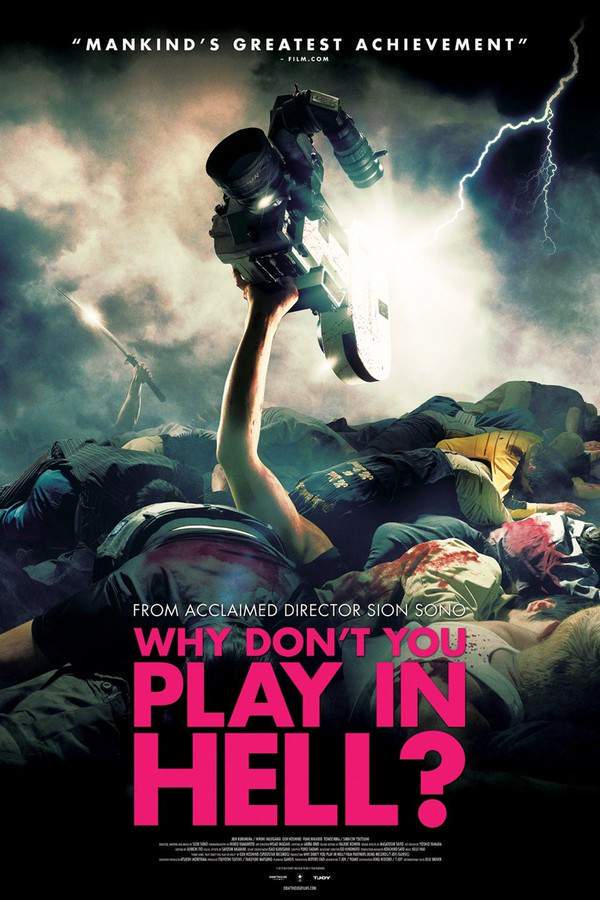
Why Don't You Play in Hell? (2014) movie poster

Characters & Themes

Why Don't You Play in Hell? (2014) Characters, Setting & Themes Explained

Release, runtime and language
2014 · 129 min · Japanese
Loading streaming availability…
Directed by
Shion Sono

To revitalize a fading actress’s career, three unconventional filmmakers devise a risky plan involving a blockbuster film, a resolution to a violent yakuza conflict, and the actress's highly anticipated comeback. Their ambitious scheme quickly spirals into unexpected chaos as the lines between reality and fiction blur, and the yakuza themselves become unwilling participants in their cinematic endeavor.

On this page (9)
  1. 1 Where to watch
  2. 2 Characters explained (4)
  3. 3 Character relationship map
  4. 4 Where & when it takes place
  5. 5 Themes & meaning (3)
  6. 6 Character & meaning questions
  7. 7 Movie threads
  8. 8 Movies like Why Don't You Play in Hell?
  9. 9 Every angle
Loading streaming availability…

4 main characters · contains spoilers

Why Don't You Play in Hell? Characters Explained: Who Is Who

The main characters of Why Don't You Play in Hell? (2014), heroes and villains: what drives them, how they change over the course of the story and what each of them reveals about the film's bigger ideas.

  • Hirata

    Hirata is an aspiring director and a key figure within the Fuck Bombers, embodying the spirit and resilience of emerging filmmakers. His passion for creating a memorable film drives him to reconnect with his friends and guide them through tumultuous endeavors. Hirata's faith in cinema is symbolized through his visit to the shrine, where he seeks divine inspiration.

    • 🎬 Aspiring Director
    • 🏆 Passionate
    • 🙏 Devout
  • Mitsuko

    Mitsuko is the child star turned actress struggling to find her place in the film industry. Her journey reflects the pressures of familial expectations and the search for authenticity in her work. Despite her fame, she yearns for genuine experiences and love, demonstrating the conflict between personal desires and public persona.

    • 🌟 Child Star
    • 💔 Stifled Artist
    • 👧 Young Prodigy
  • Sasaki

    Sasaki is introduced as a young thug aspiring to be the next martial arts icon, embodying the dreamer archetype within the gritty world surrounding him. His enthusiasm juxtaposes the harsh realities of gang life, leading to a tumultuous involvement with the film crew and highlighting the intersections of violence and creativity.

    • 🥋 Aspiring Icon
    • ⚡ Dynamic
    • 🎥 Film Enthusiast
  • Koji

    Koji is a pivotal character caught between his feelings for Mitsuko and his unexpected role in her chaotic escape. His adoration for her drives him into dangerous situations, epitomizing the struggles of an artist amidst the chaos of yakuza warfare. Koji's journey emphasizes themes of love, courage, and the quest for artistic identity.

    • ❤️ Romantic Interest
    • 🎭 Artist
    • 🕵️‍♂️ Reluctant Hero

Last updated: October 28, 2026 at 19:50

Was this helpful?

6 characters · 9 connections · contains spoilers

Why Don't You Play in Hell? Character Relationship Map

Who is connected to whom in Why Don't You Play in Hell?: family, love, friendships, rivalries and hidden ties, colour-coded. Pick a character to see their side of the story, or a connection to see what brings two characters together.

HHirataSSasakiMMitsukoKKojiMMutoMMMitsuko'smother

Last updated: October 28, 2026 at 19:50

Was this helpful?

Setting

Where and When Does Why Don't You Play in Hell? Take Place?

The setting of Why Don't You Play in Hell? (2014): the year and time period, the places and locations, and how they shape the characters, the mood and the tension of the story.

Time period

2000s

The story unfolds in the 2000s, a period marked by a cultural obsession with cinema in Japan, alongside a backdrop of rising gang conflicts and the changing landscape of the film industry. During this era, filmmaking is evolving with new technologies, yet traditional values and the allure of classic narratives still hold sway over aspiring directors and actors.

Location

Japan, Yakuza headquarters, various film sets

The movie is primarily set in Japan, where the soaring ambitions and gritty realities of filmmaking collide with the violent world of the yakuza. The locations include high-stakes gang headquarters and chaotic film sets that mirror the tumultuous lives of the characters involved. Each setting is infused with cultural significance, from the portrayal of yakuza traditions to the homage to classic samurai cinema.

  • 🇯🇵 Japan
  • 🎥 Film Industry
  • 💼 Organized Crime

Last updated: October 28, 2026 at 19:50

Was this helpful?

3 major themes

Why Don't You Play in Hell? Meaning: Themes & Message Explained

What is Why Don't You Play in Hell? (2014) really about? The emotional, social and philosophical themes the film keeps returning to, its symbolism and the message beneath the surface.

  • Cinematic Passion

    At its core, the film explores the fervent love for cinema that binds the main characters together. Their dreams of creating a masterpiece serve as both motivation and a source of conflict, highlighting the thin line between art and life. The ambitious spirits of the Fuck Bombers represent the trials of artistic creation amidst chaos and violence.

  • Violence and Chaos

    Violence permeates the narrative as characters navigate the dangers of gang warfare while trying to create a film. The chaos of the yakuza's brutal world serves as a stark contrast to the innocence of filmmaking dreams, showing how easily life’s unpredictability can shatter aspirations. This theme emphasizes the grim realities behind creative pursuits.

  • Love and Sacrifice

    The film delves into themes of love through the relationship between Mitsuko and Koji, whose connection is tested by external threats and their pursuits in the film industry. Their tragic romance underscores the notion of sacrifice in both love and art, illustrating how personal relationships can become entangled in a web of ambition and violence.

Last updated: October 28, 2026 at 19:50

Was this helpful?

Character & theme questions

Why Don't You Play in Hell? Characters & Meaning: Your Questions Answered

The questions people ask about Why Don't You Play in Hell? (2014): who the characters really are, their relationships, what the symbols mean, where it takes place and what the movie is really about. Each answer contains spoilers.

Q1

How does the setting in Japan shape the story's conflict?

The movie is set in Japan, where the ambitious world of filmmaking collides with the violent realm of the yakuza. This collision creates the story's central tension: idealistic filmmakers attempt to create art while being forced to navigate gang warfare and deadly conflicts. The yakuza headquarters and chaotic film sets serve as contrasting environments that mirror the characters' dual existences as artists and unwilling participants in real-world violence.

  • japan setting
  • yakuza
  • film sets
  • tokyo
  • locations
Q2

What does the 2000s setting tell us about the film industry in the story?

The story takes place in the 2000s, a period when Japanese cinema was undergoing transformation with new technologies, yet traditional storytelling values and classic samurai film influences still held sway. This era provides context for the Fuck Bombers' ambition to create a masterpiece, reflecting both the modern tools available to filmmakers and the nostalgic reverence for classic cinematic narratives that drives their passion.

  • 2000s
  • era
  • japan cinema
  • film industry
  • time period
Q3

What does the movie say about the love for cinema?

The film explores cinematic passion as its central theme, showing how the characters' shared love for movies becomes both their unifying force and the source of their downfall. The Fuck Bombers' dream of creating a masterpiece drives them to extreme lengths, illustrating how artistic ambition can blur the line between art and life, ultimately leading to deadly consequences when their creative pursuits intersect with real yakuza violence.

  • cinema
  • filmmaking
  • passion
  • director
  • fuck bombers
  • art
Q4

How does the film balance violence with filmmaking?

The movie presents a stark contrast between the brutal world of yakuza violence and the innocent, creative aspirations of the filmmakers. As the characters attempt to make their film, the chaos of gang warfare constantly intrudes on their artistic pursuit, showing how the unpredictability of real-world violence shatters creative dreams. This theme underscores the grim realities behind artistic creation when it becomes entangled with organized crime.

  • violence
  • chaos
  • yakuza
  • war
  • film shoot
  • danger
Q5

What role does love and sacrifice play in the story?

Love and sacrifice emerge through the relationship between Mitsuko and Koji, whose connection is tested by external threats and their involvement in the film industry. Their romance illustrates how personal relationships become entangled in webs of ambition and violence, with both characters making significant sacrifices. The theme highlights how the pursuit of artistic dreams and romantic fulfillment can lead to tragic consequences in such a violent world.

  • love
  • sacrifice
  • mitsuko
  • koji
  • romance
  • relationship
Q6

Who is Mitsuko and why is her comeback significant?

Mitsuko is a former child star struggling to revitalize her fading career in the competitive Japanese film industry. Her journey reflects the pressures of maintaining a public persona while searching for authentic artistic expression. Her highly anticipated comeback becomes the catalyst for the entire scheme, as three filmmakers devise a risky plan involving a blockbuster film to resurrect her career, ultimately drawing her into dangerous conflicts with the yakuza.

  • mitsuko
  • actress
  • child star
  • comeback
  • career
  • fame
Q7

Who is Hirata and what drives him as a director?

Hirata is an aspiring director and key figure within the Fuck Bombers, embodying the spirit of emerging filmmakers driven by passion for cinema. His determination to create a memorable film motivates him to reunite with his friends and guide them through chaotic circumstances. His faith in cinema is symbolized by his visit to a shrine seeking divine inspiration, representing the spiritual connection between his artistic aspirations and Japanese cultural traditions.

  • hirata
  • director
  • fuck bombers
  • filmmaker
  • ambition
Q8

What is Sasaki's role in the story?

Sasaki is a young yakuza thug who dreams of becoming the next martial arts icon. His enthusiasm for action cinema stands in stark contrast to the harsh realities of gang life. This character embodies the intersection of violence and creativity, as his involvement with the film crew highlights how the worlds of martial arts fantasy and real-world criminal violence become inextricably linked throughout the narrative.

  • sasaki
  • yakuza
  • thug
  • martial arts
  • dreamer
  • action star
Q9

What motivates Koji in the story?

Koji is driven by his deep feelings for Mitsuko, which lead him into dangerous situations throughout the film. His adoration for her represents the struggles of an artist caught between romantic devotion and the chaos of yakuza warfare. Koji's journey emphasizes themes of love, courage, and artistic identity, as his personal emotions become intertwined with the violent events surrounding the film's production.

  • koji
  • mitsuko
  • love
  • artist
  • devotion
  • feelings
Q10

How do the yakuza become involved in the film?

The yakuza become unwilling participants in the filmmakers' cinematic endeavor as their violent conflicts become intertwined with the film shoot. What begins as a scheme to resolve a gang war through a blockbuster movie escalates into chaos, with gang members finding themselves acting in or being captured by the film crew. This unique premise merges real organized crime with fictional filmmaking, creating unexpected consequences for all involved.

  • yakuza
  • gang
  • film collaboration
  • crime
  • unwilling actors

Movie threads

More Movies Like Why Don't You Play in Hell?, by Mood & Story

Curated lists built around what makes Why Don't You Play in Hell? tick: the same mood, the same kind of story or the same emotional payoff. Each list explains why these movies belong together.

Meta Filmmaking Chaos Movies Like Why Don't You Play in Hell?

Stories where the act of creation violently or absurdly merges with life itself. If you liked the wild, self-referential energy of Why Don't You Play in Hell?, explore more movies where filmmaking or artistic creation becomes a dangerous, reality-bending endeavor. These stories celebrate the chaotic spirit of art, often with high intensity and a darkly comic tone.

  • meta
  • feverish
  • unhinged
  • ambitious
  • cinematic
  • chaotic
  • Tone: dark, meta, celebratory
  • Pacing: fast, escalating
Why these movies?

The story pattern: Narratives in this thread often follow ambitious, obsessive artists or creators whose grand project spirals out of control, forcing real-world conflicts (like crime or violence) to become part of the art. The climax is typically a chaotic, high-energy convergence where the work is finished at a great personal cost.

Why they belong together: Movies are grouped here for their shared celebration of artistic passion filtered through chaos and danger. They blend a meta-commentary on their own medium with high-intensity action or drama, creating a uniquely feverish and ambitious viewing experience.


Tragicomic Carnage and Bittersweet Endings Like in Why Don't You Play in Hell?

Absurdly violent stories where a pyrrhic victory is won at a devastating cost. Fans of Why Don't You Play in Hell? will appreciate these movies that balance extreme violence and absurd humor with a heavy, bittersweet emotional conclusion. They are fast-paced, high-intensity stories where success feels ambiguous and earned through immense sacrifice.

  • violent
  • tragicomic
  • bittersweet
  • chaotic
  • unhinged
  • absurd
  • Tone: dark, tragicomic, bittersweet
  • Pacing: fast, relentless
Why these movies?

The story pattern: These narratives often involve a central, ambitious goal pursued by eccentric characters. The path to achieving this goal is littered with absurdly violent set pieces and tragic deaths, treated with a darkly comic sensibility. The conclusion sees the goal technically achieved, but the emotional weight of the loss casts a long shadow over the victory.

Why they belong together: They are united by a specific tonal blend: the relentless pace and high intensity of an action movie, the existential humor of a black comedy, and the heavy, poignant payoff of a tragedy. This creates a unique, contradictory, and memorable vibe.

If you liked this

Movies Like Why Don't You Play in Hell?

Similar movies to Why Don't You Play in Hell?: the same genre, themes or kind of story. Each one comes with its own plot summary, timeline and ending explained.

Browse all movie summaries

Every angle

Why Don't You Play in Hell? (2014) Explained: Plot, Timeline & Characters

Everything about Why Don't You Play in Hell? in one place: what happens in the plot summary, the timeline in chronological order, the characters and meaning and a spoiler-free summary. What's After the Movie adds the cast, box office and post-credit scenes.

Coming soon on iOS and Android

The Plot Explained Movie Summary App

Plot summaries, endings explained and timelines on your phone. Catch up on any movie in minutes, save your favorites and never miss a twist again.

Be the first to know when we launch. Your email stays private, always.

Learn more about the app