


Plot Explained Spoilers guaranteed!
Plot Explained

Browse by genre

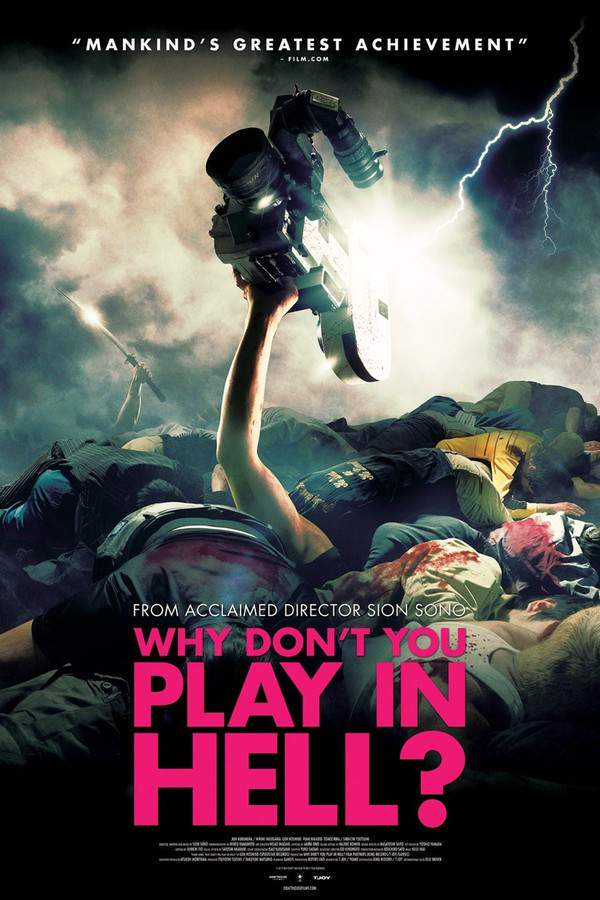
Why Don't You Play in Hell? (2014) movie poster

Timeline

Why Don't You Play in Hell? (2014) Timeline Explained – Every Event in Order

Release, runtime and language
2014 · 129 min · Japanese
Directed by
Shion Sono

To revitalize a fading actress’s career, three unconventional filmmakers devise a risky plan involving a blockbuster film, a resolution to a violent yakuza conflict, and the actress's highly anticipated comeback. Their ambitious scheme quickly spirals into unexpected chaos as the lines between reality and fiction blur, and the yakuza themselves become unwilling participants in their cinematic endeavor.

On this page (6)
  1. 1 Where to watch
  2. 2 Events in order (15)
  3. 3 Timeline questions answered
  4. 4 Movie threads
  5. 5 Movies like Why Don't You Play in Hell?
  6. 6 Every angle

Where to watch

Where to Watch Why Don't You Play in Hell? (2014)

Where can you watch Why Don't You Play in Hell?? Stream, rent or buy it in the US, including on Google Play Movies and YouTube: current JustWatch availability with up-to-date prices.

Streaming availability powered by JustWatch

15 events in order · contains spoilers

Why Don't You Play in Hell? Timeline: Events in Chronological Order

Every key event of Why Don't You Play in Hell? (2014) in order, scene by scene, with when and where it takes place. Use it to untangle flashbacks, time jumps and parallel storylines, to refresh your memory before the sequel or to find the exact scene you are thinking of.

  1. The Birth of the Fuck Bombers

    Three teenagers with a passion for cinema encounter a young thug named Sasaki, aspiring to emulate the legendary Bruce Lee. They invite him to join their film-making group, the 'Fuck Bombers', under the mentorship of a knowledgeable elderly projectionist.

  2. Gang War Erupts

    While the teens dive into filmmaking, organized crime experiences upheaval as Boss Muto engages in a dangerous conflict against a rival gang. The violent altercation spills into Muto's home, endangering his wife, who bravely fights back against the attackers.

    Where
    Muto's home
  3. A Grim Encounter

    In the aftermath of the violent attack on Boss Muto's home, the sole survivor, Ikegami, is portrayed on film by the Fuck Bombers. This dramatic moment captures the essence of the chaos surrounding their filmmaking journey.

  4. The Rise of Ikegami

    Following the gang conflict, Ikegami seizes power after Muto’s gang emerges victorious, executing the rival gang leader. He suggests a truce and redesigns their headquarters inspired by samurai films, enhancing the yakuza's image.

    Where
    Yakuza Headquarters
  5. Hirata's Prayer

    Amidst the turmoil, Hirata visits a small shrine where he humbly prays for the Fuck Bombers’ artistic success. His heartfelt plea reflects his dedication to cinema, hoping to create a significant film despite the surrounding violence.

    Where
    Shrine
  6. A Decade of Dreams

    Fast forward a decade, and the aspirations of the Fuck Bombers have faltered as they have yet to make a notable film. The passing of their loyal projectionist further compounds their despair, leading Sasaki to withdraw from the group.

    When
    Ten years later
  7. Mitsuko's Escape

    Now an actress, Mitsuko feels trapped by her unexciting roles and flees from a film project that her mother cherishes. During her evasion, she finds refuge in a phone booth, unexpectedly meeting Koji, a boy who harbored feelings for her since childhood.

    Where
    Phone booth
  8. Capture and Scheme

    Muto's men capture both Mitsuko and Koji, misguidedly believing Koji is her lover. Mitsuko cleverly persuades Muto to spare Koji's life by claiming he is a film director who can realize her cinematic dreams.

  9. Film Production Begins

    Intrigued by her plan, Muto decides to produce a film starring his daughter and enlists Koji's help. They gather equipment and prepare a set, merging their film project with an impending confrontation with Ikegami's faction.

  10. Hirata's Return

    Koji, feeling overwhelmed, attempts to escape but returns to the shrine visited by Hirata years prior. Captured again by the yakuza, he discovers Hirata's prayer, prompting a desperate search for guidance in directing the film.

    Where
    Shrine
  11. Reunion and Collaboration

    Hirata accepts the offer to direct the film, excited by the backing they received. He reconnects with Sasaki and integrates the remaining yakuza members into the film crew, creating a sense of camaraderie amidst the chaos.

  12. The Climactic Battle

    As filming commences, Hirata directs an elaborate battle scene with both yakuza factions. The violence escalates, with Muto meeting a gruesome fate, while Koji suffers severe injuries as the lines between film and reality blur.

  13. Tragic Confessions

    In a see-saw of emotions, Koji and Mitsuko confess their love for each other just before tragedy strikes. As chaos erupts, a katana pierces Koji's skull, marking a heartbreaking turn in their intertwined fates.

  14. The Arrival of the Police

    Just as hope fades, police intervention leads to a horrifying conclusion for the protagonists caught in the crossfire. Amid the bloodshed, Hirata gathers the film reels, driven by passion for their cinematic dreams.

  15. A New Beginning?

    Hirata escapes the carnage with the film reels while proclaiming 'Fuck Bombers!' He envisions the revival of the group with their newly created movie, although the reality of the situation begins to set in, leaving his future uncertain.

Last updated: November 15, 2024 at 16:15

Was this helpful?

Timeline questions answered

Why Don't You Play in Hell? Timeline Explained: Your Questions Answered

When does it happen, and why in that order? The questions people ask about the chronology of Why Don't You Play in Hell? (2014): time jumps, flashbacks, cause and effect between scenes and the correct order of events, each answered with spoilers.

Q1

Why does Mitsuko ask Koji to be her boyfriend for a day?

Mitsuko is desperately trying to escape her mother's control and a film project she hates. When she hides in the phone booth and meets Koji, she quickly enlists him as a decoy boyfriend to help her evade her pursuers. It's a impulsive scheme to buy herself time and create cover for her escape, not a genuine romantic request.

  • mitsuko
  • koji
  • escape
  • phone booth
  • decoy boyfriend
Q2

Why does Muto spare Koji after thinking he eloped with Mitsuko?

When Muto captures Mitsuko and Koji, he intends to kill Koji for supposedly running away with his daughter. However, Mitsuko cleverly claims Koji is a film director who can make her dream movie. Muto, intrigued by the idea of creating a film for his wife as a comeback project, decides to spare Koji and put his filmmaking skills to use instead.

  • muto
  • koji
  • spare life
  • film director
  • mitsuko father
Q3

How do the yakuza members become the film crew?

After Koji agrees to direct the film, Muto's remaining yakuza subordinates transform into an impromptu crew - gathering equipment and building sets. When Hirata joins as director, he persuades Ikegami's faction to participate as well, creating an unusual collaboration between rival yakuza clans who become both actors and crew members for the film project.

  • yakuza
  • film crew
  • hirota
  • ikegami
  • muto crew
Q4

Why does Ikegami agree to participate in the film?

Ikegami remains infatuated with Mitsuko since he first saw her as a child covered in blood at Muto's house. Despite being a rival yakuza boss, he agrees to join the film project partly to be near Mitsuko and partly because Hirata convinces him the cinematic endeavor offers redemption and glory greater than continued warfare.

Foreshadowing: Ikegami's obsession with Mitsuko began when he saw her as a child during the violent home invasion.

  • ikegami
  • mitsuko
  • film project
  • obsession
  • yakuza boss
Q5

Why does Hirata insist all participants use katanas?

Hirata insists on katanas for authenticity, wanting the battle scene to feel like a genuine samurai film rather than using modern weapons. This decision directly contributes to the escalating violence, as katanas cause far more brutal hand-to-hand combat than firearms would, ultimately leading to the graphic deaths of multiple characters.

  • hirata
  • katana
  • samurai film
  • authenticity
  • weaponry
Q6

Why does Muto's wife go to prison after killing the attackers?

Muto's wife was already incarcerated prior to the main story timeline. During the rival gang's home invasion, she managed to kill nearly all the attackers in self-defense, but she was already in prison for previous crimes. The timeline shows she recouped her freedom from prison and later envisioned Mitsuko becoming a superstar.

  • muto wife
  • prison
  • killers
  • self defense
  • yakuza home
Q7

Why does Sasaki leave the Fuck Bombers after ten years?

After a decade of failed attempts to create a notable film, Sasaki becomes disillusioned and decides to part ways with the Fuck Bombers. The passing of their mentor projectionist compounds his despair over their lack of success, leading him to abandon his dreams of becoming a star like Bruce Lee.

  • sasaki
  • leave fuck bombers
  • ten years
  • projectionist
  • disillusioned
Q8

What is the significance of Hirata's prayer at the shrine?

Ten years earlier, Hirata visited a small shrine and prayed to the God of Cinema for the Fuck Bombers to create a memorable film. When Koji is recaptured by the yakuza, he discovers this prayer at the shrine, which inspires him to seek out Hirata for help directing the movie. The prayer symbolizes the enduring passion that will drive the entire chaotic film project.

Foreshadowing: The prayer was made by Hirata a decade before the main events, hoping for cinematic success.

  • hirata
  • shrine
  • prayer
  • Fuck Bombers
  • movie dream
Q9

What does the ending mean when a voice calls for 'cut'?

In the final moments, Hirata imagines the triumphant premiere of their film with the surviving cast and crew at the premiere. However, he's abruptly interrupted by a voice yelling 'cut,' revealing that this triumphant vision was fantasy. The film appears to have been made, but reality is far bleaker - the ending remains ambiguous about whether the movie truly exists or if Hirata's passion has become delusional.

  • ending
  • cut
  • premiere
  • hallucination
  • Fuck Bombers movie
Q10

Do the film reels actually survive the massacre?

Amidst the carnage when police kill most of the participants, Hirata frantically gathers the scattered film reels from Ikegama's castle and escapes with them. The film appears to have been captured, though the price was nearly everyone's life. Hirati's final vision shows the premiere of 'Why Don't You Play in Hell?' suggesting the movie exists, but the ambiguous 'cut' voice raises questions about whether this is reality or his delusion.

  • film reels
  • survive
  • hirata
  • massacre
  • Why Don't You Play in Hell
Q11

Why combine the yakuza showdown with the film shoot?

A subordinate suggests merging the film project with the anticipated yakuza battle against Ikegami's faction. This creates a unique opportunity: they can film an authentic battle while simultaneously resolving the gang conflict. Both Muto and Ikegami agree, believing they can achieve their goals - entertainment and warfare - simultaneously, but this fusion ultimately leads to catastrophic bloodshed.

  • yakuza
  • battle
  • film shoot
  • merge
  • ikegami
  • muti
Q12

How does Koji get injured during the battle?

During the climactic battle, Hirata directs the yakuza factions as if filming a movie, repeatedly calling for different angles. The violence escalates into graphic combat where Muto is decapitated and Koji suffers a grievous injury to his hand. The lines between reality and film blur completely as the yakuza continue fighting even while being filmed, resulting in severe casualties.

  • koji
  • hand injury
  • battle
  • katana
  • film

Movie threads

More Movies Like Why Don't You Play in Hell?, by Mood & Story

Curated lists built around what makes Why Don't You Play in Hell? tick: the same mood, the same kind of story or the same emotional payoff. Each list explains why these movies belong together.

Meta Filmmaking Chaos Movies Like Why Don't You Play in Hell?

Stories where the act of creation violently or absurdly merges with life itself. If you liked the wild, self-referential energy of Why Don't You Play in Hell?, explore more movies where filmmaking or artistic creation becomes a dangerous, reality-bending endeavor. These stories celebrate the chaotic spirit of art, often with high intensity and a darkly comic tone.

  • meta
  • feverish
  • unhinged
  • ambitious
  • cinematic
  • chaotic
  • Tone: dark, meta, celebratory
  • Pacing: fast, escalating
Why these movies?

The story pattern: Narratives in this thread often follow ambitious, obsessive artists or creators whose grand project spirals out of control, forcing real-world conflicts (like crime or violence) to become part of the art. The climax is typically a chaotic, high-energy convergence where the work is finished at a great personal cost.

Why they belong together: Movies are grouped here for their shared celebration of artistic passion filtered through chaos and danger. They blend a meta-commentary on their own medium with high-intensity action or drama, creating a uniquely feverish and ambitious viewing experience.


Tragicomic Carnage and Bittersweet Endings Like in Why Don't You Play in Hell?

Absurdly violent stories where a pyrrhic victory is won at a devastating cost. Fans of Why Don't You Play in Hell? will appreciate these movies that balance extreme violence and absurd humor with a heavy, bittersweet emotional conclusion. They are fast-paced, high-intensity stories where success feels ambiguous and earned through immense sacrifice.

  • violent
  • tragicomic
  • bittersweet
  • chaotic
  • unhinged
  • absurd
  • Tone: dark, tragicomic, bittersweet
  • Pacing: fast, relentless
Why these movies?

The story pattern: These narratives often involve a central, ambitious goal pursued by eccentric characters. The path to achieving this goal is littered with absurdly violent set pieces and tragic deaths, treated with a darkly comic sensibility. The conclusion sees the goal technically achieved, but the emotional weight of the loss casts a long shadow over the victory.

Why they belong together: They are united by a specific tonal blend: the relentless pace and high intensity of an action movie, the existential humor of a black comedy, and the heavy, poignant payoff of a tragedy. This creates a unique, contradictory, and memorable vibe.

If you liked this

Movies Like Why Don't You Play in Hell?

Similar movies to Why Don't You Play in Hell?: the same genre, themes or kind of story. Each one comes with its own plot summary, timeline and ending explained.

Browse all movie summaries

Every angle

Why Don't You Play in Hell? (2014) Explained: Plot, Timeline & Characters

Everything about Why Don't You Play in Hell? in one place: what happens in the plot summary, the timeline in chronological order, the characters and meaning and a spoiler-free summary. What's After the Movie adds the cast, box office and post-credit scenes.

Coming soon on iOS and Android

The Plot Explained Movie Summary App

Plot summaries, endings explained and timelines on your phone. Catch up on any movie in minutes, save your favorites and never miss a twist again.

Be the first to know when we launch. Your email stays private, always.

Learn more about the app