Plot Explained Spoilers guaranteed!
Plot Explained

Browse by genre

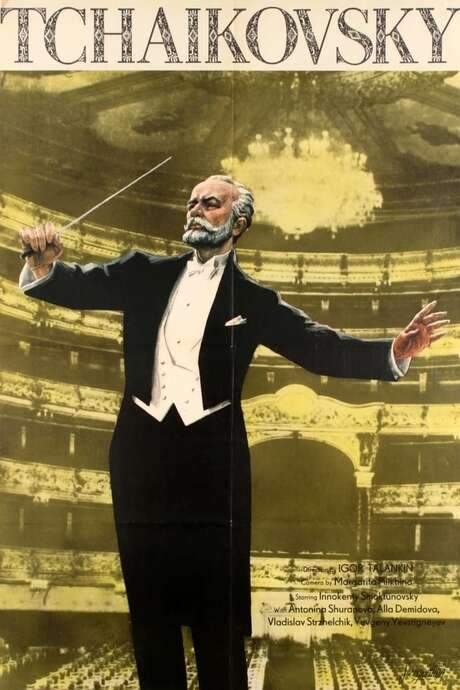
Tchaikovsky (1970) movie poster

Plot Summary

Tchaikovsky (1970) Plot Summary Explained

Release, runtime and language
1970 · 157 mins · Russian
Directed by
Igor Talankin
Starring
Alla Demidova, Innokentiy Smoktunovskiy, Aleksandr Smirnov, Kirill Lavrov, Antonina Shuranova, Nina Agapova

The film honors Russian composer Pyotr Tchaikovsky (1840‑1893), focusing on the last twenty years of his life and his close friendship with patron Baroness Nadezhda von Meck. It also glances at his childhood and adolescence, set against excerpts from his operas and ballets performed by top Russian musicians.

On this page (5)
  1. 1 What happens: full plot
  2. 2 Plot questions answered
  3. 3 Movie threads
  4. 4 Movies like Tchaikovsky
  5. 5 Every angle

Full plot summary · contains spoilers

What Happens in Tchaikovsky: Full Plot Summary

The whole story of Tchaikovsky (1970) explained, from the opening scene to the final frame: every key event, every twist and what it all adds up to. Read it as a quick recap before the sequel, to check a scene you missed, or to finally understand what really happened.

Tchaikovsky, Innokentiy Smoktunovskiy, sits at the center of a film that threads his dazzling music with intimate longing, personal struggle, and the weight of public expectation. In the opening chapters, as he wrestles with the craft of his First Piano Concerto, his friend Nikolai Grigoryevich Rubinstein Vladislav Strzhelchik bluntly refuses to perform it at the premiere, a setback that casts a long shadow over the young composer’s confidence. The disappointment mirrors a larger pattern: art that bursts forth under scrutiny, often at the expense of warmth and ease.

Following the misfire of the premiere, the narrative moves through a sequence of pivotal moments that push his music and his life in new directions. After the heavy blow of the Swan Lake setback, the wealthy widow Nadezhda Filaretowna von Meck provides crucial financial support, steering the artist through turbulent times without fully smoothing the rough edges of his reality. Later, as he turns to Eugene Onegin, a correspondence from a student named Antonina Ivanovna pulls him toward a personal crossroads; an attempt to meet her leads to a brief arrest, underscoring how proximity to affection and connection can collide with society’s boundaries. In the wake of these emotional storms, he dedicates his Fourth Symphony to von Meck, a gesture that signals hope—hope that marriage and stability might finally bring him peace.

Yet the road remains rocky. The film does not shy away from the darker chapters: a crisis in his married life pushes him toward despair, and in a moment of surrender he attempts suicide. Von Meck steps in once more, offering financial aid in the hope that he can secure a divorce and salvage what remains of his life and career. The world around him is restless, too; Rubinstein’s Paris debut brings renewed attention to the concerto, but the arc abruptly turns when Rubinstein dies, a turning point that echoes through the rest of Tchaikovsky’s choices. The composer declines an opportunity to assume leadership of the Moscow Conservatory, choosing instead to follow his own unpredictable path.

Back in Russia, the film places Tchaikovsky under the lens of public critique—especially for a controversial staging of The Maid of Orleans. As he grapples with reputational scrutiny, von Meck’s influence shifts dramatically when she hostingly throws a party in his honor and then abruptly severs the relationship. Despite concerted efforts to tarnish his name, the composer’s resilience shines through as he achieves a notable triumph with Queen of Spades, a moment that reaffirms his stature even as personal ties fray. In a striking interlude, the legendary dancer Maya Plisetskaya appears as Desire, a brief but memorable motif that bridges the stage world with the film’s portrait of a life saturated by performance and emotion.

The film’s emotional peak comes as von Meck’s illness looms large. Learning of her illness, Tchaikovsky writes what becomes his final symphony, Pathétique, a work that crystallizes the sense of farewell and reflection that threads his later years. The closing pages of the story are heavy with inevitability: not long after the premiere of Pathétique, the composer succumbs to cholera, his prolific career ending as dramatically as it began, leaving behind a legacy of some of classical music’s most enduring themes and melodies.

Across these episodes, the film maintains a clear, steady focus on the tension between genius and vulnerability. It presents how Tchaikovsky’s music is inseparable from his life—how his melodies arise from love and loneliness, from triumph and humiliation, from the friendships that sustain him and the patrons who propel him forward. The narrative keeps a careful balance between biographical detail and the universal human questions that his life embodies: how to endure public scrutiny, how to seek personal happiness, and how to translate inner tumult into art that can outlive the man who created it. The result is a richly textured portrait that stays faithful to the spirit of its subject while expanding the emotional landscape beyond what a straightforward chronology might offer.
Last updated: February 24, 2026 at 13:51

Was this helpful?

Plot questions answered

Tchaikovsky Plot Explained: Your Questions Answered

The questions people ask most about Tchaikovsky (1970): what happens in the confusing scenes, why the characters do what they do, the twists, hidden details and what the ending means. Each answer contains spoilers.

Q1

Why did Rubinstein refuse to perform Tchaikovsky's First Piano Concerto?

Nikolai Rubinstein deemed the concerto unplayable when Tchaikovsky asked him to perform it at the premiere. Rubinstein's blunt refusal cast immediate doubt on the work's merit and deeply wounded Tchaikovsky's confidence as a young composer. However, the concerto later gained fame when Rubinstein performed it favorably in Paris, reversing the initial perception.

Foreshadowing: The opening scene establishes a recurring pattern where Tchaikovsky's art faces initial rejection before achieving recognition.

  • rubinstein
  • first piano concerto
  • premiere rejection
  • nikolai rubinstein
Q2

Who was Nadezhda von Meck and what was her relationship with Tchaikovsky?

Nadezhda von Meck was a wealthy Russian widow who became Tchaikovsky's most important patron and emotional support. She provided crucial financial assistance following his disappointments with Swan Lake and the concerto, helping stabilize his life and career. Their relationship was unique, they maintained a close emotional bond while largely communicating through letters, as von Meck deliberately avoided in-person meetings.

  • nadezhda von Meck
  • patron
  • financial support
  • relationship
Q3

Why did Tchaikovsky attempt suicide?

Tchaikovsky attempted suicide while struggling with the pressures of his married life, which had become unbearable. The crisis in his marriage overwhelmed him to the point of despair, leading him to surrender to personal turmoil. Von Meck intervened financially to help secure his divorce, demonstrating the depth of her commitment to supporting him through his difficulties.

Foreshadowing: Earlier tension in his marriage and his emotional struggles had been building throughout the narrative.

  • suicide attempt
  • marriage crisis
  • divorce
  • von Meck support
Q4

Why did von Meck suddenly cut ties with Tchaikovsky?

Von Meck abruptly severed her relationship with Tchaikovsky after hosting a party in his honor. The exact reasons for this sudden reversal are not detailed in the film, but it represents a dramatic shift in their relationship that affected Tchaikovsky both personally and professionally. Despite her previous unwavering support, this severance marked a significant emotional turning point for the composer.

  • von Meck
  • relationship ended
  • party
  • cut ties
Q5

What is the Pathétique symphony and why is it significant?

The Pathétique (Symphony No. 6) was Tchaikovsky's final symphony, composed after he learned of von Meck's illness. The work became a profound musical farewell, carrying themes of reflection, resignation, and emotional farewell that mirrored his own life. It premiered shortly before his death, making it a poignant conclusion to his compositional legacy.

  • pathetique
  • sixth symphony
  • final symphony
  • von Meck illness
Q6

Why did Tchaikovsky dedicate his Fourth Symphony to von Meck?

Tchaikovsky dedicated his Fourth Symphony to von Meck as a gesture of gratitude and hope. Von Meck had become his primary emotional and financial anchor, and he hoped that marriage and stability might finally bring him peace. The dedication symbolized his belief that her support could help him find personal happiness and artistic stability.

  • fourth symphony
  • dedication
  • von Meck
  • marriage hope
Q7

What happened between Tchaikovsky and Antonina Ivanovna?

Antonina Ivanovna was a student who sent Tchaikovsky a love letter, stirring his curiosity and complicating his personal life. When he attempted to meet her, it led to a brief arrest, highlighting the fragility of his social standing and the restrictions placed on his pursuit of personal connections. This incident underscored how his search for affection often collided with society's boundaries.

  • antonina ivanovna
  • love letter
  • arrest
  • student
Q8

Why did Tchaikovsky decline the position at Moscow Conservatory?

Tchaikovsky declined the opportunity to lead the Moscow Conservatory, choosing instead to follow his own unpredictable artistic path. This decision marked a shift away from institutional duties toward personal creative exploration, reflecting his desire to compose and direct his career on his own terms rather than take on administrative responsibilities.

  • moscow conservatory
  • declined position
  • compose
  • artistic path
Q9

How did Tchaikovsky die?

Tchaikovsky died from cholera shortly after the premiere of his Sixth Symphony, the Pathétique. His death brought a dramatic close to a prolific career that had spanned decades of both professional triumph and personal struggle. The timing of his death, so soon after completing his final major work, added a layer of tragic inevitability to his legacy.

  • death
  • cholera
  • pathetique
  • premiere
Q10

What was the Queen of Spades and why did it matter?

Queen of Spades was an opera that brought Tchaikovsky significant success despite earlier attempts to tarnish his reputation. The triumph restored his standing among audiences and colleagues, reaffirming his resilience and artistic credibility. This success demonstrated his ability to overcome professional setbacks and personal attacks.

  • queen of spades
  • opera
  • success
  • reputation
Q11

What happened with Swan Lake that disappointed Tchaikovsky?

Swan Lake faced disappointment during its initial run, though the specific nature of the setback is not detailed in the summary. This disappointment came on the heels of the First Piano Concerto rejection, adding to Tchaikovsky's professional struggles. It was following this disappointment that von Meck stepped in with crucial financial support.

Foreshadowing: The Swan Lake setback directly led to von Meck's patronage, a relationship that would define the rest of his life.

  • swan lake
  • disappointment
  • failure
  • von Meck support

Movie threads

More Movies Like Tchaikovsky, by Mood & Story

Curated lists built around what makes Tchaikovsky tick: the same mood, the same kind of story or the same emotional payoff. Each list explains why these movies belong together.

Tormented Genius Biopics like Tchaikovsky

Exploring the weight of creative genius and the personal cost of artistic brilliance. If you appreciated the tragic beauty of Tchaikovsky, discover other movies like it that explore the lives of brilliant artists haunted by their genius. These films share a melancholic tone and delve into the painful cost of creating immortal works.

  • tragic
  • introspective
  • creative struggle
  • melancholic
  • grieving
  • isolated
  • Tone: melancholic, tragic, reflective
  • Pacing: steady, character-driven
Why these movies?

The story pattern: These stories typically follow a chronological arc, tracing the subject's rise to prominence while simultaneously uncovering the deep-seated anxieties, mental health crises, and loneliness that accompany their talent. The narrative often builds towards a poignant or tragic conclusion, emphasizing the intrinsic link between suffering and artistic expression.

Why they belong together: Movies in this thread are united by their focus on the 'pain of creation.' They share a heavy emotional weight, a melancholic tone, and a steady pacing that allows for deep introspection. The central question is rarely 'how' the art was made, but 'what it cost' the person who made it.

Somber Meditations on Legacy like Tchaikovsky

Stories that reflect on a life's work and the bittersweet nature of enduring influence. Seeking more movies like Tchaikovsky that thoughtfully examine a famous legacy? This thread features reflective dramas where profound artistic achievements are shadowed by personal tragedy, offering a deeply moving viewing experience.

  • reflective
  • legacy
  • tragic
  • poignant
  • melancholic
  • introspective
  • Tone: melancholic, reflective, poignant
  • Pacing: steady, contemplative
Why these movies?

The story pattern: The narrative pattern revolves around looking back on a life, often through key events or relationships. It juxtaposes public success with private turmoil, building towards an ending that solidifies the subject's legacy while underscoring the loneliness or pain that accompanied it. The story is less about action and more about the emotional resonance of a life lived.

Why they belong together: These films are grouped together by their unique blend of celebration and sorrow. They share a steady, reflective pacing, a melancholic tone, and a heavy emotional weight rooted in themes of artistic struggle, unfulfilled relationships, and the ultimate price of a lasting legacy.

If you liked this

Movies Like Tchaikovsky

Similar movies to Tchaikovsky: the same genre, themes or kind of story. Each one comes with its own plot summary, timeline and ending explained.

Browse all movie summaries

Every angle

Tchaikovsky (1970) Explained: Plot, Timeline & Characters

Everything about Tchaikovsky in one place: what happens in the plot summary, the timeline in chronological order, the characters and meaning and a spoiler-free summary. What's After the Movie adds the cast, box office and post-credit scenes.

Coming soon on iOS and Android

The Plot Explained Movie Summary App

Plot summaries, endings explained and timelines on your phone. Catch up on any movie in minutes, save your favorites and never miss a twist again.

Be the first to know when we launch. Your email stays private, always.

Learn more about the app