In a Karnataka village named Kamarottu, a chilling Brahmarakshasa legend from a children’s story lingers in the air as a mysterious figure suddenly abducts a kid, setting a tense stage for the events to come.
Janardhan Gambira, [Madhusudhan Rao], is a short-tempered landlord who shares his home with his wife Shaku and his brother Eknath. When his friend Vishwanath arrives with his family, they bring along Panna, a young woman who is engaged and eager to hold her wedding in the ancestral house. Janardhan refuses, insisting the house is haunted after his son Sanju was accused of stealing temple jewels 28 years earlier. That night, Sanju returns from London, and with Panna, the pair discover the beheaded body of police officer Suresh Krishna in the house well, a discovery that hurls the family into a deeper, darker mystery.
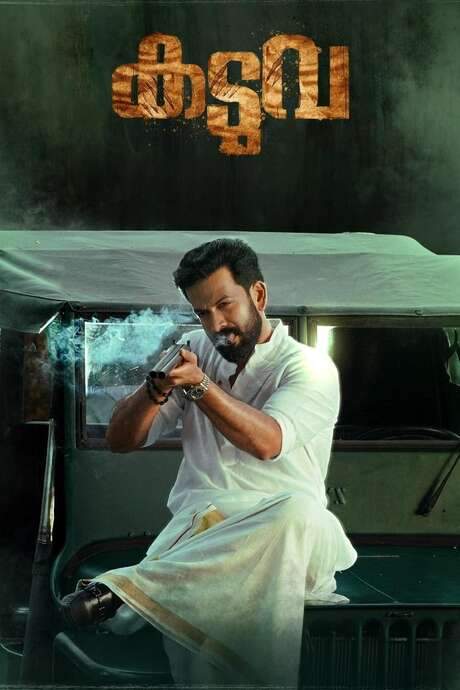
Detective Vikrant Rona, [Sudeep], arrives in the village to lead the investigation, accompanied by his daughter Guddi. He survives an initial attack and uncovers a trail of eerie clues—a single ₹1 note, cryptic writings, and a string of past child murders. His questioning of Moose Kunni, a local smuggler, reveals tangled links to the crime. Meanwhile, Panna begins to dig on her own and encounters an old woman named Deyyu in the ancestral house, who is found with Suresh Krishna’s severed head. Deyyu is revealed to be Nittoni’s mother; Nittoni and his family—his wife, and his sons Madhava and Raghava, plus a young daughter—had previously faced public humiliation and suicide in the wake of a temple theft scandal. The revelation shakes Vikrant’s sense of the case, as he learns Nittoni’s family was driven to ruin by long-buried grievances.
As Vikrant follows the trail, he learns that the crime scene of a child’s murder lies on Moose Kunni’s property. A startling thread emerges: the fathers of the murdered children were classmates of Madhava and Raghava who had bullied and demeaned them for their caste and status. Panna overhears a village elder recounting the same cryptic writing found on the corpses and recalls another note issuing revenge. Vikrant pieces together that only four bodies were found during Nittoni’s family’s death, suggesting that Madhava may still be alive. A puzzling clue—an encounter with a tattoo of Shiva on a teacher named Lawrence Pinto—hints at a larger conspiracy. Pinto escapes, and Vikrant discovers an abandoned temple containing the names and belongings of the murdered children, deepening the mystery.
The story turns with a brutal truth: Vikrant’s own daughter Guddi was among the victims, and her presence throughout the story was a hallucination born from Vikrant’s trauma. His wife remains in a coma from the same attack. Vikrant, who was once a classmate of Madhava and Raghava, recognizes that he neither bullied them nor defended them, and that Madhava—now disguising himself as Lawrence Pinto—is seeking a ruthless revenge. Panna and Munna realize they are next targets and are kidnapped, sharpening the sense of imminent danger.
A devastating discovery confirms that Madhava’s younger brother Raghava is alive as well. In a shocking twist, Sanju is revealed to be Raghava in disguise, having killed the real Sanju as payback for the temple theft that ruined his family. The climax unfolds as Vikrant confronts Madhava and Raghava. Madhava and Deyyu die in the confrontation, while Vikrant defeats and kills Raghava, thereby avenging his daughter. Panna and Munna are spared a grim fate and reunite with their families. On Janardhan’s request, Vikrant keeps Raghava’s true fate from Shaku, choosing not to reveal the full darkness of the past to a grieving household.
Through twists and layers of memory, the film threads themes of legacy, social injustice, and the long shadows cast by past wrongs, all while tracing a detective’s hard-won courage to protect the living from a cycle of vengeance that began long before he arrived in Kamarottu.