Plot Explained Spoilers guaranteed!
Plot Explained

Browse by genre

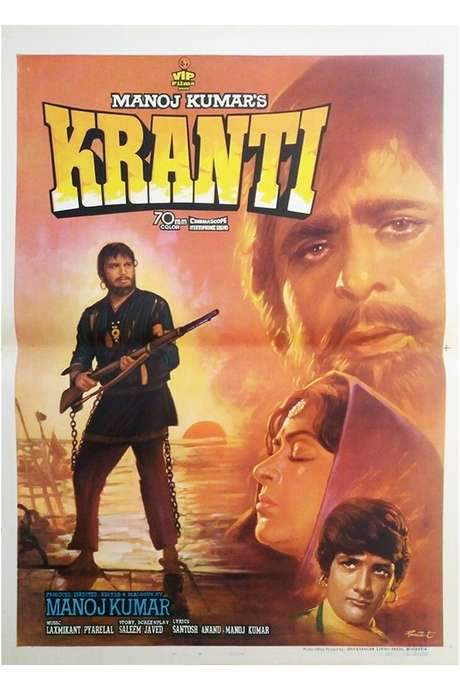
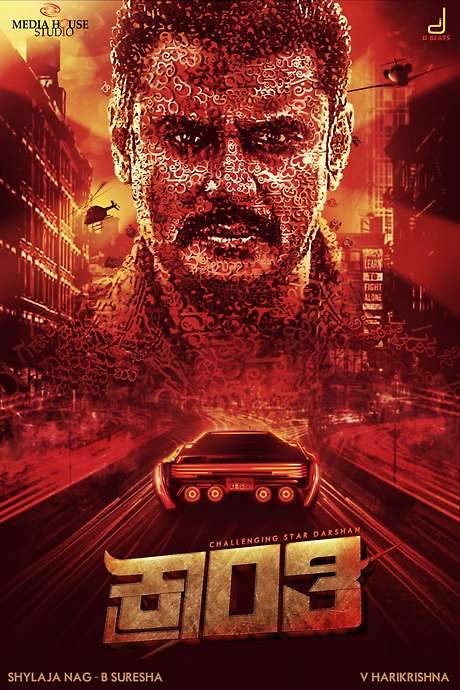
Kranti (2023) movie poster

Plot Summary

Kranti (2023) Plot Summary Explained

Release, runtime and language
2023 · 163 mins · Kannada
Echo score 41
Directed by
V. Harikrishna
Starring
Sampath Raj, Darshan Thoogudeepa Srinivas, Sadhu Kokila, Achyuth Kumar, Girish Shivanna, Umashree

Kranti Rayanna, a successful businessman living in Europe, is asked by a former teacher to return for his school’s centenary celebrations. What begins as a nostalgic trip soon escalates into a fight for the future of education as Kranti uncovers a plot by the Salatri Group to take control of 12,000 government schools and privatize them. He then takes on the challenge to stop them and fight for what is right.

On this page (5)
  1. 1 What happens: full plot
  2. 2 Plot questions answered
  3. 3 Movie threads
  4. 4 Movies like Kranti
  5. 5 Every angle

Full plot summary · contains spoilers

What Happens in Kranti: Full Plot Summary

The whole story of Kranti (2023) explained, from the opening scene to the final frame: every key event, every twist and what it all adds up to. Read it as a quick recap before the sequel, to check a scene you missed, or to finally understand what really happened.

Kranti Rayanna, portrayed by Darshan Thoogudeepa Srinivas, is a successful NRI business magnate who receives an invitation from his mentor, Srikantaiah, to attend the centenary celebration of his childhood government school. Upon returning from Europe, he reunites with a dedicated school teacher, Achyuth Kumar, who raises an alarming issue—his beloved school, along with approximately 12,000 other government institutions, faces imminent closure. This threat looms due to the unscrupulous businessman Salatri, mastermind behind a plot to privatize these schools, backed by the corrupt Education Minister, Sampath Raj, and the unprincipled gangster Narasappa, played by P. Ravi Shankar.

Determined to protect the future of public education, Kranti ignites a revolution against this alarming trend, taking a stand against Salatri and his accomplices. The stakes escalate when he takes action against Narasappa's son, Nanjappa, in a heated confrontation, and launches a campaign to shut down private schools to draw the attention of the Chief Minister, portrayed by Sumalatha. The Chief Minister eventually agrees to meet Kranti, leading to a pivotal discussion where he delivers a powerful speech emphasizing the importance of free education provided by government schools.

His compelling arguments resonate with her, resulting in a decision to renovate and uphold the integrity of government schools, rejecting any move towards privatization. The aftermath reveals a significant turn of events: as a consequence of Kranti's unwavering stance, Vaman Rao resigns from his post, while Salatri is apprehended for his illicit endeavors. With the fight for educational integrity secured, Kranti champions the cause of public schooling, leaving a lasting legacy for future generations.

Last updated: September 18, 2026 at 08:59

Was this helpful?

Plot questions answered

Kranti Plot Explained: Your Questions Answered

The questions people ask most about Kranti (2023): what happens in the confusing scenes, why the characters do what they do, the twists, hidden details and what the ending means. Each answer contains spoilers.

Q1

What argument does Kranti make to convince the Chief Minister?

In Kranti, the protagonist delivers a passionate speech arguing that free government education is essential to relieve the financial burden on parents and protect underprivileged children. He warns that privatizing 12,000 government schools would push quality education out of reach for millions of families, framing the issue as both a moral and economic imperative. His heartfelt and well-articulated points resonate strongly with the Chief Minister, ultimately changing her stance and prompting her to order the renovation of government schools.

  • kranti speech
  • free education argument
  • chief minister convinced
  • government school renovation
Q2

Why does Kranti forcibly shut down private schools?

Kranti shuts down private schools as a bold, attention-grabbing strategy to expose the crisis facing government education. By disrupting the private sector, he forces parents, media, and politicians to confront how the Education Minister's corruption is enabling privatization. This aggressive move amplifies his message and ultimately earns him a direct meeting with the Chief Minister, which becomes the turning point of the film.

Foreshadowing: Sadashivayya's revelation that 12,000 government schools face closure directly motivates this drastic counter-action.

  • kranti shutdown private schools
  • protest strategy
  • government school crisis
  • chief minister attention
Q3

Why does Kranti decide to fight for government schools despite being a wealthy businessman?

Kranti's decision is rooted in his deep emotional connection to his childhood government school and the values instilled by his mentor Srikantaiah. Learning that 12,000 schools face destruction under Salatri's privatization scheme triggers a personal sense of responsibility in him. As a self-made NRI who once studied in a government school, he sees the fight as protecting the very system that shaped his own success.

Foreshadowing: His invitation by Srikantaiah to the school's centenary celebration sets up the nostalgic return that rekindles his commitment.

  • kranti motivation
  • childhood school
  • public education cause
  • wealthy hero fight
  • srikantaiah mentor
Q4

What is Salatri's plan to privatize 12,000 government schools?

Salatri is a corrupt businessman who orchestrates a scheme to take control of approximately 12,000 government institutions and convert them into private establishments. He uses his political connections through Education Minister Vaman Rao and the muscle of gangster Narasappa to push the policy through quietly. The plot threatens to dismantle free public education and replace it with fee-based private schooling across the region.

Foreshadowing: Sadashivayya's warning during Kranti's school visit lays out the full scope of Salatri's scheme early in the film.

  • salatri privatization
  • 12000 government schools
  • education plot
  • villain scheme kranti
Q5

How does Kranti get a meeting with the Chief Minister?

Kranti gains access to the Chief Minister by generating enough public uproar through his confrontational actions and the forced closure of private schools. His escalating campaign, combined with his direct challenge to Narasappa's son Nanjappa, makes the issue of school privatization politically unavoidable. The pressure forces the Chief Minister to grant him a direct audience, which becomes the film's pivotal moment.

Foreshadowing: Kranti's earlier confrontation with Nanjappa establishes him as a fearless voice capable of forcing political conversations.

  • kranti meeting chief minister
  • political pressure
  • audience granted
  • government office scene
Q6

What happens to Salatri at the end of the film?

Following the political upheaval caused by Kranti's movement and the Chief Minister's decision to renovate government schools, Salatri is arrested for his illegal activities tied to the privatization scheme. His arrest marks the definitive collapse of the corrupt network he built around government education. With Salatri behind bars and Vaman Rao forced to resign, the privatization threat is fully neutralized.

Foreshadowing: Salatri's early collaboration with corrupt officials foreshadows that his illegal dealings will eventually catch up with him.

  • salatri arrest
  • privatization crime
  • villain caught
  • kranti ending
  • resolution
Q7

Why does Education Minister Vaman Rao resign?

Education Minister Vaman Rao resigns because the political landscape shifts dramatically against him once the Chief Minister publicly sides with Kranti. Her decision to renovate government schools and reject privatization exposes Vaman Rao's corrupt alliance with Salatri. With no political cover left and public opinion firmly against him, he is forced to step down from his position.

Foreshadowing: Vaman Rao's early partnership with Salatri and Narasappa foreshadows that his downfall is tied to the collapse of their scheme.

  • vaman rao resign
  • education minister
  • corruption exposed
  • political fallout kranti
Q8

Who backs Salatri's privatization plot?

Salatri's plot is supported by two powerful allies who enable the privatization of 12,000 government schools. Education Minister Vaman Rao provides political cover by approving policies that favor privatization, while gangster Narasappa supplies enforcement and intimidation against anyone who resists. Together they form a corrupt triangle that allows Salatri's scheme to operate with near impunity.

Foreshadowing: Sadashivayya names all three collaborators early in the film, establishing the full scope of the opposition Kranti will face.

  • salatri allies
  • vaman rao
  • narasappa
  • corrupt network
  • education conspiracy
Q9

Why did Kranti Rayanna return to India from Europe?

Kranti Rayanna returns to his homeland after receiving an invitation from his former mentor, Srikantaiah, who asks him to attend the centenary celebration of his childhood government school. What is meant to be a nostalgic trip quickly turns into a fight for the future of education. His return places him in the path of Sadashivayya, who reveals the privatization threat and turns Kranti into the leader of a mass movement.

Foreshadowing: The mentor's emotional invitation foreshadows that Kranti's homecoming will become far more significant than a simple celebration.

  • kranti return india
  • school centenary
  • srikantaiah invitation
  • europe nri
Q10

Why is gangster Narasappa involved in the school privatization scheme?

Gangster Narasappa aligns with Salatri because the privatization plot offers him financial and political leverage through intimidation and control over public resources. His role is to enforce the scheme by threatening teachers, parents, and local administrators who resist the takeover of government schools. Through Narasappa, Salatri gains the muscle needed to push his privatization agenda without public resistance.

Foreshadowing: His early introduction alongside Vaman Rao signals that force, not just politics, will be used to push the privatization agenda.

  • narasappa role
  • gangster involvement
  • school privatization
  • intimidation education
Q11

Why does Kranti physically confront Nanjappa?

Kranti confronts Nanjappa, the son of gangster Narasappa, as part of his direct, aggressive stand against the corrupt network threatening government schools. The physical confrontation signals Kranti's refusal to be intimidated by Narasappa's influence over the privatization scheme. It also marks the moment Kranti stops being a passive visitor and becomes an active revolutionary willing to fight the system head-on.

Foreshadowing: Sadashivayya's earlier revelation that Narasappa is one of the key players builds toward this direct physical confrontation.

  • nanjappa confrontation
  • narasappa son
  • kranti physical fight
  • action scene

Movie threads

More Movies Like Kranti, by Mood & Story

Curated lists built around what makes Kranti tick: the same mood, the same kind of story or the same emotional payoff. Each list explains why these movies belong together.

Righteous action thrillers like Kranti

Determined heroes charging headfirst into greedy institutions and winning the day. If you liked Kranti, you'll love these high intensity action dramas where a courageous hero takes on greedy politicians and corrupt institutions to save something bigger than himself. These movies like Kranti deliver fast pacing, clear moral stakes, populist speeches, and triumphant endings. Expect Bollywood-style and global populist action stories that channel righteous anger into satisfying, crowd-rousing victories.

  • populist
  • righteous
  • triumphant
  • rousing
  • action-packed
  • cathartic
  • Tone: hopeful, triumphant, rousing
  • Pacing: fast and event-driven
Why these movies?

The story pattern: A successful or capable outsider notices that an institution, public resource, or community is being exploited by powerful villains. The hero is provoked into action, gathers allies (or rouses a crowd), faces escalating threats and physical danger, then confronts the antagonists in a climactic showdown. Public speeches, courtroom or political beats, and bursts of physical action punctuate a linear cause-and-effect chain that ends with the villain's downfall and a hopeful, restored status quo.

Why they belong together: These films share the same populist DNA: an uplifting tone, a fast event-driven pace, high intensity confrontations, and a straightforward moral framework where corruption is punished and the everyman cause wins. The emotional texture is triumphant rather than grim, even when violence and political scheming are on screen, because the audience is always rooting for the same clear hero.


NRI homecoming stories like Kranti

Successful outsiders return home and rediscover purpose in a fight for their roots. Discover movies like Kranti where successful protagonists return home from abroad and rediscover a reason to fight. These homecoming stories blend nostalgia, family ties, and a righteous cause, often centered on education, community, or public good under threat. Similar films feature NRI characters confronting corruption, privatization, or injustice, and choosing to wage a personal war for their roots rather than walk away.

  • nostalgic
  • homecoming
  • purpose-driven
  • activist
  • determined
  • community
  • Tone: hopeful, nostalgic, determined
  • Pacing: fast, nostalgia-driven setup
Why these movies?

The story pattern: A successful person living far from home is invited back for a personal milestone (a reunion, anniversary, or family event). Early scenes lean on nostalgia and warm memories, but the protagonist soon discovers a systemic injustice tied to the place they once knew. Their outsider perspective, resources, and skills become weapons in a local fight. The arc moves from detachment to reconnection, from comfort to commitment, ending with the hero choosing to stay engaged or having permanently changed because of the experience.

Why they belong together: These films share the same emotional throughline: the pull between a successful life elsewhere and a moral or emotional debt to home. The tone stays hopeful because the homecoming leads to renewed purpose rather than disillusionment, and pacing tends to be fast once the cause is identified. The visual and emotional grammar of nostalgia, schoolyards, ancestral homes, and public gatherings binds these stories together.

If you liked this

Movies Like Kranti

Similar movies to Kranti: the same genre, themes or kind of story. Each one comes with its own plot summary, timeline and ending explained.

Browse all movie summaries

Every angle

Kranti (2023) Explained: Plot, Timeline & Characters

Everything about Kranti in one place: what happens in the plot summary, the timeline in chronological order, the characters and meaning and a spoiler-free summary. What's After the Movie adds the cast, box office and post-credit scenes.

Coming soon on iOS and Android

The Plot Explained Movie Summary App

Plot summaries, endings explained and timelines on your phone. Catch up on any movie in minutes, save your favorites and never miss a twist again.

Be the first to know when we launch. Your email stays private, always.

Learn more about the app