Plot Explained Spoilers guaranteed!
Plot Explained

Browse by genre

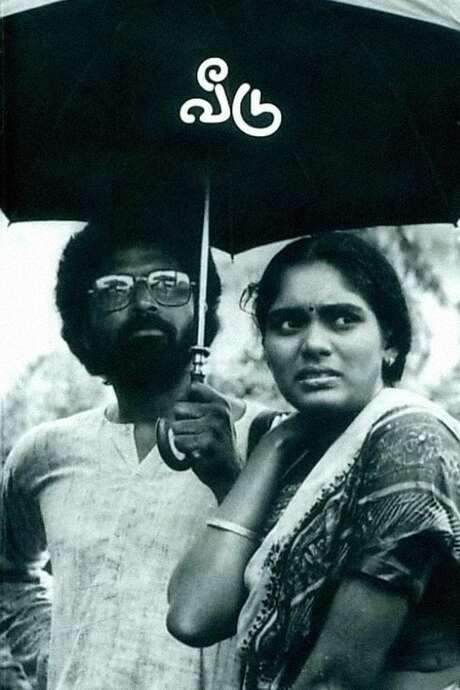
Veedu (1988) movie poster

Plot Summary

Veedu (1988) Plot Summary Explained

Release, runtime and language
1988 · 108 mins · Tamil
Loading streaming availability…
Directed by
Balu Mahendra
Starring
Bala, Bhanuchander, Archana, Pasi Sathya, Veera Raghavan, Senthamarai

After being forced out of the house she rents, Sudha resolves to construct a new home for herself and her family. As she navigates the building process, she confronts extensive bureaucratic red tape and pervasive corruption, battling officials and endless paperwork while persisting against the odds.

On this page (6)
  1. 1 Where to watch
  2. 2 What happens: full plot
  3. 3 Plot questions answered
  4. 4 Movie threads
  5. 5 Movies like Veedu
  6. 6 Every angle
Loading streaming availability…

Full plot summary · contains spoilers

What Happens in Veedu: Full Plot Summary

The whole story of Veedu (1988) explained, from the opening scene to the final frame: every key event, every twist and what it all adds up to. Read it as a quick recap before the sequel, to check a scene you missed, or to finally understand what really happened.

In the busy heart of Madras, a young woman named Sudha navigates a precarious life that hinges on stability, family, and the promise of a future she is determined to secure. At 22, she remains unmarried and shares a small apartment with her younger sister Indhu and their elderly grandfather, Murugesan. Sudha is engaged to her colleague, Gopi, and the couple dreams of a peaceful, secure home, but fate has other plans. The owner of the tenement where they live announces an eviction, intending to clear the space to erect a new building, and suddenly the family’s housing insecurity becomes the central obstacle to their happiness.

Facing the threat of displacement, Sudha must hustle to find a new place to live. The family simply cannot afford the rents demanded by other options, and the search quickly becomes a test of resilience rather than a simple relocation. In this moment of strain, a colleague named Iyengar suggests a bold option: build a house of their own. Despite initial hesitation, Sudha’s resolve grows as she weighs the possibility of independence against the looming threat of homelessness. The plan is ambitious: use one of her grandfather’s two construction sites on the city’s outskirts to erect a new home for the family, and sell the other to raise the capital needed to cover costs.

To turn this plan into reality, Sudha contemplates securing a housing loan and even pledges her jewels for additional funding. A building contractor enters the picture, sketching a plan for the new house. Yet the process immediately reveals a harsh reality: in order to get the plan approved, someone must be bribed. The landscape of risk widens when unexpected rains push up costs, threatening to derail the project just as momentum begins to build. When Gopi steps forward to offer financial support, Sudha chooses not to accept, worried that the extra money could affect his sister’s forthcoming marriage and complicate their lives.

Amid the mounting pressures, a compassionate construction worker named Mangamma becomes a stabilizing force. Mangamma notices anomalies at the site—materials being stolen by the contractor—and she alerts Sudha, prompting decisive action that drives the contractor to quit. With Mangamma, her supervisor, and Iyengar rallying around the project, construction resumes. The delays and bureaucratic snags stretch into the loan sanctioning process, and Sudha reaches out to her superior for help, only to discover that this figure is a womanizer, adding another layer of personal and financial strain to her already fragile situation.

Despite the setbacks, Sudha’s courage keeps the project moving forward. Gopi reemerges as a potential lifeline, offering support once again as progress resumes, underscoring the couple’s ongoing bond and shared hope. The stress and uncertainty take a toll on Sudha, and tragedy strikes in a painful moment when her grandfather, Murugesan, visits the site and dies on his way home. His death compounds Sudha’s heartbreak, but it also reinforces her determination to see the project through and protect her family’s future.

As the house nears completion, a new obstacle arrives in the form of an official from the Metropolitan Water Authority who questions how a structure could be built on land that the authority has already acquired. This confrontation casts doubt on the entire venture and raises broader questions about legality, ownership, and the right to shelter. The film closes with Sudha seated in a panchayat office, carrying the weight of the unresolved dispute and the broader fight for justice. A voiceover punctuates the final frame, stating that she is pursuing justice in the court, signaling that the fight is far from over and that the quest for a secure home is inseparable from the pursuit of dignity and fairness.

Throughout, the narrative moves with a steady, unflinching realism, presenting Sudha’s world with empathy and a clear-eyed look at the social and economic pressures that shape her choices. It is a story about resourcefulness under pressure, the generosity of friends like Mangamma, and the heavy costs of pursuing a dream in a system where opportunity can feel out of reach. The characters’ relationships—between Sudha and Gopi, Sudha and Mangamma, and the silent endurance of Murugesan—form a tapestry that grounds the film in human stakes even as it grapples with broader questions about housing, authority, and justice. The ending leaves viewers with a sense of unfinished business, inviting reflection on how communities negotiate hardship and what a fair path to a home should look like.

Last updated: October 09, 2025 at 14:33

Was this helpful?

Plot questions answered

Veedu Plot Explained: Your Questions Answered

The questions people ask most about Veedu (1988): what happens in the confusing scenes, why the characters do what they do, the twists, hidden details and what the ending means. Each answer contains spoilers.

Q1

Why does Sudha refuse Gopi's money when he offers to help with construction?

Sudha refuses Gopi's financial help because she worries it would affect his sister's upcoming marriage. She knows that if Gopi spends his savings on her construction project, he won't have enough resources for his sister's wedding expenses. This decision shows her selflessness and reluctance to burden her fiancé, even at the cost of her own project's stability.

Foreshadowing: Earlier, the couple's dream of a peaceful home was established, making her refusal a continuation of prioritizing others over herself.

  • sudha
  • gopi
  • financial help
  • marriage
  • sister
  • wedding
Q2

What did Mangamma discover at the construction site?

Mangamma discovered that the contractor was stealing construction materials from the site. She noticed anomalies in the material inventory and alerted Sudha, which led to Sudha confronting the contractor. The contractor then quit, forcing the project to find new workers. This discovery was crucial because it prevented further losses and allowed the project to continue under more honest supervision.

Foreshadowing: The contractor was introduced early as someone who could expedite the building process, making his betrayal more impactful.

  • mangamma
  • contractor
  • stealing materials
  • theft
  • construction site
Q3

Why does the Metropolitan Water Authority question the building on the land?

The Metropolitan Water Authority official questions Sudha's construction because the authority had already acquired that land for their own purposes. This means there is a legal dispute over ownership, the land technically belongs to the Water Authority, not Sudha's grandfather. This threatens the entire project and explains why the film ends with Sudha seeking justice in court rather than celebrating a completed home.

Foreshadowing: The timeline shows this challenge occurs only as the house nears completion, turning an apparent success into a legal crisis.

  • metropolitan water authority
  • land ownership
  • official
  • legal dispute
  • court
Q4

How did Murugesan die in the film?

Murugesan dies after visiting the construction site on a Sunday. He visits with a sense of pride, seeing the house his granddaughter is building for the family, but dies while returning home. His death adds significant emotional weight to the story and strengthens Sudha's determination to complete the project, she now wants to honor his memory by securing the family's future.

Foreshadowing: The film establishes Murugesan as the elderly patriarch sharing the small apartment with Sudha and Indhu, making his death a profound loss.

  • murugesan
  • death
  • grandfather
  • construction site
  • sunday
Q5

Why was a bribe necessary to get the house plan approved?

A bribe was necessary because the government official responsible for approving the building plan demanded one. The summary explicitly states that to get the plan approved, someone must be bribed, this reflects the pervasive corruption in the bureaucratic system that Sudha must navigate. This moment establishes one of the film's central themes: the systemic obstacles facing ordinary people trying to achieve their goals.

Foreshadowing: The film's description mentions pervasive corruption as a key challenge Sudha must battle.

  • bribe
  • corruption
  • government official
  • building plan
  • approval
Q6

How did the unexpected rains affect the construction project?

The unexpected rains halted construction work and inflated the costs significantly. This created a budget crisis because the project had already been planned with certain expenses, and the weather-related delays required additional funds. This setback is what prompted Gopi to offer financial help, help Sudha initially refused.

Foreshadowing: The financial strain was established early when the family couldn't afford higher rents, making rain-related costs even more burdensome.

  • rains
  • construction
  • cost
  • budget
  • delay
  • weather
Q7

Why did the contractor leave the project?

The contractor left after Sudha discovered he was stealing materials from the construction site. When Mangamma informed Sudha of the theft, Sudha confronted the contractor, which led to him quitting. This forced the team, Mangamma, her supervisor, and colleague Iyengar, to rally together to find new workers and continue construction themselves.

Foreshadowing: The contractor was brought in to draft the house plan, but his dishonest character was revealed through Mangamma's vigilance.

  • contractor
  • quit
  • stealing
  • mangamma
  • construction workers
Q8

Why does Sudha face so many delays in getting the housing loan sanctioned?

Sudha faces delays in the loan sanctioning process due to bureaucratic red tape, which is part of the film's critique of the system. The timeline mentions that delays stretch into the loan process, adding pressure to finish on time. Additionally, when she seeks help from her superior at work, she discovers he is a womanizer, complicating her situation further and making her reluctant to ask for favors.

Foreshadowing: The film establishes early that Sudha must battle endless paperwork and officials, making the loan delays consistent with this systemic obstacle.

  • housing loan
  • delay
  • bureaucracy
  • bank
  • paperwork
  • official
Q9

Does Sudha win her fight for the house in the end?

The ending leaves the outcome uncertain. The house is built, but the legal challenge from the Metropolitan Water Authority remains unresolved. The film closes with Sudha in a panchayat office, determined to pursue justice in court. A voiceover confirms she will fight the legal battle, but the outcome is not decided, leaving the story with an ambiguous conclusion about whether she will ultimately keep her home.

Foreshadowing: The Water Authority official arrives only after the house is nearly complete, making this a last-minute crisis that defines the ending.

  • house
  • justice
  • court
  • legal battle
  • panchayat
  • outcome
Q10

Why does learning her supervisor is a womanizer affect Sudha?

When Sudha learns her supervisor at work is a womanizer, it complicates her situation because she had hoped to seek his help to expedite the loan process. This revelation makes her feel vulnerable and unable to trust him with her financial matters. It adds another layer of personal and financial strain, as she cannot rely on workplace connections to overcome the bureaucratic obstacles she faces.

Foreshadowing: Earlier, Sudha reaches out to her superior for help, establishing this relationship before the troubling discovery.

  • supervisor
  • womanizer
  • workplace
  • trust
  • financial help
Q11

How do Mangamma and Iyengar help save the construction project?

Mangamma and Iyengar become crucial allies when the project faces crisis. Mangamma discovers the contractor's theft and alerts Sudha, while Iyengar had originally suggested building the house as a solution to their housing problem. After the contractor quits, Mangamma, her supervisor, and Iyengar rally together to coordinate labor, deter further malpractices, and keep the project moving forward. Their collective effort represents the community support that helps Sudha persist against systemic obstacles.

Foreshadowing: Iyengar first appears early, suggesting the ambitious option of building a house, while Mangamma enters as the story progresses.

  • mangamma
  • iyengar
  • support
  • construction
  • community help

Movie threads

More Movies Like Veedu, by Mood & Story

Curated lists built around what makes Veedu tick: the same mood, the same kind of story or the same emotional payoff. Each list explains why these movies belong together.

Movies about fighting bureaucracy like Veedu

Stories of ordinary people taking on immense, faceless systems. If you liked Veedu's depiction of one woman's fight against systemic obstacles, you'll appreciate these movies. This list features similar dramas where characters confront bureaucratic corruption, endless paperwork, and social injustice in their quest for a basic right or justice.

  • frustrating
  • persevering
  • realistic
  • gritty
  • anxious
  • hopeful
  • Tone: tense, realistic, frustrating
  • Pacing: steady, procedural
Why these movies?

The story pattern: The narrative typically follows a determined protagonist facing a series of escalating administrative hurdles. The conflict is less about a single villain and more about the grinding, impersonal nature of a broken system, testing the character's resolve and perseverance over a linear, obstacle-driven plot.

Why they belong together: They are grouped by their shared focus on systemic conflict, a tense and realistic tone, and the emotional weight of watching someone fight for something fundamental against seemingly impossible odds. The pacing is often steady, mirroring the methodical nature of the struggle.

Movies about quiet resilience like Veedu

Character-driven stories of everyday perseverance through grim circumstances. Find movies similar to Veedu that capture the spirit of quiet perseverance. These character-driven dramas feature protagonists who demonstrate profound resilience while navigating economic struggle, personal loss, or social injustice, often with a steady, realistic pace and heavy emotional core.

  • persevering
  • somber
  • hopeful
  • realistic
  • gritty
  • anxious
  • Tone: somber, hopeful, realistic
  • Pacing: steady, character-driven
Why these movies?

The story pattern: The narrative arc is an internal one, following a character's emotional fortitude as they confront a series of life's challenges. The plot is often straightforward, prioritizing the protagonist's psychological journey and their relentless, often lonely, pursuit of a stable or dignified life.

Why they belong together: They share a heavy emotional weight, a somber but persevering mood, and a focus on the theme of resilience. The tone balances realism with a glimmer of hope, and the pacing is steady, allowing the viewer to fully absorb the character's struggle and quiet strength.

If you liked this

Movies Like Veedu

Similar movies to Veedu: the same genre, themes or kind of story. Each one comes with its own plot summary, timeline and ending explained.

Browse all movie summaries

Every angle

Veedu (1988) Explained: Plot, Timeline & Characters

Everything about Veedu in one place: what happens in the plot summary, the timeline in chronological order, the characters and meaning and a spoiler-free summary. What's After the Movie adds the cast, box office and post-credit scenes.

Coming soon on iOS and Android

The Plot Explained Movie Summary App

Plot summaries, endings explained and timelines on your phone. Catch up on any movie in minutes, save your favorites and never miss a twist again.

Be the first to know when we launch. Your email stays private, always.

Learn more about the app