Plot Explained Spoilers guaranteed!
Plot Explained

Browse by genre

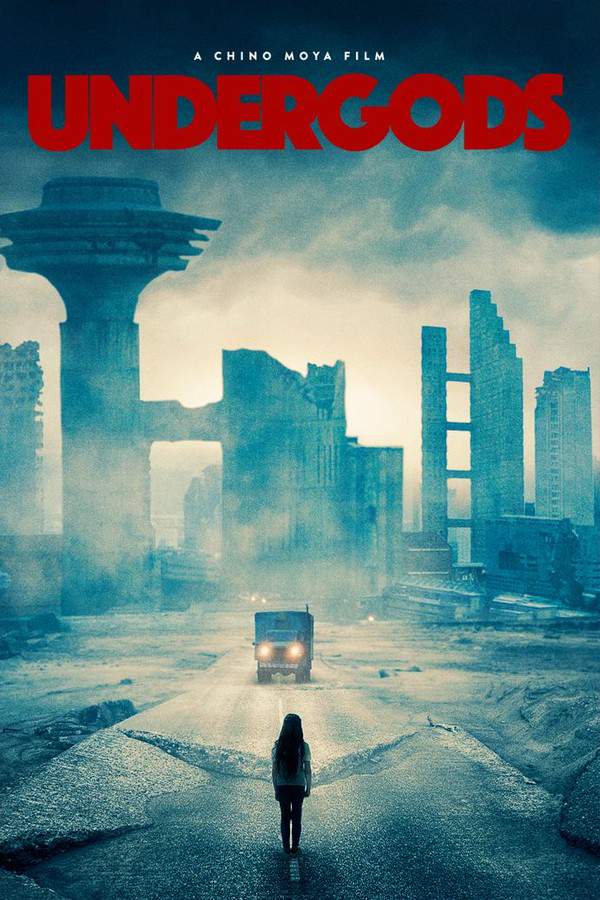
Undergods (2021) movie poster

Plot Summary

Undergods (2021) Plot Summary Explained

Release, runtime and language
2021 · 92 min · English
Echo score 61
Loading streaming availability…
Directed by
Chino Moya
Starring
Géza Röhrig, Jan Bijvoet, Eric Godon, Hayley Carmichael, Johann Myers, Khalid Abdalla

In a decaying Europe, the unexpected arrival of strangers throws the lives of several men into disarray, leading to chaotic consequences. The film presents a darkly humorous journey through different time periods, blending fantastical elements with unsettlingly familiar modern settings, like the sterile environment of IKEA. An original synth score, reminiscent of 1980s electronica, underscores the unfolding drama as failed societies and contemporary anxieties collide.

On this page (6)
  1. 1 Where to watch
  2. 2 What happens: full plot
  3. 3 Plot questions answered
  4. 4 Movie threads
  5. 5 Movies like Undergods
  6. 6 Every angle
Loading streaming availability…

Full plot summary · contains spoilers

What Happens in Undergods: Full Plot Summary

The whole story of Undergods (2021) explained, from the opening scene to the final frame: every key event, every twist and what it all adds up to. Read it as a quick recap before the sequel, to check a scene you missed, or to finally understand what really happened.

The film opens with two homeless individuals, Z and K, foraging for corpses in a desolate, post-apocalyptic suburb. As they drive their van, they initiate a conversation about their unsettling dreams. Z shares a recurring nightmare he has involving "a room with a ghost inside." This leads into the first of several intertwined narratives.

In this narrative, we meet a middle-aged couple, Ron (the "ghost") and Ruth, who are the only inhabitants of a newly constructed apartment building. One evening, they are joined by Harry, who claims to have locked himself out of his apartment. Ron, ever the gracious host, allows Harry inside, but soon finds himself haunted by dreams of Ruth’s infidelity and his fears of abandonment. The tension escalates when Ruth and Harry indeed engage in an affair after a heated confrontation with Ron. Driven by jealousy and despair, Ron confronts Harry, brandishing a knife, and forces him to leave, but not before Harry hurls slanderous insults about Ruth. This confrontation intensifies when Ron follows him into the elevator, only to have the doors open, revealing his dead body to new tenants, Octavius and his young daughter, Horatia.

As the story progresses, Octavius tells Horatia a bedtime tale about Hans, a divorced merchant who crosses paths with an eccentric stranger, the "Foreigner" [Jan Bijvoet]. Hans, tempted by greed, plots to swindle the Foreigner out of an invention. That night, Hans's estranged daughter Maria arrives with her new partner, Johann, who quickly alienates everyone with his self-importance. The situation worsens when the Foreigner discovers Hans's treachery and kidnaps Maria, leaving behind a copy of E. T. A. Hoffmann's "The Sandman" as a taunt. This brings us back to Octavius and Horatia, who has fallen asleep, marking the end of that narrative.

Hans decides to enlist Johann's help in an effort to rescue Maria, leading them to the Foreigner's lair. Their plans quickly disintegrate as they find themselves in the same desolate setting from the opening of the film. There, Z and K encounter Hans and ultimately kill him to sell his body "for meat," while Johann is chained and sold to an unknown factory that holds many others in terrible conditions. Johann performs arduous labor for an indefinite period, ultimately succumbing to the filth of his surroundings. During this time, another imprisoned individual, designated #398, wins a lottery held by the guards and is granted release.

Transitioning back to the present, we meet senior engineer Dominic, who impresses his boss, Tim. Dominic and his wife Rachel receive an invitation to Tim's upcoming birthday party. That evening, they experience an unsettling surprise: a silent intruder, #398, has returned. This figure is revealed to be Sam, Rachel's former husband and Will’s father, who mysteriously vanished fifteen years ago. Rachel's determination to cure Sam, who now exists in a catatonic state, strains her relationship with Dominic. Tensions rise as Dominic attends the party alone, becoming inebriated and embarrassing himself before returning home to confront Rachel about his feelings of displacement.

This culminates in a fierce argument about their home life, and the scene intensifies when Sam finally stands and breaks his silence, admonishing them for "talking too much." In a sudden twist, Sam brutally murders Rachel, followed by Dominic. As the chaos unfolds, we find ourselves back with Z and K in their van, revealing that they were simply discussing their dreams all along. K then inquires about Sam's son, Will, and Z describes a scenario where Will returns, blissfully unaware of the horror, contentedly watching birds flock on television alongside his father Sam. K seems puzzled by this notion, prompting Z to offer a series of hypothetical reflections. They both conclude with a somber toast "to families," reflecting on the complexities of their narratives and the potential for different outcomes.
Last updated: September 18, 2026 at 08:59

Was this helpful?

Plot questions answered

Undergods Plot Explained: Your Questions Answered

The questions people ask most about Undergods (2021): what happens in the confusing scenes, why the characters do what they do, the twists, hidden details and what the ending means. Each answer contains spoilers.

Q1

Why does Ron end up dead in the elevator in Undergods?

Ron dies because his paranoia and jealousy push him into a fatal confrontation with Harry, whom he suspects of having an affair with his wife Ruth. After chasing Harry with a knife and forcing him out, Ron follows him into the elevator and is killed, likely by Harry or in the resulting struggle. His body is then discovered by new tenants Octavius and Horatia when the elevator doors open during a building tour, turning what began as a marital dispute into a shocking reveal for the new arrivals.

  • ron death
  • elevator
  • octavius
  • horatia
  • harry
  • ruth
  • knife
Q2

Why does the Foreigner kidnap Maria in Undergods?

The Foreigner kidnaps Maria as punishment and leverage after Hans tries to swindle him out of an invention. Discovering Hans's treachery, the Foreigner retaliates by abducting Maria and leaves behind a copy of E. T. A. Hoffmann's 'The Sandman' as a psychological weapon, taunting Hans with literary associations of lost eyes and stolen children. The kidnapping is not about ransom but about asserting dominance over Hans's greed.

  • foreigner
  • maria
  • hans
  • kidnapping
  • sandman
  • betrayal
Q3

Why do Z and K kill Hans and sell his body for meat?

Z and K kill Hans because, in their post-apocalyptic reality, human corpses have become a tradable commodity. When the failed rescue brings Hans and Johann into the desolate landscape the vagrants inhabit, Z and K see Hans purely as a resource and murder him to sell his body 'for meat.' The act demonstrates the moral collapse of the world framing the nested stories and shows that Hans's earlier greed has been answered with a far more literal form of exploitation.

  • z and k
  • hans
  • cannibalism
  • meat
  • vagrants
  • corpse scavenging
Q4

Why does Sam suddenly kill Rachel and Dominic after being silent for years?

Sam snaps after years of catatonic silence because Rachel and Dominic's argument exposes the unresolved pain of the family he left behind. When Rachel and Dominic finally confront each other about displacement, abandonment, and Will, the household tension becomes unbearable. Sam breaks his silence to admonish them for 'talking too much' and then lashes out violently, murdering both. It functions as the film's bleak culmination of accumulated grief and toxic domesticity.

Foreshadowing: Sam's silent intrusion and Rachel's compulsive attempts to 'cure' him hint that his presence is not restorative but volatile.

  • sam
  • rachel
  • dominic
  • murder
  • catatonic
  • silence
  • family
Q5

Are the other stories in Undergods actually Z and K's dreams?

The film uses Z and K's conversation about dreams as a framing device, but it deliberately blurs the line between dreams and reality rather than confirming the nested stories are literally dreamt. Z's recurring nightmare about 'a room with a ghost inside' introduces Ron and Ruth's apartment story, and the narratives flow in and out of one another, suggesting dreamlike logic. Ultimately, the film treats the stories as porous reflections of one another, collapsing the frame back into itself at the end.

  • dreams
  • z
  • k
  • frame narrative
  • ghost
  • nested stories
Q6

What actually happens to Johann after he is captured in Undergods?

Johann is chained and sold to an unnamed factory where he is forced to perform backbreaking labor alongside other captives. The conditions are so unsanitary and brutal that he eventually succumbs to the filth around him, dying in captivity. The factory scene underscores how the film's world reduces people to disposable units, and it is in this same prison that prisoner #398 wins a release lottery, setting up the modern-day story that follows.

  • johann
  • factory
  • slavery
  • prisoner
  • labor
  • death
Q7

What does the ending toast 'to families' mean in Undergods?

The closing toast 'to families' is the film's bleak summary of everything that has just unfolded. After multiple family units collapse through betrayal, murder, abandonment, and cannibalism, Z and K raise a drink to the very institution that failed every character. The line works as darkly cynical closure rather than sentiment, suggesting that in this decaying world, family is both the only thing left and the primary source of horror.

  • to families
  • ending
  • toast
  • z and k
  • family
  • meaning
Q8

Why was Sam missing for fifteen years before returning in Undergods?

The film never spells out where Sam was during the fifteen years he vanished, but the prison lottery reveal strongly implies he was the prisoner designated #398, captured after Johann's storyline and held in the unnamed factory. When his number wins the lottery he is released, but the trauma of captivity has reduced him to a silent, catatonic state. He reappears in Rachel and Dominic's home as a hollow version of the husband and father who once left.

Foreshadowing: The earlier lottery scene with prisoner #398 becomes a payoff only once Sam is identified as that prisoner in the present-day storyline.

  • sam missing
  • fifteen years
  • 398
  • lottery
  • prisoner
  • rachel
Q9

Why does Undergods use sterile, IKEA-like settings for its modern scenes?

The sterile, showroom-quality environments mirror the emotional emptiness of the modern relationships the film depicts. By placing domestic conflict inside spaces designed to feel aspirational and impersonal, Undergods makes familiar anxieties about contemporary life feel uncanny. The bland perfection of the apartments amplifies the dysfunction playing out inside them, turning mundane middle-class settings into something quietly menacing.

  • ikea
  • modern settings
  • sterile
  • apartment
  • uncanny
  • contemporary
Q10

What happened to Will, Sam and Rachel's son, in Undergods?

Will's fate is never shown directly in the film. He is only referenced when K asks about him and Z imagines a hypothetical scene in which Will returns home, oblivious to the murders, and sits peacefully watching birds on television with Sam. The imagined ending is offered as one possible outcome but is treated as wishful thinking, leaving Will's actual status deliberately unresolved and reinforcing the film's refusal to provide comforting closure.

  • will
  • sam
  • rachel
  • son
  • birds
  • hypothetical
Q11

Why does Octavius tell Horatia a bedtime story in Undergods?

Octavius tells Horatia the story of Hans and the Foreigner partly as a comforting bedtime tale, but the film also uses it as a narrative bridge into the next chapter of the film. The Hans story picks up directly from themes already established in Ron's storyline, such as greed, betrayal, and retribution, and it mirrors the larger decay Z and K inhabit. The bedtime-story framing lets the film shift between time periods and tones without a hard cut.

Foreshadowing: Horatia falling asleep at the end of the bedtime story marks the seamless transition back into the Hans narrative, foreshadowing the bleed between stories.

  • octavius
  • horatia
  • bedtime story
  • hans
  • foreigner
  • narrative bridge
Q12

Why does Ron confront Harry with a knife instead of just asking Ruth?

Ron confronts Harry at knifepoint because his nightmares have already convinced him that Ruth is unfaithful, so direct conversation feels pointless to him. By the time Ruth and Harry's affair becomes real, Ron's jealousy has hardened into a sense of humiliation that only confrontation, not discussion, can discharge. The knife reflects how far his paranoia has pushed him past reason and signals the unraveling that ends in his death.

Foreshadowing: Ron's earlier nightmares about Ruth's infidelity already establish the suspicion that erupts into violence once Harry appears.

  • ron
  • harry
  • knife
  • ruth
  • jealousy
  • paranoia
  • nightmares
Q13

How are the different stories in Undergods connected to each other?

The stories in Undergods are connected through recurring motifs of haunting, betrayal, greed, and family collapse rather than through a single shared plot. Ron's apartment bleeds into Octavius's bedtime story about Hans, which bleeds into Z and K's wasteland and eventually into the modern-day story of Sam, Rachel, and Dominic. The framing conversation between Z and K ties them together as fragments of the same broken world, with each tale echoing the others' betrayals and losses.

  • connected stories
  • motifs
  • themes
  • frame
  • z and k
  • structure
Q14

Why does the Foreigner leave a copy of 'The Sandman' behind in Undergods?

The Foreigner leaves E. T. A. Hoffmann's 'The Sandman' as a deliberate psychological taunt aimed at Hans. The tale's themes of stolen children, obsessive desire, and manufactured humanity mirror what the Foreigner has just done by taking Maria. By leaving the book, the Foreigner signals that the kidnapping is not merely a transaction but a curated lesson in horror, designed to unnerve Hans with the literary weight of his own act of betrayal.

  • foreigner
  • sandman
  • hoffmann
  • book
  • maria
  • psychological
  • taunt

Movie threads

More Movies Like Undergods, by Mood & Story

Curated lists built around what makes Undergods tick: the same mood, the same kind of story or the same emotional payoff. Each list explains why these movies belong together.

Nested dystopian nightmares and surreal frame stories like in Undergods

Stories where layered realities collapse into one another, leaving nothing but rubble. If you liked the layered, dreamlike storytelling in Undergods, explore other movies that use nested narratives and shifting realities to build unease. These surreal, philosophically heavy films blur timelines, collapse stories into each other, and reward viewers who enjoy piecing together fractured worlds of decay and dread.

  • surreal
  • dreamlike
  • nested
  • dystopian
  • philosophical
  • disorienting
  • Tone: bleak, surreal, dreamlike
  • Pacing: variable, hypnotic with sudden shocks
Why these movies?

The story pattern: These films typically begin with a seemingly ordinary framing device — two strangers trading stories, a diary entry, a recorded confession — that opens into a self-contained tale. That tale then contains another, and another, each one bleaker and more nightmarish than the last, until the boundaries between frame and inner story dissolve. Characters may literally wander between levels of reality, or the structure itself may be the only thing telling us we are inside a dream. The destination is rarely resolution; instead, the nested layers tighten around a single thematic core — isolation, failed civilization, moral rot — until the audience is left holding a hollow, recursive shape where a plot used to be.

Why they belong together: They share a commitment to structural complexity as an emotional weapon, using framing devices and dream logic to trap the viewer inside a deteriorating worldview. Tone is usually dark, pacing is variable (slow, hypnotic stretches punctuated by sudden shocks), and endings lean bleak or ambiguous. Surreal imagery, deadpan humor, and an unmistakable sense of decline — civic, familial, psychological — tie them together into one cohesive mood of recursive despair.

Bleak dystopian horror in sterile modern settings like in Undergods

Where clean surfaces hide collapsing societies and casual atrocity. Looking for more movies like Undergods that pair dark humor with graphic violence in cold, contemporary worlds? This thread gathers dystopian and psychological films set against sterile modernist backdrops, where failed societies, family collapse, and brutal acts unfold under harsh fluorescent calm and an unforgiving synth score.

  • dystopian
  • oppressive
  • darkly humorous
  • brutal
  • sterile
  • paranoid
  • Tone: dark, bleak, darkly humorous
  • Pacing: variable, slow vignettes with sudden violence
Why these movies?

The story pattern: Characters begin inside spaces that feel superficially orderly — a flawless apartment, a utopian suburb, a logistics hub, a showroom floor — and gradually realize the order is a lie. Small domestic frictions (infidelity, estrangement, debt) escalate into systemic horror (kidnapping, slavery, murder, cannibalism). Stories rarely offer escape; instead, they emphasize how complicit ordinary people become in the machinery around them. Pacing drifts between long, almost still life tableaux of domestic life and sudden eruptions of savagery, with a score that is often deliberately anachronistic — retro electronic, opera, found sound — to keep the viewer slightly off-balance.

Why they belong together: They are unified by tone and texture rather than plot: cold visual design, high graphic content delivered with deadpan restraint, dark humor used sparingly for maximum impact, and endings that refuse to comfort. The dread is constant rather than spike-driven, and the violence feels less like spectacle and more like a natural consequence of the worlds depicted. Viewers who can sit with that discomfort find these films deeply rewarding and fiercely memorable.

If you liked this

Movies Like Undergods

Similar movies to Undergods: the same genre, themes or kind of story. Each one comes with its own plot summary, timeline and ending explained.

Browse all movie summaries

Every angle

Undergods (2021) Explained: Plot, Timeline & Characters

Everything about Undergods in one place: what happens in the plot summary, the timeline in chronological order, the characters and meaning and a spoiler-free summary. What's After the Movie adds the cast, box office and post-credit scenes.

Coming soon on iOS and Android

The Plot Explained Movie Summary App

Plot summaries, endings explained and timelines on your phone. Catch up on any movie in minutes, save your favorites and never miss a twist again.

Be the first to know when we launch. Your email stays private, always.

Learn more about the app