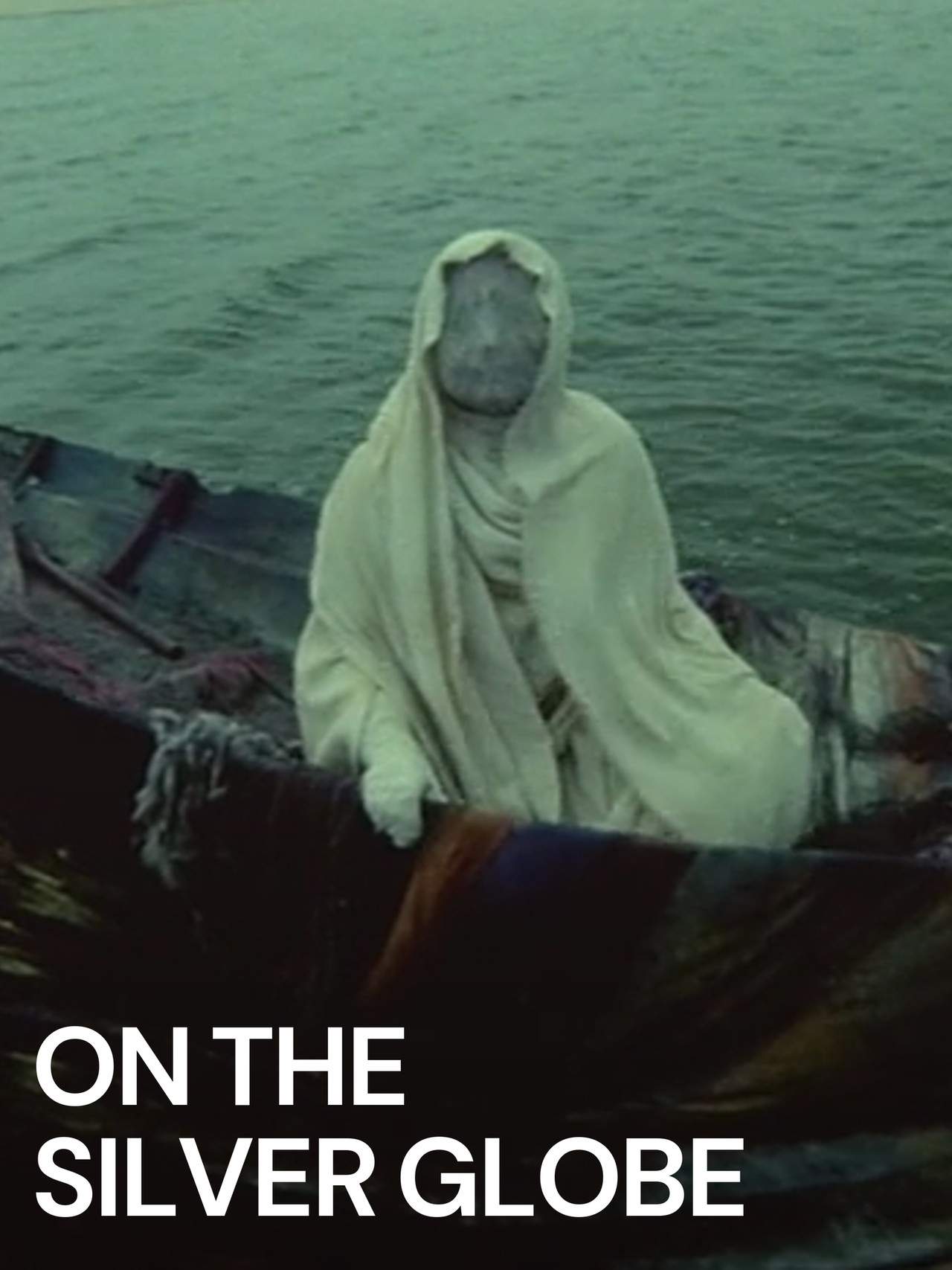
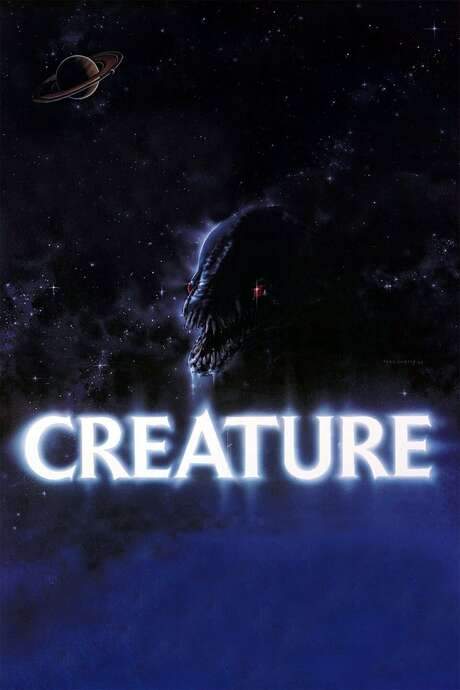
In a distant prologue set far in the future, two researchers rest inside a derelict palace that is also home to a tribe of Indigenous people. A horse rider arrives with a blazing object that supposedly fell from the sky. The researchers recognize it as an old, obsolete “Small Transmission Module.” Hidden away in an underground lab, they discover it contains a video diary—the record of an astronaut whose spacecraft crashed many decades earlier.
In a lengthy flashback, a group of dissident astronauts crash-land on an unnamed Earth-like world after fleeing a degraded, dystopian Earth. One of the travelers dies soon after the landing. The surviving crew consists of a woman, Marta, Iwona Bielska, and two men, Piotr, Jerzy Grałek and Jerzy, Jerzy Trela. Stranded and cut off from Earth, they decide to settle along a secluded seashore and begin to raise a new human community from the ground up. The trio builds a fragile existence among the planet’s unfamiliar rhythms, learning to harvest what the sea and land offer while building a sense of family under the constant pressure of isolation.
As time passes, Marta notices something extraordinary about their first child: the infant grows much faster than children on Earth. This rapid development tests the family and their fledgling society, and tragedy follows. Piotr dies from injuries sustained during the struggle to survive, and Marta dies in childbirth, leaving Jerzy and the growing clan to shoulder the responsibility of a lineage that feels almost stamped by fate. Decades creep by, and Jerzy ages at a far slower rate than the others who now populate the new community. The people come to view him as a demigod figure—an enduring link to the old world—while the younger generation speaks a language shaped by their rapid changes and the isolation from Earth. Before his final days, Jerzy records a video diary for Earth, hoping his memories and lessons will travel across the stars.
Many years later, Marek, a planetary scientist, travels to this world. Marek is introduced as a seeker who must navigate a culture guided by priests who interpret prophecies and enforce their own authority. The priests mistake Marek for the returning Old Man, a sign that the prophecy has come true, and they declare him the messiah destined to liberate the people from the telepathic, bird-like native beings known as the Sherns. Marek accepts this role and sets out on a campaign to confront the Sherns and their enigmatic power.
Back on Earth, the mystery of Marek’s mission deepens. It’s revealed that his assignment to the planet was connected to a personal conflict: his actress girlfriend was involved with a fellow officer, Jacek, and their colleagues arranged Marek’s removal to remove the obstacle to their relationship. This motive underscores the human frailties behind grand religious rhetoric and planetary-scale manipulation. In his initial campaign, Marek successfully captures the Shern leader Avius, signaling a potential turning point in the war between the settlers and the planet’s native species. Yet the subsequent assault on the Shern city fails, and the mission spirals into calamity.
As the conflict unfolds, the priests begin to reassess Marek’s identity, suspecting that he is not the prophesied Earth outsider but a figure who came from within the Earth’s own cast of characters. The central tension shifts from military conquest to questions of identity, faith, and legitimacy. The backlash culminates in Marek’s persecution: he is stoned and crucified, a stark punishment that reveals how quickly religious zeal can blur into coercive power, and how fragile fabricated legends can become when confronted with reality.
Throughout these entwined timelines—the long memory carried by the video diary and the unfolding saga on the alien world—the story delves into themes of legacy, faith, and the ways in which communities sculpt themselves under pressure. It examines how a small group can become a people with its own myths, laws, and leaders, and how outsiders—whether Earth-born scientists or interstellar pilgrims—are interpreted through the prisms of power, prophecy, and fear. The narrative purposefully juxtaposes the intimate costs of survival with the sweeping demands of belief, offering a meditation on what it means to be human when civilizations rise, fall, and redesign themselves across vast distances of time and space.