Plot Explained Spoilers guaranteed!
Plot Explained

Browse by genre

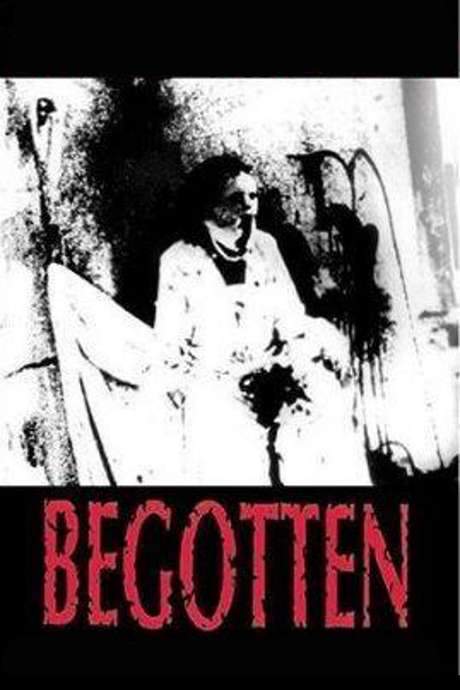
Begotten (1989) movie poster

Plot Summary

Begotten (1989) Plot Summary Explained

Release, runtime and language
1989 · 72 mins
Directed by
E. Elias Merhige
Starring
Stephen Charles Barry, Brian Salzberg, Donna Dempsey

An avant‑garde debut by the director of Shadow of the Vampire, the film presents a stark, visual creation myth. It dramatizes the brutal slaying of God and the ensuing (re)birth of nature on a desolate, barren world, using stark imagery and experimental narrative to explore cycles of death and renewal.

On this page (5)
  1. 1 What happens: full plot
  2. 2 Plot questions answered
  3. 3 Movie threads
  4. 4 Movies like Begotten
  5. 5 Every angle

Full plot summary · contains spoilers

What Happens in Begotten: Full Plot Summary

The whole story of Begotten (1989) explained, from the opening scene to the final frame: every key event, every twist and what it all adds up to. Read it as a quick recap before the sequel, to check a scene you missed, or to finally understand what really happened.

In a dilapidated shack, the robed and masked figure known as God Killing Himself ends his life in a brutal, self-inflicted act, disemboweling himself and leaving a stark, chilling image behind. From the remains, a woman in white emerges, stepping into the ritual aftermath with a calm intensity. She uses the dead man's semen to impregnate herself, and time passes until she stands beside a coffin, visibly pregnant. She gives birth to a fully matured yet malformed man, who is abandoned in the wilderness to fend for himself.

The newborn indelibly marks the landscape as he wanders across a barren world. He is soon seized by a desert tribe of nomads, who grab him by his umbilical cord and greet him with a startling reception: he vomits part of his organs, an act the nomads accept as gifts rather than grotesque tragedy. They lead him up a rocky hillside, subject him to torture, and finally throw him into a fire pit where he burns to death. Yet death is not the end once the mother steps in again; she Mother Earth resurrects him, offering quiet comfort as they continue their trek across the harsh wilderness.

Their fragile passage is interrupted when the nomads reappear, attacking him again while the mother lingers nearby in a trance-like state. The assault escalates as the nomads knock her to the ground and proceed to sexually assault and murder her as her son lies injured and powerless nearby. The scene shifts to a procession of robed figures arriving to carry away her mutilated remains. They travel to a gorge, where they harvest mounds of clay into small jars, a ritual that feels like a grim craftsmanship of memory and loss. The robed men then cut the mother’s body into pieces, crush her bones, and seal them into the jars. With this act complete, they abduct and murder her son as well, repeating the same ritual and burying the jars deep into the crust of the earth.

Over time, the buried jars become connected to a lush earth—flowers and crops sprout in a vivid montage that hints at a cyclical regeneration tied to the robed god. The film closes on a stark, haunting image: the mother and son wander once more through a forest as the cycle begins anew, leaving the viewer with a sense of an ancient, inexorable rhythm that binds birth, violence, and renewal.
Last updated: January 28, 2026 at 12:46

Was this helpful?

Plot questions answered

Begotten Plot Explained: Your Questions Answered

The questions people ask most about Begotten (1989): what happens in the confusing scenes, why the characters do what they do, the twists, hidden details and what the ending means. Each answer contains spoilers.

Q1

Why does the robed figure kill himself at the beginning of the film?

The robed figure, representing God, performs a self-sacrifice ritual by disemboweling himself. This act is meant to depict the death of divinity and the creation myth's starting point. By killing himself, God initiates the cycle of death and renewal that drives the entire narrative, allowing new life to emerge from his remains.

Foreshadowing: The opening act of divine self-sacrifice foreshadows the cyclical pattern of death and rebirth that repeats throughout the film.

  • god
  • self-sacrifice
  • ritual
  • creation myth
  • disembowelment
Q2

Why does the woman emerge from God's remains and impregnate herself?

After God kills himself, the woman in white emerges from his body and uses his semen to impregnate herself. This represents a primal, divine conception, nature's way of continuing the creative cycle through a literal interpretation of creation mythology. The act is both violating and fertile, establishing the film's themes of death giving birth to life.

Foreshadowing: This initial act of forced impregnation mirrors the later ritual of harvesting bodies into jars for agricultural renewal.

  • woman
  • impregnation
  • creation
  • god
  • reproduction
Q3

Why is the son born already mature and malformed?

The son is born fully developed yet physically deformed, which serves the film's mythic logic rather than biological realism. His malformation represents the imperfect, broken nature of creation born from violence and death. He emerges ready to face the world but is immediately abandoned, setting the tone for his brutal journey.

Foreshadowing: The son's immediate abandonment mirrors the mother's later passive stance during his second assault, both reflect a cruel detachment in the cycle.

  • son
  • birth
  • malformed
  • creation
  • abandonment
Q4

Why do the nomads treat the son's vomiting of organs as gifts?

When the nomads seize the wanderer, he vomits part of his internal organs, but instead of viewing this as a medical crisis, the tribe accepts it as sacred offerings. This reflects the nomads' brutal, ritualistic worldview, they see suffering and sacrifice as blessed transactions. Their acceptance underscores the film's theme that violence and gift-giving are intertwined in primal societies.

Foreshadowing: This acceptance of visceral offerings prefigures the robed figures' later ritual of harvesting bodies into jars for fertility.

  • nomads
  • organs
  • sacrifice
  • ritual
  • tribe
Q5

Why does the mother resurrect the son after he burns to death?

After the nomads torture and burn the son in the fire pit, the mother resurrects him, bringing him back to life. This represents nature's ability to renew itself despite destruction, the mother figure embodies Mother Earth, capable of restoring life even after violent death. Her resurrection of the son demonstrates the inexorable cycle of death and renewal that defines the film's mythic structure.

Foreshadowing: The mother's resurrection power connects directly to the final scene where the cycle begins anew after burial.

  • mother
  • resurrection
  • death
  • life
  • cycle
Q6

Why does the mother stay passive during the second nomad attack?

During the nomads' second assault, the mother stands in a trance-like state and does not intervene to protect herself or her son. This passivity suggests a submission to the cyclical violence, she understands that the cycle must continue regardless of individual suffering. Her inaction is not weakness but rather an acceptance of the mythic role she must play in the endless pattern of death and rebirth.

Foreshadowing: Her trance-like state foreshadows her ultimate fate: being cut apart and harvested like the earth itself.

  • mother
  • passivity
  • trance
  • attack
  • cycle
Q7

Why do the robed figures cut up the bodies and seal them in jars?

The robed figures dissect both the mother and son, crush their bones, and seal the remains into jars which they bury deep in the earth. This ritual represents the ancient practice of burial as fertilization, the bodies are decomposed into the ground to nourish the soil. The robed figures function as priests of a death-cult that views murder as a necessary agricultural act, transforming corpses into the fuel for new growth.

Foreshadowing: The montage showing flowers and crops growing from the burial site confirms this fertility ritual works as intended.

  • jars
  • bodies
  • burial
  • fertility
  • ritual
  • robed figures
Q8

Why does the burial site become lush with vegetation after the bodies are buried?

After the robed figures bury the jars containing the mother's and son's remains, the formerly barren landscape transforms into lush fields of flowers and crops. This visual payoff demonstrates that the ritualistic murder and burial functioned as a fertility cycle, the violence and death of the divine figures literally nourishes the earth back to life, completing the creation-destruction-renewal circuit.

  • burial
  • fertility
  • nature
  • growth
  • vegetation
  • cycle
Q9

What does the final scene imply about the cycle repeating?

The film ends with the mother and son wandering through a forest, suggesting the entire violent ritual has begun again. This cyclical ending implies there is no escape from the pattern of divine death, rebirth, sacrifice, and renewal, the myth will repeat endlessly. The ambiguous final image offers no hope of escape, only the continuation of the ancient, brutal rhythm that governs existence.

Foreshadowing: The ending directly mirrors the opening: a woman with a man-child in a harsh landscape, poised to begin the suffering anew.

  • ending
  • cycle
  • repetition
  • myth
  • forest
  • ambiguous
Q10

What is the significance of the robed figures and their connection to the cycle?

The robed figures serve as priests or manifestations of a death-god, orchestrating the ritualistic destruction and renewal. They appear at key moments: collecting the mother's body, performing the jar burial, and are shown in montages alongside fertile imagery. They represent the divine mechanism that enforces the cycle, they kill to create, destroying bodies so that life can emerge. Their presence throughout reinforces that the violence is not random but cosmically ordained.

Foreshadowing: The robed god imagery in the closing montage cements their role as the driving force behind the perpetual cycle.

  • robed figures
  • god
  • cycle
  • ritual
  • priests
  • death

Movie threads

More Movies Like Begotten, by Mood & Story

Curated lists built around what makes Begotten tick: the same mood, the same kind of story or the same emotional payoff. Each list explains why these movies belong together.

Mythic allegories of death and rebirth like Begotten

Mythical stories exploring brutal, necessary cycles of creation through destruction. For viewers who appreciated the stark symbolic narrative of Begotten, this section features other movies that explore similar primal themes of creation through destruction, divine sacrifice, and the brutal cycles of nature in mythic, often non-linear formats.

  • ritualistic
  • primal
  • transcendent
  • bleak
  • symbolic
  • brutal
  • Tone: dark, bleak, transcendent
  • Pacing: slow, deliberate, meditative
Why these movies?

The story pattern: Stories in this thread often eschew conventional plot for a series of powerful, symbolic tableaus. They follow a cyclical structure, beginning with a sacrifice or death that is necessary to spawn new life, leading to a period of desolation, and culminating in a painful, ambiguous rebirth.

Why they belong together: These films are grouped by their shared focus on archetypal themes, a non-narrative or mythic structure, a reliance on potent visual symbolism over dialogue, and an unflinching portrayal of primal, violent acts as fundamental to existence.

Challenging avant-garde films similar to Begotten

A challenging cinematic experience prioritizing oppressive, abstract imagery over conventional narrative. If the experimental, non-narrative, and intensely visual style of Begotten captivated you, explore these other movies that prioritize stark imagery, sensory overload, and oppressive atmosphere over traditional storytelling and character arcs.

  • oppressive
  • dreamlike
  • disturbing
  • abstract
  • bleak
  • experimental
  • Tone: dark, oppressive, disturbing
  • Pacing: slow, lingering
Why these movies?

The story pattern: These films often lack a clear protagonist or plot, instead unfolding as a sequence of powerful, dreamlike (or nightmarish) images. The journey is internal and interpretive, designed to provoke discomfort, awe, or profound unease rather than tell a linear story.

Why they belong together: These movies are grouped by their shared use of extreme, abstract visuals, a slow and deliberate pace that immerses the viewer in an atmosphere, a high degree of complexity requiring active interpretation, and a commitment to creating a deeply oppressive or transcendent sensory experience.

If you liked this

Movies Like Begotten

Similar movies to Begotten: the same genre, themes or kind of story. Each one comes with its own plot summary, timeline and ending explained.

Browse all movie summaries

Every angle

Begotten (1989) Explained: Plot, Timeline & Characters

Everything about Begotten in one place: what happens in the plot summary, the timeline in chronological order, the characters and meaning and a spoiler-free summary. What's After the Movie adds the cast, box office and post-credit scenes.

Coming soon on iOS and Android

The Plot Explained Movie Summary App

Plot summaries, endings explained and timelines on your phone. Catch up on any movie in minutes, save your favorites and never miss a twist again.

Be the first to know when we launch. Your email stays private, always.

Learn more about the app