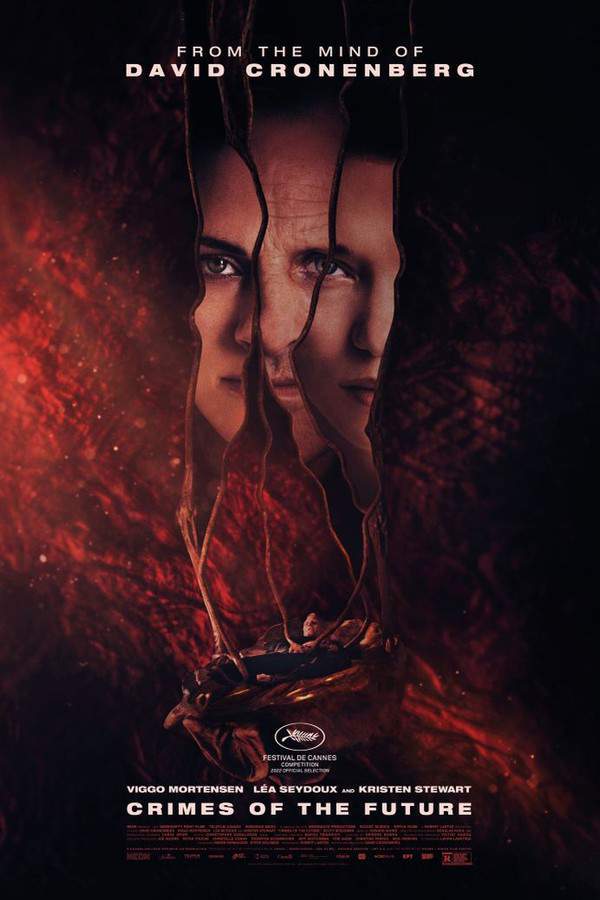
Set in a dystopian future where a cosmetic‑induced plague has seemingly eradicated all sexually mature women, the story follows Adrian Tripod, director of the dermatological clinic known as the House of Skin. As he grapples with the mysterious disappearance of his mentor Antoine Rouge, Tripod wanders through a world transformed by the epidemic, searching for answers.
Find where to stream, rent, or buy Crimes of the Future (1970) in the US with current JustWatch availability, up-to-date pricing, and platform listings for subscription, rental, and digital purchase options.
Warning: spoilers below!
Haven’t seen Crimes of the Future yet? This summary contains major spoilers. Bookmark the page, watch the movie, and come back for the full breakdown. If you're ready, scroll on and relive the story!
Read the complete plot breakdown of Crimes of the Future (1970), including all key story events, major twists, and the ending explained in detail. Discover what really happened, and what it all means.
Set in 1997, the film follows Adrian Tripod, an occasional director at the House of Skin, a dermatological clinic, as he sets out on a troubling quest to locate his mentor, the infamous dermatologist Antoine Rouge. Rouge has vanished in the wake of a devastating plague tied to cosmetic products, a catastrophe that has wiped out all sexually mature women. The story frames this crisis as a virus that scientists claim mutated, now threatening men as well and eventually taking Rouge’s life.
As Tripod pursues answers, he crosses paths with a mosaic of organizations, including Metaphysical Import-Export and the Oceanic Podiatry Group, and encounters a spectrum of men trying to navigate a world that has become defeminized. The journey is marked by encounters with communities, schemes, and subcultures that try to make sense of a radically altered social landscape, where gender roles and vulnerabilities are continually renegotiated.
The search takes a personal turn when a House of Skin patient, with whom Tripod had built a close connection, dies from the plague. Traumatized and perplexed, Tripod checks himself into a mental health clinic, where the narrative delves into unsettling compulsions and darker curiosities, including a focus on foot fetishism that underscores the film’s provocative exploration of desire and control.
In a disturbing turn, Tripod becomes entangled with a group of pedophiles who abduct a five-year-old girl exposed to chemicals intended to force puberty so she could be impregnated. The plan is halted when one member cannot bring himself to commit the act and leaves the girl untouched, a moment that casts a grim light on the moral boundaries the film interrogates. Tripod then enters the room where the child is kept and witnesses a disturbing sight: the girl emits a cream-like white foam from her mouth, a detail that jolts him into a brutal realization.
From there, the film threads together the implications of artificially accelerating puberty in a child and the far-reaching consequences it has on her wellbeing and on the broader plague that haunts this defeminized world. The revelation reframes Tripod’s quest, turning his search for a cure or cure-alls into a stark meditation on ethical limits, human vulnerability, and the costs of pursuing science and power in a society where gender and health are in upheaval. The narrative maintains a restrained, clinical tone while steadily spiraling toward a defining truth about mutation, contamination, and the perils of unchecked ambition.
Last updated: February 24, 2026 at 13:50
Explore frequently asked questions about Crimes of the Future (1970) with spoiler-rich answers covering the full plot summary, major story beats, character motivations, hidden details, and ending meaning. This movie summary FAQ helps explain confusing scenes, plot twists, and narrative decisions in clear, searchable detail.
Adrian Tripod searches for his mentor Antoine Rouge because Rouge was a controversial dermatologist who disappeared after the devastating plague began. As Rouge's student and occasional director at the House of Skin clinic, Tripod sees finding his mentor as both a personal mission and potentially the key to understanding the plague that has destroyed nearly all sexually mature women.
Early scenes establish Tripod's deep respect for Rouge and the clinic's connection to dermatological research, hinting at why finding him matters.
Scientists trace the plague to cosmetic products, specifically beauty items that contained a virus which mutated and spread beyond control. The virus initially targeted sexually mature women, wiping them out completely, before mutating further to threaten men as well.
The film establishes early on that the dermatological clinic exists because of skin-related research, connecting cosmetics to the outbreak.
The cream-like white foam emerging from the five-year-old girl's mouth is a sign that she has been infected with the same plague ravaging the world. The chemicals used to artificially force her puberty have triggered the same deadly progression seen in adult women, confirming the plague's connection to accelerated development and showing how the outbreak continues to spread.
Scientists warned earlier that the virus had mutated and now threatened men, but the girl's condition suggests even children are not safe.
After his patient dies from the plague and he checks himself into a mental health clinic, Tripod becomes increasingly destabilized. His psychological state deteriorates as he grapples with grief, trauma, and dark curiosities. This vulnerability leads him into dangerous company, eventually aligning with a group of criminals involved in the plot to abduct and impregnate the child.
The mental health clinic sequence introduces Tripod's disturbing compulsions and willingness to cross moral boundaries.
One member of the criminal group cannot bring himself to go through with the assault of the five-year-old girl and leaves her untouched. This moment reveals a moral boundary even within a group of depraved individuals, forcing Tripod to witness both the depths of human corruption and the existence of a line some cannot cross.
The group's plan is presented as a desperate attempt to propagate humanity in a world without women, making the refusal even more significant.
During his time in the mental health clinic, Tripod becomes involved in foot fetishism, which underscores the film's exploration of desire and control in a defeminized world. With women virtually extinct, sexuality has become distorted, and bodies have become objects of strange fixation. This element reflects the film's broader examination of how societal collapse warps human intimacy and desire.
The foot fetishism emerges after Tripod's psychological breakdown, showing how trauma manifests in his relationships.
The group abducts a five-year-old girl and uses chemicals to force her into puberty so she could be impregnated. However, this artificial acceleration triggers the plague's symptoms in her, demonstrating that the same force driving the epidemic is linked to premature sexual maturation. The chemicals essentially accelerate the same fatal process that the plague causes naturally.
Scientists warned the virus had mutated, and the girl's condition suggests the plague responds to hormonal development.
Scientists in the film explain that the virus originally targeting sexually mature women has mutated. This mutation means the plague no longer discriminates by gender, and men are now also vulnerable. This escalation drives the desperation in the world, as the last remaining humans face total extinction.
The early warning about mutation sets up the ultimate hopelessness of the film's world.
Tripod checks into a mental health clinic after a patient at the House of Skin, someone he had grown close to, dies from the plague. The combination of grief, survivor's guilt, and the overwhelming trauma of living in a collapsed world causes him to seek professional help, though the clinic ultimately exposes his darkest curiosities rather than curing him.
The patient's death is the first major emotional blow Tripod experiences, destabilizing his entire psychological foundation.
These are specialized organizations Tripod aligns with during his search. They represent the new social structures that have emerged in the defeminized world, with different groups carving out niches in the post-plague society. Tripod uses these affiliations to gather information and resources as traditional institutions have collapsed.
The existence of these obscure organizations shows how society has fragmented into strange new factions.
The House of Skin is a dermatological clinic where Adrian Tripod works as occasional director. It represents the medical and scientific response to the plague crisis, focusing on skin-related research. The clinic is connected to Tripod's mentor Antoine Rouge and serves as the starting point for Tripod's quest to find answers about the epidemic.
The clinic's dermatological focus foreshadows the link between cosmetics, skin, and the plague's origin.
The film ends bleakly because Tripod witnesses the five-year-old girl displaying plague symptoms, confirming that even children are not safe from the infection. The artificial attempt to create new life has failed, and the plague continues to spread. This realization reinforces the film's dark meditation on unchecked scientific ambition and the impossibility of escaping the consequences of the defeminized world's collapse.
Throughout the film, warnings about the virus mutating and threatening everyone build toward this final, devastating confirmation.
Discover curated groups of movies connected by mood, themes, and story style. Browse collections built around emotion, atmosphere, and narrative focus to easily find films that match what you feel like watching right now.
Unsettling journeys through psychologically decaying futures.Explore films with a similar bleak and surreal vision of the future. If you enjoyed the oppressive atmosphere and psychological unraveling of Crimes of the Future, you'll find more unsettling dystopian journeys here.
Stories in this thread typically follow characters navigating worlds where reality is fragmented, often due to plague, societal breakdown, or environmental catastrophe. The narrative frequently involves a search for meaning or truth in a universe that is actively hostile or indifferent.
Movies are grouped together based on their shared use of surrealism to explore dark, dystopian themes, a heavy and melancholic atmosphere, and a focus on the psychological impact of societal collapse on the individual.
Where external decay mirrors a character's internal fragmentation.Discover films where characters face psychological collapse amidst turmoil. If you were captivated by the heavy emotional weight and identity crisis in Crimes of the Future, these movies offer similarly intense character studies.
The narrative pattern involves a protagonist grappling with a profound external threat—be it a plague, loss, or a broken world—which acts as a catalyst for their own psychological breakdown. The journey is inward, focusing on identity, trauma, and the blurring lines between reality and perception.
These films are connected by a core focus on a character's psychological deterioration, often mirrored by a dystopian or decaying setting. They share a heavy emotional weight, complex themes, and a bleak, contemplative tone.
Don't stop at just watching - explore Crimes of the Future in full detail. From the complete plot summary and scene-by-scene timeline to character breakdowns, thematic analysis, and a deep dive into the ending - every page helps you truly understand what Crimes of the Future is all about. Plus, discover what's next after the movie.
Track the full timeline of Crimes of the Future with every major event arranged chronologically. Perfect for decoding non-linear storytelling, flashbacks, or parallel narratives with a clear scene-by-scene breakdown.
Discover the characters, locations, and core themes that shape Crimes of the Future. Get insights into symbolic elements, setting significance, and deeper narrative meaning - ideal for thematic analysis and movie breakdowns.
Discover movies like Crimes of the Future that share similar genres, themes, and storytelling elements. Whether you’re drawn to the atmosphere, character arcs, or plot structure, these curated recommendations will help you explore more films you’ll love.
Crimes of the Future (1970) Scene-by-Scene Movie Timeline
Crimes of the Future (1970) Movie Characters, Themes & Settings
Crimes of the Future (1970) Spoiler-Free Summary & Key Flow
Movies Like Crimes of the Future – Similar Titles You’ll Enjoy
Crimes of the Future (2022) Full Movie Breakdown
Future World (2018) Full Movie Breakdown
Futureworld (1976) Movie Recap & Themes
Future Century Amazons (2017) Movie Recap & Themes
Crime Scenes (2000) Ending Explained & Film Insights
Future Schlock (1984) Plot Summary & Ending Explained
Crime Zone (1988) Full Movie Breakdown
Dr. M (1990) Spoiler-Packed Plot Recap
2019: After the Fall of New York (1983) Full Summary & Key Details
The Immortalizer (1989) Full Summary & Key Details
Lipton Cockton in the Shadows of Sodoma (1995) Ending Explained & Film Insights
Murder in a Blue World (1973) Spoiler-Packed Plot Recap
Future Shock (1994) Full Movie Breakdown
Cyberotica: Computer Escapes (1996) Full Summary & Key Details
Future Fear (1997) Ending Explained & Film Insights