





Plot Explained Spoilers guaranteed!
Plot Explained

Browse by genre

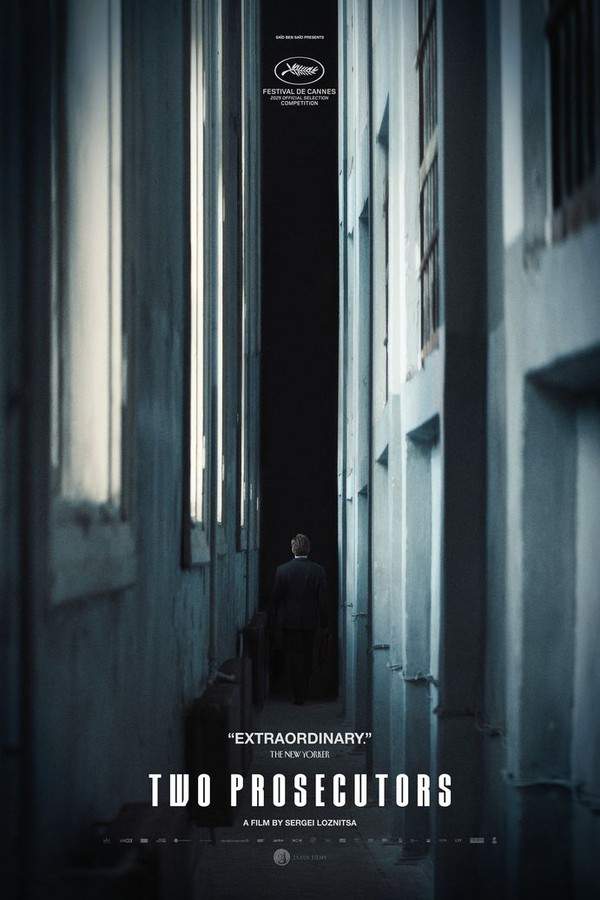
Two Prosecutors (2026) movie poster

Characters & Themes

Two Prosecutors (2026) Characters, Setting & Themes Explained

Release, runtime and language
2026 · 1 h 57 m · Russian
Echo score 80
Directed by
Sergey Loznitsa
Starring
Aleksandr Kuznetsov, Andris Keiss, Anatoliy Belyy, Valentin Novopolskij, Aleksandr Filippenko, Lukas Petrauskas

In 1937 Soviet Union, thousands of letters from detainees falsely accused by the regime are burned in a prison cell. Against all odds, one survives and is placed on the desk of newly appointed local prosecutor Alexander Kornev. Determined to uncover the truth, Kornev seeks the prisoner, a victim of the corrupt NKVD secret‑police agents amid terror.

On this page (7)
  1. 1 Where to watch
  2. 2 Characters explained (3)
  3. 3 Where & when it takes place
  4. 4 Themes & meaning (3)
  5. 5 Character & meaning questions
  6. 6 Movie threads
  7. 7 Every angle

Where to watch

Where to Watch Two Prosecutors (2026)

Where can you watch Two Prosecutors? Stream, rent or buy it in the US, including on Amazon Video, Apple TV Store and Fandango At Home: current JustWatch availability with up-to-date prices.

Streaming availability powered by JustWatch

3 main characters · contains spoilers

Two Prosecutors Characters Explained: Who Is Who

The main characters of Two Prosecutors (2026), heroes and villains: what drives them, how they change over the course of the story and what each of them reveals about the film's bigger ideas.

  • Kornev — Aleksandr Kuznetsov

    A young Soviet prosecutor who believes in the ideal of justice but discovers how the system weaponizes fear and expediency. He remains determined to push for truth, yet he quickly learns that central directives override local concerns. His initial optimism gives way to a harsher understanding of state power.

    • 🔎 Idealistic
    • 🧭 Persistent
    • 🧠 Analytical
  • Stepniak — Aleksandr Filippenko

    An imprisoned Old Bolshevik and loyal party member who has endured torture for refusing to confess a false crime. He embodies the moral plea for truth and integrity against a system bent on expediency. He urges the prosecutor to reveal wrongful convictions, even at great personal risk.

    • 🪖 Loyal
    • 🕯️ Suffering
    • 🗣️ Courageous
  • Andrey Vyshinsky — Anatoliy Belyy

    The Procurator General who embodies centralized authority and blunt practicality. He sets the limits of what investigations can occur without documentary evidence and emphasizes loyalty to the state over individual cases. He represents the state's willingness to suppress inconvenient truths for political reasons.

    • ⚖️ Authoritative
    • 🧭 Pragmatic
    • 🧱 Bureaucratic

Last updated: March 24, 2026 at 19:55

Was this helpful?

Setting

Where and When Does Two Prosecutors Take Place?

The setting of Two Prosecutors (2026): the year and time period, the places and locations, and how they shape the characters, the mood and the tension of the story.

Time period

1937

Set in 1937, during Stalin's Great Purge, the narrative unfolds in a climate of political terror and coercive justice. The state leverages the NKVD to enforce loyalty, while prosecutors operate under the suspicion of local complicity and fear. The period is defined by denunciations, show trials, and pressure to conform to an official narrative.

Location

Bryansk prison, Moscow

The story moves between Bryansk, where a provincial prison becomes the arena for suspected miscarriages of justice, and Moscow, the seat of the Procurator General's office where power is centralized. Bryansk's prison is depicted as a harsh environment where prisoners bear the scars of political repression, while Moscow's bureaucracy looms as a gatekeeper to potential investigations. The contrast highlights how local corruption collides with centralized authority during the Great Purge.

  • 🏛️ Soviet institutions
  • 🗺️ Cities
  • 🕰️ 1930s

Last updated: March 24, 2026 at 19:55

Was this helpful?

3 major themes

Two Prosecutors Meaning: Themes & Message Explained

What is Two Prosecutors (2026) really about? The emotional, social and philosophical themes the film keeps returning to, its symbolism and the message beneath the surface.

  • Power and Fear

    The film places a young prosecutor at the mercy of a system where power is exercised through surveillance and coercion. Fear shapes every interaction, coloring how truth is pursued and how loyalty to the state is demanded. The story shows how fear can erode moral judgment and distort the justice process.

  • Truth vs State

    Kornev's quest to uncover Stepniak's letter and expose corruption collides with the state's demand for a controlled narrative. Central authorities offer limited room for inquiry, underscoring how official truth is often crafted to protect those in power. The tension reveals the fragility of evidence under a regime that prizes allegiance over accuracy.

  • Bureaucracy and Suppression

    The bureaucracy acts as an opaque barrier to reform, where paperwork and position shield the guilty and hinder the innocent. Procedural hurdles and pressure from higher offices throttle genuine investigations. In this climate, even well-intentioned actors can become complicit in suppression.

Last updated: March 24, 2026 at 19:55

Was this helpful?

Character & theme questions

Two Prosecutors Characters & Meaning: Your Questions Answered

The questions people ask about Two Prosecutors (2026): who the characters really are, their relationships, what the symbols mean, where it takes place and what the movie is really about. Each answer contains spoilers.

Q1

Where is the story set?

The film takes place in two main locations: Bryansk, where a provincial prison serves as the arena for suspected miscarriages of justice, and Moscow, where the Procurator General's office represents centralized authority. The contrast between Bryansk's harsh prison environment and Moscow's bureaucratic power highlights how local corruption interacts with the Soviet state apparatus during the Great Purge.

  • bryansk prison
  • moscow
  • soviet union locations
  • great purge setting
Q2

When does the story take place?

The film is set in 1937 during Stalin's Great Purge, a period defined by political terror, coercive justice, and widespread denunciations. This era saw the NKVD enforcing loyalty through fear, while prosecutors operated under constant suspicion of complicity in local abuses. The climate of show trials and pressure to conform to an official narrative shapes every interaction in the story.

  • 1937
  • stalin era
  • great purge
  • soviet history
  • 1930s
Q3

What are the main themes explored?

The film explores three interconnected themes: Power and Fear, which shows how fear erodes moral judgment in the justice system; Truth vs State, highlighting the tension between seeking evidence and the state's demand for a controlled narrative; and Bureaucracy and Suppression, demonstrating how procedural hurdles and paperwork shield the guilty while hindering genuine investigations.

  • power
  • fear
  • truth
  • state
  • bureaucracy
  • corruption
  • justice system
Q4

Who is Alexander Kornev?

Alexander Kornev is a young Soviet prosecutor who believes in the ideal of justice but discovers how the system weaponizes fear and expediency. He remains determined to uncover the truth about wrongful convictions, yet quickly learns that central directives from Moscow override local concerns. His arc moves from initial optimism to a harsher understanding of state power.

  • alexander kornev
  • protagonist
  • prosecutor
  • young prosecutor
Q5

Who is Stepniak?

Stepniak is an imprisoned Old Bolshevik and loyal party member who has endured torture for refusing to confess to a false crime. He represents the moral plea for truth and integrity against a system bent on expediency. Through his surviving letter, he urges the prosecutor to expose wrongful convictions, even at great personal risk.

  • stepniak
  • old bolshevik
  • prisoner
  • torture victim
Q6

Who is Andrey Vyshinsky?

Andrey Vyshinsky is the Procurator General who embodies centralized Soviet authority and blunt practicality. He sets strict limits on what investigations can proceed without documentary evidence, emphasizing loyalty to the state over individual cases of injustice. He represents the state's willingness to suppress inconvenient truths for political reasons.

  • andrey vyshinsky
  • procurator general
  • soviet authority
  • central government
Q7

What does the Power and Fear theme represent?

The Power and Fear theme illustrates how fear shapes every interaction in the Soviet system during the Great Purge. The film shows how fear colors how truth is pursued and how loyalty to the state is demanded from officials. This pervasive atmosphere erodes moral judgment and distorts the justice process, as even well-intentioned prosecutors face unbearable pressure to conform.

  • power
  • fear
  • moral judgment
  • justice
  • loyalty
  • soviet terror
Q8

How does bureaucracy affect the pursuit of justice?

The bureaucracy acts as an opaque barrier to reform in the film. Paperwork and official positions shield the guilty while hindering the innocent. Procedural hurdles and pressure from higher offices in Moscow throttle genuine investigations. In this climate, even well-intentioned actors like Kornev can become complicit in suppression or face destruction for challenging the system.

  • bureaucracy
  • paperwork
  • procedural hurdles
  • investigation
  • corruption
  • moscow
Q9

What is the Truth vs State theme about?

The Truth vs State theme explores how Kornev's quest to uncover evidence of corruption collides with the state's demand for a controlled narrative. Central authorities offer limited room for inquiry, underscoring how official truth is often crafted to protect those in power. The tension reveals the fragility of evidence under a regime that prizes allegiance over accuracy.

  • truth
  • state
  • evidence
  • official narrative
  • allegiance
  • corruption
Q10

What kind of world does the movie depict?

The movie depicts a world where political terror defines daily life, the NKVD enforces loyalty through coercion, and prosecutors operate under constant suspicion of complicity. It shows a society where denunciations are common, show trials are routine, and the state demands conformity to an official narrative. The environment is one of claustrophobic paranoia where even seeking justice can be fatal.

  • soviet union
  • nkvd
  • political terror
  • show trials
  • denunciations
  • oppression

Movie threads

More Movies Like Two Prosecutors, by Mood & Story

Curated lists built around what makes Two Prosecutors tick: the same mood, the same kind of story or the same emotional payoff. Each list explains why these movies belong together.

Movies about doomed quests against the system like Two Prosecutors

Stories of individuals crushed by an all-powerful, corrupt state machine. If you were captivated by the futile fight for justice in Two Prosecutors, explore these films about individuals confronting corrupt and all-powerful systems. These movies share a bleak tone, heavy emotional weight, and a narrative of inevitable tragedy against overwhelming odds.

  • oppressive
  • grim
  • paranoid
  • desperate
  • somber
  • claustrophobic
  • Tone: bleak, oppressive, paranoid
  • Pacing: steady, methodical
Why these movies?

The story pattern: The narrative follows a clear, downward trajectory. An individual discovers a profound injustice within a powerful institution. Their investigation or rebellion is met with escalating resistance, revealing the system's absolute control. The story culminates not in triumph, but in the protagonist's defeat, arrest, or destruction, serving as a stark commentary on the futility of individual action against entrenched power.

Why they belong together: These films are grouped by their shared exploration of systemic corruption and the crushing of individual will. They create a cohesive experience through their bleak tone, steady pacing that builds dread, and heavy emotional focus on themes of betrayal, moral compromise, and the psychological toll of fighting a losing battle.

Slow-burn historical dread movies like Two Prosecutors

Methodical period pieces where tension and paranoia seep into every scene. Fans of the oppressive atmosphere and steady-building tension in Two Prosecutors will find similar vibes in these historical dramas. These films use a methodical pace to immerse you in a terrifying world, creating a powerful sense of dread and a bleak, emotionally heavy viewing experience.

  • somber
  • anxious
  • claustrophobic
  • melancholic
  • paranoid
  • grim
  • Tone: bleak, tense, somber
  • Pacing: slow burn, steady
Why these movies?

The story pattern: Narratives in this thread unfold with a deliberate, steady pace. They immerse the viewer in a meticulously recreated historical period defined by fear and control. The plot often centers on a character's gradual awakening to the horrors of their time, with tension arising from subtle threats, bureaucratic obstacles, and the constant fear of surveillance, leading to a tragic or bleak conclusion.

Why they belong together: These movies are united by their specific combination of historical setting, slow-burn pacing, and a consistently high-tension, bleak atmosphere. They offer a similar viewing experience focused on psychological unease, the weight of history, and a feeling of claustrophobia within a repressive society.

Every angle

Two Prosecutors (2026) Explained: Plot, Timeline & Characters

Everything about Two Prosecutors in one place: what happens in the plot summary, the timeline in chronological order, the characters and meaning and a spoiler-free summary. What's After the Movie adds the cast, box office and post-credit scenes.

Coming soon on iOS and Android

The Plot Explained Movie Summary App

Plot summaries, endings explained and timelines on your phone. Catch up on any movie in minutes, save your favorites and never miss a twist again.

Be the first to know when we launch. Your email stays private, always.

Learn more about the app