Plot Explained Spoilers guaranteed!
Plot Explained

Browse by genre

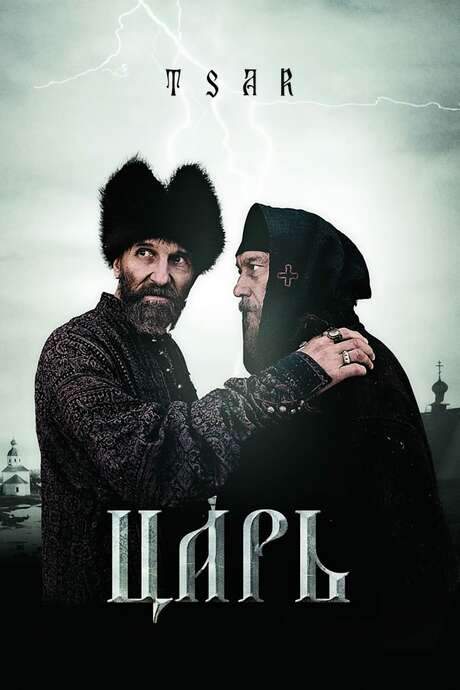
Tsar (2009) movie poster

Timeline

Tsar (2009) Timeline Explained – Every Event in Order

Release, runtime and language
2009 · 119 mins · Russian
Loading streaming availability…
Directed by
Pavel Lungin
Starring
Oleg Yankovskiy, Sergey Garmash, Ville Haapasalo, Ivan Okhlobystin, Дмитрий Сорокин, Alexandr Domogarov

Set in 16th‑century Russia, the film follows Ivan the Terrible, convinced of a divine mission and the imminent Last Judgment, as he seizes absolute power and ruthlessly eliminates opposition. His close friend, Philip, the abbot of the Solovetsky monastery, challenges Ivan’s mystical tyranny, sparking a clash of opposing worldviews that pits morality against autocracy. Mamonov and Yankovsky deliver strong performances in this grand‑scale allegory of Stalinist Russia.

On this page (6)
  1. 1 Where to watch
  2. 2 Events in order (15)
  3. 3 Timeline questions answered
  4. 4 Movie threads
  5. 5 Movies like Tsar
  6. 6 Every angle
Loading streaming availability…

15 events in order · contains spoilers

Tsar Timeline: Events in Chronological Order

Every key event of Tsar (2009) in order, scene by scene, with when and where it takes place. Use it to untangle flashbacks, time jumps and parallel storylines, to refresh your memory before the sequel or to find the exact scene you are thinking of.

  1. Death of Metropolitan Afanasii

    The film begins with the death of the Russian Orthodox Metropolitan Afanasii, marking a significant turning point in the religious and political landscape of Moscow. This event sets into motion the need for a new Metropolitan, which brings Tsar Ivan IV and Hegumen Philip Kolychev together.

    When
    1566
    Where
    Moscow
  2. Hegumen Philip Summoned

    In light of the Metropolitan's death, Tsar Ivan IV summons his childhood friend Hegumen Philip from Solovetsky Monastery. Philip is initially hesitant to accept any position of power within the Tsar's regime, foreshadowing the ethical dilemmas he will face.

    When
    1566
    Where
    Solovetsky Monastery
  3. Rescue of Masha

    On his journey to Moscow, Hegumen Philip encounters a young girl named Masha, who is fleeing from Tsar's guards. He intervenes to rescue her, highlighting his compassionate nature amid the chaos of the Oprichnina.

  4. Invitation to Become Metropolitan

    Upon his arrival in Moscow, Tsar Ivan IV invites Hegumen Philip to become the new Metropolitan of Moscow. After much contemplation and seeing the Tsar's suffering, Philip reluctantly agrees to take on the role, hoping to guide Ivan towards mercy.

    Where
    Moscow
  5. Nephew's Departure for War

    Philip meets his nephew, who is preparing to leave for a brutal war against the Poles and Lithuanians. The nephew warns Philip of the risks associated with the Tsar's court, urging him to escape, which foreshadows the impending tragedies.

  6. The Battle at Polotsk

    Philip's nephew participates in a fierce battle at Polotsk against the Lithuanian forces. Masha, carrying an icon, helps the Russian troops by causing a bridge to collapse under the enemy cavalry, showcasing the intertwining of faith with warfare.

    Where
    Polotsk
  7. Surrender of Polotsk's Governor

    The governor of Polotsk returns to Moscow, accompanied by bad news of the city’s surrender to the combined forces of Poland and Lithuania. This significant loss enrages Tsar Ivan, leading to an immediate and brutal response against the governor's men.

    Where
    Moscow
  8. Execution Orders Issued

    In a fit of rage, the Tsar orders the execution of the governor's men, leading Metropolitan Philip to defend them. This confrontation with the Tsar begins Philip's struggle against the violent actions of his childhood friend, setting a moral conflict in motion.

    Where
    Moscow
  9. Refusal to Sign Death Warrants

    As the court convicts the governor's men of treason under duress and torture, Metropolitan Philip refuses to sign their death warrants. His moral opposition to the Tsar's brutality leads to further tensions as the Tsar prepares horrific executions.

    Where
    Moscow
  10. Masha's Tragic Fate

    During the horrific execution where the convicts face a bear, Masha rushes into the arena with the icon, trying to halt the violence. Tragically, she is killed, deepening Philip's horror at the Tsar’s cruelty and marking a pivotal moment in his resistance.

    Where
    Moscow Arena
  11. Philip's Final Stand

    Realizing the futility of his pleas for mercy, Metropolitan Philip enters the arena, picking up the icon and lamenting the brutality around him. His resistance culminates as he publicly refuses to bless the Tsar, which directly leads to his punishment.

    Where
    Moscow Arena
  12. Exile to Monastery

    Following his defiance, Tsar Ivan decides to exile Philip to a monastery instead of executing him. Despite being stripped of his rank, the Tsar’s decision reveals his conflicted feelings towards his once-beloved friend.

    Where
    Monastery
  13. Philip's Conviction in Monastery

    In the monastery, Philip experiences a supernatural loosening of his chains, gaining gifts of healing and foresight. He attempts to warn Archbishop Pimen of impending danger, revealing his commitment to truth amidst oppressive circumstances.

    Where
    Monastery
  14. Execution of Philip

    Despite the Tsar's orders to safeguard Philip, he is ultimately strangled by Malyuta Skuratov, signifying the tragic end of his struggle against tyranny. This brutal act highlights the consequences of Philip’s opposition to the Tsar.

    Where
    Monastery
  15. Legacy of Philip

    In a defiant act, the monks bury Philip's body secretly, despite the Tsar's orders to display it. The film concludes with the Tsar's despair as he confronts his isolation and the absence of loyal subjects, questioning 'Where are my people?' which foreshadows his impending downfall.

    Where
    Wooden Church

Last updated: September 30, 2026 at 11:09

Was this helpful?

Timeline questions answered

Tsar Timeline Explained: Your Questions Answered

When does it happen, and why in that order? The questions people ask about the chronology of Tsar (2009): time jumps, flashbacks, cause and effect between scenes and the correct order of events, each answered with spoilers.

Q1

Why did Philip initially refuse to become Metropolitan of Moscow?

Hegumen Philip Kolychev hesitated because he understood the moral dangers of serving inside Ivan IV's increasingly tyrannical court. His nephew warned him that those close to the Tsar often met tragic ends, and Philip himself sensed that accepting the role meant potentially endorsing acts of cruelty. He only relented after the Tsar insisted that a trusted friend was needed to restrain him, hoping his spiritual influence could moderate the ruler's worst impulses.

Foreshadowing: His nephew's warning about the fate of those around the Tsar foreshadows the deaths of Masha and Philip's own nephew later in the film.

  • Philip
  • Metropolitan
  • Ivan
  • hesitation
  • Solovetsky
  • nephew warning
Q2

What role does the icon of the Mother of God play in the battle at Polotsk?

The icon, originally presented by the Tsar to Masha, becomes a symbol of divine intervention during the Russian army's fight against Polish and Lithuanian forces. When Masha brings it to the battlefield, its presence coincides with the collapse of a bridge beneath enemy cavalry, causing catastrophic losses for the opposing troops. This event intertwines religious faith with the brutality of warfare, suggesting that the sacred object channels divine protection for the Russian side.

  • icon
  • Mother of God
  • Masha
  • Polotsk
  • battle
  • bridge collapse
Q3

Why did the Tsar force condemned soldiers to fight a bear?

Ivan IV chose the bear fight as punishment because the governor of Polotsk had surrendered the city to Polish and Lithuanian forces, a humiliation the Tsar could not forgive. The execution was staged as a public spectacle of suffering, orchestrated by Heinrich von Staden, to demonstrate the consequences of military failure. For Ivan, this cruel entertainment was also a way to reassert absolute authority and pressure Philip into validating the proceedings as Metropolitan.

  • bear
  • execution
  • Polotsk surrender
  • Heinrich von Staden
  • spectacle
Q4

Why did Metropolitan Philip refuse to sign the death warrants?

Philip could not lend the spiritual authority of the Church to executions that had been secured through torture and forced confessions. By signing, he would have implicitly endorsed both the injustice of the trial and the brutality that followed. His refusal marked the beginning of his open resistance to the Tsar's regime and the start of his personal downfall.

  • Philip
  • death warrants
  • confession
  • torture
  • Metropolitan
  • conscience
Q5

How does Masha die in the execution arena?

Masha rushed into the execution grounds carrying the icon of the Mother of God, hoping to halt the violence and plead for the lives of the condemned men, including Philip's nephew. Her intervention could not stop the bear's attack, and she was killed in the chaos along with many of the prisoners. Her death serves as a turning point that deepens Philip's horror and resolves him to openly defy the Tsar.

Foreshadowing: The icon given to her by the Tsar is the same object she brings back into the arena, transforming a protective gift into a symbol of futile sacrifice.

  • Masha
  • arena
  • icon
  • bear
  • death
  • nephew
Q6

Why was the Tsar's jester Vassian burned at the stake?

Vassian was executed for daring to compare the Tsar's wife, Maria Temryukovna, to the Whore of Babylon from the Book of Revelation. Even as a jester whose role permitted provocative speech, this comparison crossed a line because it attacked the sanctity of the royal family through scripture. The burning served as a warning that no voice of dissent, however ritualized, would be tolerated under Ivan's regime.

  • Vassian
  • jester
  • Whore of Babylon
  • Maria Temryukovna
  • execution
Q7

What does Philip's miraculous loosening of chains symbolize?

When Philip's chains fall from his body in captivity, the film presents it as a sign of divine favor and spiritual freedom despite physical imprisonment. The accompanying gifts of healing and foresight elevate Philip into a martyr-like figure whose moral authority transcends earthly power. This supernatural event reinforces the contrast between the Tsar's worldly tyranny and the Church's inviolable spiritual legitimacy.

  • Philip
  • chains
  • miracle
  • healing
  • foresight
  • martyrdom
Q8

Why was Philip strangled by Malyuta Skuratov?

Despite first exiling Philip rather than executing him, Ivan IV ultimately ordered his death because the Metropolitan remained an irreconcilable symbol of moral opposition. The Tsar could not tolerate Philip's continued criticism or the possibility that monks might rally around him as a living conscience. Malyuta Skuratov, one of Ivan's most brutal oprichnina enforcers, carried out the strangling, making clear that the Tsar would extinguish spiritual resistance by any means.

  • Philip
  • Malyuta Skuratov
  • strangling
  • exile
  • oprichnina
Q9

Why did the monks burn with Philip's body inside the church?

The monks secretly buried Philip inside a wooden church to defy the Tsar's order to surrender the remains for public display, preserving him as a martyr rather than a defeated rebel. When Ivan discovered their defiance, he had the church set ablaze with the monks trapped inside, annihilating the last community loyal to Philip. The destruction eliminates every trace of spiritual opposition the Tsar could not coerce into silence.

Foreshadowing: Philip had earlier warned Archbishop Pimen to flee, predicting that those who remained loyal would perish with him.

  • monks
  • burial
  • church
  • fire
  • defiance
  • Philip remains
Q10

What does the Tsar's final question 'Where are my people?' mean?

The closing scene finds Ivan alone as he awaits spectators for his cruel entertainments, but no one appears. His cry of 'Where are my people?' reveals that his systematic elimination of opposition, including the burning of the loyal monks, has left him in total isolation. The question underscores the film's allegory of Stalinist totalitarianism, suggesting that absolute power ultimately destroys the very community and loyalty that sustains a ruler.

  • Ivan
  • ending
  • isolation
  • allegory
  • Stalinist
  • loneliness
Q11

Why did the Tsar exile Philip to a monastery instead of executing him immediately?

Ivan chose to strip Philip of his rank and confine him to a monastery rather than order an immediate execution because of their personal history as childhood friends. Exile neutralized Philip's moral authority within the court without forcing Ivan to bear the spiritual consequences of killing a Metropolitan. It was a fragile compromise that bought time, but that restraint ultimately collapsed when Philip would not stop condemning the regime.

  • exile
  • monastery
  • Ivan
  • Philip
  • childhood friendship
  • restraint
Q12

What was Heinrich von Staden's role in the Tsar's executions?

Heinrich von Staden, a Western mercenary in Ivan's service, orchestrated the brutal public spectacles ordered by the Tsar, including the forced bear fight that killed Philip's nephew. He constructed what the film depicts as a 'torture camp' where suffering was staged as entertainment for the court. Von Staden embodies the apparatus of state terror that enabled Ivan's paranoia to translate into mass violence.

  • Heinrich von Staden
  • torture
  • spectacle
  • oprichnina
  • executions

Movie threads

More Movies Like Tsar, by Mood & Story

Curated lists built around what makes Tsar tick: the same mood, the same kind of story or the same emotional payoff. Each list explains why these movies belong together.

Faith vs. Tyranny movies like Tsar (2009) - moral resistance against absolute power

When a man of God or moral conviction dares to stand against absolute power, the cost is everything. Movies like Tsar where a principled figure challenges a brutal ruler. These stories explore spiritual courage, moral resistance, and the devastating collision between conscience and absolute power. They share Tsar's heavy atmosphere, religious conflict, and bleak endings where truth stands alone against tyranny.

  • moral conflict
  • spiritual defiance
  • tyranny
  • martyrdom
  • conscience
  • confrontation
  • Tone: dark, contemplative, heavy
  • Pacing: slow, deliberate
Why these movies?

The story pattern: The narrative typically follows a figure of moral or religious authority, often a priest, monk, philosopher, or dissident, who refuses to bend to a tyrant's will. Conflict escalates through ideological debate, symbolic acts of defiance, and ever more brutal retaliation. The protagonist's martyrdom or sacrifice becomes a moral indictment of the regime, while the ruler's isolation deepens. The story may work as direct period drama or as layered political allegory.

Why they belong together: They share a core narrative spine of moral resistance against tyranny with religious or philosophical dimensions, sustained tension between opposing worldviews, and an ending that emphasizes the cost of conscience. The slow pacing allows ideas and moral weight to develop before a devastating climax, and the heavy emotional register rewards viewers who want substance over spectacle.

Oppressive historical films like Tsar (2009) - heavy slow-burn period dramas

Slow, grim voyages into the machinery of historical cruelty and human suffering. If you liked Tsar's heavy atmosphere, these slow-paced historical dramas deliver similar weight. They immerse viewers in brutal periods of history with graphic violence, political allegory, and an unblinking focus on the machinery of power, often with Russian or Eastern European settings and a suffocating, bleak tone.

  • oppressive
  • historical
  • brutal
  • allegorical
  • austere
  • suffocating
  • Tone: dark, grim, oppressive
  • Pacing: slow, contemplative, deliberate
Why these movies?

The story pattern: These films typically place characters inside the machinery of historical oppression, whether czarist courts, totalitarian regimes, religious purges, or colonial violence. The narrative unfolds at a contemplative pace, letting the weight of setting and atmosphere build before brutality erupts in shocking, unflinching set pieces. Characters are caught between survival and conscience, with the world itself functioning as antagonist. The story often doubles as allegory for contemporary political realities.

Why they belong together: They share a commitment to austere, oppressive atmospheres built through slow pacing, period detail, and graphic historical violence. The weight is both physical, in blood and suffering, and philosophical, in questions about power, faith, and conscience. Many carry political allegory about modern authoritarianism, especially within Russian and Eastern European cinema traditions where art-house sensibilities meet unblinking depictions of cruelty.

If you liked this

Movies Like Tsar

Similar movies to Tsar: the same genre, themes or kind of story. Each one comes with its own plot summary, timeline and ending explained.

Browse all movie summaries

Every angle

Tsar (2009) Explained: Plot, Timeline & Characters

Everything about Tsar in one place: what happens in the plot summary, the timeline in chronological order, the characters and meaning and a spoiler-free summary. What's After the Movie adds the cast, box office and post-credit scenes.

Coming soon on iOS and Android

The Plot Explained Movie Summary App

Plot summaries, endings explained and timelines on your phone. Catch up on any movie in minutes, save your favorites and never miss a twist again.

Be the first to know when we launch. Your email stays private, always.

Learn more about the app