Characters & Themes
Tsar (2009) Characters, Setting & Themes Explained
- Release, runtime and language
- 2009 · 119 mins · Russian
- Directed by
- Pavel Lungin
- Starring
- Oleg Yankovskiy, Sergey Garmash, Ville Haapasalo, Ivan Okhlobystin, Дмитрий Сорокин, Alexandr Domogarov
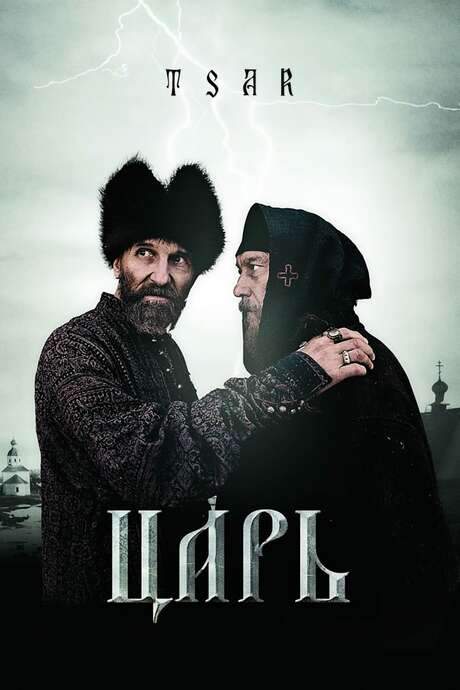
Set in 16th‑century Russia, the film follows Ivan the Terrible, convinced of a divine mission and the imminent Last Judgment, as he seizes absolute power and ruthlessly eliminates opposition. His close friend, Philip, the abbot of the Solovetsky monastery, challenges Ivan’s mystical tyranny, sparking a clash of opposing worldviews that pits morality against autocracy. Mamonov and Yankovsky deliver strong performances in this grand‑scale allegory of Stalinist Russia.
On this page (6)
4 main characters · contains spoilers
Tsar Characters Explained: Who Is Who
The main characters of Tsar (2009), heroes and villains: what drives them, how they change over the course of the story and what each of them reveals about the film's bigger ideas.
-
Tsar Ivan IV
Ivan IV, known as Ivan the Terrible, is portrayed as a complex figure battling between his desires for power and moments of introspection. His tyrannical rule is marked by fear and brutality, exemplifying the darker aspects of leadership. His relationship with Philip reflects a tragic struggle between personal loyalty and moral corruption.
- 👑 Tyranny
- ⚔️ Violence
- 🕊️ Inner Conflict
-
Hegumen Philip Kolychev
played by Oleg Yankovskiy
Hegumen Philip emerges as a voice of conscience amidst chaos, characterized by his unwavering commitment to justice and mercy. His internal conflict with the Tsar illustrates the struggle of faith against tyranny. His character embodies the theme of sacrifice as he ultimately faces severe consequences for his beliefs.
- 🙏 Faith
- ⚖️ Justice
- 🕊️ Sacrifice
-
Masha
played by Anastasiya Dontsova
Masha is depicted as a symbol of innocence caught in a brutal conflict, whose tragic fate showcases the human cost of political machinations. Her courage in seeking to protect those wronged adds an emotional depth to the narrative. Masha's character serves as a catalyst for the significant events surrounding Hegumen Philip.
- 💔 Innocence
- ⚖️ Bravery
- ✝️ Faith
-
Malyuta Skuratov
played by Yuriy Kuznetsov
Malyuta Skuratov is depicted as a loyal yet ruthless enforcer of the Tsar's will, embodying the dark, violent undercurrents of Ivan's regime. His character serves as a representation of the oppressive forces at play, carrying out the Tsar's brutal orders without hesitation. His presence heightens the film’s tension and demonstrates the perils of blind loyalty.
- ⚔️ Violence
- 👁️ Surveillance
- 🤵 Loyalty
Last updated: September 29, 2026 at 10:39
Setting
Where and When Does Tsar Take Place?
The setting of Tsar (2009): the year and time period, the places and locations, and how they shape the characters, the mood and the tension of the story.
Time period
1566-1569
This period falls during the tumultuous times of the Oprichnina, characterized by brutal political repression by Tsar Ivan IV. The Livonian War, which was fought between Russia and a coalition of Poland-Lithuania, signals a critical moment in Russian history as the Tsar seeks to expand his territories amidst internal struggles and civil unrest.
Location
Moscow, Polotsk
Moscow serves as the primary backdrop for the film, showcasing the political and religious tensions of the time. It is the heart of the Russian Orthodox Church and the seat of power for Tsar Ivan IV. Polotsk represents a strategic battleground during the Livonian War, where intense clashes between Russian and Lithuanian forces occur, illustrating the era's violent historical context.
- 🏛️ City
- ⚔️ Battleground
Last updated: September 29, 2026 at 10:39
3 major themes
Tsar Meaning: Themes & Message Explained
What is Tsar (2009) really about? The emotional, social and philosophical themes the film keeps returning to, its symbolism and the message beneath the surface.
-
Justice & Mercy
The theme of justice and mercy permeates the film as Hegumen Philip grapples with the Tsar's brutality and the morality of power. Philip's attempts to protect the innocent highlight the conflicts between divine justice and human authority. The harsh realities of the Tsar's reign challenge notions of righteousness, ultimately posing questions about the moral responsibilities of leadership.
-
Sacrifice
Sacrifice is depicted through the harrowing choices faced by Metropolitan Philip, who endures exile and brutality rather than forsake his principles. Masha’s tragic fate also underscores the costs of standing against tyranny. The theme reflects the painful decisions individuals must make in the face of overwhelming oppression and the quest for truth.
-
Power & Corruption
The film explores the corrupting nature of absolute power as embodied by Tsar Ivan IV. His descent into paranoia and violence illustrates how unchecked authority can lead to moral decay and societal collapse. Through Philip's defiance, the narrative raises critical questions about the implications of tyranny and the price of sovereignty.
Last updated: September 29, 2026 at 10:39
Character & theme questions
Tsar Characters & Meaning: Your Questions Answered
The questions people ask about Tsar (2009): who the characters really are, their relationships, what the symbols mean, where it takes place and what the movie is really about. Each answer contains spoilers.
Q1 Where is the story set?
The story is set primarily in 16th-century Moscow, which serves as both the seat of Tsar Ivan IV's political power and the center of the Russian Orthodox Church. The city functions as the stage for the ideological battle between the Tsar and the clergy. Polotsk also appears as a secondary location, representing the violent front line of the Livonian War.
- moscow
- polotsk
- setting
- ivan iv
- russian orthodox church
Q2 What time period does the film cover?
Tsar takes place between 1566 and 1569, during the early years of the Oprichnina under Ivan the Terrible. This was a period of extreme political repression, foreign war, and internal collapse, when Ivan IV dismantled the traditional boyar order and ruled through terror.
- 16th century
- oprichnina
- 1566
- 1569
- ivan the terrible era
Q3 What is the Oprichnina and why is it important to the film?
The Oprichnina was Ivan IV's policy of dividing Russia into a separate territory ruled directly by the Tsar through a private army of loyal enforcers. It became synonymous with mass purges, land seizures, and the destruction of the old aristocracy. The film uses this historical backdrop to frame the moral vacuum in which Philip's defiance takes place.
- oprichnina
- ivan iv policies
- political repression
- russian history
Q4 Who is Hegumen Philip and what role does he play?
Hegumen Philip Kolychev is the abbot of the Solovetsky monastery and a former favorite of Ivan IV who becomes the Tsar's most prominent religious critic. He functions as the voice of conscience in the film, refusing to bless the Tsar's violence and insisting that a Christian ruler must answer to divine, not human, authority. His defiance makes him the moral counterweight to Ivan's tyranny.
- hegumen philip
- solovetsky monastery
- abbot
- voice of conscience
- moral opposition
Q5 What does the clash between Ivan IV and Philip symbolize?
The confrontation between Ivan and Philip represents a struggle between two incompatible claims to authority: the Tsar's insistence on absolute earthly power and the Church's claim that even a sovereign must be judged by divine morality. It frames the film as a meditation on whether conscience can survive under totalitarianism, or whether unchecked power inevitably silences it.
- ivan vs philip
- authority
- conscience
- totalitarianism
- divine justice
Q6 How does Tsar Ivan IV embody the corruption of absolute power?
Ivan is shown as a ruler increasingly convinced of his divine mission and the imminence of the Last Judgment, which he uses to justify eliminating anyone who opposes him. His paranoia deepens into systematic terror, with loyal enforcers like Malyuta Skuratov carrying out purges, torture, and executions. The film traces this descent to suggest that absolute sovereignty corrodes even the people who hold it.
- ivan the terrible
- absolute power
- paranoia
- tyranny
- corruption
Q7 How is the theme of sacrifice expressed through Philip?
Philip's sacrifice lies in choosing exile, suffering, and ultimately death over silence and complicity. Even when the Tsar pressures him to bless the Oprichnina, he refuses to lend religious legitimacy to mass murder. The film uses his martyrdom to argue that moral truth sometimes demands standing alone against the state.
- philip martyrdom
- sacrifice
- exile
- moral truth
- defiance
Q8 Who is Malyuta Skuratov and what does he represent?
Malyuta Skuratov is one of Ivan IV's most notorious Oprichnina enforcers, portrayed in the film as the instrument of the Tsar's darkest orders. He represents blind loyalty weaponized by power, a man who carries out torture and killing without moral hesitation. His presence signals how a regime of terror depends on figures willing to do what conscience forbids.
- malyuta skuratov
- oprichnina enforcer
- blind loyalty
- regime of terror
Q9 Why is Tsar read as an allegory for Stalinist Russia?
The film uses Ivan IV's court, religious orthodoxy, and purges as a mirror for 20th-century Soviet totalitarianism, where terror was sanctified by ideology and dissidents were erased as enemies of the state. By staging the conflict in historical costume, the director suggests that the mechanics of autocracy, personality cults, and silenced clergy repeat across centuries. The allegory gives the film its suffocating political weight beyond personal tragedy.
- stalinist russia allegory
- totalitarianism
- soviet parallels
- autocracy
Q10 What does Masha represent in the story?
Masha is a young woman caught in the machinery of Ivan's reign, whose unjust fate illustrates the human cost of political purges. She embodies innocence destroyed by arbitrary power and serves as the emotional trigger that deepens Philip's moral crisis. Her tragedy turns the abstract debate about authority into something viscerally personal.
- masha
- innocence
- human cost
- political purges
- moral crisis
Q12 Why does the Polotsk setting matter?
Polotsk anchors the film in the reality of the Livonian War, the long and costly military campaign Ivan waged against Poland-Lithuania. Its appearance as a battleground shows that the Tsar's brutality is not confined to the court in Moscow but is exported through foreign wars. The setting underscores how domestic terror and imperial expansion reinforce each other.
- polotsk
- livonian war
- poland-lithuania
- imperial expansion
If you liked this
Movies Like Tsar
Similar movies to Tsar: the same genre, themes or kind of story. Each one comes with its own plot summary, timeline and ending explained.

The Russian Revolution
2017

Russia, Land of the Tsars
2003

1612: Chronicles of the Dark Time
2007

Tsar Ivan the Terrible
1991

Assassin of the Tsar
1991

The Last Days of the Last Tsar
1992

Boris Godunov
1986

Boris Godounov
1989

The Czarina Commands
1933

Peter the First, Part I
1937
Rasputin
1996

Ivan the Terrible, Part I
1944
Every angle
Tsar (2009) Explained: Plot, Timeline & Characters
Everything about Tsar in one place: what happens in the plot summary, the timeline in chronological order, the characters and meaning and a spoiler-free summary. What's After the Movie adds the cast, box office and post-credit scenes.
- Tsar Plot Summary What happens, from the first scene to the last, every twist included.
- Tsar Timeline Every key event in chronological order, ideal for flashbacks and time jumps.
- Tsar Spoiler-Free Summary What it is about and whether it is worth watching, without spoilers.
- Tsar on What's After the Movie Cast and crew, box office, post-credit scenes and more.
Coming soon on iOS and Android
The Plot Explained Movie Summary App
Plot summaries, endings explained and timelines on your phone. Catch up on any movie in minutes, save your favorites and never miss a twist again.
Be the first to know when we launch. Your email stays private, always.
Learn more about the app