Year: 1978
Runtime: 95 mins
Language: English
Director: Anthony Page
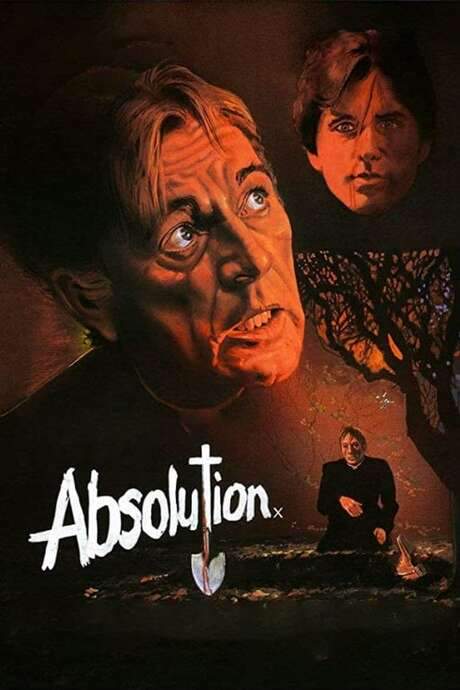
A strict Catholic boarding school is ruled by the iron‑fisted Father Goddard. When a student confesses to murder, the dogmatic, deeply repressed priest’s faith is suddenly challenged, pulling him into a deadly psychological game that threatens to unravel his authoritarian control and his very sense of purpose.
Warning: spoilers below!
Haven’t seen Absolution yet? This summary contains major spoilers. Bookmark the page, watch the movie, and come back for the full breakdown. If you're ready, scroll on and relive the story!
Read the complete plot breakdown of Absolution (1978), including all key story events, major twists, and the ending explained in detail. Discover what really happened—and what it all means.
Set in a Catholic boys’ boarding school in rural England, this story follows the quiet gravity of a tense campus where Benjamin ‘Benjie’ Stanfield and his unpopular friend Arthur Dyson navigate the strict world ruled by their form master, Father Goddard, and the arrival of a wandering motorcyclist, Blakey. The film opens with Blakey riding onto the grounds and asking Fr. Goddard if there are any odd jobs he could do; when he’s politely turned away, a sense of unease threads through the quiet routines of the school. Blakey, however, doesn’t vanish from the margins—he camps in the woods near the school and slips into the kitchen at night to steal food, a minor wrongdoing that unsettles the boys and foreshadows the deeper moral storms to come.
Fr. Goddard uses a classroom moment to illuminate the Catholic idea of confession: a priest cannot reveal what a penitent shares, not even if it involves murder. The distinction between truth spoken in confession and truth lived outside the booth begins to blur as Stanfield, newly drawn to Blakey, starts drifting away from Dyson and toward the enigmatic intruder living on the margins of the campus. The tension escalates when Fr. Goddard forbids Stanfield from seeing Blakey, yet Stanfield defies the prohibition, drawn by a flawed sense of loyalty and curiosity that Blakey seems to awaken in him.
Blakey’s presence destabilizes the school’s routine. He presses Stanfield to spin stories of sexual escapades, which Stanfield unloads in confession, feeding the priest with tall tales that rattle the boundaries between truth and deception. The consequences arrive when two policemen, summoned by Fr. Goddard, confront Blakey, beating him and ordering him to move on. Blakey’s anger boils over, and a painful, unresolved moment occurs when Stanfield attends later to a distressed Blakey who lashes out, and Stanfield picks up a rock in a moment of panic. What happens next remains unstated, a hinge on which the drama pivots.
The confessional becomes the fulcrum of the film’s moral ambiguity. Stanfield claims in confession that he has accidentally killed Blakey and buries him in the woods, prompting Fr. Goddard to investigate the site himself. He digs and discovers what he first believes to be a human head, only to find a pumpkin instead. The others’ laughter reveals the cruel joke played at the priest’s expense, and Stanfield realizes the confession he offered could trap him in a lie of his own making. Dyson, who has grown close to Stanfield, offers to take the blame, but Stanfield pushes him away and walks off, leaving the scene steeped in unanswered guilt and fear.
Later, Dyson openly enters the confession scene, admitting that he was a willing accomplice to Stanfield’s deception. An unseen figure seems to intrude, and Stanfield’s voice can later be heard confessing that he has killed Blakey, though the truth is more tangled. Fr. Goddard, torn between his duty to the seal of confession and the mounting dread of what lies beneath, refuses to absolve the boys without risking a greater sin of exposure. He then heads into the woods again, compelled to verify the truth, only to uncover what appears to be Dyson’s leg brace half-exposed in the ground.
The film’s climax spirals into brutal clarity: Stanfield appears in the woods, and Fr. Goddard, overwhelmed by fear and the weight of confession, strikes him repeatedly with a shovel, killing him. He hurries back to the chapel to pray for forgiveness, but Stanfield’s voice intrudes once more, leaving Goddard to confront the possibility that the confessional system has become a weapon in a chain of violence he cannot undo. Dyson then reveals that it was he who killed Blakey, having imitated Stanfield’s voice in the confessional to frame the boy and to unleash his own revenge against Fr. Goddard for the priest’s cruelty. Dyson’s confession sets in motion a stark moral choice: he offers Goddard the option to confess to both killings and face prison or an asylum, or to end his own life. Goddard, immobilized by the seal of confession, collapses into mortification as Dyson walks away whistling, choosing not to forgive or absolve the crime.
In the end, the film leaves the viewer with a haunting meditation on guilt, power, and the limits of forgiveness within a closed, hierarchical world. The once-clear boundaries between truth and deception, justice and mercy, blur into a somber portrait of how secrets can fester into violence, and how the righteous can become complicit in the very sins they seek to condemn. The story remains deeply human in its portrayal of flawed characters trapped by their own choices, where the line between protector and persecutor becomes dangerously thin.
Last Updated: October 09, 2025 at 12:41
Discover curated groups of movies connected by mood, themes, and story style. Browse collections built around emotion, atmosphere, and narrative focus to easily find films that match what you feel like watching right now.
Stories of characters trapped within rigid, morally corrupt systems of authority.If you liked the suffocating atmosphere of Absolution's boarding school, explore more movies like it. This list features stories set within rigid, closed systems—such as convents, military academies, or isolated communities—where authority is absolute and rebellion comes at a high psychological cost. These films share a similar feeling of claustrophobia and a deep exploration of power dynamics.
Narratives in this thread typically follow a character's awakening or downfall within a microcosm governed by strict, often hypocritical, rules. The central conflict arises from the collision between individual conscience and the demands of the system, frequently culminating in a confrontation that exposes the institution's inherent corruption.
These movies are grouped together because they create a powerful, immersive sense of place defined by institutional power. They share a focus on the dynamics of control, the psychology of submission and rebellion, and an atmospheric tension born from being trapped within an unchangeable structure.
Character studies where a rigid, controlling figure is psychologically dismantled.For viewers who appreciated the character arc in Absolution, this section collects movies like it that feature a similar narrative. These films follow a dogmatic authority figure—a priest, a teacher, a leader—whose worldview is shattered by a psychological game or a hidden truth, resulting in a bleak and heavy emotional journey.
The narrative pattern involves a staunch, often hypocritical, authority figure who is pushed to their limits. Through a series of provocations, manipulations, or revelations, their carefully constructed persona cracks, leading them on a downward spiral where they confront the emptiness or corruption of their own dogma.
These films share a specific character archetype and arc: the fall of a powerful, repressed individual. They are united by a dark tone, a slow-burn pacing that allows for deep psychological exploration, and a heavy emotional weight stemming from the protagonist's inevitable and tragic disintegration.
Don't stop at just watching — explore Absolution in full detail. From the complete plot summary and scene-by-scene timeline to character breakdowns, thematic analysis, and a deep dive into the ending — every page helps you truly understand what Absolution is all about. Plus, discover what's next after the movie.
Track the full timeline of Absolution with every major event arranged chronologically. Perfect for decoding non-linear storytelling, flashbacks, or parallel narratives with a clear scene-by-scene breakdown.
Discover the characters, locations, and core themes that shape Absolution. Get insights into symbolic elements, setting significance, and deeper narrative meaning — ideal for thematic analysis and movie breakdowns.
Get a quick, spoiler-free overview of Absolution that covers the main plot points and key details without revealing any major twists or spoilers. Perfect for those who want to know what to expect before diving in.

Visit What's After the Movie to explore more about Absolution: box office results, cast and crew info, production details, post-credit scenes, and external links — all in one place for movie fans and researchers.
Discover movies like Absolution that share similar genres, themes, and storytelling elements. Whether you’re drawn to the atmosphere, character arcs, or plot structure, these curated recommendations will help you explore more films you’ll love.
Absolution (1978) Scene-by-Scene Movie Timeline
Absolution (1978) Movie Characters, Themes & Settings
Absolution (1978) Spoiler-Free Summary & Key Flow
Movies Like Absolution – Similar Titles You’ll Enjoy
The Catholic School (2022) Complete Plot Breakdown
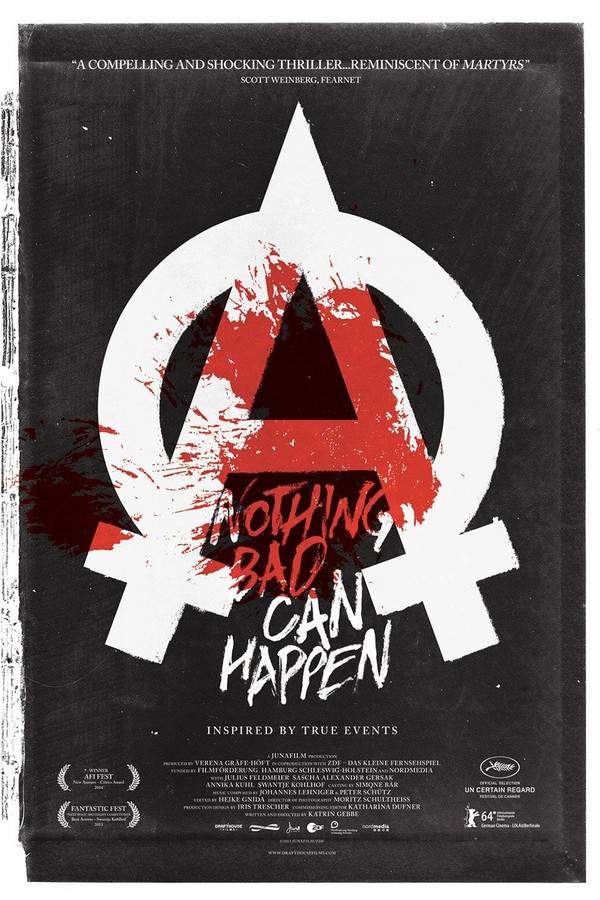
Nothing Bad Can Happen (2014) Detailed Story Recap
Absolution (2015) Spoiler-Packed Plot Recap
Absolution (2024) Ending Explained & Film Insights
The Book of Revelation (2006) Story Summary & Characters
Confession (2005) Complete Plot Breakdown
Absurd (1981) Full Summary & Key Details
Murder Obsession (1981) Spoiler-Packed Plot Recap
Broken Innocence (2024) Movie Recap & Themes
if… (1968) Detailed Story Recap
Autopsy (1975) Plot Summary & Ending Explained
Diabolique (1955) Full Movie Breakdown
Child’s Play (1972) Detailed Story Recap
Don’t Deliver Us from Evil (1971) Ending Explained & Film Insights
The Devil’s Playground (1976) Spoiler-Packed Plot Recap