


Plot Explained Spoilers guaranteed!
Plot Explained

Browse by genre

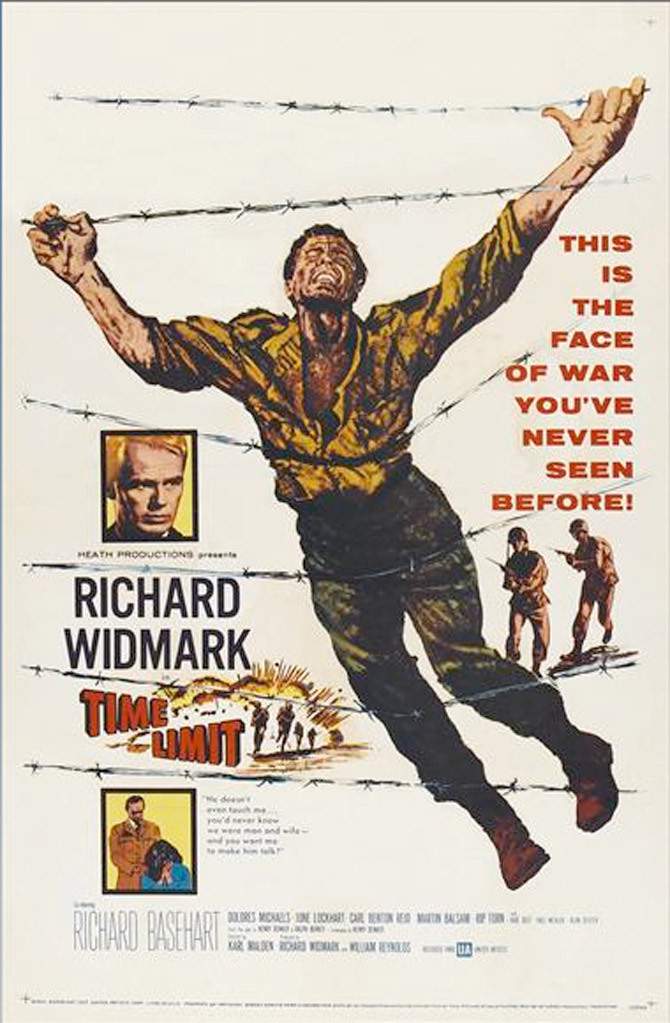
Time Limit (1957) movie poster

Timeline

Time Limit (1957) Timeline Explained – Every Event in Order

Release, runtime and language
1957 · 96 min · Japanese
Starring
Richard Basehart, Martin Balsam, Rip Torn, Richard Widmark, June Lockhart, Alan Dexter

A skilled explosives expert finds himself arrested and must convince a persistent detective of his innocence and value. Facing a rapidly approaching deadline and potential disaster, he proposes a daring plan, utilizing his specialized knowledge to avert catastrophe and prove his worth before time runs out.

On this page (6)
  1. 1 Where to watch
  2. 2 Events in order (12)
  3. 3 Timeline questions answered
  4. 4 Movie threads
  5. 5 Movies like Time Limit
  6. 6 Every angle

Where to watch

Where to Watch Time Limit (1957)

Where can you watch Time Limit? Stream, rent or buy it in the US, including on ScreenPix Amazon Channel : current JustWatch availability with up-to-date prices.

Streaming availability powered by JustWatch

12 events in order · contains spoilers

Time Limit Timeline: Events in Chronological Order

Every key event of Time Limit (1957) in order, scene by scene, with when and where it takes place. Use it to untangle flashbacks, time jumps and parallel storylines, to refresh your memory before the sequel or to find the exact scene you are thinking of.

  1. Accusation and damning evidence presented

    In a tense POW aftermath in North Korea, Major Harry Cargill openly admits guilt and presents what appears to be damning evidence: a signed germ-warfare confession and radio broadcasts that attack American efforts. The revelation seems to seal his treason in the eyes of the investigating unit. His admission, however, raises questions about its authenticity and the motive behind airing such claims.

    When
    After the POW ordeal
    Where
    North Korea (POW camp)
  2. The defense remains quiet

    Cargill refuses to defend himself, a quiet move that complicates the case and sows doubt among observers. The contrast between a damning confession and a silent defendant invites scrutiny of what really happened. The investigation then faces a crisis when two soldiers die and their testimonies echo a rehearsed account.

    When
    Early phase of inquiry
    Where
    Military inquiry room
  3. Questioning surface conclusions

    Colonel William Edwards questions the obvious conclusions and resists the ready-made explanations. He tries to look beyond guilt by association to uncover the deeper truth. General Connors pressures for a court-martial, driven by personal stakes in the death of his son.

    When
    Early investigation
    Where
    Army base investigation room
  4. Revelation under torture surfaces

    Lieutenant George Miller reveals that Captain Connors betrayed the group after Lieutenant Harvey's death during an escape attempt. To save the remaining men, they decide to execute Connors, with Miller drawing the short straw. The confession upends the simple traitor narrative and exposes a grim calculus under duress.

    When
    During investigation
    Where
    Korean POW camp / interrogation area
  5. Captors' threat and the cost of obedience

    Their captor Colonel Kim warned that obedience would cost the lives of the remaining prisoners if Cargill refused to cooperate. The leverage of torture and fear complicates any straightforward judgment of loyalty or betrayal. This warning casts doubt on the integrity of the testimonies collected under pressure.

    When
    Under interrogation
    Where
    Captivity camp in Korea
  6. Family and war: the moral calculus

    General Connors condemns his son as a traitor, while Cargill argues that heroism cannot be measured by endless sacrifice. He contends that the Uniform Code of Military Justice demands too much of soldiers in fear and desperation. The exchanged positions reveal the moral ambiguity at the heart of war.

    When
    Height of the investigation
    Where
    Base / courtroom
  7. A nuanced reading of Cargill's actions

    Edwards privately aligns with a more nuanced reading of Cargill's conduct, recognizing humane motives but flawed judgment. He concludes that the charges should be dropped, even as he acknowledges that a court-martial might still be on the horizon. The decision reframes Cargill's actions as morally complex rather than wholly treasonous.

    When
    As evidence unfolds
    Where
    Base office
  8. Edwards takes the stand

    Edwards announces his intent to defend Cargill, signaling a pivot from prosecutorial certainty to a defense that seeks to understand the questions behind the actions. He acknowledges there may be no perfect answers, but emphasizes the value of rigorous inquiry. The move signals a commitment to due process even amid fear and suspicion.

    When
    Late investigation
    Where
    Military courthouse or defense planning room
  9. From guilt to complexity

    The revelation shifts the entire case from a binary treason tale to a study in human motive under pressure. Edwards and Connors begin to see that duty and humanity can pull in opposite directions. The inquiry makes it clear that surface appearances do not tell the whole story.

    When
    Mid to late investigation
    Where
    Investigation room / command center
  10. Survivors' rehearsed testimonies

    The surviving soldiers recite a nearly identical, rehearsed account of the deaths, suggesting coercion or a shared narrative born of fear. The uniformity of their statements raises questions about how much truth emerges when fear governs memory. This doubt anchors the central tension of Edwards's inquiry.

    When
    During investigations
    Where
    Frontline or interrogation area
  11. Leaders' heavy burden

    The elder Connors underscores the grim calculus faced by leaders whose orders affect many lives, not just one. He reminds Edwards that the consequences of decisions ripple through families and futures. The debate sharpens into a meditation on responsibility in war.

    When
    During moral debate
    Where
    Base/office
  12. Resolution: asking the hard questions

    Edwards reaches a resolution that Cargill's actions, though flawed, were born of humane motives. He recommends dropping charges and preparing for a potential court-martial, acknowledging uncertainty. The final stance emphasizes that best defense is the willingness to ask hard questions rather than pretend easy answers.

    When
    End of investigation
    Where
    Base command center

Last updated: November 25, 2025 at 01:01

Was this helpful?

Timeline questions answered

Time Limit Timeline Explained: Your Questions Answered

When does it happen, and why in that order? The questions people ask about the chronology of Time Limit (1957): time jumps, flashbacks, cause and effect between scenes and the correct order of events, each answered with spoilers.

Q1

Why did Major Cargill admit to treason when he wasn't actually guilty?

Cargill's admission of guilt was not a true confession but a strategic move to protect his men. Colonel Kim, their North Korean captor, had warned Cargill that if he refused to cooperate, the remaining prisoners would be killed. By publicly admitting to the germ-warfare confession and making the radio broadcasts, Cargill effectively took the blame onto himself to save his unit from further executions. The confession was a calculated sacrifice to ensure the survival of the soldiers still alive in the camp.

Foreshadowing: Cargill's early admission contrasts sharply with his later silence during the investigation, hinting that his confession served a larger purpose.

  • major cargill confession
  • treason admission
  • POW camp
  • colonel kim threat
Q2

Why did Cargill refuse to defend himself during the investigation?

Cargill's refusal to defend himself stemmed from deep guilt over the decisions he made in the POW camp. While he acted to save his men, he also accepted that his actions involved executing Captain Connors and other moral compromises. Cargill believed he had failed the ideal of heroism and felt he did not deserve a defense. His silence was also influenced by the rehearsed testimonies from the survivors, which made it appear that any defense would be dismissed as lies.

Foreshadowing: His silence contrasts with the earlier revelation about Colonel Kim's threat, showing Cargill carried both the external pressure and internal burden.

  • cargill silence
  • self defense
  • military inquiry
  • guilt
Q3

What happened to Captain Joe Connors in the POW camp?

Captain Joe Connors, the son of General Connors, was captured during an escape attempt and betrayed the group under torture. After Lieutenant Harvey was killed during the escape, Connors broke under interrogation and revealed information to Colonel Kim that endangered the remaining American prisoners. To prevent further betrayals and protect the unit, the surviving soldiers decided Connors had to be executed. Lieutenant George Miller drew the short straw and carried out the execution.

Foreshadowing: General Connors' personal stake in the case stems directly from this revelation about his son's betrayal and execution.

  • captain connors
  • executed
  • torture
  • escape attempt
  • betrayal
Q4

Why were the surviving soldiers giving rehearsed testimonies?

The surviving soldiers gave rehearsed, nearly identical testimonies because they had been coached or coerced by their North Korean captors. Colonel Kim used psychological manipulation to ensure the prisoners told a unified story that would support the treason case against Cargill. This coordinated testimony was designed to make the accusation against Cargill appear ironclad and to hide the truth about Captain Connors' execution. The uniformity of their accounts raised suspicion with Colonel Edwards, who recognized the testimony as manufactured rather than genuine.

Foreshadowing: Edwards' observation that the testimonies sounded rehearsed was the first clue that the case was more complex than it appeared.

  • rehearsed testimony
  • coerced witnesses
  • north korean captors
  • uniform testimony
Q5

What threat did Colonel Kim make to Major Cargill?

Colonel Kim warned Cargill that if he refused to cooperate with the North Koreans, by providing the germ-warfare confession and making propaganda radio broadcasts, every remaining American prisoner would be killed. Kim used the lives of Cargill's own men as leverage, creating an impossible choice: cooperate and betray his country, or refuse and watch his soldiers die. This threat forced Cargill into the position of appearing to commit treason while actually trying to save lives.

Foreshadowing: This threat explains why Cargill's actions cannot be judged as simple treason, as he was acting under duress with his men's lives at stake.

  • colonel kim threat
  • coercion
  • prisoners lives
  • duress
Q6

Why did the soldiers execute their own captain?

The soldiers executed Captain Connors because he had betrayed the group under torture, endangering the lives of all remaining American prisoners. After Lieutenant Harvey was killed during an escape attempt, Connors broke under interrogation and provided information to Colonel Kim. Faced with the reality that Connors might continue to reveal information under torture and put everyone at risk, the surviving soldiers made the grim decision to execute him to prevent further betrayals. This was a desperate measure to protect the unit's survival.

Foreshadowing: The revelation of this execution directly challenges the initial narrative of Cargill being the sole traitor.

  • execution
  • captain connors
  • betrayal
  • unit survival
  • desperate measure
Q7

What did Lieutenant Miller reveal about the execution?

Lieutenant George Miller revealed that after Captain Connors' betrayal and the death of Lieutenant Harvey during an escape attempt, the remaining soldiers decided Connors had to be executed to prevent further leaks to the enemy. Miller drew the short straw, meaning he was randomly chosen to carry out the execution. This revelation completely reframed the case, showing that the unit had taken extreme action to protect themselves, and that Cargill's supposed treason was part of a much more complex situation involving survival under torture.

Foreshadowing: Miller's admission connects directly to the rehearsed testimonies, as the soldiers were covering up their own involvement in the execution.

  • lieutenant miller
  • short straw
  • execution
  • confession
Q8

Why did Colonel Edwards decide to defend Major Cargill?

Colonel Edwards decided to defend Cargill after uncovering the full truth about what happened in the POW camp. Edwards recognized that Cargill's actions, while involving difficult compromises, were motivated by humanitarian concerns, trying to save his men's lives under impossible circumstances. Though Edwards acknowledged Cargill showed flawed judgment in executing Captain Connors and cooperating with the enemy, he believed the charges should be dropped because the real story was one of moral complexity, not simple treason. Edwards stated he would defend Cargill because 'they'll know we asked the questions,' emphasizing the importance of thorough inquiry over easy conclusions.

Foreshadowing: This decision completes Edwards' journey from accepting the surface-level accusation to pursuing the deeper truth.

  • colonel edwards defense
  • cargill acquitted
  • moral complexity
  • court martial dropped
Q9

What does 'humane motives but flawed judgment' mean for Cargill's actions?

The phrase 'humane motives but flawed judgment' describes Edwards' nuanced assessment of Cargill's conduct. Cargill's primary motivation was humane, he tried to save his men's lives by cooperating with the enemy rather than watching them die. However, his judgment was flawed because he executed Captain Connors and made propaganda broadcasts, actions that betrayed his country even if done for understandable reasons. Edwards recognized that Cargill was not a simple traitor but a man who made terrible choices under extreme duress, balancing survival against duty in ways that cannot be easily judged.

Foreshadowing: This nuanced reading reflects the film's broader theme that wartime decisions often exist in moral gray areas.

  • humane motives
  • flawed judgment
  • moral ambiguity
  • wartime ethics
Q10

What does 'they'll know we asked the questions' mean at the end?

The line 'they'll know we asked the questions' represents Edwards' belief that the investigation itself was valuable regardless of the outcome. By rigorously examining the facts rather than accepting the convenient narrative of treason, Edwards ensured that the truth, however complicated, would be known. The statement acknowledges that there may be no perfect answers to the moral dilemmas faced in the POW camp, but that asking the hard questions and pursuing truth matters. It also foreshadows that while charges may be dropped, a court-martial could still follow, meaning the case remains open.

Foreshadowing: This closing line encapsulates the film's theme that rigorous inquiry is its own form of justice.

  • ending quote
  • hard questions
  • pursuit of truth
  • investigation meaning

Movie threads

More Movies Like Time Limit, by Mood & Story

Curated lists built around what makes Time Limit tick: the same mood, the same kind of story or the same emotional payoff. Each list explains why these movies belong together.

Claustrophobic investigative movies like Time Limit

Stories where pressure builds in confined spaces as characters seek the truth. If you liked the tense, methodical investigation in Time Limit, discover more movies that build pressure in confined settings. These films feature high-stakes questioning, morally complex reveals, and a steady, gripping pace as characters uncover difficult truths under duress.

  • claustrophobic
  • investigative
  • tense
  • dialogue-driven
  • morally complex
  • gripping
  • Tone: tense, serious, morally complex
  • Pacing: steady, methodical
Why these movies?

The story pattern: Narratives in this thread typically unfold in a single or limited number of confined settings, like a courtroom, interrogation room, or bunker. The plot progresses through a series of testimonies or revelations, methodically building a case and challenging initial assumptions. The central conflict is often intellectual and moral, pitting different versions of the truth against one another.

Why they belong together: Movies are grouped here for their shared reliance on a claustrophobic setting to amplify tension, a steady pacing driven by dialogue and deduction, and a focus on uncovering a complex, morally ambiguous truth. They deliver a specific kind of intellectual suspense.

Movies with bittersweet endings after heavy moral choices like Time Limit

Where difficult choices lead to a victory that feels like a loss. For viewers who appreciated the complex moral weight and bittersweet conclusion of Time Limit, this collection highlights films where characters face impossible ethical decisions. These stories deliver a powerful, emotionally heavy experience and conclude with a victory that acknowledges profound personal cost.

  • morally complex
  • somber
  • bittersweet
  • heavy
  • traumatic
  • anxious
  • Tone: somber, heavy, bittersweet
  • Pacing: steady, deliberate
Why these movies?

The story pattern: The narrative pattern follows a protagonist forced to make an ethically difficult choice, often under extreme pressure. The story explores the justification and consequences of this choice, revealing the deep psychological trauma involved. The resolution may clear the protagonist of immediate danger but leaves them, and the audience, to grapple with the lasting scars of their actions.

Why they belong together: These films are grouped by their shared exploration of gray-area ethics, their heavy emotional weight, and their specific type of ending that blends relief with melancholy. They satisfy a desire for complex, adult dramas that don't offer simple, happy conclusions.

If you liked this

Movies Like Time Limit

Similar movies to Time Limit: the same genre, themes or kind of story. Each one comes with its own plot summary, timeline and ending explained.

Browse all movie summaries

Every angle

Time Limit (1957) Explained: Plot, Timeline & Characters

Everything about Time Limit in one place: what happens in the plot summary, the timeline in chronological order, the characters and meaning and a spoiler-free summary. What's After the Movie adds the cast, box office and post-credit scenes.

Coming soon on iOS and Android

The Plot Explained Movie Summary App

Plot summaries, endings explained and timelines on your phone. Catch up on any movie in minutes, save your favorites and never miss a twist again.

Be the first to know when we launch. Your email stays private, always.

Learn more about the app