The Wind Will Carry Us

The Wind Will Carry Us

JustWatch#10,5041

Year: 2000

Runtime: 118 min

Language: Persian

Director: Abbas Kiarostami

Drama

A group of city dwellers journeys to a remote village, posing as technicians with a specific purpose. They secretly observe the community while awaiting the death of a very old woman. Amidst the quiet tension, an unexpected connection develops between the group’s leader and a local girl. Their interaction explores cultural differences and reveals a shared humanity in their contrasting lifestyles, creating a touching and contemplative experience.

Where to Watch The Wind Will Carry Us?

Find where to stream, rent, or buy The Wind Will Carry Us (2000) in the US with current JustWatch availability, up-to-date pricing, and platform listings for subscription, rental, and digital purchase options.

Warning: spoilers below!

Haven’t seen The Wind Will Carry Us yet? This summary contains major spoilers. Bookmark the page, watch the movie, and come back for the full breakdown. If you're ready, scroll on and relive the story!

The Wind Will Carry Us (2000) – Full Plot Summary & Ending Explained

Read the complete plot breakdown of The Wind Will Carry Us (2000), including all key story events, major twists, and the ending explained in detail. Discover what really happened, and what it all means.

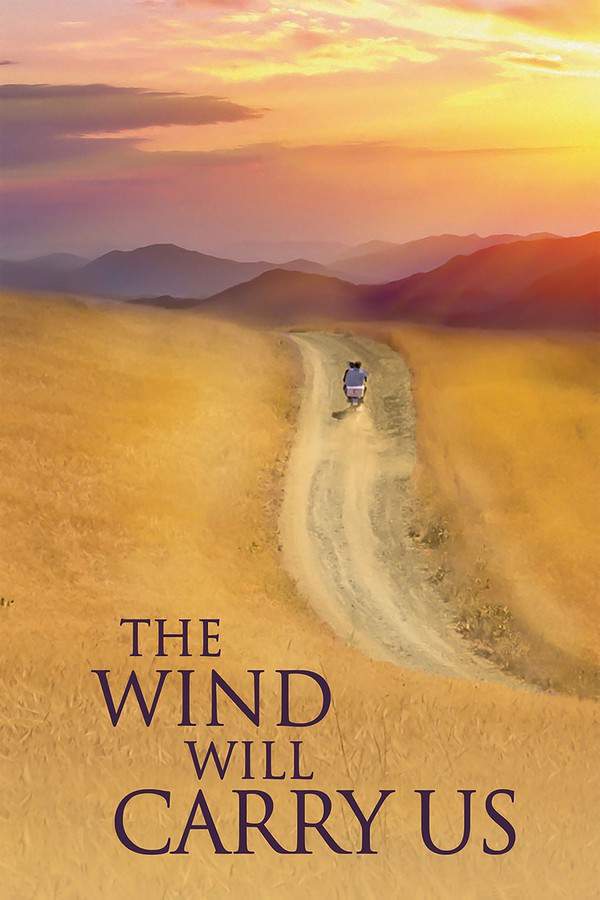
The film begins with a mesmerizing long take of the unexpectedly beautiful Iranian countryside. In a wide shot, we observe a tiny International Scout navigating a winding road, barely noticeable against the vast backdrop. Inside the vehicle, its four passengers engage in a subtle argument about their driving directions, recorded in a raw style that draws us into the scene. Right from the start, two significant aspects become clear: our director has no intention of spoon-feeding information, leaving us as in-the-dark as the characters about their identities and motives, and the film exhibits a leisurely pace, favoring long takes that linger on moments of triviality. This initial segment stretches on for over five and a half minutes, meandering through their gentle bickering.

Eventually, the group reaches their goal—a quaint village nestled on a steep hillside, reminiscent of hodgepodge structures you might find in desert Africa. Having encountered a young guide on the town's outskirts, our primary character—The Engineer—who is also the sole character seen on screen throughout the movie, traverses the uneven roofs that form his temporary universe, hopping up and down as he makes his way.

Kiarostami dedicates this introductory sequence to setting the film's rhythm and establishing its central enigma. These four evidently urban Tehranians have checked into the nearest guesthouse for the purpose of monitoring the health of an ailing matriarch residing at the opposite side of the village. During his lengthy rooftop journey with the boy who serves as his companion, The Engineer pries into the old woman’s condition, eliciting cryptic responses from the boy—responses that hint at discretion or ignorance, leaving us uncertain.

By the time we grasp the purpose of these men's presence and their concern for the elderly woman's well-being, the urgency dissipates, and we find ourselves absorbed in the daily lives of this unique community—one that balances the alien with the strangely familiar. We encounter a cantankerous restaurant owner, her possibly unfaithful husband, the innkeeper who undergoes a strikingly sudden pregnancy, and a stunning young woman who tirelessly milks a cow in shadowed corners, all contributing to a rich socio-cultural tapestry for their guests.

Critics have labeled this film a mystery, and on some level, they are correct; we are indeed prompted to ponder who these characters are and why they are fixated on such a trivial mission in this remote corner of the world. At one point, The Engineer's companions grow so disinterested that they vanish from the narrative entirely. However, to pigeonhole this film under a single genre would be to overlook Kiarostami's deeper commentary. There lies a mystery in everyday life, but it is not the thrilling, espionage-laden intrigue often depicted in films; rather, it’s the mystery of mundanity—the peculiar script by which we all navigate our shared human experiences, filled with rivalries and minor disputes. The true enigma is how life can feel mystifying despite its utter simplicity.

Last updated: November 04, 2024 at 04:29

Was this helpful?

The Wind Will Carry Us (2000) Plot Questions Answered – Summary FAQ

Explore frequently asked questions about The Wind Will Carry Us (2000) with spoiler-rich answers covering the full plot summary, major story beats, character motivations, hidden details, and ending meaning. This movie summary FAQ helps explain confusing scenes, plot twists, and narrative decisions in clear, searchable detail.

Q1

Why is the Engineer waiting for the old woman to die?

A.

The Engineer and his companions are secretly waiting for an elderly matriarch in the village to pass away. Their stated cover is that they are technicians monitoring her health, but as the film progresses, it becomes clear their true purpose is to witness her death. The reason remains ambiguous, possibly for documentary or journalistic purposes, but the film never explicitly explains their exact motive, leaving this central mystery unresolved.

The boy's cryptic responses about the old woman's condition from the beginning hint at the secretive nature of their mission.

engineerold womandeathwaitingvillagepurpose
Q2

Where do the Engineer's companions go?

A.

The Engineer's three companions gradually lose interest in their mission and eventually disappear from the narrative entirely. Their departure is gradual, first becoming disinterested, then fading away until only the Engineer remains. This abandonment leaves him alone in the village, deepening his isolation and forcing him to confront the purpose of his stay alone.

Early signs of their disinterest appear during their initial interactions with the villagers.

companionsdisappearancedepartureengineerleaving
Q3

What develops between the Engineer and the local girl?

A.

As the Engineer spends more time in the village, he forms an unexpected connection with a young local woman. This relationship represents a bridge between his urban, detached existence and the authentic, grounded life of the villagers. Through their interactions, both characters reveal vulnerability and curiosity about each other's worlds, creating a moment of genuine human connection across cultural divides.

The Engineer's rooftop journey and his questions about village life show his growing interest in the community.

engineerlocal girlconnectionrelationshipcultural
Q4

Why does the innkeeper suddenly become pregnant?

A.

The innkeeper's sudden pregnancy appears as a surprising and somewhat comedic subplot within the village narrative. While it initially seems like an unexpected plot development, it fits the film's theme of capturing life's unexpected moments. The pregnancy adds to the tapestry of village life, showing that life continues and changes even in this remote setting, contrasting with the Engineer's waiting for death.

No clear foreshadowing exists for this reveal, which is intentionally sudden.

innkeeperpregnancyvillageunexpectedsubplot
Q5

What is the 'mystery of mundanity' in the film?

A.

The 'mystery of mundanity' refers to Kiarostami's central theme that everyday life contains its own profound mysteries. Rather than traditional suspense, the film finds intrigue in trivial moments, conversations, routines, and minor conflicts. The true enigma is not espionage or dramatic revelation, but how ordinary life can feel mystifying and meaningful despite its simplicity. This philosophical layer invites viewers to find depth in the ordinary.

The slow, lingering shots of daily village activities establish this theme from the beginning.

mysterymundanityeveryday lifeordinarytheme
Q6

Why does the Engineer spend so much time on the rooftops?

A.

The Engineer's rooftop journeys serve as both literal navigation and metaphor. The village is built on uneven rooftops that form his temporary universe, requiring him to hop between structures. Symbolically, the rooftops represent his transitional state, he is neither fully part of the village nor entirely separate from it. This elevated perspective also allows him to observe the community below, reinforcing his role as an outsider looking in.

The opening sequence establishes his rooftop traversing as a key visual motif.

engineerrooftopsvillageobservationmetaphor
Q7

Who is the young woman who constantly milks the cow?

A.

The young woman is one of the villagers the Engineer observes during his stay. She is seen tirelessly milking a cow in shadowed corners, representing the constant, unglamorous labor of rural life. While she remains mostly silent and observed from a distance, her presence embodies the film's focus on the mundane routines that make up village existence. Her role is more symbolic than narrative, she represents the hardworking, unseen labor that sustains community life.

Her routine appears early and repeats throughout, establishing her as a visual motif.

young womancowmilkingvillageroutine
Q8

Why doesn't the film explain who these characters really are?

A.

Kiarostami deliberately withholds explicit information about the characters' identities and motives, keeping viewers as uncertain as the villagers themselves. This narrative choice creates an atmosphere of mystery and forces audience participation. The lack of explanation reinforces the theme that we often observe people without truly knowing them, just as the Engineer observes the village without fully understanding it or being understood in return.

The opening argument about directions establishes from the start that information will be withheld.

charactersidentitiesmysteryexplanationwithholding
Q9

Why is the village setting important to the story?

A.

The remote village serves as a contrasting world to the urban Tehran existence the Engineer and his companions come from. This isolated setting creates cultural friction and highlights differences between city and rural life. The village functions almost like a character itself, quaint, self-contained, with its own rhythms and mysteries. The Engineer's wait for the old woman's death becomes a journey of self-discovery through this unfamiliar environment.

The long opening take of the Iranian countryside establishes the remoteness and beauty of the location.

villageremotelocationcountrysidecontrastiran
Q10

Does the old woman ever die in the film?

A.

The film does not provide a clear resolution regarding whether the old woman dies. The narrative focus dissipates as the companions leave and the Engineer becomes absorbed in village life. The ending remains ambiguous, the film simply concludes without confirming the fate of the matriarch or the Engineer's ultimate departure. This ambiguity aligns with the film's overall approach to storytelling, leaving interpretation open rather than providing neat closure.

The gradual shift away from the original mission toward village life absorption foreshadows the unresolved ending.

old womandeathendingambiguityresolution
Mobile App Preview

Coming soon on iOS and Android

The Plot Explained Mobile App

From blockbusters to hidden gems - dive into movie stories anytime, anywhere. Save your favorites, discover plots faster, and never miss a twist again.

Sign up to be the first to know when we launch. Your email stays private, always.

Explore Movie Threads

Discover curated groups of movies connected by mood, themes, and story style. Browse collections built around emotion, atmosphere, and narrative focus to easily find films that match what you feel like watching right now.

Meditative slow burn movies like The Wind Will Carry Us

Films that immerse you in quiet rhythms and subtle human observations.If you liked the quiet, contemplative pace of The Wind Will Carry Us, explore more movies that unfold slowly and focus on atmosphere over plot. These films offer a similar meditative experience, immersing you in poetic observation and the subtle beauty of mundane life.

contemplativemeditativeatmosphericslow burnpoeticquietmelancholicobservational

Narrative Summary

Stories in this thread often unfold without a traditional plot, instead following characters as they observe or integrate into a new environment. The narrative is driven by mood and small, seemingly insignificant moments that accumulate to reveal larger truths about life, death, and human connection.

Why These Movies?

Movies are grouped here for their shared commitment to a slow, deliberate pace and a contemplative, often melancholic mood. They prioritize atmosphere and sensory experience over narrative urgency, creating a space for the viewer to reflect alongside the characters.

Movies about hidden observers like in The Wind Will Carry Us

Outsiders arrive in a closed community, hiding their true purpose.Find films similar to The Wind Will Carry Us where city outsiders observe a rural community. These stories explore the tension and connection between observers and the observed, often with a mysterious purpose and ambiguous, open-ended conclusions.

mysteriousobservationalcultural clashcontemplativeslow burnatmosphericethically ambiguousquiet tension

Narrative Summary

The narrative pattern follows a group or individual as they embed themselves in a unfamiliar setting, their true motives creating a layer of suspense. The core drama comes from the ethical tension of their observation and the personal transformations that occur as they breach the divide between observer and participant, leading to an unresolved or contemplative ending.

Why These Movies?

These movies are linked by their central premise of clandestine observation and the exploration of the 'outsider looking in' trope. They share a mood of quiet mystery, a focus on cultural differences, and an emotional arc built on the tension between deception and genuine connection.

Unlock the Full Story of The Wind Will Carry Us

Don't stop at just watching - explore The Wind Will Carry Us in full detail. From the complete plot summary and scene-by-scene timeline to character breakdowns, thematic analysis, and a deep dive into the ending - every page helps you truly understand what The Wind Will Carry Us is all about. Plus, discover what's next after the movie.

The Wind Will Carry Us Timeline

Track the full timeline of The Wind Will Carry Us with every major event arranged chronologically. Perfect for decoding non-linear storytelling, flashbacks, or parallel narratives with a clear scene-by-scene breakdown.

The Wind Will Carry Us Timeline

Characters, Settings & Themes in The Wind Will Carry Us

Discover the characters, locations, and core themes that shape The Wind Will Carry Us. Get insights into symbolic elements, setting significance, and deeper narrative meaning - ideal for thematic analysis and movie breakdowns.

Characters, Settings & Themes in The Wind Will Carry Us

The Wind Will Carry Us Spoiler-Free Summary

Get a quick, spoiler-free overview of The Wind Will Carry Us that covers the main plot points and key details without revealing any major twists or spoilers. Perfect for those who want to know what to expect before diving in.

The Wind Will Carry Us Spoiler-Free Summary

More About The Wind Will Carry Us

Visit What's After the Movie to explore more about The Wind Will Carry Us: box office results, cast and crew info, production details, post-credit scenes, and external links - all in one place for movie fans and researchers.

More About The Wind Will Carry Us

Similar Movies to The Wind Will Carry Us

Discover movies like The Wind Will Carry Us that share similar genres, themes, and storytelling elements. Whether you’re drawn to the atmosphere, character arcs, or plot structure, these curated recommendations will help you explore more films you’ll love.