Plot Explained Spoilers guaranteed!
Plot Explained

Browse by genre

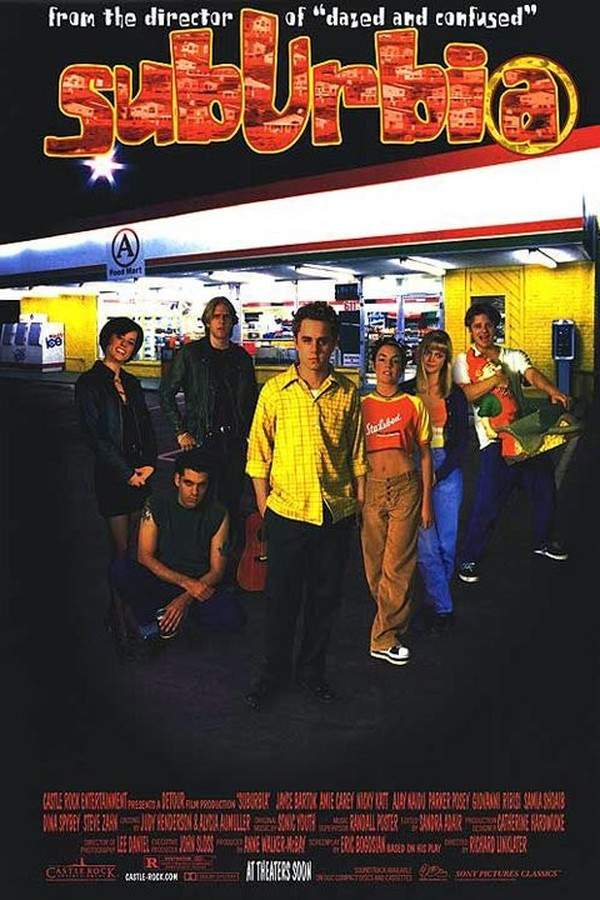
SubUrbia (1997) movie poster

Plot Summary

SubUrbia (1997) Plot Summary Explained

Release, runtime and language
1997 · 121 min · English
JustWatch #12,247 16
Directed by
Richard Linklater
Starring
Steve Zahn, Giovanni Ribisi

Five teenagers spend their days in a Texas suburb, drifting through life with little purpose and a growing sense of disillusionment. The arrival of Pony, a former friend who achieved rockstar success, shakes up their monotonous routines. His return forces them to examine their stagnant existence, the frustrations of small-town life, and the reasons they feel trapped. The film explores themes of ambition, disappointment, and the struggle to find meaning.

On this page (7)
  1. 1 Where to watch
  2. 2 What happens: full plot
  3. 3 Plot questions answered
  4. 4 The book behind the movie
  5. 5 Movie threads
  6. 6 Movies like SubUrbia
  7. 7 Every angle

Where to watch

Where to Watch SubUrbia (1997)

Where can you watch SubUrbia? Stream, rent or buy it in the US, including on Amazon Video, Apple TV Store and Fandango At Home: current JustWatch availability with up-to-date prices.

Streaming availability powered by JustWatch

Full plot summary · contains spoilers

What Happens in SubUrbia: Full Plot Summary

The whole story of SubUrbia (1997) explained, from the opening scene to the final frame: every key event, every twist and what it all adds up to. Read it as a quick recap before the sequel, to check a scene you missed, or to finally understand what really happened.

In the fictional town of Burnfield, a tight-knit circle of four young adults tows the line between boredom and trouble as they spend their nights at “the corner” outside a Circle A—a convenience store and gas station run by the couple Nazeer and Pakessa. The group centers on Jeff, who feels aimless and spends his time writing and dating Sooze, a community college student with dreams of studying visual arts in New York City. His closest companions are Buff, a reckless, bluntly frank friend whose bravado masks something more, and Tim, a heavy drinker with a troubled past who left the Air Force under less-than-sterling circumstances. The night scene is intimate and messy, a microcosm of their youth where loyalty and jealousy sit side by side with longing and fear.

Into this cluster enters a glossier, more complicated dynamic with Pony Moynihan, the lead singer of Dreamgirl, a rising rock band about to headline a stadium tour. Pony arrives home in a limousine with Erica, Dreamgirl’s publicist, and he’s eager to reconnect with old friends, even as the others wrestle with mixed feelings—Jeff, amid jealousy, senses a shift in the group’s dynamics when Pony asks Sooze to design the next Dreamgirl album cover. The mood lightens briefly as Bee-Bee, a shy friend of Sooze, joins the gathering, drawn by the promise of a story or a song. But the mood turns sour quickly: Nazeer’s boundary-keeping anger Bites Buff and Tim, who are told to leave the property, and a shove from Tim prompts Pakessa to brandish a gun, sending the crew scattering.

The night leads the friends on separate paths. Jeff and Sooze retreat to Whataburger for a tense, unresolved argument about her plans to move to New York, while Buff and Tim drift toward a liquor store. Buff, ever the opportunist, notices Bee-Bee alone and tells her about a cloud he filmed with a stolen video camera, and they end up sharing a moment of reckless intimacy in an abandoned van. Pony returns in the limo with Erica, and the reunion brings a mix of warmth and friction: Pony’s homecoming joy clashes with Jeff’s lingering resentment, and Buff’s unsteady flirtation with Erica tests the boundaries of the group. Erica, meanwhile, is drawn to Tim’s misanthropic edge, and Tim reveals a graphic truth about his discharge—that he cut off the tip of his own pinky finger as part of his past, a detail he uses to underline that he is not exactly a “nice guy,” even as Erica remains intrigued by his intensity.

As the night winds on, a sense of disarray returns when Tim tries to reassemble the night’s plan, and the group gathers at the Circle A once more. Jeff asks to stop so he can relieve himself, and the situation becomes murky: Buff lies passed out from drinking, Sooze and Pony share a private moment, and Bee-Bee sits with an unopened bottle, confessing her struggle with alcoholism and rehab. Jeff sits with her, listening as a bottle is opened and the moment grows heavier, and he speaks of his resolve to follow Sooze to New York, a vow that casts a quiet shadow over the group’s earlier camaraderie.

Wearied by the drama and the secrets spilling out, the crew reconvenes for a tense conversation. Tim’s evasiveness about Erica’s whereabouts and her absence on the phone heightens suspicion, and a heated argument erupts when Sooze decides to leave with Pony, with Buff decisively hopping into the limo as a last-minute friend-turned-companion. Jeff and Tim exit to look after Bee-Bee, who begins to guzzle down more alcohol. Soon the night takes a sharper turn: Nazeer calls the police after Tim’s escalating behavior, and Tim tearfully confesses to Jeff that he punched Erica in the van and left her there.

Left alone with silence and the dawning light, Jeff confronts the reality of what Tim has admitted. He discovers Erica’s cellphone outside the van, the evidence of a night that spiraled beyond control. As dawn approaches, Buff returns to the Circle A with a boastful swagger about moving to Los Angeles to shoot Dreamgirl’s next video, and he even claims more about Erica, though Jeff suspects he’s exaggerating. Erica herself eventually appears, unharmed, which complicates Jeff’s understanding of the night’s truth. Tim is briefly vindicated by Buff’s bravado, but Jeff remains unsettled, questioning whether anyone truly tells the whole truth in a night where fear and bravado collide.

The morning after brings a fragile and uneasy calm. Tim, fined and released after the arrest, returns, and the group’s earlier bravado and vulnerability collide once more as Buff and Erica drive away. Jeff confronts Tim, who revels in his own mischief and mocks Jeff for believing him, insisting that Jeff lacks the nerve to face what happened in the van. The tension peaks when, still intoxicated, Tim threatens Nazeer with a gun, sparking a standoff that ends with Nazeer pulling his own weapon. Tim climbs to the roof in a last act of defiance, sees Bee-Bee unconscious, and hands her down to Jeff—who believes she’s still breathing—and calls an ambulance. In the end, Nazeer’s sober assessment rings loud: the young men have thrown away what they thought they wanted, a warning that lingers as the sun rises and the town begins to wake.
Last updated: November 22, 2025 at 15:57

Was this helpful?

Plot questions answered

SubUrbia Plot Explained: Your Questions Answered

The questions people ask most about SubUrbia (1997): what happens in the confusing scenes, why the characters do what they do, the twists, hidden details and what the ending means. Each answer contains spoilers.

Q1

Why did Tim cut off his own pinky finger in the Air Force?

Tim cut off the tip of his own pinky finger as a way to get discharged from the Air Force. He reveals this disturbing detail to explain that he receives a disability check and to reinforce that he is not a 'nice guy.' This self-harm was his ticket out of the military, showing his willingness to hurt himself to escape situations he doesn't want to be in.

Foreshadowing: Earlier, Tim's troubled past and his less-than-sterling departure from the Air Force are mentioned, setting up this revelation about how he got out.

  • tim
  • air force
  • discharge
  • pinky finger
  • self harm
  • disablity
Q2

What really happened between Tim and Erica in the van?

Tim tearfully admits to Jeff that he punched Erica in the van and left her there. However, the truth remains ambiguous because Erica later returns unharmed, and Jeff finds her cellphone outside the van but never confirms what actually transpired. Buff also lies about sleeping with her, making it unclear who is telling the truth about the night's events.

Foreshadowing: Erica expresses interest in going to the van earlier, and Tim's inability to perform is mentioned, suggesting tension between them.

  • tim
  • erica
  • van
  • punch
  • assault
  • confession
Q3

Why does Sooze decide to leave with Pony instead of Jeff?

Sooze chooses to leave with Pony after he asks her to design Dreamgirl's next album cover, which represents a real opportunity for her artistic ambitions. Earlier, Jeff and Sooze argue at Whataburger about her plans to move to New York, and Jeff's drunken vow to follow her feels empty compared to Pony's tangible offer of collaboration and his glamorous rockstar life.

Foreshadowing: Jeff's jealousy intensifies when Pony asks Sooze for the album cover work, and their private moment at Circle A hints at a connection.

  • sooze
  • pony
  • leaves
  • album cover
  • dreamgirl
  • jealousy
Q4

Why is Jeff so resentful of Pony's success?

Jeff's jealousy stems from Pony's tangible success contrasted with Jeff's own stagnant life. Pony achieved what Jeff dreams of, fame, purpose, and the ability to leave Burnfield, while Jeff spends his time writing aimlessly and feeling trapped. Pony's return forces Jeff to confront his own failures and fear of never escaping their small-town existence.

Foreshadowing: Jeff is introduced as feeling aimless and writing, establishing his desire for something more before Pony arrives.

  • jeff
  • pony
  • jealousy
  • success
  • rockstar
  • dreamgirl
Q5

Is Bee-Bee alive at the end of SubUrbia?

Bee-Bee's condition at the end remains deliberately ambiguous. After guzzling alcohol throughout the night, she is found unconscious on the rooftop. Jeff believes she's breathing when he hands her down, but the film never confirms whether she survives. The uncertainty reflects the film's themes of unresolved youthful despair and the consequences of self-destruction.

Foreshadowing: Bee-Bee confesses to Jeff about her struggles with alcoholism and rehab, establishing her vulnerability.

  • bee-bee
  • alive
  • unconscious
  • roof
  • alcohol
  • ambiguous ending
Q6

Why does Buff lie about everything throughout the night?

Buff uses lies and exaggeration as a defense mechanism to mask his own insecurities and feel important. He boasts about filming a cloud with a stolen camera, claims he slept with Erica, and brags about going to Los Angeles to shoot Dreamgirl's video, none of which seem trustworthy. His bravado hides a deeper sense of inadequacy, and he even admits to Jeff that he exaggerates.

Foreshadowing: Buff is described as someone whose 'bravado masks something more' from the beginning.

  • buff
  • lying
  • exaggeration
  • boasting
  • bravado
Q7

Why does Nazeer call the police on the group?

Nazeer calls the police after Tim's escalating behavior becomes too threatening. Tim had already shoved Nazeer earlier in the night, and his intoxication and aggression continue to spiral. After Tim threatens Nazeer with a gun during the rooftop standoff, Nazeer takes action to protect himself and his property.

Foreshadowing: Tensions between Nazeer and the group escalate throughout the night, beginning with the first confrontation at Circle A.

  • nazeer
  • police
  • arrest
  • tim
  • circle a
  • gun
Q8

What is Pony's connection to Sooze and why does he want her to design the album cover?

Pony asks Sooze to design Dreamgirl's next album cover because he genuinely values her artistic abilities. This request represents a real opportunity for Sooze, bridging her passion for visual arts with a major rock band's visibility. The offer creates tension with Jeff, who sees it as Pony stealing his girlfriend and romantic future.

Foreshadowing: Sooze's dream of studying visual arts in New York is established early, making Pony's offer a concrete path to that dream.

  • pony
  • sooze
  • album cover
  • dreamgirl
  • art
  • opportunity
Q9

Why does Jeff make a drunken vow to follow Sooze to New York?

Jeff's drunken monologue about following Sooze to New York reveals his deep fear of losing her and his anxiety about his own directionless life. The vow comes after Bee-Bee opens up about her struggles, creating a heavy emotional moment. Jeff sees Sooze as his pathway out of Burnfield, and the vow is partly about proving to himself that he can commit to something meaningful.

Foreshadowing: Jeff's aimlessness and his relationship with Sooze are established from the start, along with Sooze's concrete plans to move to New York.

  • jeff
  • sooze
  • new york
  • vow
  • drunk
  • follow
Q10

What leads to Tim threatening Nazeer with a gun on the rooftop?

Tim's rooftop confrontation with Nazeer is the culmination of his escalating instability throughout the night. After being mocked by Jeff and Buff, arrested and fined, and confronting the aftermath of his actions with Erica, Tim snaps. He threatens Nazeer with a gun, leading to a standoff. This act represents his complete breakdown and final defiance before the night ends.

Foreshadowing: Tim's violent tendencies and trouble with authority build throughout the night, from shoving Nazeer to punching Erica.

  • tim
  • nazeer
  • gun
  • roof
  • standoff
  • threat
Q11

Why does the Circle A convenience store matter in the story?

Circle A serves as the central meeting place and symbolic heart of the group's stagnation. It's where they gather each night, where conflicts with Nazeer and Pakessa repeatedly occur, and where many key moments happen. The repeated returns to Circle A emphasize their circular, trapped existence in Burnfield, with the convenience store representing their limited world.

Foreshadowing: The opening scene establishes Circle A as their primary hangout spot, setting up its importance throughout.

  • circle a
  • convenience store
  • hangout
  • meeting place
  • stagnation
Q12

Does anyone tell the truth in SubUrbia?

The film leaves almost every truth uncertain, Buff's boasts are unreliable, Tim's confession about Erica may be exaggerated or false, and even Jeff's perceptions are questioned. The only clear truths are the group's collective dysfunction and their wasted potential. This ambiguity reinforces the film's exploration of how young people obscure reality with bravado, lies, and self-deception.

Foreshadowing: The pattern of characters lying and exaggerating is established early, with Buff's cloud story and Tim's military discharge story both containing questionable elements.

  • truth
  • lie
  • ambiguous
  • ending
  • deception
  • reliability

Movie threads

More Movies Like SubUrbia, by Mood & Story

Curated lists built around what makes SubUrbia tick: the same mood, the same kind of story or the same emotional payoff. Each list explains why these movies belong together.

Movies about a life-altering night like SubUrbia

A single, pivotal night that forces characters to confront their stagnant lives. If you liked the intense, single-night structure of SubUrbia, you'll find similar movies here. These films use a condensed timeline to explore character crises, escalating confrontations, and the raw emotions that surface when there's no escape from the truth.

  • claustrophobic
  • restless
  • confrontational
  • raw
  • anxious
  • reckoning
  • Tone: tense, raw, melancholic
  • Pacing: steady, real-time feel
Why these movies?

The story pattern: The narrative unfolds in real-time or over one night, serving as a crucible for characters. A catalyst event disrupts their routine, leading to a series of escalating confrontations and revelations that strip away their defenses, leaving them to grapple with the consequences as the night ends.

Why they belong together: These films are grouped by their shared structure—a tightly focused timeline that amplifies emotional tension. They explore how a single evening can become a turning point, characterized by raw dialogue, confrontational energy, and an ambiguous or bittersweet dawn that suggests change without clear resolution.

Movies about disillusioned youth like SubUrbia

Stories of disillusioned young adults grappling with ambition and reality. Find movies like SubUrbia that capture the specific angst of post-high school youth. These dramas explore themes of friendship tested by ambition, the frustration of small-town life, and the painful process of realizing that the future might not match your dreams.

  • aimless
  • disillusioned
  • restless
  • melancholic
  • generational angst
  • friendship
  • Tone: melancholic, tense, disillusioned
  • Pacing: steady, character-driven
Why these movies?

The story pattern: The narrative follows a close-knit but stagnant group of characters, often in a limiting environment. A catalyst—usually someone who 'made it out'—ruptures their dynamic, exposing jealousy, disappointment, and the underlying reasons for their paralysis. The story is driven by dialogue and character conflict rather than major plot events.

Why they belong together: These movies share a core thematic focus on generational disillusionment and the anxiety of potential wasted. They feature ensemble casts, a steady, character-driven pace, and a tone that blends melancholy with tension, resulting in endings that are often ambiguous, reflecting the unresolved nature of the characters' journeys.

If you liked this

Movies Like SubUrbia

Similar movies to SubUrbia: the same genre, themes or kind of story. Each one comes with its own plot summary, timeline and ending explained.

Browse all movie summaries

Every angle

SubUrbia (1997) Explained: Plot, Timeline & Characters

Everything about SubUrbia in one place: what happens in the plot summary, the timeline in chronological order, the characters and meaning and a spoiler-free summary. What's After the Movie adds the cast, box office and post-credit scenes.

Coming soon on iOS and Android

The Plot Explained Movie Summary App

Plot summaries, endings explained and timelines on your phone. Catch up on any movie in minutes, save your favorites and never miss a twist again.

Be the first to know when we launch. Your email stays private, always.

Learn more about the app