Plot Explained Spoilers guaranteed!
Plot Explained

Browse by genre

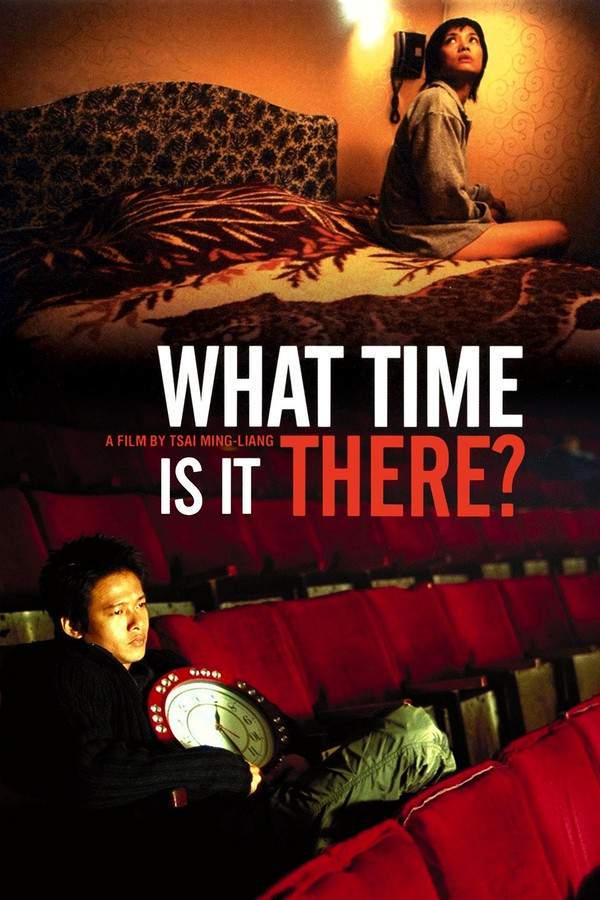
What Time Is It Over There? (2002) movie poster

Plot Summary

What Time Is It Over There? (2002) Plot Summary Explained

Release, runtime and language
2002 · 116 min · Chinese
Loading streaming availability…
Directed by
Ming-liang Tsai
Starring
Kang-sheng Lee, Shiang-chyi Chen

A street vendor's ordinary routine is unexpectedly changed when he meets a traveler on their way to Paris. Through their developing connection, the film explores themes of loneliness and the search for meaning in a chaotic urban environment. The encounter reveals the individual challenges each character faces, highlighting the power of human connection in unexpected places.

On this page (6)
  1. 1 Where to watch
  2. 2 What happens: full plot
  3. 3 Plot questions answered
  4. 4 Movie threads
  5. 5 Categories
  6. 6 Every angle
Loading streaming availability…

Full plot summary · contains spoilers

What Happens in What Time Is It Over There?: Full Plot Summary

The whole story of What Time Is It Over There? (2002) explained, from the opening scene to the final frame: every key event, every twist and what it all adds up to. Read it as a quick recap before the sequel, to check a scene you missed, or to finally understand what really happened.

Hsiao-kang, a street vendor in Taipei, makes a modest living selling watches from a briefcase. Following the recent passing of his father, life becomes increasingly complicated. In an unexpected turn of events, Shiang-chyi Chen arrives seeking a dual-time watch for her upcoming trip to Paris. Initially, Hsiao-kang refuses to part with his own personal watch, believing that selling it would bring him bad luck during his time of grief. However, Shiang-chyi's determination leads her to persuade him to change his mind and purchase it.

As Hsiao-kang navigates his sorrow, he witnesses his mother mourning deeply, leaving food and water in hopes of reconnecting with the spirit of her deceased husband. In an attempt to escape his feelings, Hsiao-kang finds solace in cinematic worlds, watching The 400 Blows, a film set in Paris, meanwhile obsessively adjusting the time on all the clocks and watches around him to match that city’s time.

In the City of Lights, Shiang-chyi explores her surroundings alone, visiting shops and dining at restaurants, while Hsiao-kang's mother grows more erratic—convinced that the changing times in their home signal her husband's return, leading to escalating tensions between her and Hsiao-kang.

In a twist of fate at a cemetery, Shiang-chyi encounters Jean-Pierre Léaud, the star of The 400 Blows. Later, she forms a bond with another Chinese woman at a restaurant, only to share a brief, intimate moment before the woman turns away. Meanwhile, Hsiao-kang's mother awkwardly sets the dinner table for her husband, indulging in her own moments of solitude afterward.

As Hsiao-kang attempts to cope with his emotional landscape, his night involves a fleeting connection with a prostitute, resulting in a loss when she steals his briefcase filled with watches while he sleeps. The cycle of sorrow and longing continues as Hsiao-kang returns home, lying beside his grieving mother, while Shiang-chyi finds herself lost in tears by a pool. Eventually, a mysterious figure resembling Hsiao-kang's father emerges, retrieving Shiang-chyi's suitcase from the water and disappearing into the night, leaving a haunting sense of unresolved connections in his wake.

Last updated: November 15, 2024 at 20:25

Was this helpful?

Plot questions answered

What Time Is It Over There? Plot Explained: Your Questions Answered

The questions people ask most about What Time Is It Over There? (2002): what happens in the confusing scenes, why the characters do what they do, the twists, hidden details and what the ending means. Each answer contains spoilers.

Q1

Why does Hsiao-kang refuse to sell his watch to Shiang-chyi?

Hsiao-kang refuses to sell his personal watch because he believes doing so would bring him bad luck during his period of mourning after his father's death. He is superstitious about parting with something so meaningful to him while he is still grieving, viewing the sale as potentially unlucky during this vulnerable time.

  • hsiao-kang
  • watch
  • refused sale
  • grief
  • superstition
  • paris
Q2

Why does Hsiao-kang obsessively set all clocks to Paris time?

After his father's death, Hsiao-kang uses the Paris time as a form of escapism. Watching 'The 400 Blows', a film set in Paris, further fuels his obsession. By setting every clock and watch to Paris time, he creates a symbolic connection to both the film and to Shiang-chyi, who has traveled there, using it as a way to mentally escape his grief and the painful atmosphere at home.

Foreshadowing: Earlier, Shiang-chyi specifically asks for a dual-time watch to know the time in Paris, establishing Hsiao-kang's fixation on the city.

  • paris time
  • clocks
  • escapism
  • the 400 blows
  • hsiao-kang
  • grief
Q3

Why does Hsiao-kang's mother believe the changing times signal her husband's return?

Hsiao-kang's mother is deeply entrenched in grief and denial following her husband's death. As she watches Hsiao-kang repeatedly change the clocks, she becomes convinced that these time changes are spiritual signs that her husband is returning to her. This belief represents her desperate attempt to maintain a connection with her deceased spouse and cope with her overwhelming loneliness.

  • mother
  • grief
  • husband's return
  • time changes
  • spiritual belief
  • denial
Q4

What is the significance of Shiang-chyi meeting Jean-Pierre Léaud at the cemetery?

The encounter is a direct intertextual reference to François Truffaut's 'The 400 Blows,' in which Jean-Pierre Léaud famously played the troubled protagonist Antoine Doinel. Meeting the actor in Paris, where the film is set, highlights Shiang-chyi's own sense of alienation and longing in a foreign city. It underscores the film's themes of urban isolation and the search for connection in unexpected places.

Foreshadowing: Hsiao-kang watches 'The 400 Blows' repeatedly, establishing the film's importance as a connection between the two characters.

  • jean-pierre leaud
  • the 400 blows
  • cemetery
  • paris
  • intertextual
  • shiang-chyi
Q5

Who is the mysterious figure who retrieves Shiang-chyi's suitcase from the pool?

The mysterious figure appears to resemble Hsiao-kang's deceased father. Given the film's ambiguous and ghostly tone, this figure seems to represent a spiritual manifestation or hallucination, possibly a symbol of unresolved connections between the living and the dead. His act of retrieving the suitcase creates a haunting link between the parallel narratives of Taipei and Paris, suggesting themes of grief transcending physical boundaries.

  • mysterious figure
  • father
  • pool
  • suitcase
  • ghost
  • resolution
Q6

Why does the prostitute steal Hsiao-kang's briefcase?

When Hsiao-kang engages the prostitute, he falls asleep after their encounter. While he sleeps, she steals his briefcase filled with watches and leaves. This event represents another instance of loss in Hsiao-kang's life, the briefcase was his livelihood as a street vendor. The theft underscores his vulnerability and the transactional, ultimately disconnected nature of his attempt at human connection.

  • prostitute
  • briefcase
  • theft
  • watches
  • hsiao-kang
  • loss
Q7

Why does Shiang-chyi cry by the pool in Paris?

Shiang-chyi breaks down beside a pool in Paris because she is overwhelmed by loneliness and longing despite being in one of the world's most romantic cities. Her encounters in Paris, the surreal meeting with Jean-Pierre Léaud and the fleeting connection with another Chinese woman who abruptly leaves, have left her emotionally drained. The pool scene represents her isolation and the gap between her expectations of Paris and the emotional reality she experiences.

  • shiang-chyi
  • pool
  • tears
  • loneliness
  • paris
  • isolation
Q8

What do the ending's unresolved connections signify?

The ending leaves both Hsiao-kang and Shiang-chyi in states of emotional limbo, lying beside their respective grief, unable to fully connect with others or find closure. The mysterious figure's appearance creates a supernatural link between their parallel stories, suggesting that grief and longing transcend physical distance. The unresolved nature reflects the film's meditation on how loss lingers and how human connection remains perpetually out of reach, even when desperately sought.

  • ending
  • unresolved
  • connections
  • grief
  • parallel narratives
  • loss
Q9

Why does Hsiao-kang's mother set the dinner table for her deceased husband?

Hsiao-kang's mother continues to set a place for her dead husband at the dinner table as part of her grieving ritual. This act represents her inability to accept his death and her desperate attempt to maintain normalcy and connection. By preserving his place at the table, she clings to the hope that he might still return, demonstrating the depth of her denial and loneliness.

  • mother
  • dinner table
  • husband
  • grief
  • ritual
  • denial
Q10

How do the parallel narratives in Paris and Taipei connect?

The Paris and Taipei storylines are connected through the characters' shared experiences of grief, loneliness, and longing for connection. Both Hsiao-kang and Shiang-chyi are searching for something, Hsiao-kang escapes into a fantasy of Paris through clocks and films, while Shiang-chyi physically travels there but finds only isolation. The mysterious figure at the end literally bridges their worlds, suggesting their emotional journeys are intertwined despite the geographic distance.

  • paris
  • taipei
  • parallel narratives
  • connection
  • hsiao-kang
  • shiang-chyi
Q11

Why is the watch such an important symbol in the film?

The watch represents multiple themes: time's passage and how we measure grief, connection across distance through the dual-time watch, and Hsiao-kang's livelihood and personal attachments. Selling his watch means parting with his last connection to his father and his only source of income. The act of setting all clocks to Paris time becomes a ritual of escape, while the stolen briefcase of watches signifies his complete loss.

  • watch
  • time
  • symbol
  • dual-time
  • paris
  • grief
  • loss

Movie threads

More Movies Like What Time Is It Over There?, by Mood & Story

Curated lists built around what makes What Time Is It Over There? tick: the same mood, the same kind of story or the same emotional payoff. Each list explains why these movies belong together.

Movies about urban solitude and melancholy like What Time Is It Over There?

Stories of quiet loneliness and subtle connections in the vast city. If you liked the quiet contemplation and themes of urban alienation in What Time Is It Over There?, explore these other films. This list features moody, character-focused stories set in cities, where loneliness and the search for human connection are central themes.

  • lonely
  • contemplative
  • somber
  • quiet
  • yearning
  • atmospheric
  • Tone: melancholic, contemplative
  • Pacing: slow, deliberate
Why these movies?

The story pattern: Narratives in this thread are often introspective and character-driven, focusing on individuals navigating their personal grief or alienation against the backdrop of an impersonal city. The plot is secondary to the atmospheric exploration of mood, with storylines unfolding through quiet observations and subtle interactions.

Why they belong together: These films are grouped by their shared melancholic tone, low intensity, and focus on the theme of urban loneliness. They create a specific, contemplative mood through slow pacing and a visual style that emphasizes the distance between people in crowded spaces.


Movies with ambiguous connections and yearning like What Time Is It Over There?

Films about brief encounters that leave a lingering, unresolved sense of longing. For viewers who appreciated the unresolved, dreamlike connection in What Time Is It Over There?, this list highlights similar films. Discover stories where brief encounters spark deep reflection and a lasting sense of longing, often with open-ended conclusions.

  • yearning
  • dreamlike
  • contemplative
  • bittersweet
  • unresolved
  • serendipity
  • Tone: melancholic, dreamlike
  • Pacing: slow, reflective
Why these movies?

The story pattern: Stories in this thread often follow a pattern of a chance meeting that disrupts a character's routine, creating a parallel narrative or a series of reflections. The central relationship remains undeveloped or physically distant, serving as a catalyst for internal change rather than a traditional romance, leading to an ambiguous ending that emphasizes feeling over plot resolution.

Why they belong together: These films share a specific narrative pattern of serendipitous, incomplete connections and an emotional core of yearning. They are united by a moderate emotional weight, ambiguous endings, and a dreamlike quality that prioritizes mood and theme over concrete story outcomes.

Categories

Movie Lists Featuring What Time Is It Over There?

What Time Is It Over There? appears in these hand-built movie categories. Each one groups movies by a specific mood, theme or story type, with their plot summaries and endings explained.

View all movie categories

Every angle

What Time Is It Over There? (2002) Explained: Plot, Timeline & Characters

Everything about What Time Is It Over There? in one place: what happens in the plot summary, the timeline in chronological order, the characters and meaning and a spoiler-free summary. What's After the Movie adds the cast, box office and post-credit scenes.

Coming soon on iOS and Android

The Plot Explained Movie Summary App

Plot summaries, endings explained and timelines on your phone. Catch up on any movie in minutes, save your favorites and never miss a twist again.

Be the first to know when we launch. Your email stays private, always.

Learn more about the app