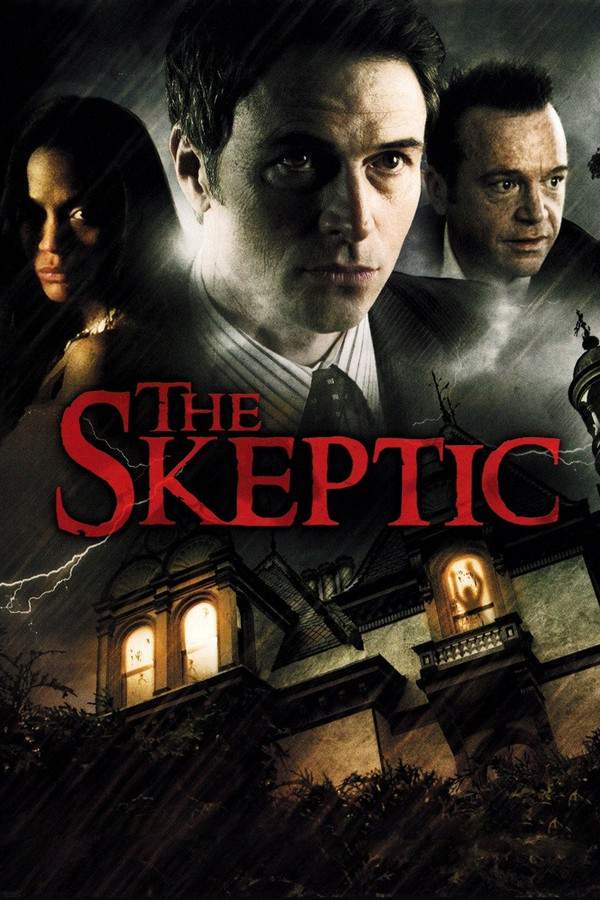
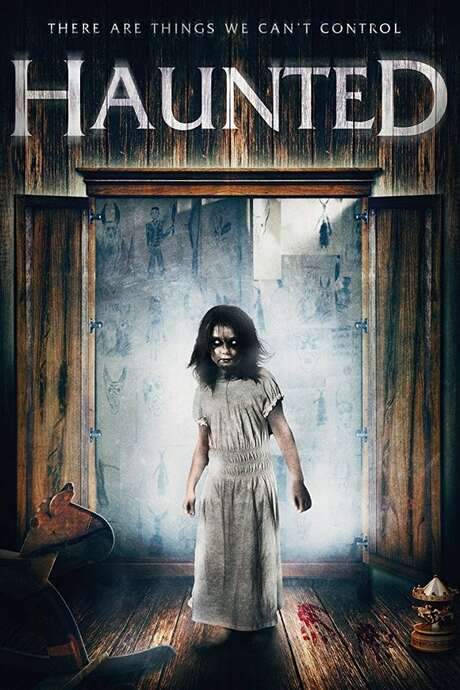
A police officer responds to a 911 call from a sprawling family home and discovers an elderly woman who has apparently died of fright, clutching a set of rosary beads. The story centers on Bryan Beckett, an overly analytical lawyer whose cool, rational attitude has strained his marriage and left him emotionally distant. When he learns that his elderly aunt has died, he assumes he stands to inherit her house as the sole remaining kin, and he sees the move as a chance to test his own theories about life, death, and memory.
Deciding to spend a few weeks in the aunt’s house to coax his wife toward a separation, Bryan finds that the place is anything but quiet. A friend and law partner, Sully, suffers a seizure while visiting and warns Bryan not to venture into a closet hidden behind a crucifix. The warning, though dismissed in the moment, lingers in the back of his mind as the house reveals itself to be far more unsettling than he expected.
Throughout his stay, odd, almost trivial phenomena begin to mount into a pattern: a chest in the upstairs bedroom shifts of its own accord, a concealed shrine sits behind the crucifix in the closet, and the house hums with unexplained noises and brief glimpses of a woman that seem almost real. These moments test Bryan’s skepticism; he wants science to explain everything, but the evidence around him resists easy categorization.
Bryan learns that the house was left to an institute focused on sleep disorders, a fact that deepens the tension between rational inquiry and inexplicable experiences. The institute’s director, Koven, guides him toward a research department that studies psychic energy, and although Koven claims they do not endorse paranormal explanations, Bryan cannot shake the sense that something beyond ordinary science is at work. He decides to challenge the terms of the will, hoping to uncover truth rather than merely validate his instinct to control his life.
The whispers Bryan hears about an old trunk, the strange fall of a stair, and the creeping sense of presence nudge him back toward the basement. A psychiatrist, Shepard, reassures him that his insomnia and stress could be amplifying his perceptions, but the visions grow more vivid. Cassie, a psychic subject from Koven’s program, arrives to scan the house and, together with Bryan, uncovers layers of details Bryan himself had kept hidden. Her insights unsettle him and the eerie noises—especially the sound of someone falling down a stair—continue to intrude on his thoughts.
When Bryan and Cassie pry open an old trunk in the basement, they confront a doll that fills him with a deeper fear than any prior anomaly. The emotional pressure becomes personal as memories surface: Bryan begins to recall his own childhood, specifically the pattern of abuse by his mother and the way she locked him in a closet for minor transgressions. Shepard confirms that as a five-year-old, Bryan had repressed the truth about what happened, a memory that both explains his present fear and ties the haunting to his family history. The revelation makes it clear that the ghost haunting the house is tied to his mother’s past actions.
Returning to the aunt’s home, Bryan hesitates at the doorway, sensing danger in the space he once dismissed. When he finally enters, a car belonging to Cassie is found in the driveway, yet the car seems nowhere to be seen when he checks again, casting doubt on every aspect of reality he thought he understood. He realizes that his mother is using a manipulation to draw him back into the house. In a fierce confrontation with the staircase and its memories, he discovers his mother’s body at the foot of the stairs, and a shock propels him to collapse. As he lies there, his mother’s touch brings a vision: a missed family picnic from the day before her death, and in that moment he senses an apology from her for her past deeds.
The curtain falls in darkness as Bryan confronts the truth his childhood self tried to forget. The house, the memories, and the spectral presence converge on the staircase, leaving him at the threshold of a reckoning with the past and a future where he must decide what to believe about life, memory, and the forces that shape them.