Plot Explained Spoilers guaranteed!
Plot Explained

Browse by genre

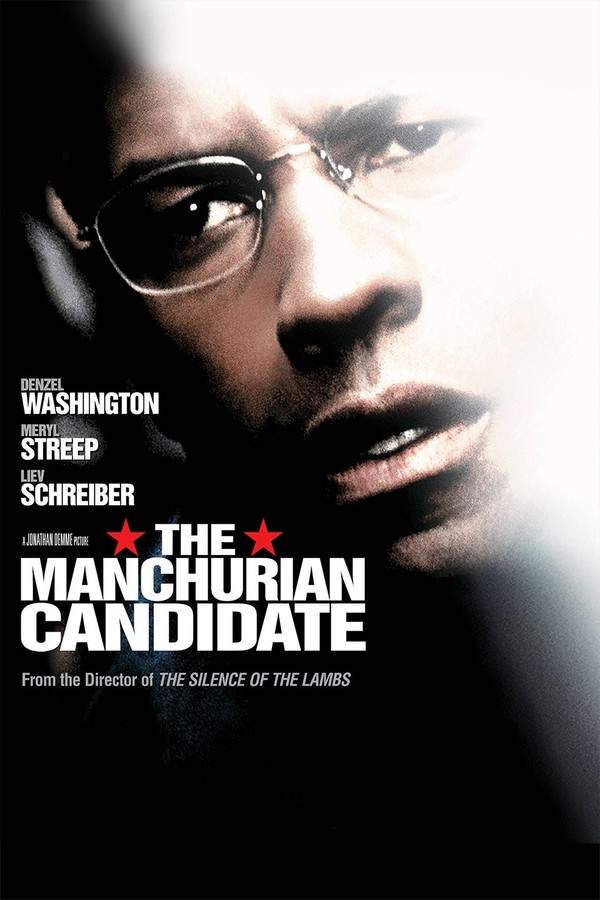
The Manchurian Candidate (1962) movie poster

Plot Summary

The Manchurian Candidate (1962) Plot Summary Explained

Release, runtime and language
1962 · 126 min · English
Directed by
John Frankenheimer
Starring
Frank Sinatra, Laurence Harvey

Following the Korean War, a returning platoon is celebrated as heroes, but harbors dark secrets planted by communist forces. Sergeant Raymond Shaw, a decorated soldier, and Captain Bennett Marco, a troubled veteran, find themselves caught in a web of manipulation and paranoia. As they uncover a sinister plot, they must confront a desperate fight against powerful forces and a looming threat to national security, battling to expose the truth before it’s too late.

On this page (7)
  1. 1 Where to watch
  2. 2 What happens: full plot
  3. 3 Plot questions answered
  4. 4 The book behind the movie
  5. 5 Movie threads
  6. 6 Movies like The Manchurian Candidate
  7. 7 Every angle

Where to watch

Where to Watch The Manchurian Candidate (1962)

Where can you watch The Manchurian Candidate? Stream, rent or buy it in the US, including on YouTube Free, Amazon Video and Apple TV Store: current JustWatch availability with up-to-date prices.

Streaming availability powered by JustWatch

Full plot summary · contains spoilers

What Happens in The Manchurian Candidate: Full Plot Summary

The whole story of The Manchurian Candidate (1962) explained, from the opening scene to the final frame: every key event, every twist and what it all adds up to. Read it as a quick recap before the sequel, to check a scene you missed, or to finally understand what really happened.

In the dramatic backdrop of the Korean War in 1952, an American platoon finds themselves captured by Soviet forces and subsequently taken to Manchuria, located in Communist China. Once the conflict concludes, these soldiers return to the United States, and Staff Sergeant Raymond Shaw, played by Laurence Harvey, is heralded as a hero, credited for saving the lives of his comrades in battle. Following a commendation from their platoon's commander, Captain Bennett Marco, portrayed by Frank Sinatra, Shaw is awarded the prestigious Medal of Honor for his alleged heroic deeds. When asked about Shaw, Marco and the other soldiers instinctively proclaim, > "Raymond Shaw is the kindest, bravest, warmest, most wonderful human being I've ever known in my life." Yet, lurking beneath the surface is a profound sense of unease—Marco concedes, "It isn't as if Raymond is hard to like. He's impossible to like!"

Having advanced to the rank of Major, Marco grapples with the torment of recurring nightmares that haunt him. These vivid dreams feature a hypnotized Shaw, who gruesomely murders fellow soldiers under the chilling gaze of prominent military officials from communist countries. The nightmarish scenarios stem from a sinister brainwashing experiment, where Shaw and his platoon are conditioned to believe their captors in the Korean military are harmless, aging American ladies from a local garden club. Driven by a desire to uncover the truth, Marco seeks assistance but is met with resistance from Army Intelligence due to a lack of tangible evidence. However, he soon discovers that another soldier from his unit, Allen Melvin (played by James Edwards), shares his haunting visions. When both Marco and Melvin identify key figures from their dreams as influential leaders in communist regimes, Army Intelligence reluctantly agrees to support their investigation.

Behind the scenes, Shaw's formidable mother, Mrs. Eleanor Iselin (played by Angela Lansbury), wields significant influence, driving the ambitions of her husband, Shaw's step-father, Senator John Yerkes Iselin (James Gregory). Iselin is a flamboyant demagogue reminiscent of Joseph McCarthy, often dismissed by many as a political buffoon. Shaw harbors deep loathing for both his parents, especially his overbearing mother. Senator Iselin's political fortunes rise dramatically when he disrupts a televised press conference to accuse the Secretary of Defense of harboring communists within the Defense Department, eliciting outrage and chaos among the media and government officials alike.

Unbeknownst to all, including Shaw, the Iselins (or primarily Mrs. Iselin) are covert agents for a Stalinist agenda aimed at an ambitious takeover, potentially even reaching the White House. Shaw himself has been conditioned to become an unwitting assassin, his actions activated by the sight of a Queen of Diamonds playing card. Once this stimulus is presented, he must follow through with the orders of whoever triggers him. Shockingly, it is revealed that Shaw's esteemed recognition for valor is a fabricated memory implanted by their communist captors, and the true valiant actions attributed to him never occurred.

Amidst this treacherous landscape, Shaw experiences a fleeting moment of happiness reviving an old romance with Jocelyn Jordan (Leslie Parrish), the daughter of Senator Thomas Jordan (John McGiver), who stands as one of his stepfather’s political adversaries. Their initial relationship was strategized by Shaw as a means to rebel against his parents, yet genuine feelings blossom between them. Mrs. Iselin, however, disrupts their union to further her political ambitions but eventually orchestrates their reunion in pursuit of Senator Jordan's support for Iselin’s unexpected bid for vice presidency.

During a costume party at the Iselin residence, Jocelyn, donning a Queen of Diamonds ensemble, unwittingly activates Shaw's conditioning, leading to their clandestine elopement. Although Senator Jordan tolerates this match, he forewarns Mrs. Iselin of his intent to seek impeachment against her husband should he pursue the vice-presidential seat. In a cruel twist of fate, Shaw’s mother triggers his conditioning, setting him on a path to assassinate Jordan. In a tragic turn, Jocelyn stumbles upon their confrontation and falls victim as a witness to the act. Raymond, shrouded in confusion and grief, is devastated when he uncovers the truth behind the heinous acts he has committed.

As Marco delves deeper into the mystery, he uncovers the pivotal role of the Queen of Diamonds card in Shaw's trance-like state for carrying out murderous assignments. In a desperate attempt to save Shaw, Marco meets with him, utilizing a deck filled solely with Queen of Diamonds cards, effectively revealing the complete narrative of his conditioning. He urges Shaw to sever his ties with the card forever and defy any future commands from those controlling him. Meanwhile, Mrs. Iselin continues her sinister plot, priming her son to assassinate the presidential candidate during a convention speech, thereby securing her husband's rise in the political hierarchy. She chillingly insists that her son may never grasp the full scope of their plot, while she vows revenge against those she believes have manipulated her son's fate.

As the convention unfolds, Marco rushes to halt Shaw’s assignment. Disguised as a Catholic priest, Raymond takes aim, poised to execute his sinister directive. In a shocking climax, instead of carrying out his instructions, he turns the rifle on his stepfather and mother, eliminating them as they lay dead before him. Overcome with despair, he then takes his own life in front of Marco, clad in the undeserved honor of the Medal of Honor, leaving a grim conclusion to a devastating tale of manipulation and tragedy.

Last updated: January 19, 2025 at 18:49

Was this helpful?

Plot questions answered

The Manchurian Candidate Plot Explained: Your Questions Answered

The questions people ask most about The Manchurian Candidate (1962): what happens in the confusing scenes, why the characters do what they do, the twists, hidden details and what the ending means. Each answer contains spoilers.

Q1

What does the Queen of Diamonds trigger do to Raymond Shaw?

The Queen of Diamonds is the programmed stimulus that activates Raymond Shaw's hypnotic conditioning. When Shaw sees the card, whether in person, on clothing, or as a visual cue, he enters a trance-like state and must carry out whatever order is given to him by whoever triggered him. The conditioning was implanted during his brainwashing in Manchuria, and he has no memory of his actions once the trigger is activated. This is how Mrs. Iselin controls him as an unwitting assassin.

Foreshadowing: The brainwashing experiment is established early when Marco's nightmares show Shaw murdering soldiers under the gaze of communist officials.

  • queen of diamonds
  • raymond shaw
  • brainwashing
  • trigger
  • conditioning
  • hypnosis
Q2

What is Mrs. Iselin's real agenda in the movie?

Mrs. Eleanor Iselin is revealed to be a covert Soviet agent working toward a Stalinist political takeover of the United States government. She manipulates her husband Senator John Yerkes Iselin, a loud-mouthed demagogue, to rise in political power, ultimately aiming for the vice presidency and potentially control of the White House. Her son Raymond is merely a tool in this scheme, programmed to assassinate whoever she targets, including political rivals and ultimately the presidential candidate.

Foreshadowing: Mrs. Iselin's intense control over her husband and son is evident from the start, with her directing every major political and personal decision.

  • mrs elisin
  • senator iselin
  • communist
  • soviet agent
  • political conspiracy
  • manipulation
Q3

Why does Raymond Shaw kill Jocelyn Jordan?

Raymond Shaw kills Jocelyn Jordan because his mother triggers his conditioning and orders him to assassinate Senator Thomas Jordan, Jocelyn's father and a political rival to Senator Iselin. When Jocelyn unexpectedly witnesses the murder of Senator Jordan, Shaw's programming compels him to eliminate her as a witness. Shaw has no control over these actions, he is essentially a human weapon operating on automatic pilot. The tragic irony is that his own mother activates the order that leads to his lover's death.

Foreshadowing: The costume party scene shows Jocelyn in a Queen of Diamonds outfit, inadvertently triggering Shaw's conditioning for the first time.

  • jocelyn jordan
  • raymond shaw
  • assassination
  • senator jordan
  • murder
  • conditioning
Q4

Why does Major Marco have nightmares about Raymond Shaw?

Major Marco experiences recurring nightmares about Shaw because both men were subjects of the same Soviet brainwashing experiment in Manchuria. The communists conditioned Shaw to become an assassin, but they also programmed Marco with a secondary layer, he was conditioned to dream about Shaw's programming, effectively serving as a living surveillance system. The nightmares are literally Marco's mind showing him the truth about what was done to Shaw, though at first he doesn't understand what he's seeing.

Foreshadowing: The nightmares begin shortly after Marco returns home, showing violent images of communist officials observing Shaw.

  • major marco
  • raymond shaw
  • nightmares
  • brainwashing
  • soviet captivity
  • conditioning
Q5

Why does Raymond Shaw shoot his parents instead of the presidential candidate?

At the climactic convention, Raymond Shaw was programmed to assassinate the presidential nominee. However, when Mrs. Iselin triggers his conditioning, Shaw experiences a moment of profound clarity and free will. He recognizes that his mother has been using him as a puppet throughout his entire life, not just in the assassination plot, but in every aspect of his existence. In an act of desperate agency, he turns the rifle on his mother and stepfather instead, killing them before taking his own life. This is his first and only genuine choice.

Foreshadowing: Throughout the film, Shaw harbors deep-seated hatred for his mother, which he suppresses but never loses.

  • raymond shaw
  • parents
  • convention
  • assassination
  • free will
  • climax
  • ending
Q6

Is Raymond Shaw's Medal of Honor actually earned?

No. Raymond Shaw's Medal of Honor is entirely fabricated. The communists implanted a false memory in the entire platoon, Shaw never actually saved anyone or performed any heroic acts during the Korean War. The story of his valor was constructed as part of the brainwashing protocol to give Shaw status and influence in American society, making him a more valuable asset for their eventual political conspiracy. Even Marco's recommendation was part of the programming, as he was conditioned to believe Shaw was a hero.

Foreshadowing: Marco's uncomfortable admission that Raymond is "impossible to like" hints that something is fundamentally wrong with the hero narrative.

  • medal of honor
  • raymond shaw
  • fabricated
  • false memory
  • brainwashing
  • korean war
Q7

What is the overall conspiracy in The Manchurian Candidate?

The conspiracy is a Soviet-backed operation to infiltrate and ultimately take control of the U.S. government. The communists brainwashed an entire American platoon, turning Raymond Shaw into a programmable assassin and Major Marco into an unwitting witness to the programming. Mrs. Iselin, a Soviet agent, guides her husband Senator Iselin toward the vice presidency through demagogic tactics. The ultimate goal is to place a puppet in power who will serve Stalinist interests, with Shaw potentially being used to eliminate the presidential candidate and clear the path for Iselin.

Foreshadowing: The film opens with the brainwashing scene in Manchuria, establishing the conspiracy's origin before the soldiers return home.

  • communist conspiracy
  • soviet
  • brainwashing
  • senator iselin
  • political takeover
  • infiltration
Q8

Why do Marco and Melvin have the same nightmares?

Marco and Melvin share the same nightmares because both men underwent the same Soviet brainwashing procedure in Manchuria. The communists programmed Shaw as the primary assassin, but they also planted a secondary mechanism in Marco and potentially other soldiers, specifically, they were made to dream about Shaw's conditioning as a form of encrypted self-reporting. The shared dreams serve as proof to Army Intelligence that something happened to the platoon, though the full purpose of this dual programming remains part of the conspiracy's sophistication.

Foreshadowing: Both men independently report the same dreams about communist officials observing Shaw's violent actions.

  • allen melvin
  • major marco
  • shared dreams
  • brainwashing
  • soviet programming
  • evidence
Q9

Why does Raymond Shaw hate his mother?

Raymond Shaw hates his mother because Mrs. Iselin has controlled every aspect of his life since childhood, treating him not as a son but as a political tool to advance her and her husband's ambitions. She manipulates his career, his relationships, and ultimately his free will through the brainwashing she now exploits. Shaw's deep resentment is also fueled by the knowledge that his own mother is responsible for turning him into a murderer, he recognizes her as the true architect of his tragedies, even before he fully understands the programming.

Foreshadowing: Shaw's visceral hatred for his mother is evident early in the film, though the full depth of her manipulation is revealed later.

  • raymond shaw
  • mrs elisin
  • mother
  • hatred
  • control
  • manipulation
  • resentment
Q10

What is Jocelyn Jordan's purpose in the conspiracy?

Jocelyn Jordan becomes a pawn in Mrs. Iselin's political strategy. Initially, Raymond dates Jocelyn to rebel against his parents, but Mrs. Iselin later orchestrates their reunion to secure Senator Jordan's support for Iselin's vice presidential bid. When that political alliance fails, Mrs. Iselin orders Shaw to assassinate Senator Jordan, using Jocelyn as an unwitting trigger and ultimately a witness that must be eliminated. Jocelyn represents how the Iselins use and destroy anyone, even their own son's genuine happiness, for political gain.

Foreshadowing: Mrs. Iselin's sudden approval of Jocelyn after initially opposing her relationship signals her political calculation.

  • jocelyn jordan
  • senator jordan
  • political pawn
  • iselin conspiracy
  • raymond shaw

Movie threads

More Movies Like The Manchurian Candidate, by Mood & Story

Curated lists built around what makes The Manchurian Candidate tick: the same mood, the same kind of story or the same emotional payoff. Each list explains why these movies belong together.

Cold War Paranoia Thrillers like The Manchurian Candidate

Thrillers where a hidden enemy and a vast conspiracy fuel deep-seated fear. If you liked the tense, conspiratorial atmosphere of The Manchurian Candidate, explore more movies like it. This section features similar Cold War thrillers and political conspiracy stories where paranoia and the threat of hidden enemies create a gripping, suspenseful experience.

  • paranoid
  • suspenseful
  • cold war
  • anxious
  • conspiratorial
  • claustrophobic
  • Tone: tense, paranoid, bleak
  • Pacing: steady, methodical
Why these movies?

The story pattern: Stories in this thread typically follow characters uncovering a vast, sinister plot orchestrated by a shadowy enemy, often a foreign power. The narrative focuses on unraveling the conspiracy, dealing with untrustworthy allies, and confronting the psychological toll of realizing that the world is not as safe or straightforward as it seems.

Why they belong together: Movies are grouped here based on their shared setting or thematic focus on Cold War-era tensions, political conspiracies, and the psychological state of paranoia. They create a similar viewing experience defined by suspicion, a looming threat to society, and high-stakes intrigue.

Psychological Thrillers About Lost Agency like The Manchurian Candidate

Stories where characters fight to reclaim their minds from external control. For viewers who appreciated the psychological horror of brainwashing in The Manchurian Candidate, this section highlights similar movies about lost free will. Discover thrillers where characters are manipulated or controlled, fighting a desperate internal and external battle for their own mind.

  • psychological
  • unsettling
  • tragic
  • manipulation
  • brainwashing
  • dark
  • Tone: dark, tense, tragic
  • Pacing: steady, deliberate
Why these movies?

The story pattern: The narrative pattern involves a character who is, or discovers they have been, turned into an unwitting pawn. The journey is one of uncovering the manipulation, experiencing the horror of their conditioned actions, and attempting to break their programming, often with tragic or bittersweet consequences.

Why they belong together: These films are united by the central theme of psychological manipulation and the loss of personal agency. They share a heavy emotional weight, complex character psychology, and a tense, often bleak tone that explores the horrifying idea of being controlled against one's will.

If you liked this

Movies Like The Manchurian Candidate

Similar movies to The Manchurian Candidate: the same genre, themes or kind of story. Each one comes with its own plot summary, timeline and ending explained.

Browse all movie summaries

Every angle

The Manchurian Candidate (1962) Explained: Plot, Timeline & Characters

Everything about The Manchurian Candidate in one place: what happens in the plot summary, the timeline in chronological order, the characters and meaning and a spoiler-free summary. What's After the Movie adds the cast, box office and post-credit scenes.

Coming soon on iOS and Android

The Plot Explained Movie Summary App

Plot summaries, endings explained and timelines on your phone. Catch up on any movie in minutes, save your favorites and never miss a twist again.

Be the first to know when we launch. Your email stays private, always.

Learn more about the app