Plot Explained Spoilers guaranteed!
Plot Explained

Browse by genre

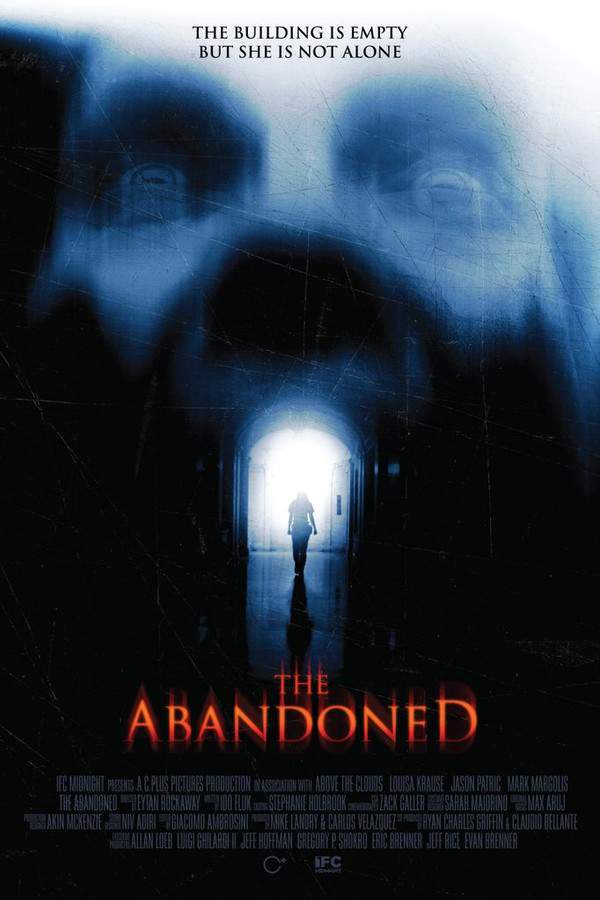
The Abandoned (2016) movie poster

Plot Summary

The Abandoned (2016) Plot Summary & Ending Explained

Release, runtime and language
2016 · 86 min · English
Loading streaming availability…
Directed by
Eytan Rockaway

Seeking redemption from a troubled past, Streak takes a job at a decaying apartment complex. As she explores the abandoned building, she discovers a sinister presence that threatens her sanity. The unsettling atmosphere and strange occurrences force her to confront not only the malevolent force within the complex, but also the darkness within herself. She must fight to maintain her grip on reality as the night progresses and the true terror of the building is revealed.

On this page (6)
  1. 1 Where to watch
  2. 2 What happens: full plot
  3. 3 Plot questions answered
  4. 4 How it ends
  5. 5 Movie threads
  6. 6 Every angle
Loading streaming availability…

Full plot summary · contains spoilers

What Happens in The Abandoned: Full Plot Summary

The whole story of The Abandoned (2016) explained, from the opening scene to the final frame: every key event, every twist and what it all adds up to. Read it as a quick recap before the sequel, to check a scene you missed, or to finally understand what really happened.

Julia Streak [Louisa Krause] is a troubled, antipsychotic-dependent young woman who takes a job as a night guard at a grand but abandoned apartment complex so she can support her daughter, Clara [Morgan Waulters]. She is accepted by master keeper Dixon Boothe [Ezra Knight] and introduced to the only other security guard for the complex, the rude paraplegic Dennis Cooper [Jason Patric], who has been working at the complex since it opened. While patrolling, Julia hears whispers from Room 441, whose access is blocked by a locked door. Cooper denies that there is anything unusual behind the door, claiming that the owners left the room unfinished.

Sometime later, a homeless man, Jim [Mark Margolis] attempts to enter the complex. Cooper refuses him access, but Julia allows him shelter under the condition that he does not wander. Using a hammer from Jim's belongings, Julia breaks the lock and discovers that camera 441 is a corridor leading to a dormitory. Meanwhile, Jim wanders anyway and follows Julia into the dormitory. There, Julia encounters a number of deformed children. She calls for Cooper's aid, but the two end up losing track of Jim. Jim, now at the dormitory, is then killed by a blonde girl, who smashes his head with a faucet.

Julia searches through the internet and finds a video of the Wellville, a center for deformed and mentally-challenged children, which had been accused of abusing its patients. Julia connects the center with the dormitory but Cooper, having found out that she is dependent on anti-psychotics, handcuffs her while he agrees to go down to Room 441 alone. However, his wheelchair is forced to the dormitory, where he is haunted by the deformed children.

Following Cooper, Julia meets an apple-cheeked boy [Henry Kelemen], who gives her more details about Wellville: the children, four in total, attempted to escape, but they were caught and forced inside a room containing a reservoir of contaminated water. By the time that the Wellville's crimes were revealed, all but one had died. Thinking that the survivor struggling to get out of the reservoir is Clara [Morgan Waulters], Julia jumps inside, despite Cooper's warning. She is saved by Cooper from drowning at the cost of his life. Finding the door locked, Julia asks for mercy and is confronted by the children, including the face-deformed blonde girl. She convinces the girl to forgive her, after which the children allow her to leave.

It is revealed that all the events were happening inside Julia's mind. Julia is in fact the deformed girl, being the daughter of "Dennis Cooper", whom she gave a new identity in her dream. Dixon is the doctor assigned to her, Jim a sickly old man being treated next to her, while Clara is the name of her doll. The film ends with Julia flatlining after being on life support since she was a child, next to her grieving father.
Last updated: October 09, 2025 at 16:18

Was this helpful?

Plot questions answered

The Abandoned Plot Explained: Your Questions Answered

The questions people ask most about The Abandoned (2016): what happens in the confusing scenes, why the characters do what they do, the twists, hidden details and what the ending means. Each answer contains spoilers.

Q1

Who is Julia in The Abandoned and why is she at the apartment complex?

Julia appears to be a night guard at the apartment complex, but the twist reveals she is actually a deformed girl who has been on life support since childhood. The entire story takes place in her mind as she幻想. In her delusion, she gave herself a new identity as Julia Streak, a mother with a daughter named Clara, to create a different life for herself. The apartment complex is a construct of her dying mind.

Foreshadowing: Early in the film, Julia is shown dependent on antipsychotics, hinting at her fragile mental state.

  • julia streak identity
  • twist reveal
  • protagonist real identity
  • mind game
  • psychological horror twist
Q2

Who is Clara in The Abandoned and is she real?

Clara is not Julia's biological daughter. The reveal shows that Clara is actually the name of Julia's doll from when she was a child. In Julia's delusion, she transformed the doll into her daughter to give herself a maternal identity and a reason to take the job and survive. The real Julia has been in a hospital on life support since she was a child, having suffered severe deformities from the Wellville abuse.

Foreshadowing: Julia mentions her daughter Clara early on, but the film never shows Clara directly, only references to her.

  • clara character
  • is clara real
  • julia daughter
  • doll identity twist
Q3

Who is Dennis Cooper to Julia in The Abandoned?

Dennis Cooper is Julia's father, not a fellow security guard. In Julia's delusion, she transformed her father into the paraplegic guard who works at the complex. The real Cooper is the grieving father seen at the film's end, sitting beside Julia's hospital bed as she flatlines. In the dream, Cooper was given a wheelchair and a different name as part of Julia's distorted reinterpretation of her actual family.

Foreshadowing: Cooper is unusually protective of Julia and seems to know more about the building than he admits.

  • dennis cooper relationship
  • julia father
  • character twist
  • real identity
Q4

What was Wellville and what happened to the children there?

Wellville was a residential center for deformed and mentally challenged children that had been accused of abusing its patients. The film reveals that four children at the facility attempted to escape after being mistreated, but they were caught and forcibly locked inside a room containing a reservoir of contaminated water. By the time the center's crimes were exposed, three of the four children had died. Only one survived, the deformed girl who is actually Julia herself.

Foreshadowing: Julia's internet search and the apple-cheeked boy's testimony both reference Wellville's dark history.

  • wellville children home
  • wellville abuse
  • child horror
  • facility backstory
Q5

What is behind Room 441 in The Abandoned?

Room 441 leads to a hidden dormitory where the deformed children from Wellville were kept. In Julia's mind, this became a dark corridor in the abandoned apartment complex. The locked door represents her subconscious attempt to hide the traumatic memories of what happened to her and the other children at Wellville. The dormitory is where the children聚集 in her delusion, and where Jim is killed by the blonde girl.

Foreshadowing: Julia hears whispers from Room 441 early in the film, and Cooper repeatedly denies anything unusual behind the door.

  • room 441 secret
  • hidden dormitory
  • apartment complex mystery
  • wellville children
Q6

Why does Julia jump into the reservoir to save Clara?

Julia believes the survivor struggling in the reservoir is her daughter Clara, but in reality, she is responding to her own childhood trauma. The survivor in the water represents the part of herself she has been trying to save throughout the film, her innocent child self that suffered at Wellville. Her maternal instinct in the delusion drives her to rescue who she thinks is Clara, but she is actually trying to rescue her own dying child-self.

Foreshadowing: The apple-cheeked boy tells Julia that one child survived and is trying to escape the reservoir, triggering her desperate action.

  • reservoir scene
  • julia rescue
  • clara drowning
  • psychological motivation
Q7

How and why does Cooper die in The Abandoned?

Cooper dies after Julia jumps into the reservoir to save Clara. When Julia goes into the contaminated water, Cooper rescues her at the cost of his own life, drowning in the process. This represents Julia's father sacrificing everything to save his daughter in the real world, keeping her on life support for years despite her condition. In the dream, Julia repays this sacrifice by allowing Cooper to die so she can live.

Foreshadowing: Cooper warns Julia not to go into the water, mirroring a father's protective instinct.

  • cooper dies
  • death scene
  • sacrifice
  • reservoir drowning
Q8

Why does the blonde girl kill Jim in The Abandoned?

The blonde girl kills Jim because he has entered the sacred space of the dormitory, which represents the children's hidden trauma. In Julia's mind, the deformed children are protective of their secret location and react violently to intruders. The blonde girl, who has the most severe facial deformities, is the most aggressive defender of this space. Jim's death reflects how Julia's subconscious processes the violence done to the children at Wellville, they will attack anyone who discovers their existence.

Foreshadowing: The children are first encountered as threatening figures hiding in the shadows of the dormitory.

  • blonde girl kills jim
  • murder scene
  • jim death
  • deformed children violence
Q9

Is the apartment complex real in The Abandoned?

No, the entire apartment complex exists only in Julia's mind. The grand abandoned building is a psychological construct, a manifestation of her confused memories of the hospital where she has been on life support. The rooms, corridors, and the mysterious Room 441 represent different aspects of her traumatic past. The building is decaying and dark because it represents the deterioration of her own mind and the bleak reality of her situation.

Foreshadowing: The apartment complex has an unrealistic, dreamlike quality with endless hallways and impossible geography.

  • apartment complex real
  • fantasy vs reality
  • mind game
  • psychological construct
Q10

What does the ending of The Abandoned mean?

The ending reveals that Julia has been on life support in a hospital since she was a child, suffering from severe deformities caused by the abuse at Wellville. The entire film was a prolonged death fantasy, a final mental journey where she created alternate identities to give herself the life she never had. The flatline represents her finally letting go and dying, with her grieving father beside her. The film is ultimately a tragic tale of a child who never woke up from her trauma, and the ending confirms she dies alone in a hospital bed.

Foreshadowing: Throughout the film, Julia struggles to maintain her grip on reality, and the boundaries between the dream and waking life blur increasingly.

  • ending explained
  • flatline death
  • hospital scene
  • final twist
  • movie conclusion
Q11

Who is Jim in The Abandoned and what does he represent?

Jim is a homeless man who seeks shelter in the apartment complex, but he is actually a construct of Julia's mind representing a sickly old man who was treated in the hospital bed next to hers. In her delusion, Julia gave him a different appearance, the homeless man with a hammer, but his core identity as a neighboring patient remains. He follows Julia into the dormitory and is killed, symbolizing how Julia's mind processes the other patients she observed during her years in the hospital.

Foreshadowing: Jim carries a hammer, which Julia uses to break the lock, symbolically unlocking her suppressed memories.

  • jim character
  • homeless man identity
  • hospital patient
  • dream character
Q12

Who is Dixon Boothe in The Abandoned?

Dixon Boothe is Julia's doctor in real life. In Julia's dream, she transformed him into the master keeper of the apartment complex, the person who welcomes her to the building and assigns her the job. This represents how Julia perceived the medical staff who controlled her life in the hospital. As the master keeper, Dixon has authority over the building, just as doctors had authority over her body and care. He appears at the beginning to introduce Julia to her role, mirroring how a doctor would introduce treatment plans.

Foreshadowing: Dixon appears briefly at the start but has minimal interaction with Julia, like a distant authority figure.

  • dixon boothe identity
  • doctor character
  • master keeper
  • hospital staff

Ending explained

What Happens at the End of The Abandoned?

How The Abandoned (2016) ends, in short: the final scene, the last twist and what it means for the characters. The full ending explained, with every spoiler, lives on its own page.

Read the full ending explained

In the end, Wu finally confronts and captures Chang-Fu, the murderer responsible for Waree’s and Yeti’s deaths, along with the others he had killed. She finds him on the top floor of his compound, where he’s been keeping many of his victims’ hearts and fingers as twisted trophies. Chang-Fu, a man devastated by love lost and driven by a sick desire for revenge, reveals that he is the killer. His motivation stems from his painful breakup with his wife, which led him to see immigrant women as objects of betrayal and disdain, resulting in his gruesome acts of mutilation and murder.

When Wu locates Saipin, she arrives just in time to prevent Chang-Fu from killing her. He tries to trap Wu in a room with her, but she fights back fiercely, managing to wound him and ultimately shooting him in the chest to stop his rampage. As the building fills with deadly carbon monoxide, Chang-Fu desperately claims he’s forgotten the password, but it’s clear he’s just trying to prevent Wu and Saipin from escaping. Wu, risking her life, forces her way through the poisoned space, breaking the door open, and rescuing Saipin in the process.

Continue reading the ending (1 more paragraphs)

In the aftermath, Wu is left battered but victorious. She finally understands that her obsession with her past and her grief had blinded her to the possibility of moving forward. Her near-death experience and the discovery of Chang-Fu’s atrocities help her realize that she has to let go of her guilt and pain. She adopts a dog, symbolizing a new beginning, and finally finds peace. The case has also helped Wu see the difference between obsession and love, allowing her to begin healing—ready to live again. Meanwhile, Wu and Wei share a moment of camaraderie, suggesting that they will continue supporting each other as they heal from their trauma. The film closes on a note of hope, emphasizing that even amidst darkness, there is a chance for renewal and redemption.

The Abandoned ending explained in full

Movie threads

More Movies Like The Abandoned, by Mood & Story

Curated lists built around what makes The Abandoned tick: the same mood, the same kind of story or the same emotional payoff. Each list explains why these movies belong together.

Psychological horror mirrors like The Abandoned

Stories where supernatural terrors reflect and challenge deep-seated personal trauma. If you liked how The Abandoned used a haunted building to explore internal trauma, you'll find similar experiences here. These movies, like Jacob's Ladder or Session 9, feature supernatural horror that directly reflects a character's psychological state, making the terror deeply personal and ambiguous.

  • psychological
  • unsettling
  • claustrophobic
  • oppressive
  • dreamlike
  • anxious
  • Tone: dark, psychological, introspective
  • Pacing: slow burn, atmospheric
Why these movies?

The story pattern: These narratives typically follow a vulnerable protagonist entering an oppressive environment where strange events begin to occur. The horror escalates in parallel with the character's psychological unraveling, often through discoveries that link the external menace to their own unprocessed past. The climax involves a direct confrontation with both the malevolent force and the truth of their own trauma.

Why they belong together: Movies in this thread are united by their use of horror as a metaphor for internal struggle. They share a dark, psychologically complex tone, a slow-burning pace to build unease, and a heavy emotional weight stemming from themes of grief, guilt, and mental fragility. The experience is less about jump scares and more about a creeping, claustrophobic dread.

Slow burn surreal tragedies like The Abandoned

Deliberate, atmospheric journeys where reality fractures and ends in profound sadness. For viewers who appreciated The Abandoned's slow build of dread and its heartbreaking final twist. This collection features horror and thriller movies with a deliberate pace, a surreal or dreamlike quality, and endings that are profoundly sad or bleak, similar to films like The Others or Saint Maud.

  • slow burn
  • tragic
  • surreal
  • dreamlike
  • unsettling
  • melancholic
  • Tone: dark, tragic, surreal
  • Pacing: very slow, deliberate
Why these movies?

The story pattern: The journey in these films is characterized by a gradual accumulation of eerie details and unexplained phenomena within a confined or isolating setting. The narrative complexity often stems from a major twist or revelation in the final act that casts the preceding events in a new, tragic light. The emotional arc is one of inevitable descent, culminating in a conclusion that is emotionally heavy and somber.

Why they belong together: These films share a specific combination of pacing, tone, and narrative structure. They prioritize atmosphere over action, use surreal or ambiguous elements to disorient the viewer, and are committed to endings that are emotionally impactful and tragic rather than hopeful. The overall experience is one of immersive dread and cathartic sorrow.

Every angle

The Abandoned (2016) Explained: Plot, Ending, Timeline & Characters

Everything about The Abandoned in one place: what happens in the plot summary, the timeline in chronological order, the characters and meaning, the ending explained and a spoiler-free summary. What's After the Movie adds the cast, box office and post-credit scenes.

Coming soon on iOS and Android

The Plot Explained Movie Summary App

Plot summaries, endings explained and timelines on your phone. Catch up on any movie in minutes, save your favorites and never miss a twist again.

Be the first to know when we launch. Your email stays private, always.

Learn more about the app