Plot Explained Spoilers guaranteed!
Plot Explained

Browse by genre

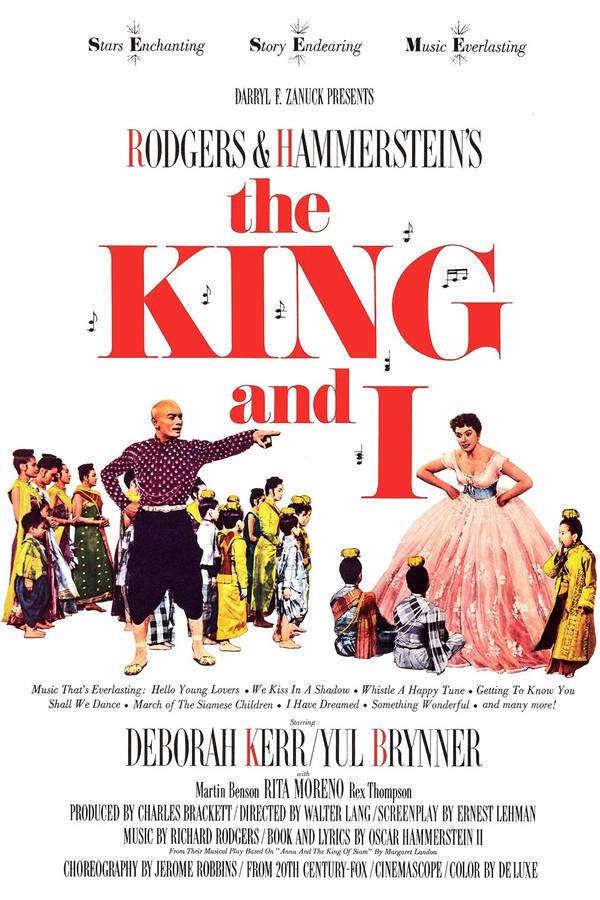
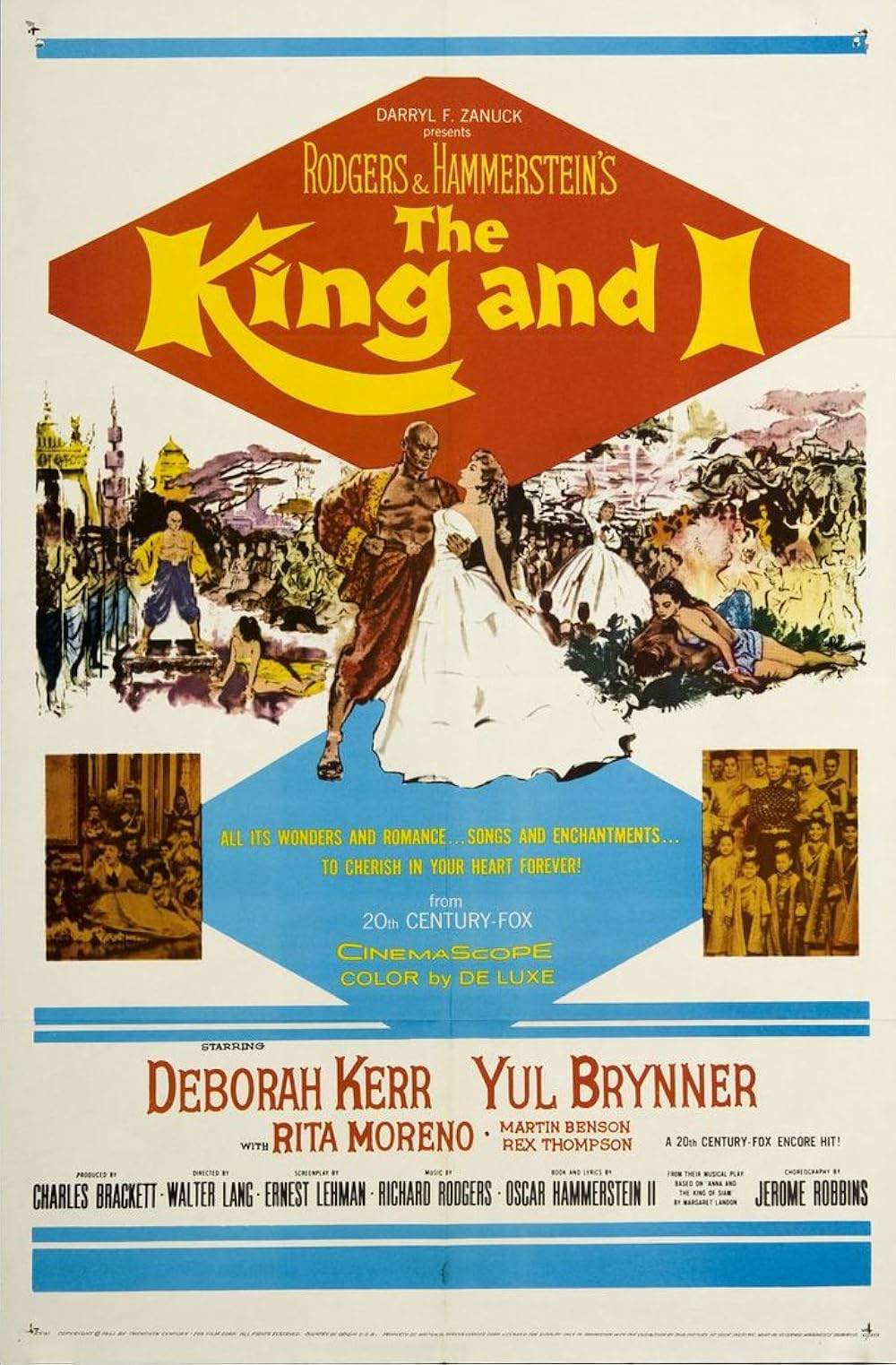
The King and I (2018) movie poster

Plot Summary

The King and I (2018) Plot Summary Explained

Release, runtime and language
2018 · 159 mins · English
Loading streaming availability…
Directed by
Gary Halvorson
Starring
Ken Watanabe, Ruthie Ann Miles, Kelli O'Hara, Takao Osawa, Dean John-Wilson, Paul Benedict Sarte

Following the death of her husband, Anna Leonowens takes a position as governess to the many children and wives of King Mongkut of Siam. The widowed Welsh mother finds herself clashing with the King's strong will as she introduces English language, customs, and etiquette to the royal family. She also works to prepare a grand party intended to impress visiting European diplomats and reshape their perceptions of the King.

On this page (6)
  1. 1 Where to watch
  2. 2 What happens: full plot
  3. 3 Plot questions answered
  4. 4 Movie threads
  5. 5 Movies like The King and I
  6. 6 Every angle
Loading streaming availability…

Full plot summary · contains spoilers

What Happens in The King and I: Full Plot Summary

The whole story of The King and I (2018) explained, from the opening scene to the final frame: every key event, every twist and what it all adds up to. Read it as a quick recap before the sequel, to check a scene you missed, or to finally understand what really happened.

In 1862, a strong-willed, widowed schoolteacher, Anna Leonowens, arrives in Bangkok, Siam (later known as Thailand) at the request of the King of Siam to tutor his many children. Anna's young son, Louis, fears the severe countenance of the King's prime minister, the Kralahome, but Anna refuses to be intimidated ("I Whistle a Happy Tune"). The Kralahome has come to escort them to the palace, where they are expected to live – a violation of Anna's contract, which calls for them to live in a separate house. She considers returning to Singapore aboard the vessel that brought them, but goes with her son and the Kralahome.

Several weeks pass, during which Anna and Louis are confined to their palace rooms. The King receives a gift from the king of Burma, a lovely slave girl named Tuptim, to be one of his many wives. She is escorted by Lun Tha, a scholar who has come to copy a design for a temple, and the two are secretly in love. Tuptim, left alone, declares that the King may own her, but not her heart ("My Lord and Master"). The King gives Anna her first audience. The schoolteacher is a part of his plan for the modernization of Siam; he is impressed when she already knows this. She raises the issue of her house with him, he dismisses her protests and orders her to talk with his wives. They are interested in her, and she tells them of her late husband, Tom ("Hello, Young Lovers"). The King presents her new pupils; Anna is to teach those of his children whose mothers are in favor with him – several dozen – and is to teach their mothers as well. The princes and princesses enter in procession ("March of the Royal Siamese Children"). Anna is charmed by the children, and formality breaks down after the ceremony as they crowd around her.

Anna has not given up on the house, and teaches the children proverbs and songs extolling the virtues of home life, to the King's irritation. The King has enough worries without battling the schoolteacher, and wonders why the world has become so complicated ("A Puzzlement"). The children and wives are hard at work learning English ("The Royal Bangkok Academy"). The children are surprised by a map showing how small Siam is compared with the rest of the world ("Getting to Know You"). As the crown prince, Chulalongkorn, disputes the map, the King enters a chaotic schoolroom. He orders the pupils to believe the teacher but complains to Anna about her lessons about "home". Anna stands her ground and insists on the letter of her contract, threatening to leave Siam, much to the dismay of wives and children. The King orders her to obey as "my servant"; she repudiates the term and hurries away. The King dismisses school, then leaves, uncertain of his next action. Meanwhile, Lun Tha comes upon Tuptim, and they muse about having to hide their relationship ("We Kiss in a Shadow").

In her room, Anna replays the confrontation in her mind, her anger building ("Shall I Tell You What I Think of You?"). Lady Thiang, the King's head wife, tells Anna that the King is troubled by his portrayal in the West as a barbarian, as the British are being urged to take over Siam as a protectorate. Anna is shocked by the accusations – the King is a polygamist, but he is no barbarian – but she is reluctant to see him after their argument. Lady Thiang convinces her that the King is deserving of support ("Something Wonderful"). Anna goes to him and finds him anxious for reconciliation. The King tells her that the British are sending an envoy to Bangkok to evaluate the situation. Anna "guesses" – the only guise in which the King will accept advice – that the King will receive the envoy in European style, and that the wives will be dressed in Western fashion. Tuptim has been writing a play based on a book that Anna has lent her, Uncle Tom's Cabin, that can be presented to the guests. News is brought to the King that the British are arriving much earlier than thought, and so Anna and the wives are to stay up all night to prepare. The King assembles his family for a Buddhist prayer for the success of the venture and also promises before Buddha that Anna will receive her own house "as provided in agreement, etc., etc."

The wives are dressed in their new European-style gowns, which they find confining ("Western People Funny"). In the rush to prepare, the question of undergarments has been overlooked, and the wives have practically nothing on underneath their gowns. When the British envoy, Sir Edward Ramsay, arrives and gazes at them through a monocle, they are panicked by the "evil eye" and lift their skirts over their heads as they flee. Sir Edward is diplomatic about the incident. When the King is called away, it emerges that Sir Edward is an old flame of Anna's, and they dance in remembrance of old times, as Edward urges her to return to British society. The King returns and irritably reminds them that dancing is for after dinner.

As final preparations for the play are made, Tuptim steals a moment to meet with Lun Tha. He tells her he has an escape plan, and she should be ready to leave after the performance ("I Have Dreamed"). Anna encounters them, and they confide in her ("Hello, Young Lovers", reprise). The play ("Small House of Uncle Thomas", narrated ballet) is presented in a Siamese ballet-inspired dance. Tuptim is the narrator, and she tells her audience of the evil King Simon of Legree and his pursuit of the runaway slave Eliza. Eliza is saved by Buddha, who miraculously freezes a river and conceals her in snow. Buddha then causes the river to melt, drowning King Simon and his hunting party. The anti-slavery message is blunt.

After the play, Sir Edward reveals that the British threat has receded, but the King is distracted by his displeasure at Tuptim's rebellious message. After Sir Edward leaves, Anna and the King express their delight at how well the evening went, and he presents her with a ring. Secret police report that Tuptim is missing. The King realizes that Anna knows something; she parries his inquiry by asking why he should care, as Tuptim is just another woman to him. He is delighted; she is at last understanding the Siamese perspective. Anna tries to explain to him the Western customs of courtship and tells him what it is like for a young woman at a formal dance ("Shall We Dance?"). He demands that she teach him the dance. She does, and in that dance they experience and express a love for each other that they can never speak aloud. They are interrupted by the Kralahome. Tuptim has been captured, and a search is on for Lun Tha. The King resolves to punish Tuptim, though she denies she and Lun Tha were lovers. Anna tries to dissuade him, but he is determined that her influence shall not rule, and he takes the whip himself. He turns to lash Tuptim, but under Anna's gaze is unable to swing the whip, and hurries away. Lun Tha is found dead, and Tuptim is dragged off, swearing to kill herself; nothing more is heard about her. Anna asks the Kralahome to give her ring back to the King; both schoolteacher and minister state their wish that she had never come to Siam.

Several months pass with no contact between Anna and the King. Anna is packed and ready to board a ship leaving Siam. Chulalongkorn arrives with a letter from the King, who has been unable to resolve the conflicts within himself and is dying. Anna hurries to the King's bedside and they reconcile. The King persuades her to take back the ring and to stay and assist the next king, Chulalongkorn. The dying man tells Anna to take dictation from the prince, and instructs the boy to give orders as if he were King. The prince orders the end of the custom of kowtowing that Anna hated. The King grudgingly accepts this decision. As Chulalongkorn continues, prescribing a less arduous bow to show respect for the king, his father dies. Anna kneels by the late King, holding his hand and kissing it, as the wives and children bow or curtsey, a gesture of respect to old king and new.

Last updated: October 11, 2026 at 15:50

Was this helpful?

Plot questions answered

The King and I Plot Explained: Your Questions Answered

The questions people ask most about The King and I (2018): what happens in the confusing scenes, why the characters do what they do, the twists, hidden details and what the ending means. Each answer contains spoilers.

Q1

Why does Anna agree to live in the palace when her contract promised a separate house?

Anna strongly objects to the violation of her contract, which guaranteed her and Louis a house of their own rather than rooms inside the royal palace. After considering returning to Singapore on the vessel that brought her, she ultimately goes with the Kralahome because leaving would mean abandoning the opportunity to educate the King's children and influence Siam's modernization, something she sees as more important than her personal comfort.

Foreshadowing: Anna's later insistence on the letter of her contract shows this early concession is only temporary, not a true acceptance of the arrangement.

  • anna contract
  • separate house
  • palace
  • kralahome
  • arriving in siam
Q2

Why does the King of Siam refuse to give Anna her own house?

The King insists on keeping Anna inside the palace because he wants her under his direct control and close to the royal household so her influence over his wives and children can be monitored and maximized for his modernization plans. Granting her independence would weaken his authority over the schoolroom and the Western ideas spreading through his family, which he already finds threatening.

Foreshadowing: His refusal directly sets up the confrontation that nearly drives Anna out of Siam.

  • king mongkut
  • separate house
  • modernization
  • royal authority
Q3

Why does Anna deliberately teach the children songs about home?

Anna uses proverbs and songs praising home life as a quiet form of protest against the King breaking her contract by denying her a separate house. By making her students long for the kind of domestic independence she is being refused, she pressures the King through his own children rather than through direct confrontation.

  • anna lessons
  • home life
  • contract dispute
  • schoolroom
Q4

Why does Lady Thiang convince Anna to reconcile with the King?

Lady Thiang explains that the King is not just a stubborn ruler but a man whose reputation as a 'barbarian' in the West is being used by the British as a pretext to turn Siam into a protectorate. She appeals to Anna's sense of justice by arguing that abandoning him now would expose Siam to colonial takeover, framing reconciliation as a patriotic duty rather than a personal one.

  • lady thiang
  • head wife
  • british protectorate
  • reconciliation
Q5

Why do the wives lift their skirts over their heads when Sir Edward looks at them?

In their rush to prepare European-style gowns, the wives were never given proper undergarments, so when Sir Edward gazes at them through his monocle they panic, believing the glass is an 'evil eye' meant to bewitch or harm them. They lift their skirts over their heads to block the curse, unintentionally exposing what should have been hidden beneath the gowns.

Foreshadowing: The wardrobe oversight is a direct consequence of the last-minute change in the envoy's arrival time.

  • british envoy
  • evil eye
  • monocle
  • european gowns
  • wives
Q6

Who is Sir Edward Ramsay to Anna and why does he urge her to leave Siam?

Sir Edward Ramsay is revealed to be an old flame of Anna's from her life before Siam, an English gentleman whose sudden reappearance as the British envoy makes him both a political ally and a personal temptation. His urging reflects genuine affection, but it also serves British interests by removing the one Western voice shaping the King's policies.

  • sir edward ramsay
  • anna leonowens
  • old flame
  • british envoy
Q7

What is the hidden message in Tuptim's Uncle Tom's Cabin ballet?

Tuptim's ballet, The Small House of Uncle Thomas, is a Siamese retelling of Uncle Tom's Cabin in which the slave owner 'King Simon of Legree' pursues the runaway Eliza, only to be drowned by Buddha while she is saved by a miracle. The performance is an unmistakable critique of slavery disguised as entertainment, and the King's displeasure shows he recognizes that Tuptim has used his own celebration to condemn his institution of ownership over women.

Foreshadowing: Tuptim's earlier song 'My Lord and Master' already hinted at her rebellion against being owned.

  • uncle tom's cabin
  • tuptim
  • small house of uncle thomas
  • anti-slavery
  • ballet
Q8

Why does Anna pretend not to know where Tuptim has gone?

When the King confronts Anna after learning Tuptim is missing, Anna turns the question back on him by asking why he should care since she is 'just another woman' to him. The deflection works because it forces the King to admit he does care, exposing the human attachment behind his royal mask and shifting his attention away from her own complicity in Tuptim's escape attempt.

  • tuptim escape
  • anna deflection
  • secret police
  • king's attachment
Q9

What does it mean when the King gives Anna a ring after the banquet?

The ring is the King's way of expressing a love he cannot articulate openly, since Siamese custom forbids him from taking a Western wife while already bound to dozens of others. It functions as a private symbol of devotion and a quiet promise that Anna's place in his life, and in Siam's future, is secured even though their relationship can never be made official.

Foreshadowing: Anna later returning the ring to the Kralahome signals the collapse of that unspoken bond.

  • king's ring
  • anna leonowens
  • unspoken love
  • gift
Q10

Why is the 'Shall We Dance?' scene the emotional turning point of the relationship?

Anna explains Western courtship by describing what a formal dance means to a young woman, and the King demands she teach him. In that shared lesson the two finally translate their feelings into a single physical language, expressing a love that Siamese custom and Anna's principles forbid them to speak aloud. The dance becomes the only honest declaration their situation allows.

  • shall we dance
  • courtship
  • anna and king
  • forbidden love
  • musical
Q11

Why can't the King bring himself to whip Tuptim while Anna watches?

The King takes the whip himself to reassert his authority against Anna's influence, but he freezes under her steady gaze because whipping Tuptim in front of the woman he loves would force him to embody the very cruelty she has spent months teaching him to renounce. His inability to strike shows that Anna's ideas have already begun reshaping his conscience even as his pride resists them.

  • whipping scene
  • tuptim punishment
  • king's conscience
  • anna's influence
Q12

What ultimately happens to Tuptim after she is captured?

After Tuptim is dragged off swearing to kill herself, the musical never confirms her fate but the implication, combined with Lun Tha's death and the court's silence, is that she has taken her own life. Her disappearance becomes the tragic cost of the love story between her and the scholar, and it deepens Anna's guilt over having been drawn into their escape attempt.

  • tuptim fate
  • lun tha death
  • suicide
  • captured slave
Q13

Why does Anna return the King's ring and try to leave Siam?

After Tuptim's capture and Lun Tha's death, Anna feels she has become complicit in a tragedy her presence helped set in motion, and the ring now represents a love that produced suffering rather than reform. By sending it back through the Kralahome, she acknowledges that the King's world and her principles are incompatible, and she prepares to return to England where she believes she belongs.

  • anna returns ring
  • leaving siam
  • kralahome
  • guilt
Q14

Why does Chulalongkorn abolish the kowtow custom on his first day as King?

On the dying King's instruction, Chulalongkorn gives his first orders as if he were already King and immediately ends the bowing-to-the-floor custom that Anna had always found demeaning. The reform is a direct inheritance of Anna's lessons about human dignity and a symbolic beginning of the modernization she championed, proving that her influence will outlast her in Siam.

Foreshadowing: Anna's repeated objections to kowtowing throughout her time at the palace set up this very reform.

  • chulalongkorn
  • kowtow abolished
  • modernization
  • new king
Q15

Why does the King die at the end and what does it mean for Siam?

The King dies unable to fully resolve the conflicts between tradition and Western reform that Anna has forced him to confront, and his death symbolizes the painful cost of Siam's transition. Yet his final act of handing power to Chulalongkorn and allowing the prince to abolish kowtow suggests that progress will continue under a new ruler shaped by Anna's teaching, leaving the ending bittersweet rather than triumphant.

Foreshadowing: His earlier song 'A Puzzlement' already foreshadows a man unable to reconcile the old world with the new.

  • king's death
  • bittersweet ending
  • chulalongkorn
  • reform
  • tradition

Movie threads

More Movies Like The King and I, by Mood & Story

Curated lists built around what makes The King and I tick: the same mood, the same kind of story or the same emotional payoff. Each list explains why these movies belong together.

Cultural clashes and forbidden longing like in The King and I

Outsiders fall for forbidden love while empires, traditions, and politics collide. If you loved The King and I, you'll enjoy these movies like The King and I that pair cross-cultural romance with imperial pressure. Expect elegant period dramas and musicals where outsiders clash with monarchs, tradition versus progress drives the plot, and tender feelings bloom under impossible circumstances. Similar stories blend romance, cultural commentary, and political intrigue in sweeping, theatrical style.

  • elegant
  • forbidden romance
  • cultural clash
  • theatrical
  • tender
  • imperial
  • Tone: bittersweet, romantic, elegant
  • Pacing: steady, theatrical
Why these movies?

The story pattern: An outsider, often a governess, teacher, or traveler, arrives in a richly different culture, usually a royal or aristocratic court. They slowly fall for someone unavailable: a king, a royal spouse, or a person whose love is forbidden by duty, caste, or empire. Cultural misunderstanding, political threat, and romantic tension build in parallel until personal loss or social upheaval forces an ending that is tender but unresolved, leaving reform begun and longing lingering.

Why they belong together: These films share a mood of bittersweet romance against imperial or cultural pressure, often featuring elegant staging, period detail, and musical or theatrical flourishes. They tend to balance warmth and humor with serious undercurrents like colonialism, slavery, or political reform, and they end on notes of progress mixed with personal sacrifice. The pacing is steady, the tone tender but melancholy, and the intensity stays medium so emotion never overwhelms the spectacle.

Bittersweet reform stories like in The King and I

Stories where modernization triumphs, but the people who make it possible pay the price. Movies like The King and I where modernization meets tradition and progress comes at a personal cost. These similar films follow reformers, outsiders, or educators challenging royal or imperial systems, blending political intrigue with intimate tragedy. If you liked The King and I's mix of warm humor, tender loss, and hopeful endings tinged with grief, this thread is for you.

  • reform
  • tradition vs progress
  • bittersweet
  • educational
  • political
  • tender
  • Tone: bittersweet, hopeful, melancholic
  • Pacing: steady, reflective
Why these movies?

The story pattern: A reformer enters a closed, traditional world and begins teaching new ideas: language, customs, human rights, or science. Resistance from authority figures and cherished traditions drives the central conflict, while smaller romances and rebellions mirror the larger struggle. Reform ultimately begins, signaled by a public ceremony or concession, but the central reformer or their beloved suffers loss. The story closes on dual registers: societal hope alongside personal mourning.

Why they belong together: These films share a focus on tradition versus progress, education as a tool of change, and bittersweet endings that honor both victory and sacrifice. They tend to be period dramas with medium intensity and steady pacing, mixing warmth and humor with weightier themes like slavery, colonialism, or authoritarian rule. The emotional weight lands medium, never crushing the hopeful arc, and they often include music or heightened theatrical staging.

If you liked this

Movies Like The King and I

Similar movies to The King and I: the same genre, themes or kind of story. Each one comes with its own plot summary, timeline and ending explained.

Browse all movie summaries

Every angle

The King and I (2018) Explained: Plot, Timeline & Characters

Everything about The King and I in one place: what happens in the plot summary, the timeline in chronological order, the characters and meaning and a spoiler-free summary. What's After the Movie adds the cast, box office and post-credit scenes.

Coming soon on iOS and Android

The Plot Explained Movie Summary App

Plot summaries, endings explained and timelines on your phone. Catch up on any movie in minutes, save your favorites and never miss a twist again.

Be the first to know when we launch. Your email stays private, always.

Learn more about the app