Plot Explained Spoilers guaranteed!
Plot Explained

Browse by genre

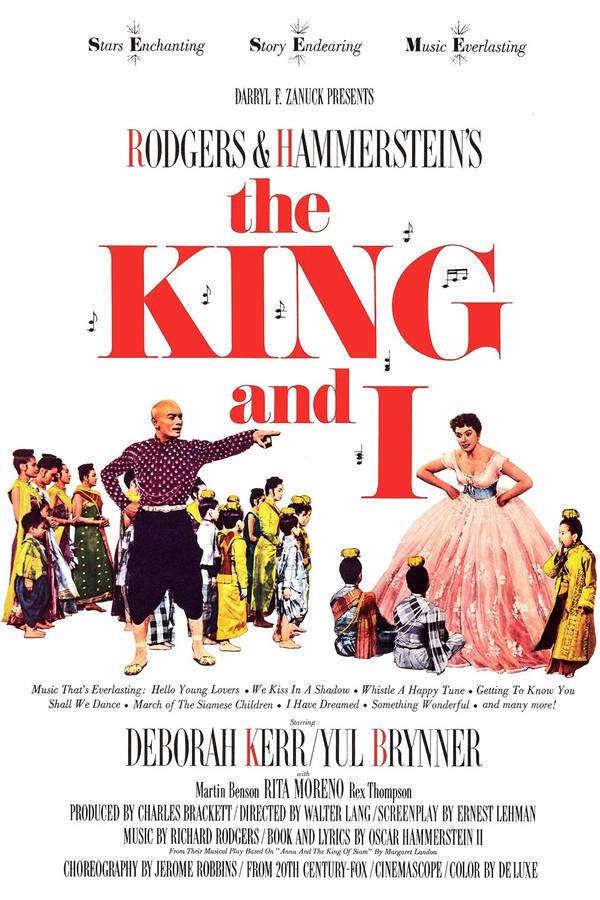
The King and I (1999) movie poster

Plot Summary

The King and I (1999) Plot Summary Explained

Release, runtime and language
1999 · 87 min · English
Loading streaming availability…
Directed by
Richard Rich
Starring
Miranda Richardson, Martin Vidnovic
Budget
$25M

A spirited British governess journeys to 19th-century Siam and finds herself unexpectedly involved in a royal courtship. While educating the king's numerous children, she encounters cultural differences and humorous misunderstandings. Through these experiences, a heartwarming bond develops, fostering friendship and acceptance between them all, ultimately bridging the gap between their different worlds.

On this page (7)
  1. 1 Where to watch
  2. 2 What happens: full plot
  3. 3 Plot questions answered
  4. 4 The book behind the movie
  5. 5 Movie threads
  6. 6 Movies like The King and I
  7. 7 Every angle
Loading streaming availability…

Full plot summary · contains spoilers

What Happens in The King and I: Full Plot Summary

The whole story of The King and I (1999) explained, from the opening scene to the final frame: every key event, every twist and what it all adds up to. Read it as a quick recap before the sequel, to check a scene you missed, or to finally understand what really happened.

As the year 1862 unfolds, a determined widow, Anna Leonowens, arrives in Bangkok, Siam—soon to be recognized as Thailand—accompanied by her young son, Louis. Summoned personally by the King of Siam, Anna embarks on the noble pursuit of educating his many children. Despite the imposing presence of the Kralahome, the King’s loyal prime minister who comes to escort them to the palace, Anna's courageous spirit remains unbroken. However, this arrangement defies her original contract which clearly stated that she and her family were to reside separately.

Weeks pass, and Anna and Louis soon find themselves essentially imprisoned within the palace's lavish confines, their movements curtailed by the rigid protocols of the royal court. Meanwhile, the King receives a stunning gift from his Burmese counterpart—a beautiful slave girl named Tuptim, whose destiny is to join his harem. Proudly accompanied by Lun Tha, a scholar devoted to replicating temple designs, Tuptim enters the palace unaware that their hearts are intertwined, as she laments that despite the King’s ownership, her heart belongs to Lun Tha. > "My Lord and Master."

When Anna finally meets the King, she's amazed to learn of his keen interest in her reputation as a modernizer within Siam. She adeptly maneuvers through the intricacies of royal decorum while addressing his apprehensions about educational reform. Still, when it comes to her living conditions, the King brusquely dismisses her grievances, indicating that she should engage with his wives instead.

Intrigued by her strong demeanor, the King's wives invite Anna to share memories of her late husband, Tom. > "Hello, Young Lovers." These exchanges lead her to meet her new students—numerous children whose mothers enjoy the King's favor. The royal procession, decorated with princes and princesses, marks the official commencement of Anna’s role as their educator.

As formalities fade away, Anna is captivated by the spirited young royals, who eagerly gather around her, their energy shattering the barriers of formality. With unwavering determination, Anna strives to impart essential life lessons, yet she frequently clashes with the King, whose tolerance wears thin with her insistence on the value of home life. His frustrations manifest as he questions why the world seems so bewildering. > "A Puzzlement." Meanwhile, the royal family is found dutifully studying English at the Royal Bangkok Academy, showing their dedication to their newfound educational privileges—a clear indication of Anna's influence.

As the crown prince, Chulalongkorn, contests the chart's validity during their lessons, the King bursts in, only to discover uproar among the students. He orders them to accept Anna's teachings while simultaneously chiding her for stressing "home". Undeterred, Anna stands her ground, threatening to leave Siam if her original terms are not honored—a scenario that disheartens the wives and children. The King commands her to comply as a servant, but Anna defiantly rejects this notion, departing in haste. Amidst the ensuing chaos, Lun Tha finds a moment with Tuptim, where they contemplate the necessity of concealing their blossoming love. > "We Kiss in a Shadow."

In moments of introspection, Anna recalls their fiery confrontation, simmering with rage, > "Shall I Tell You What I Think of You?" Lady Thiang, the King's chief consort, leans in to share intimate details about the monarch's anxieties regarding his public persona, which British influences are eager to frame as primitive. This revelation rattles Anna, as she grapples with the paradox of the King’s multiple wives yet finds it hard to accept these accusations regarding his character. Lady Thiang's insights eventually break through Anna's defenses, leading her to reconcile with the King, who reveals that a British envoy is due to arrive in Bangkok. Upon hearing this, Anna feels the urgency of the situation and "guesses" that the King will greet them in a European style, alongside his wives dressed in Western garments.

As the King prepares for a Buddhist prayer to seek blessings for the upcoming visit, he promises Anna that her own residence will be provided soon, fulfilling their earlier agreement. However, in the flurry of preparations, a critical detail regarding undergarments is overlooked, leaving the royal consorts in a state of disarray when Sir Edward Ramsay, the British envoy, arrives. The whimsical chaos unfolds as they mistakenly flee in fright, only to have the envoy handle the situation diplomatically.

As the evening progresses, Tuptim meets with Lun Tha to discuss their escape plans, unveiling her hopes during a fleeting moment together. Anna inadvertently witnesses their intimate meeting, but their shared bond strengthens during this clandestine moment. Under Tuptim's guidance, the evening culminates in a delightful Siamese ballet that narrates her poignant story of escape and resilience, all while Anna looks on.

After the performance, as Sir Edward informs Anna that the British threat has receded, the King grapples with the potent message conveyed through Tuptim’s tale. Celebrating the successful evening together, Anna receives an emblem of the King’s affection—a ring. Unbeknownst to them, reports of Tuptim’s disappearance ignite concern, leading the King to question Anna, suspecting she knows more than she lets on. The tension escalates when Anna attempts to bridge cultural gaps by explaining the Western dance of courtship, > "Shall We Dance?", which the King eagerly wishes to learn.

This tender moment, however, is cut short by the Kralahome's revelation of Tuptim's capture. The King, determined to assert his power, prepares to administer punishment, yet falters before Anna's unwavering gaze. He leaves hastily, torn between duty and his compassion. As the heartbreaking news of Lun Tha's demise lingers in the air, Tuptim vows that her fate will not mirror his. With the night drawing to a close, Anna relinquishes the ring to the Kralahome while both she and the minister grieve the profound changes her presence has wrought within the palace.

As seasons turn with barely a word exchanged between Anna and the King, she readies to depart, her heart yearning for freedom across the seas. Just as she prepares to board the vessel, a sudden arrival interrupts her plans—Chulalongkorn, with a letter from the King, whose internal conflict has spiraled dangerously. Anna rushes to his side, their reunion serving as a poignant exploration of forgiveness and love.

In his final moments, the King reveals a wisdom fused with melancholy, urging Anna to reclaim the ring and guide his son, Chulalongkorn, as he ascends to the throne. With a heavy heart, Anna agrees as the young prince steps into a series of new responsibilities, issuing commands that abolish the distressing ritual of kowtowing—a tradition Anna long despised.

Though the King’s reluctant acceptance of these reformative decisions showcases his love for his son, it is evident he has surrendered to a fate he could no longer escape. As Chulalongkorn continues to uphold a new standard of respectful governance, the King’s life force dwindles gradually. Finally, when he breathes his last, Anna kneels beside him, her tears cascading like summer rain, offering a final gesture of respect as she holds his hand and kisses it tenderly. The wives and children gather around, their heads bowed not only in remembrance of the late King but also in reverence for the prince who will now carry forth the legacy of their kingdom, embarking on a path filled with uncertainty yet blossoming with hope.
Last updated: November 19, 2024 at 17:25

Was this helpful?

Plot questions answered

The King and I Plot Explained: Your Questions Answered

The questions people ask most about The King and I (1999): what happens in the confusing scenes, why the characters do what they do, the twists, hidden details and what the ending means. Each answer contains spoilers.

Q1

Why is Anna Leonowens confined to the palace?

Anna discovers that the King has effectively imprisoned her and her son Louis within the palace walls. Although her original contract specified that she and her family would live separately from the royal household, the King disregards this agreement. She finds herself trapped by the rigid protocols of the royal court, with her movements severely restricted despite being summoned as a guest rather than a servant.

  • anna leonowens
  • palace confinement
  • king contract
  • royal court
Q2

Why does the King give Anna a ring?

The King gives Anna a ring as a token of his affection and respect after she successfully helps manage the chaotic arrival of the British envoy, Sir Edward Ramsay. The ring symbolizes his personal regard for her and represents a bridge between their different worlds. However, Anna later gives the ring to the Kralahome (the prime minister) during the emotional turmoil following Tuptim's capture, only to receive it back from the dying King.

  • king ring
  • anna token
  • affection
  • royal gift
Q3

What happens to Tuptim and Lun Tha in the end?

Tuptim and Lun Tha's love story ends tragically. Lun Tha is killed while attempting to rescue Tuptim during her escape attempt. Rather than accept the King's punishment, Tuptim chooses to take her own life, vowing that her fate will not mirror his. Their forbidden romance serves as a poignant subplot highlighting the constraints of royal tradition versus personal freedom.

  • tuptim
  • lun tha
  • escape
  • tragic love
  • death
Q4

Why does Anna clash with the King over teaching methods?

Anna and the King conflict primarily over her insistence on teaching the royal children about Western concepts of home life and individual choice. The King grows frustrated when Anna stresses the importance of home and personal freedom, viewing these ideas as threatening to royal authority. When Anna threatens to leave Siam unless her original contract terms are honored, the King commands her to comply as a servant, which she defiantly rejects.

  • anna king conflict
  • teaching methods
  • education reform
  • royal authority
Q5

What is the kowtowing tradition and why does Anna oppose it?

Kowtowing is a deep bow where one prostrates oneself before royalty, touching their head to the ground as a sign of ultimate subservience. Anna finds this tradition degrading and contrary to the dignity she believes every person deserves. She particularly despises that the King's own children must kowtow to their father, viewing it as incompatible with the mutual respect she tries to teach in her lessons.

  • kowtowing
  • tradition
  • royal protocol
  • submissi n
  • anna principles
Q6

How does the King die in The King and I?

The King's health gradually declines throughout the film, though the exact cause is not explicitly detailed in medical terms. He becomes increasingly frail as seasons pass, with his internal conflict and stress from governing, maintaining royal traditions, and dealing with British pressure taking a toll. He dies peacefully with Anna beside him, having entrusted her with guiding his son Chulalongkorn.

  • king death
  • chulalongkorn
  • passing
  • thailand succession
Q7

Why does Chulalongkorn abolish kowtowing?

When Chulalongkorn becomes king after his father's death, he issues commands to abolish the kowtowing tradition that Anna had always opposed. This reform reflects both Anna's long-standing teachings about dignity and mutual respect, and Chulalongkorn's desire to modernize Siam's governance. The young prince demonstrates his willingness to embrace Western ideas while honoring his father's memory through progressive change.

  • chulalongkorn
  • kowtowing abolition
  • reform
  • succession
  • modernization
Q8

What does Lady Thiang reveal about the King's character?

Lady Thiang, the King's chief consort, shares intimate details with Anna about the King's anxieties regarding how British observers perceive him. She explains that foreign powers are eager to frame Siam as primitive, and the King fears being judged as barbaric despite having multiple wives and maintaining traditional customs. This revelation helps Anna understand the King's complex personality, his attempts at modernization despite traditional pressures, and softens her harsh judgment of him.

  • lady thiang
  • king character
  • british perception
  • anxiety
  • modernization
Q9

Why does Anna decide to return to the King?

Anna decides to return to the King after receiving a desperate letter from him as she prepares to leave Siam. The letter reveals his deep internal conflict and deteriorating health. When she rushes back to his side, they share a poignant reunion marked by forgiveness and mutual love. The dying King asks Anna to reclaim the ring and guide his son Chulalongkorn, which she tearfully agrees to do.

  • anna return
  • king letter
  • reconciliation
  • forgiveness
  • final moments
Q10

What reforms does Chulalongkorn implement after becoming king?

After ascending to the throne, Chulalongkorn implements several reforms influenced by Anna's teachings. Most notably, he abolishes the kowtowing tradition that his father enforced. These changes represent Siam's movement toward modernization and more equitable governance. The film suggests Chulalongkorn will continue his father's efforts to modernize Siam while moving away from the most oppressive royal customs.

  • chulalongkorn
  • reforms
  • thailand modernization
  • progressive leadership
Q11

Why is the British envoy's visit significant to the plot?

The visit of Sir Edward Ramsay, the British envoy, creates a major crisis in the palace. The King must prepare for diplomatic negotiations that could affect Siam's sovereignty. During the visit, a comedic chaos ensues when the royal wives, unfamiliar with Western undergarments, flee in fright upon encountering the envoy. The visit ultimately strengthens Anna's position as the King realizes he needs her help to navigate between traditional Siamese culture and Western expectations.

  • british envoy
  • sir edward ramsay
  • diplomacy
  • siams future
  • negotiations
Q12

What is the significance of Tuptim's ballet performance?

Tuptim's ballet performance tells her own story of being a slave girl who escapes and finds freedom through resilience. The ballet serves as a powerful narrative within the film, reflecting Tuptim's own hopes for escape from royal captivity. The King is deeply moved by the performance's message, which highlights the tension between his role as a traditional monarch and his capacity for compassion. The performance also brings Anna and the King closer together emotionally.

  • tuptim ballet
  • escape story
  • royal entertainment
  • king reaction

Movie threads

More Movies Like The King and I, by Mood & Story

Curated lists built around what makes The King and I tick: the same mood, the same kind of story or the same emotional payoff. Each list explains why these movies belong together.

Movies with cultural exchange and bittersweet endings like The King and I

Cultures collide with emotional friction, leading to profound but costly understanding. Explore movies like The King and I where characters bridge cultural divides. These similar stories feature heartwarming connections forged from initial clashes, often building to a bittersweet conclusion that celebrates change while acknowledging loss.

  • cultural clash
  • melancholic
  • heartwarming
  • romantic tension
  • sentimental
  • dramatic
  • Tone: bittersweet, dramatic, sentimental
  • Pacing: steady, character-driven
Why these movies?

The story pattern: The narrative typically revolves around an outsider entering a closed society, challenging its norms through education or diplomacy. A central relationship, often tinged with forbidden romance, develops amidst cultural friction. The story builds towards a climax where characters achieve mutual respect, but this growth often comes at a personal cost or is shadowed by a tragic subplot, resulting in a bittersweet resolution.

Why they belong together: Movies in this thread share a core theme of cultural exchange explored through a steady, character-driven pace. They blend dramatic and sentimental moods, balancing lighter moments of connection with the melancholy of sacrifice and change, leading to a similarly bittersweet emotional payoff.

Dramatic and bittersweet musicals similar to The King and I

Where song and story intertwine to explore serious themes of love, loss, and change. If you liked the emotional weight and musical storytelling of The King and I, discover other musicals like it. These films blend song and drama to tell heartfelt stories about personal growth, often with a bittersweet undercurrent.

  • musical
  • dramatic
  • sentimental
  • melancholic
  • heartfelt
  • romantic
  • Tone: bittersweet, dramatic, heartfelt
  • Pacing: steady, with musical interludes
Why these movies?

The story pattern: These musicals follow characters facing major life changes or moral dilemmas, using music to express internal conflict and pivotal moments. The plot interweaves lighter, more whimsical sequences with dramatic turns and tragic elements. The journey is one of personal transformation, often culminating in an ending that is hopeful yet acknowledges the pain of loss or the price of progress.

Why they belong together: These films are united by their use of the musical genre to tell stories with medium to high emotional weight. They share a steady pacing that allows for both character development and musical interludes, and a bittersweet tone that balances celebration with sorrow, creating a powerful and memorable experience.

If you liked this

Movies Like The King and I

Similar movies to The King and I: the same genre, themes or kind of story. Each one comes with its own plot summary, timeline and ending explained.

Browse all movie summaries

Every angle

The King and I (1999) Explained: Plot, Timeline & Characters

Everything about The King and I in one place: what happens in the plot summary, the timeline in chronological order, the characters and meaning and a spoiler-free summary. What's After the Movie adds the cast, box office and post-credit scenes.

Coming soon on iOS and Android

The Plot Explained Movie Summary App

Plot summaries, endings explained and timelines on your phone. Catch up on any movie in minutes, save your favorites and never miss a twist again.

Be the first to know when we launch. Your email stays private, always.

Learn more about the app