Plot Explained Spoilers guaranteed!
Plot Explained

Browse by genre

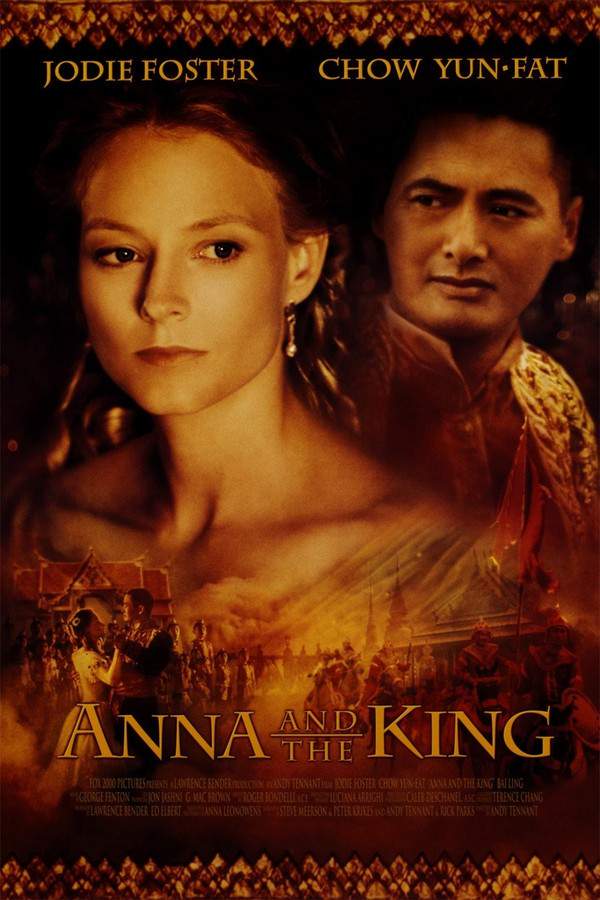
Anna and the King (1999) movie poster

Plot Summary

Anna and the King (1999) Plot Summary Explained

Release, runtime and language
1999 · 148 min · English
Loading streaming availability…
Directed by
Andy Tennant
Starring
Jodie Foster, Yun-Fat Chow
Budget
$92M

During the 19th century in Siam, Anna Leonowens travels to the royal court to serve as a tutor for the 58 children of King Mongkut. As she acclimates to her new role, she finds herself clashing with the King, initially viewing him as an autocratic ruler. However, her understanding evolves as she confronts his own prejudices against Westerners and their customs, leading to a complex relationship and a deeper appreciation for Siamese culture.

On this page (7)
  1. 1 Where to watch
  2. 2 What happens: full plot
  3. 3 Plot questions answered
  4. 4 The book behind the movie
  5. 5 Movie threads
  6. 6 Movies like Anna and the King
  7. 7 Every angle
Loading streaming availability…

Full plot summary · contains spoilers

What Happens in Anna and the King: Full Plot Summary

The whole story of Anna and the King (1999) explained, from the opening scene to the final frame: every key event, every twist and what it all adds up to. Read it as a quick recap before the sequel, to check a scene you missed, or to finally understand what really happened.

Anna Leonowens (Jodie Foster), a British widow, arrives in Siam with her son Louis (Tom Felton) to educate the King Mongkut’s (Yun-Fat Chow) many children. With her strong will, intelligence, and benevolence, she quickly earns the King's respect. Mongkut aims to modernize Siam, hopeful that this will aid in resisting colonial threats while preserving its rich traditions. Throughout their interactions, the two engage in discussions about love, culture, and the stark differences between Western and Eastern perspectives. Notably, Mongkut brushes aside the idea that one man could ever be satisfied with a single wife.

To curry favor with British ambassadors, the King organizes an extravagant reception and entrusts Anna with its planning. During the event, an engaging exchange unfolds between Mongkut and Sir Mycroft Kincaid (Bill Stewart) of the East India Company, where Westerners express their misconceptions about Siam being a superstitious and outdated nation. In a poignant moment, the King shares a dance with Anna, further deepening their connection.

Anna finds joy in the playful spirit of the royal children, especially young Princess Fa-Ying (Melissa Campbell), who has a special fondness for the monkeys that inhabit the royal garden. Tragedy strikes when Fa-Ying falls ill with cholera, leading to a heartbreaking farewell. Anna arrives just in time to witness the final moments of the Princess, as Mongkut cradles her in sorrow. The King later discovers that one of the monkeys has playfully taken his glasses, reminiscent of Fa-Ying’s love for them. In this time of grief, Mongkut finds solace in his belief in reincarnation, cherishing the hope that Fa-Ying may return as one of her beloved pets.

Lady Tuptim (Bai Ling), the King's newest concubine, struggles with her own heartache, having been brought to the court against her will while still secretly belonging to another man, Khun Phra Balat (Sean Ghazi). Yearning for her true love, she disguises herself as a man and attempts to escape, only to be caught and brought back, facing severe consequences for her disobedience. Anna, witnessing Tuptim's punishment, finds the situation unbearable and intervenes, though her actions inadvertently complicate matters for Mongkut, who cannot show leniency without appearing beholden to her. This leads to a tragic execution of Tuptim and Balat.

As turmoil brews, Siam faces a grave threat from what seems to be a British-backed coup, led by General Alak (Randall Duk Kim) and his collaborator, who brings a battalion of Burmese soldiers. In a twist of fate, Alak betrays Mongkut, resulting in the death of Prince Chaofa (Kay Siu Lim), which sets the stage for revenge. Preparing for an invasion, Alak seeks to eliminate Mongkut and his progeny.

Mongkut cleverly orchestrates a ruse, claiming that a white elephant has been sighted, prompting a court journey that allows him time to escape with his family and prepare for confrontation. Anna, aware of the subterfuge, joins the royal family, lending credence to the tale of the white elephant. However, they soon find themselves cornered by Alak’s forces. In a bold move, Mongkut and his soldiers set explosives on a precarious bridge to thwart the impending attack.

Meanwhile, Anna and Louis devise a clever stratagem from their concealed location in the forest, using sound and fireworks to create a feigned military presence, inciting panic among Alak’s soldiers. Following the chaotic retreat of the Burmese troops, Mongkut encounters Alak, who stands isolated and desperate. Refusing to take Alak's life, Mongkut chooses to uphold his honor, but the confrontation ends with a dramatic explosion as the guard detonates the bridge, obliterating Alak in the process.

In a touching conclusion, Mongkut and Anna share a final dance, marking the bittersweet nature of their farewell. He reveals that he finally understands the potential for a man's happiness in being devoted to just one woman. The story closes with a reflective note about Chulalongkorn’s ascension to the throne, recognizing his father's vision that led to the abolition of slavery and the promotion of religious freedom in Siam.

Last updated: November 03, 2024 at 11:44

Was this helpful?

Plot questions answered

Anna and the King Plot Explained: Your Questions Answered

The questions people ask most about Anna and the King (1999): what happens in the confusing scenes, why the characters do what they do, the twists, hidden details and what the ending means. Each answer contains spoilers.

Q1

Why was Lady Tuptim executed?

Lady Tuptim was executed because she attempted to escape the palace to be with her true love, Khun Phra Balat, after being brought to the court as a concubine against her will. When she was caught and brought back, the King could not show leniency without appearing weak or beholden to Western influence. Anna's intervention on Tuptim's behalf actually made the situation worse, as Mongkut could not grant mercy without seeming subservient to Anna's will, leading to the tragic execution of both Tuptim and Balat.

  • tuptim execution
  • concubine
  • forbidden love
  • khun pra balat
  • anna intervention
Q2

How did the white elephant ruse help the King escape?

King Mongkut devised the white elephant ruse to buy time when a coup led by General Alak threatened the royal family. By claiming a white elephant had been sighted, Mongkut justified a court journey that allowed him and his family to evacuate the palace and prepare for the approaching threat. Anna, who knew the truth, supported the deception by joining the royal family, lending credibility to the story and strengthening their alliance.

  • white elephant
  • coup escape
  • mongkut plan
  • anna joins
  • royal family escape
Q3

Why did Anna's intervention in Tuptim's punishment make things worse?

When Anna witnessed Tuptim's brutal punishment and intervened out of compassion, she inadvertently put King Mongkut in an impossible position. As a ruler, he could not show weakness or appear to be influenced by a foreign woman. Granting leniency would make him seem beholden to Western pressure, so to maintain his authority and not appear subservient, he had no choice but to order the executions, making Anna's good intentions tragically counterproductive.

  • anna intervene
  • tuptim punishment
  • mongkut authority
  • western influence
  • tragic consequences
Q4

What happened to General Alak after the battle?

General Alak, who led the British-backed coup against King Mongkut, was ultimately killed in the confrontation at the bridge. After his Burmese troops retreated in panic due to Anna and Louis's fireworks deception, Alak faced Mongkut alone. Despite having the opportunity for revenge after Alak killed Prince Chaofa, Mongkut chose to honor Alak rather than kill him. However, as Alak stood alone and desperate, a guard detonated the explosives on the bridge, killing Alak in the explosion.

  • general alak
  • coup leader
  • bridge explosion
  • mongkut mercy
  • death
Q5

How did King Mongkut cope with Princess Fa-Ying's death?

After Princess Fa-Ying died from cholera, King Mongkut coped with his grief through his belief in reincarnation. He found solace in the hope that Fa-Ying might return as one of the monkeys she loved in the royal garden. This moment also revealed the cultural difference in how Eastern and Western perspectives approach death and loss, as Mongkut's spiritual beliefs provided him comfort during his sorrow.

  • fa-ying death
  • chola
  • reincarnation
  • grief
  • mongkut sorrow
Q6

Why did the King change his view about having only one wife?

Through his interactions and deepening connection with Anna Leonowens, King Mongkut came to understand that a man could find true happinessdevoted to just one woman. This transformation was demonstrated in the final dance when he revealed this realization to Anna. His views evolved through their cultural exchanges, intellectual debates, and the emotional journey they shared together, culminating in this significant shift in his perspective on love and marriage.

  • mongkut love
  • one wife
  • anna relationship
  • cultural exchange
  • transformation
Q7

How did Anna and Louis help defeat Alak's army?

When cornered by Alak's forces in the forest, Anna and Louis devised a clever tactical strategy. From their concealed location, they used sound and fireworks to create the illusion of a larger military presence. This deception incited panic among Alak's Burmese soldiers, causing them to retreat in chaos. Their clever stratagem played a critical role in the ultimate defeat of the coup forces.

  • anna louis strategy
  • fireworks deception
  • burmese army retreat
  • forest battle
  • tactical advantage
Q8

What was the British colonial threat to Siam?

King Mongkut aimed to modernize Siam specifically to resist colonial threats from Western powers like Britain. The British East India Company represented these pressures, and the King organized an extravagant reception for British ambassadors to curry their favor and dispel their misconceptions about Siam being a superstitious and outdated nation. General Alak's coup was British-backed, representing the direct military manifestation of these colonial ambitions threatening Siam's sovereignty.

  • colonial threat
  • british east india company
  • modernization
  • siam independence
  • alak coup
Q9

Why was Anna hired to educate the King's children?

Anna Leonowens was hired to educate King Mongkut's 58 children because of her strong will, intelligence, and benevolence. Her role was significant beyond basic education, as she became a cultural bridge between East and West through her interactions with the royal family. Her teaching and personal example influenced the King's perspectives and contributed to his modernization efforts for Siam.

  • anna tutor
  • royal children
  • 58 children
  • educator role
  • cultural exchange
Q10

What was King Mongkut's legacy for his son Chulalongkorn?

King Mongkut's legacy for his son Chulalongkorn included his vision for a modernized Siam. The story concludes with Chulalongkorn's ascension to the throne, noting that his father's policies led to significant reforms including the abolition of slavery and the promotion of religious freedom in Siam. This reflects Mongkut's overarching goal of strengthening Siam against colonial threats while preserving its rich traditions.

  • chulalongkorn throne
  • abolition of slavery
  • religious freedom
  • mongkut legacy
  • reforms

Movie threads

More Movies Like Anna and the King, by Mood & Story

Curated lists built around what makes Anna and the King tick: the same mood, the same kind of story or the same emotional payoff. Each list explains why these movies belong together.

Respectful cross-cultural historical dramas like Anna and the King

Stories where worlds collide with deep respect for both cultures. Explore movies like Anna and the King that thoughtfully depict the clash and convergence of cultures. If you enjoyed the intellectual and emotional journey of cultural exchange, you'll find similar stories of understanding and respect in these historical dramas.

  • historical
  • cross-cultural
  • respectful
  • bittersweet
  • reflective
  • hopeful
  • Tone: bittersweet, respectful, reflective
  • Pacing: steady, methodical
Why these movies?

The story pattern: The narrative pattern follows a central figure navigating a foreign and complex society, leading to intellectual clashes that gradually transform into deep mutual respect. While often featuring elements of romance or political intrigue, the core journey is one of cultural bridge-building, typically set during a time of significant historical change.

Why they belong together: Movies in this thread share a dignified, reflective tone and prioritize an authentic, respectful portrayal of different cultures. They focus on character-driven stories where personal relationships become metaphors for larger cultural dialogues, balancing hopeful progress with the realistic bittersweetness of such encounters.

Bittersweet court dramas with forbidden connections like Anna and the King

Emotionally charged relationships constrained by duty and protocol. Find movies similar to Anna and the King that feature complex, bittersweet relationships set against formal backdrops. If you liked the tension between personal feelings and royal duty, these stories of forbidden connections in stately settings will resonate.

  • bittersweet
  • forbidden romance
  • tragic
  • courtly drama
  • duty-bound
  • hopeful
  • Tone: bittersweet, tragic, hopeful
  • Pacing: steady, character-driven
Why these movies?

The story pattern: The narrative revolves around a powerful but constrained relationship that develops in a highly structured world. The story builds emotional weight through stolen moments, intellectual sparring, and unspoken feelings, culminating in an ending where duty, sacrifice, or circumstance often outweighs personal fulfillment, leaving a sense of poignant, unfulfilled potential.

Why they belong together: These movies are grouped by their specific emotional mix: a steady, character-driven pace, a medium-to-high emotional weight centered on sacrifice, and a consistently bittersweet tone. They share a focus on the tension between the heart and immutable external pressures, creating a specific type of romantic and dramatic yearning.

If you liked this

Movies Like Anna and the King

Similar movies to Anna and the King: the same genre, themes or kind of story. Each one comes with its own plot summary, timeline and ending explained.

Browse all movie summaries

Every angle

Anna and the King (1999) Explained: Plot, Timeline & Characters

Everything about Anna and the King in one place: what happens in the plot summary, the timeline in chronological order, the characters and meaning and a spoiler-free summary. What's After the Movie adds the cast, box office and post-credit scenes.

Coming soon on iOS and Android

The Plot Explained Movie Summary App

Plot summaries, endings explained and timelines on your phone. Catch up on any movie in minutes, save your favorites and never miss a twist again.

Be the first to know when we launch. Your email stays private, always.

Learn more about the app