Plot Explained Spoilers guaranteed!
Plot Explained

Browse by genre

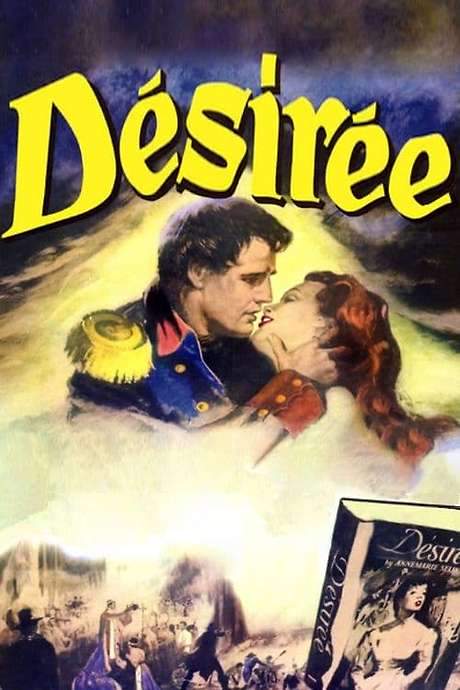
Désirée (1954) movie poster

Plot Summary

Désirée (1954) Plot Summary Explained

Release, runtime and language
1954 · 110 mins · English
Directed by
Henry Koster
Starring
Alan Napier, Edith Evanson, Marlon Brando, Jean Simmons, Cathleen Nesbitt, Elizabeth Sellars

In 1794 Marseille, millinery clerk Désirée Clary becomes infatuated with Napoleon Bonaparte, but marries his aide, General Jean‑Baptiste Berandotte, who later joins the forces that topple the emperor. Meanwhile, worldly courtesan Josephine Beauharnais marries Napoleon, becomes Empress of France, and is cast aside when she cannot produce an heir.

On this page (7)
  1. 1 Where to watch
  2. 2 What happens: full plot
  3. 3 Plot questions answered
  4. 4 The book behind the movie
  5. 5 Movie threads
  6. 6 Movies like Désirée
  7. 7 Every angle

Where to watch

Where to Watch Désirée (1954)

Where can you watch Désirée? Stream, rent or buy it in the US, including on Amazon Video, Apple TV Store and Fandango At Home: current JustWatch availability with up-to-date prices.

Streaming availability powered by JustWatch

Full plot summary · contains spoilers

What Happens in Désirée: Full Plot Summary

The whole story of Désirée (1954) explained, from the opening scene to the final frame: every key event, every twist and what it all adds up to. Read it as a quick recap before the sequel, to check a scene you missed, or to finally understand what really happened.

In Marseille in 1794, Désirée Clary, [Jean Simmons], quietly crosses paths with a Corsican named Joseph Bonaparte and soon invites him and his daring brother, Captain Napoleon Bonaparte, [Marlon Brando], to call on her family the very next day. The encounter sets off a chain of instant attractions: Julie, Désirée’s sister, and Joseph Bonaparte [Alan Napier] are drawn to one another, while Napoleon himself is taken with Désirée. In a bold confession, he admits that the financially strapped Bonaparte brothers would benefit from the Clary sisters’ dowries. Before long, a troubling turn arrives when Désirée learns Napoleon has been arrested and hauled off to Paris.

When Napoleon finally returns to Marseille, he claims he’s cleared of charges but has been ordered to hunt Bourbon royalists in Paris. Désirée, hopeful and practical, pleads with him to abandon the Army and join her brother in business, but Napoleon brushes aside the idea and instead proposes marriage. Désirée accepts and lends him money to head back to Paris, hoping for a future together. He vows to forever love her and promises to return for their wedding, yet the months that follow erode that certainty. Désirée’s doubts push her to travel to Paris, where she encounters General Jean-Baptiste Bernadotte [Michael Rennie], a man who will change the course of her life. She also learns that Napoleon has become betrothed to the wealthy Joséphine de Beauharnais [Merle Oberon], a revelation that nearly drives Désirée to despair until Bernadotte intervenes, confessing his own love and stopping her from a darker choice.

By 1797, Napoleon has emerged as France’s leading general, conquering Italy, while Désirée inhabits Rome with Julie and Joseph. Yet the romance falters in Rome, and she ultimately longs to return to Paris, where Napoleon — now married to Joséphine — prepares for a new campaign in Egypt. Bernadotte, still drawn to Désirée, proposes again, fueling a complex web of loyalty, love, and ambition.

On July 4, 1799, Désirée and Bernadotte settle into married life and welcome a son, Oscar [Nicolas Koster], a symbol of their fragile happiness. Later that year, Napoleon is proclaimed First Consul of the French Republic and invites Bernadotte to join his council of state, an invitation Bernadotte accepts, binding their intertwined fates a little more tightly. A few years pass, and Napoleon is proclaimed Emperor, an act that culminates in him dethroning the papal authority and minting his own crown.

As the politics of power tighten their grip, Napoleon divorces Josephine five years later, and Désirée supports her former rival as Napoleon courts Marie Louise of Austria for an heir. Bernadotte’s future becomes entangled with Sweden when King Charles XIII seeks to adopt him as heir, an offer Désirée receives with mixed feelings yet supports, and Napoleon permits both to seek new paths away from Paris.

Désirée travels to Stockholm, where she struggles to fit in with the royal milieu and longs to return home. She later attends a Paris ball where Napoleon proudly parades his new son, Napoleon II, and hints at the strategic threats that hover over Bernadotte’s Russia alliance, threatening Sweden’s role in the empire’s broader schemes. The tension grows as Russia becomes a focal point in the looming wars, and Désirée realizes that Napoleon’s ambitions—mixed with his lingering love for her—are drawing her toward a precarious fate.

As the War of the Sixth Coalition unfolds, Bernadotte leads one of the victorious armies against Napoleon, reuniting briefly with Désirée before returning to his homeland. Napoleon’s exile to Elba seems a temporary reprieve, but the Battle of Waterloo closes a dramatic chapter. Napoleon retreats with his personal army to the Château de Malmaison, where allied representatives press Désirée to intervene. In a private moment, Napoleon speaks with Désirée alone, musing on what might have been if destiny had conspired differently had he chosen to marry her. Désirée, calm and compassionate, tells him that his destiny must now align with France’s needs and urges him to go into exile on Saint Helena. In a final, poignant gesture, Napoleon hands Désirée his sword and concedes that her dowry was not the sole reason he proposed in Marseille so many years before, acknowledging the strange arc of two extraordinary people whose lives intersected in ways neither could fully control.

Last updated: October 09, 2025 at 11:01

Was this helpful?

Plot questions answered

Désirée Plot Explained: Your Questions Answered

The questions people ask most about Désirée (1954): what happens in the confusing scenes, why the characters do what they do, the twists, hidden details and what the ending means. Each answer contains spoilers.

Q1

Why does Napoleon propose to Désirée if he later marries Josephine?

Napoleon was genuinely attracted to Désirée when they met in Marseille, but he was also financially strapped. He hinted that the Bonaparte brothers could benefit from the Clary sisters' dowries. When he returned after being cleared of charges, he proposed marriage, possibly for both emotional and practical reasons. However, once in Paris, he met the wealthy and well-connected Josephine de Beauharnais, whose social standing proved more useful for his rising political ambitions.

Foreshadowing: Napoleon himself admits at the end that her dowry was not the sole reason he proposed in Marseille.

  • napoleon
  • josephine
  • marriage proposal
  • dowry
  • desiree clary
  • marseille
Q2

Why does Désirée choose to marry Bernadotte instead of waiting for Napoleon?

After Désirée travels to Paris and learns Napoleon has become engaged to Josephine, she falls into deep despair. Bernadotte, who has fallen in love with her, proposes marriage multiple times and eventually saves her from a dark moment. Over time, Désirée comes to love Bernadotte, appreciating his genuine devotion compared to Napoleon's broken promises. She eventually accepts his proposal, and they marry on July 4, 1799.

Foreshadowing: Their earlier meetings in Paris planted the seeds of their relationship before Napoleon's engagement to Josephine.

  • jean-baptiste bernadotte
  • marriage
  • desiree
  • napoleon
  • josephine
Q3

What triggers Désirée's suicidal thoughts after learning about Napoleon and Josephine?

When Désirée travels to Paris and discovers that Napoleon has become betrothed to Josephine de Beauharnais, she is devastated. The realization that Napoleon had abandoned his promise to return and marry her, combined with the emotional blow of seeing him choose another woman, drives her to despair. It is Bernadotte who discovers her in this state and intervenes, preventing her from making a tragic choice.

Foreshadowing: Désirée's earlier hope and her lending money to Napoleon had established her deep emotional investment in their relationship.

  • desiree
  • suicide
  • josephine
  • napoleon
  • despair
  • paris
  • bernadotte
Q4

How does Bernadotte become heir to the Swedish throne?

King Charles XIII of Sweden, lacking an heir, seeks to adopt Bernadotte as his successor to the Swedish throne. This unexpected offer comes as a surprise to both Bernadotte and Désirée. Napoleon permits them to pursue this new path away from Paris, effectively allowing Bernadotte to leave the French imperial orbit. Bernadotte accepts, eventually becoming King Charles XIV John of Sweden.

Foreshadowing: The political winds of Europe were shifting, and Napoleon needed to secure alliances, Sweden's offer provided a way to strengthen his coalition.

  • bernadotte
  • sweden
  • king charles xiii
  • heir
  • throne
  • adoption
Q5

Why does Napoleon divorce Josephine after making her Empress?

Napoleon divorces Josephine in 1809 because she cannot produce an heir to secure his imperial dynasty. Despite his genuine affection for her, the need for a legitimate male successor to cement his legacy and strengthen his political position compels him to set aside Josephine and marry Marie Louise of Austria, who subsequently gives birth to Napoleon II.

Foreshadowing: The empire's succession had been a concern since Napoleon's coronation, and the divorce marks a decisive shift in his priorities.

  • napoleon
  • josephine
  • divorce
  • marie louise
  • heir
  • imperial
  • dynasty
Q6

Why does Désirée support Bernadotte becoming King of Sweden despite her reservations?

While Désirée receives the news of the Swedish throne offer with mixed feelings, being far from her homeland and unsure of the new environment, she ultimately supports her husband's opportunity. This decision reflects her loyalty to Bernadotte and her willingness to adapt to the shifting circumstances of their lives, even though it means leaving Paris and the world she knew.

Foreshadowing: Désirée had already shown adaptability by moving between cities throughout the story as politics demanded.

  • desiree
  • bernadotte
  • sweden
  • support
  • loyalty
  • stockholm
Q7

What is the significance of Napoleon giving his sword to Désirée at their final meeting?

After Waterloo, Napoleon retreats to Château de Malmaison. In a private moment with Désirée, he gives her his sword as a symbolic gesture of surrender and acceptance of his fate. More importantly, he acknowledges that her dowry was not the sole reason he proposed to her in Marseille all those years ago, a poignant admission that there was genuine feeling behind his original proposal.

Foreshadowing: This moment fulfills the emotional arc established from their first meeting in Marseille.

  • napoleon
  • sword
  • malmaison
  • exile
  • saint helena
  • desiree
  • farewell
Q8

What transpires in Napoleon's final meeting with Désirée?

At Malmaison, allied representatives ask Désirée to convince Napoleon to surrender. In their private conversation, Napoleon muses about what might have happened had he married Désirée instead of Josephine, a alternate destiny where their lives took different paths. Désirée, showing compassion, urges him to go into exile on Saint Helena, telling him his destiny must now align with France's needs.

Foreshadowing: Their relationship had been a thread throughout the entire narrative, and this meeting provides emotional closure.

  • napoleon
  • desiree
  • malmaison
  • final meeting
  • exile
  • surrender
Q9

What causes Bernadotte to fight against Napoleon in the War of the Sixth Coalition?

During the War of the Sixth Coalition, Bernadotte finds himself leading armies against Napoleon as part of the coalition forces. Although once part of Napoleon's council, political alliances and the shifting European landscape pull him into opposition. Bernadotte ultimately leads one of the victorious armies against his former patron, and the coalition defeats Napoleon.

Foreshadowing: Earlier tensions had already emerged, particularly when Napoleon threatened invasion of Russia and criticized Bernadotte's alliance with Russia.

  • bernadotte
  • napoleon
  • sixth coalition
  • wars
  • battle
  • opposition
Q10

Why does Désirée have difficulty adjusting to life in Stockholm?

When Désirée relocates to Stockholm after Bernadotte becomes heir to the Swedish throne, she struggles to fit into the royal milieu. She longs to return to her home and the familiar world of Paris, feeling isolated in the foreign Swedish court. This isolation reflects her ongoing tension between duty to her husband and personal nostalgia for her former life.

Foreshadowing: Her earlier moves between cities had prepared her for change, but the cultural distance to Sweden proves more challenging.

  • desiree
  • stockholm
  • adjustment
  • royal court
  • isolation
  • homesickness
Q11

What does Napoleon mean when he threatens Bernadotte over Russia at the Paris ball?

At an 1811 Paris ball, Napoleon flaunts his young son Napoleon II and issues veiled threats about Bernadotte's alliance with Russia. The implication is that Bernadotte's alignment with Russia, Sweden's strategic partner, poses a threat to Napoleon's broader imperial plans. Napoleon hints at a potential invasion of Russia, and the political tension underscores how Désirée remains caught between two men who shaped her fate.

Foreshadowing: This moment sets up the eventual break between Napoleon and Bernadotte as their political interests diverge.

  • napoleon
  • bernadotte
  • russia
  • threat
  • paris ball
  • alliance
  • invasion

Movie threads

More Movies Like Désirée, by Mood & Story

Curated lists built around what makes Désirée tick: the same mood, the same kind of story or the same emotional payoff. Each list explains why these movies belong together.

Bittersweet Historical Romances like Désirée

Sweeping love stories where personal destinies are shaped by the tides of history. For viewers who enjoyed the grand, romantic melancholy of Désirée, this collection features movies like it that weave intimate love stories into the fabric of history, exploring themes of destiny and sacrifice in lavish, emotionally resonant dramas.

  • romantic
  • melancholic
  • grand
  • nostalgic
  • passionate
  • fated
  • Tone: bittersweet, melancholic, grand
  • Pacing: steady, epic
Why these movies?

The story pattern: These stories typically follow passionate relationships that ignite during turbulent historical periods. The central romance is deeply intertwined with political ambition or social upheaval, leading to a narrative arc where love is often sacrificed for power or duty, resulting in a reflective, bittersweet conclusion.

Why they belong together: Movies in this thread share a core focus on the interplay between epic historical scale and intimate romantic longing. They balance grand production values with a melancholic, reflective tone, creating a specific vibe of romantic grandeur touched by loss.

Movies about the Personal Cost of Ambition like Désirée

Stories where the relentless pursuit of power leaves a trail of personal wreckage. If you liked Désirée's exploration of how Napoleon's ambition affected his personal life, these similar films focus on the emotional consequences of power, featuring characters who achieve greatness but lose love and connection along the way.

  • ambitious
  • tragic
  • reflective
  • grand
  • melancholic
  • fated
  • Tone: bittersweet, reflective, grand
  • Pacing: steady, character-driven
Why these movies?

The story pattern: The narrative follows a protagonist's rise to prominence, paralleled by the deterioration of their intimate bonds. The central conflict is between public achievement and private fulfillment, often culminating in a lonely victory where the protagonist reflects on the love and humanity sacrificed for their goals.

Why they belong together: These films are grouped by their shared thematic exploration of ambition's duality—the glamour of success contrasted with the intimate costs. They feature a steady, character-driven pace and a consistently bittersweet or melancholic tone that questions the true price of power.

If you liked this

Movies Like Désirée

Similar movies to Désirée: the same genre, themes or kind of story. Each one comes with its own plot summary, timeline and ending explained.

Browse all movie summaries

Every angle

Désirée (1954) Explained: Plot, Timeline & Characters

Everything about Désirée in one place: what happens in the plot summary, the timeline in chronological order, the characters and meaning and a spoiler-free summary. What's After the Movie adds the cast, box office and post-credit scenes.

Coming soon on iOS and Android

The Plot Explained Movie Summary App

Plot summaries, endings explained and timelines on your phone. Catch up on any movie in minutes, save your favorites and never miss a twist again.

Be the first to know when we launch. Your email stays private, always.

Learn more about the app