Plot Explained Spoilers guaranteed!
Plot Explained

Browse by genre

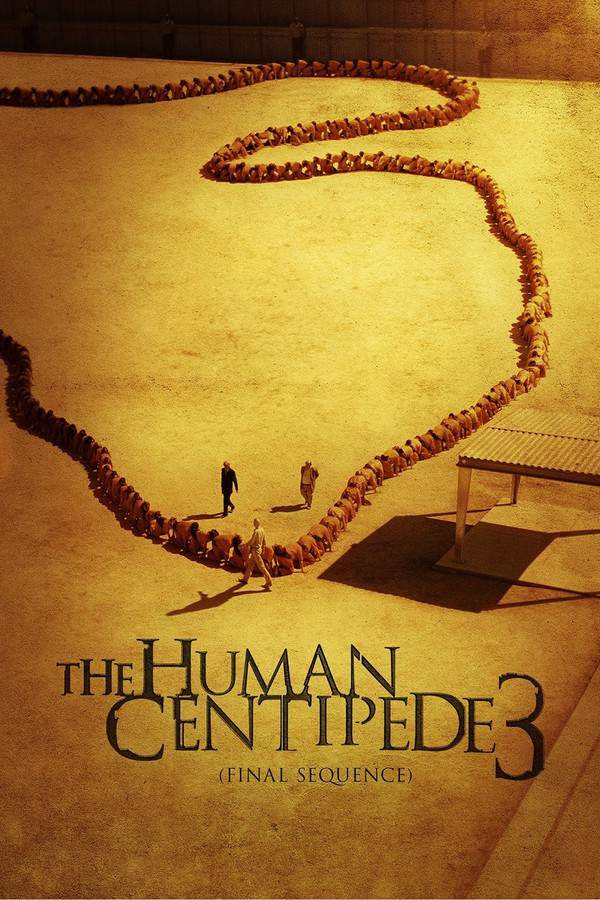
The Human Centipede (First Sequence) (2009) movie poster

Characters & Themes

The Human Centipede (First Sequence) (2009) Characters, Setting & Themes Explained

Release, runtime and language
2009 · 91 mins · English
Loading streaming availability…
Directed by
Tom Six
Starring
Dieter Laser, Andreas Leupold, Ashley C. Williams, Ashlynn Yennie, Rosemary Annabella, Akihiro Kitamura

During a carefree European road trip, two American women’s car breaks down in a German forest. Seeking shelter, they discover a remote villa where a retired surgeon, obsessed with a grotesque vision, lures them inside. He intends to use them in a perverse surgical experiment that will join their bodies together.

On this page (8)
  1. 1 Where to watch
  2. 2 Characters explained (4)
  3. 3 Where & when it takes place
  4. 4 Themes & meaning (3)
  5. 5 Character & meaning questions
  6. 6 Movie threads
  7. 7 Movies like The Human Centipede (First Sequence)
  8. 8 Every angle
Loading streaming availability…

4 main characters · contains spoilers

The Human Centipede (First Sequence) Characters Explained: Who Is Who

The main characters of The Human Centipede (First Sequence) (2009), heroes and villains: what drives them, how they change over the course of the story and what each of them reveals about the film's bigger ideas.

  • Dr. Heiter

    played by Dieter Laser

    Dr. Heiter is a psychopathic surgeon with a twisted vision of creating a 'human centipede.' His character represents a perverse intersection of genius and madness, showcasing an obsession with control and domination over life. Heiter's unsettling charisma masks a deep-seated misanthropy and a disregard for human life.

    • 🩺 Surgeon
    • 🔪 Psychopath
    • 🚪 Captor
  • Lindsay

    played by Ashley C. Williams

    Lindsay is one of the tourists who fall victim to Dr. Heiter's gruesome experiment. Her character embodies the struggle for survival as she is forced into a nightmarish reality. Despite her situation, she shows resilience and a determination to escape, illustrating the human will to fight against despair.

    • 👩‍🎤 Tourist
    • 💪 Survivor
    • 😢 Victim
  • Jenny

    played by Ashlynn Yennie

    Jenny is the other tourist captured alongside Lindsay, showcasing vulnerability and the tragic consequences of their encounter with Dr. Heiter. As the story unfolds, she becomes a symbol of innocence lost, ultimately facing a horrifying fate. Her relationship with Lindsay highlights themes of friendship and shared suffering.

    • 👩‍🎤 Tourist
    • 💔 Friend
    • ⚰️ Victim
  • Katsuro

    played by Akihiro Kitamura

    Katsuro is a Japanese tourist who becomes an unwilling participant in Dr. Heiter's grotesque project. His character adds depth to the narrative, confronting personal guilt and the struggle for redemption amidst horror. Katsuro’s tragic fate encapsulates the helplessness felt by all victims in this twisted scenario.

    • 👨‍💼 Tourist
    • 💔 Tragic
    • 🚫 Victim

Last updated: September 29, 2026 at 10:39

Was this helpful?

Setting

Where and When Does The Human Centipede (First Sequence) Take Place?

The setting of The Human Centipede (First Sequence) (2009): the year and time period, the places and locations, and how they shape the characters, the mood and the tension of the story.

Time period

The events of the film are contemporaneous to its release, highlighting modern medical ethics and societal taboos. The setting allows for a reflection on contemporary fears about the misuse of medical knowledge. The focus on current technology emphasizes the real-world implications of scientific advances.

Location

Germany

The movie takes place in Germany, specifically in a remote area where Dr. Heiter resides. Known for its surgical innovations, it ironically serves as the backdrop for a gruesome medical experiment. The quiet surroundings contrast sharply with the horrors occurring inside Heiter's home.

  • 🇩🇪 Germany
  • 🏚️ House
  • 🏙️ Nightclub

Last updated: September 29, 2026 at 10:39

Was this helpful?

3 major themes

The Human Centipede (First Sequence) Meaning: Themes & Message Explained

What is The Human Centipede (First Sequence) (2009) really about? The emotional, social and philosophical themes the film keeps returning to, its symbolism and the message beneath the surface.

  • Survival

    At its core, the film explores the theme of survival against insurmountable odds. The characters face extreme physical and psychological challenges in their fight to escape a madman's clutches. Their struggle reflects the human spirit's resilience even in the darkest situations.

  • Ethics

    The movie raises unsettling questions about medical ethics and moral boundaries. Dr. Heiter embodies the potential for scientific knowledge to be wielded as a weapon against humanity. The film critiques the idea of a 'creator' versus 'creature,' forcing viewers to confront the dark side of human experimentation.

  • Dehumanization

    Dehumanization is a crucial theme, illustrated by Heiter's treatment of his victims as mere experimental subjects rather than individuals. The surgical procedure fundamentally strips away their identities, reducing them to a grotesque collective. This theme challenges the audience to reflect on the moral implications of objectifying others.

Last updated: September 29, 2026 at 10:39

Was this helpful?

Character & theme questions

The Human Centipede (First Sequence) Characters & Meaning: Your Questions Answered

The questions people ask about The Human Centipede (First Sequence) (2009): who the characters really are, their relationships, what the symbols mean, where it takes place and what the movie is really about. Each answer contains spoilers.

Q1

Where is the movie set?

The Human Centipede is set in a remote, forested area of Germany, centered almost entirely around the isolated villa where Dr. Heiter lives and conducts his experiments. The secluded European location is important because it cuts the victims off from any chance of outside help, deepening their helplessness. The quiet, rural surroundings contrast sharply with the grotesque acts performed inside the house.

  • germany setting
  • remote villa
  • european location
  • heiter house
  • isolated forest
Q2

Who is Dr. Heiter?

Dr. Heiter is a retired German surgeon and the central antagonist of The Human Centipede, portrayed by Dieter Laser. He is a psychopathic figure who blends genuine surgical skill with deep misanthropy, obsessed with creating a grotesque living organism by surgically joining humans together. His unsettling charisma masks a complete disregard for human life and bodily autonomy.

  • dr heiter
  • retired surgeon
  • antagonist
  • dieter laser
  • mad scientist
Q3

What drives Dr. Heiter's obsession?

Dr. Heiter is driven by a twisted vision of creating a new kind of life form, treating his human centipede concept as both a scientific experiment and an artistic achievement. His motivation stems from a desire for absolute control and domination over other living beings, reducing people to raw biological material. This obsession reflects the film's broader critique of scientific knowledge weaponized against humanity.

  • heiter motivation
  • obsession
  • control
  • scientific ambition
  • human centipede concept
Q4

What are the main themes explored in the film?

The Human Centipede revolves around three core themes: survival, medical ethics, and dehumanization. Survival is embodied by the victims' desperate fight to escape, while ethics is interrogated through Heiter's abuse of surgical expertise. Dehumanization runs throughout the film, as the victims are stripped of their individuality and reduced to parts of a single grotesque organism.

  • themes
  • survival
  • ethics
  • dehumanization
  • body horror meaning
Q5

What does the film say about medical ethics?

The Human Centipede uses Dr. Heiter's actions to critique the dangerous potential of unchecked scientific ambition and the violation of medical ethics. By twisting healing knowledge into a tool of torture, the film forces viewers to confront how expertise can be perverted when divorced from moral responsibility. It taps into broader modern fears about the misuse of medical authority and unauthorized experimentation.

  • medical ethics
  • scientific misuse
  • unethical experimentation
  • surgeon horror
  • modern fears
Q6

How does the movie explore dehumanization?

The Human Centipede depicts dehumanization through the way Dr. Heiter treats his victims as interchangeable biological parts rather than individuals with identities and autonomy. The surgical procedure literally erases their personhood by linking them into a single organism controlled from one end. This bodily violation becomes a metaphor for how systems of cruelty strip people of their humanity and agency.

  • dehumanization
  • objectification
  • loss of identity
  • bodily autonomy
  • human subjects
Q7

What time period is the film set in?

The Human Centipede takes place in the contemporary modern era, contemporaneous with its 2009 release. This present-day setting grounds the horror in real, recognizable medical technology and current ethical standards rather than a distant past. It allows the film to function as commentary on modern anxieties about how today's scientific advances could be misused.

  • time period
  • modern setting
  • contemporary
  • present day
  • 2009
Q8

Who are Lindsay and Jenny?

Lindsay and Jenny are two American tourists on a carefree European road trip who become the first victims of Dr. Heiter's experiment in The Human Centipede. Their car breaks down in the German forest, leading them to seek help at the remote villa where Heiter lives. They represent the vulnerability of ordinary people caught in an extraordinary nightmare, and their friendship highlights themes of shared suffering and companionship under duress.

  • lindsay
  • jenny
  • american tourists
  • victims
  • friendship
  • road trip
Q9

Who is Katsuro and what role does he play?

Katsuro is a Japanese tourist who becomes the third and final member of Dr. Heiter's experiment in The Human Centipede. His inclusion adds an international dimension to the victims and underscores how Heiter's obsession transcends cultural and racial boundaries. Katsuro's character grapples with guilt and the impossibility of redemption once he is absorbed into the experiment.

  • katsuro
  • japanese tourist
  • third victim
  • guilt
  • redemption
  • international victims
Q10

What kind of horror movie is this?

The Human Centipede is a body horror and transgressive horror film built around surgical violence and the violation of bodily autonomy. Its tone is relentlessly bleak and its pacing is steady, building dread through the experiment's methodical progression rather than relying on jump scares. The film is widely regarded as a benchmark for extreme horror cinema, designed to provoke discomfort rather than offer catharsis or relief.

  • body horror
  • transgressive horror
  • extreme horror
  • surgical horror
  • horror subgenre

Movie threads

More Movies Like The Human Centipede (First Sequence), by Mood & Story

Curated lists built around what makes The Human Centipede (First Sequence) tick: the same mood, the same kind of story or the same emotional payoff. Each list explains why these movies belong together.

Mad scientist body horror like The Human Centipede (First Sequence)

Victims trapped by an obsessed mind, used as raw material for a monstrous vision. If you liked the sickening medical experiments in The Human Centipede (First Sequence), explore more disturbing horror stories where obsessive surgeons or scientists kidnap victims to perform grotesque, dehumanizing procedures. These movies share a focus on captivity, surgical horror, and a chillingly calm villain who treats cruelty as science.

  • body horror
  • mad scientist
  • captivity
  • grotesque
  • unsettling
  • torture
  • Tone: dark, bleak, transgressive
  • Pacing: steady, methodically building
Why these movies?

The story pattern: Stories in this thread usually begin with ordinary people lured or trapped by a charismatic but insane authority figure, often a doctor or researcher with a singular, repulsive obsession. The middle act descends into prolonged captivity where victims are physically violated, dissected, or reassembled in service of the villain's grotesque vision. Escapes are attempted but rarely fully succeed, and the endings tend to leave at least one victim permanently marked by the experience. The narrative is structured around helplessness, voyeuristic dread, and the slow reveal of what the experiment actually entails.

Why they belong together: These films are grouped together because they share the same core engine: a remote or sealed location, a calm and articulate monster who frames their actions as visionary, and victims reduced to raw material for body horror. Pacing tends to be steady and deliberate, tone is overwhelmingly dark, and the emotional weight comes from sustained dehumanization rather than jump scares. Intensity is consistently high, and the content warnings lean heavily on graphic violence, torture, and violation of bodily autonomy.


Claustrophobic horror like The Human Centipede (First Sequence)

Walls close in, exits vanish, and despair seeps into every breath. Movies like The Human Centipede (First Sequence) that trap their characters and viewers in sealed, suffocating spaces where every attempt to escape deepens the nightmare. These horror stories lean on steady pacing, heavy emotional weight, and a bleak sense that survival is never guaranteed, perfect for fans of oppressive, claustrophobic terror.

  • claustrophobic
  • oppressive
  • helpless
  • bleak
  • unsettling
  • survival
  • Tone: dark, tense, claustrophobic
  • Pacing: steady, oppressive
Why these movies?

The story pattern: These films usually open with a brief moment of normalcy before an unlucky circumstance, wrong turn, or trusting stranger delivers the protagonist into a sealed environment. From there, the story is a slow tightening of options as doors lock, allies disappear, and the rules of the trap become horrifyingly clear. Characters spend much of the runtime bargaining, scheming, and attempting small revolts, only to be pushed further into the antagonist's grip. The emotional arc is one of shrinking hope, with endings that range from devastating to quietly nihilistic.

Why they belong together: These movies share an oppressive, suffocating atmosphere where physical and emotional confinement become the primary source of fear. Pacing is steady rather than frantic, intensity stays high throughout, and the tone is dark with little relief or humor. The audience experiences the same helplessness as the victims, and the dread is amplified by bleak endings and heavy emotional weight. Whether the threat is a mad surgeon, a family of killers, or an unseen captor, the unifying element is the feeling that there is genuinely nowhere to run.

If you liked this

Movies Like The Human Centipede (First Sequence)

Similar movies to The Human Centipede (First Sequence): the same genre, themes or kind of story. Each one comes with its own plot summary, timeline and ending explained.

Browse all movie summaries

Every angle

The Human Centipede (First Sequence) (2009) Explained: Plot, Timeline & Characters

Everything about The Human Centipede (First Sequence) in one place: what happens in the plot summary, the timeline in chronological order, the characters and meaning and a spoiler-free summary. What's After the Movie adds the cast, box office and post-credit scenes.

Coming soon on iOS and Android

The Plot Explained Movie Summary App

Plot summaries, endings explained and timelines on your phone. Catch up on any movie in minutes, save your favorites and never miss a twist again.

Be the first to know when we launch. Your email stays private, always.

Learn more about the app