Plot Explained Spoilers guaranteed!
Plot Explained

Browse by genre

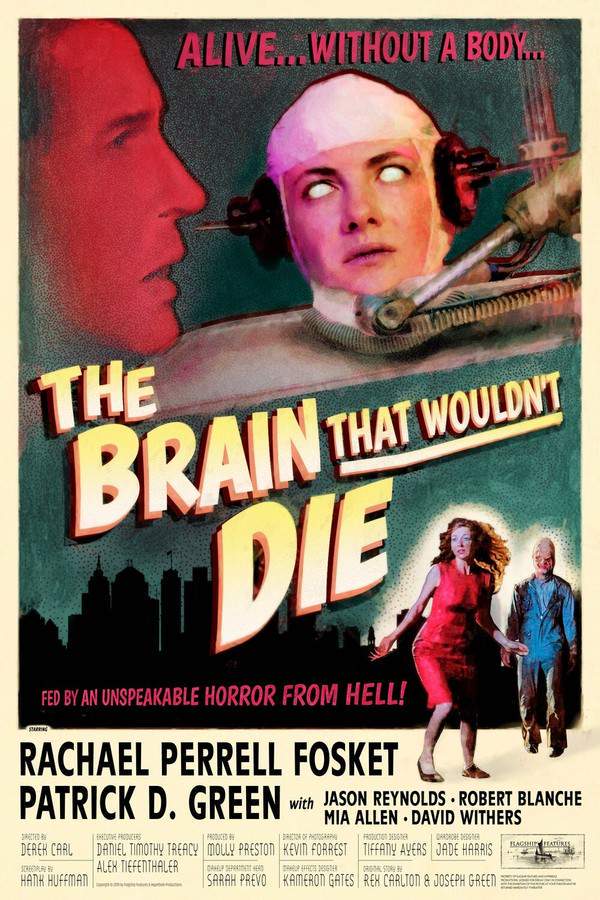
The Brain That Wouldn't Die (1962) movie poster

Plot Summary

The Brain That Wouldn't Die (1962) Plot Summary Explained

Release, runtime and language
1962 · 82 min · English
Loading streaming availability…
Directed by
Joseph Green
Starring
Leslie Daniels, Adele Lamont, Arny Freeman, Bonnie Sharie, Bruce Brighton, Fred Martin

After a car accident leaves his fiancée in a vegetative state, a brilliant surgeon becomes determined to find a way to keep her alive. He becomes fixated on preserving her head, leading him down a dark and obsessive path. As he experiments and delves deeper into the science of life and death, he confronts unsettling moral questions and uncovers terrifying secrets that blur the line between love and madness.

On this page (6)
  1. 1 Where to watch
  2. 2 What happens: full plot
  3. 3 Plot questions answered
  4. 4 Movie threads
  5. 5 Movies like The Brain That Wouldn't Die
  6. 6 Every angle
Loading streaming availability…

Full plot summary · contains spoilers

What Happens in The Brain That Wouldn't Die: Full Plot Summary

The whole story of The Brain That Wouldn't Die (1962) explained, from the opening scene to the final frame: every key event, every twist and what it all adds up to. Read it as a quick recap before the sequel, to check a scene you missed, or to finally understand what really happened.

Dr. Bill Cortner, portrayed by Herb Evans, is an exceptionally skilled surgeon who manages to save the life of a patient during a surgery led by his father, Dr. Cortner, played by Bruce Brighton. Utilizing controversial techniques from his research on amputated limbs, Bill's methods raise ethical concerns, especially since they involve using body parts from deceased patients. While Dr. Cortner acknowledges his son's talent, he cautions him to be cautious in his work.

As Bill plans a weekend with his fiancée, Jan Compton, an urgent call from Kurt, his assistant, interrupts him, alerting him to a crisis in the basement of their country house. In a tragic turn, Bill is involved in a car accident that decapitates Jan. Desperate to save her, he brings her head back to the country house, determined to transplant it onto a new body. He harbors one of his previous experiments locked away in the basement, which becomes increasingly aggressive. Meanwhile, Jan's surviving head resents its unnatural state and conspires with the creature in the closet, plotting a dangerous escape.

As Bill searches for an ideal female body, he reconnects with an old acquaintance, Donna Williams, offering her a chance at beauty restoration through his father's surgical skills. However, Bill's unorthodox methods lead to unforeseen consequences when he brings Donna back to the country house, causing a chain reaction that culminates in horror.

The film opens with a dark screen, alongside a woman's anguished voice begging, "Let me die. Let me die." This chilling start sets the tone as a man lies on an operating table surrounded by worried doctors. When the patient dies, Dr. Cortner laments, "I should have known he was a good as dead when they wheeled him in." Nurse Jan attempts to console him, asserting the efforts were valiant. Seizing the moment, Bill requests to take over the procedure to prove his pioneering techniques can avert death, eventually succeeding in reviving the patient.

Post-surgery, father and son debate the ethics surrounding their work, particularly regarding missing limbs from their hospital. When Jan arrives, Bill reassures her of their wedding plans. Yet, a message from Kurt about a calamity at the country house propels them into a disastrous car crash, which leads to Jan's tragic fate.

Bill's obsessive quest to find a body for Jan's head takes him through dark alleys and strip clubs, as he seeks a potential candidate amongst unknowing women. As Jan navigates her new reality, she forms an alliance with the creature stowed away in the closet, setting the stage for revenge against Bill.

The film escalates into graphic chaos as Bill’s nefarious plans unravel, ultimately leading to confrontations with both the living and the grotesque. Jan's silent determination signals a haunting end as the sinister experiment spirals out of control, leaving viewers captivated by the intertwining tales of love, loss, and the macabre consequences of unchecked ambition in the world of science. “I told you I’d bring you a body. A beautiful one. Soon it will be yours,” Bill declares to Jan, unaware of the chaos his obsession will usher in.

In the climax, the house becomes an arena for revenge and survival as the line between life and death blurs terribly, culminating in tragic yet darkly absurd demolitions of responsibility and ethics in the pursuit of love. The story fades to black with Jan's chilling laughter echoing, forever haunted by what transpired.
Last updated: October 25, 2024 at 09:32

Was this helpful?

Plot questions answered

The Brain That Wouldn't Die Plot Explained: Your Questions Answered

The questions people ask most about The Brain That Wouldn't Die (1962): what happens in the confusing scenes, why the characters do what they do, the twists, hidden details and what the ending means. Each answer contains spoilers.

Q1

Why does Bill decide to keep Jan's head alive after the car accident?

Bill refuses to accept Jan's death because he is obsessed with proving his experimental techniques work. After the car accident decapitates Jan, Bill rushes her head back to his country house with the desperate plan to transplant it onto a new body. His obsession with resurrection and his belief that his controversial research on amputated limbs can bring her back drives this decision, ignoring the moral implications of what he's attempting.

Foreshadowing: Earlier in the film, Bill argues fiercely with his father about using body parts from deceased patients, showing his willingness to cross ethical boundaries for his experiments.

  • bill cortner
  • jan
  • decapitation
  • experiment
  • transplant
  • surgeon
Q2

What is the creature Bill keeps locked in the basement?

The creature is one of Bill's previous experiments - a grotesque being he created using body parts from deceased patients, similar to his controversial limb research. Bill has been keeping it hidden in the basement of the country house. The creature has become increasingly aggressive over time, representing the horrifying consequence of Bill's unethical scientific ambitions.

Foreshadowing: Bill's father warns him to be cautious about his work with missing limbs from deceased patients, hinting that Bill has already crossed serious ethical lines.

  • creature
  • basement
  • experiment
  • monster
  • bill cortner
Q3

Why does Jan's head conspire with the creature against Bill?

Jan becomes filled with resentment toward Bill after he keeps her alive in her decapitated state without her consent. She views her existence as a monstrous violation and desperately wants to die, but Bill refuses to let her go. This betrayal leads her to form an alliance with the creature locked in the closet, planning a dangerous escape and revenge against Bill for what he has done to her.

Foreshadowing: The film opens with a woman's anguished voice begging 'Let me die,' establishing from the start that being kept alive against one's will is the central horror.

  • jan
  • creature
  • revenge
  • betrayal
  • conspiracy
Q4

What happens to Donna Williams after Bill brings her to the country house?

Bill targets Donna Williams because she is an old acquaintance he believes could benefit from his father's surgical skills in beauty restoration. However, his true intention is to find a suitable female body for Jan's head. When Bill brings Donna back to the country house, his unhinged experiments escalate, leading to horrific consequences. She becomes another victim of his obsessive quest to find a body for Jan.

Foreshadowing: Bill's dark journey through alleys and strip clubs, viewing potential victims as 'solutions' rather than people, foreshadows his willingness to harm anyone to achieve his goal.

  • donna williams
  • bill
  • body
  • transplant
  • victim
Q5

How does Bill die in the film's climax?

In the climactic confrontation at the country house, Bill's ambitions finally collapse under the weight of his own creations. The house becomes an arena where his obsession clashes with the lives he has disturbed. As Jan and the creature execute their revenge, Bill faces the consequences of his unethical experiments. The exact nature of his death reflects the darkly absurd destruction of responsibility and ethics he has pursued in the name of love and science.

Foreshadowing: Throughout the film, Bill ignores warning signs and continues his obsession, building toward the inevitable confrontation with both his victims.

  • bill cortner
  • death
  • climax
  • confrontation
  • revenge
Q6

What was Bill's original research experiment before Jan's accident?

Bill had been conducting controversial experiments on amputated limbs, using body parts from deceased patients at the hospital. His techniques, while successful in some cases, raised serious ethical concerns from his father and colleagues. The creature in the basement is a result of these earlier experiments - a being created from combining body parts, representing the extreme conclusion of Bill's unethical scientific pursuits.

Foreshadowing: The father-son debate about missing limbs from the hospital clearly indicates Bill has been conducting experiments that go beyond accepted medical practice.

  • experiment
  • amputated limbs
  • body parts
  • research
  • surgery
Q7

Why does Jan want revenge against Bill instead of being grateful he saved her?

Jan views Bill's actions not as salvation but as a horrific violation. He kept her alive without her consent in a monstrous, unnatural state - a living severed head trapped in a world of darkness and isolation. Her first words upon awakening express pure resentment. She begs to die, but Bill refuses, insisting he will find her a new body. This betrayal of her autonomy and dignity transforms her love for Bill into vengeful hatred.

Foreshadowing: The opening scene establishes Jan's desire to die, making clear from the start that Bill's 'rescue' is not what she wants.

  • jan
  • revenge
  • autonomy
  • consent
  • betrayal
  • love
Q8

What was Bill's plan for transplanting Jan's head onto a new body?

Bill believed his experimental techniques could successfully reattach Jan's head to a different female body, effectively bringing her back to life in a complete form. He tells Jan, 'I told you I'd bring you a body. A beautiful one. Soon it will be yours,' indicating he intended to find a suitable female body and perform the transplant. His obsession with proving his methods work drove him to search through dark alleys and strip clubs for potential candidates, viewing women as mere body supplies rather than people.

Foreshadowing: Bill's successful surgery at the beginning of the film, where he uses his controversial techniques to save a patient, establishes his confidence in pushing medical boundaries.

  • transplant
  • head
  • body
  • surgery
  • experiment
  • bill cortner
Q9

How does The Brain That Wouldn't Die end?

The film ends with chaotic destruction as Bill's ambitions unravel completely. The country house becomes the setting for a brutal confrontation between Bill, the creature, and Jan's vengeful plot. As the horrors Bill created close in on him, the consequences of his unchecked scientific ambition come crashing down. The film fades to black with Jan's chilling laughter echoing through the house, leaving a haunting reminder of the price paid in the name of love and ambition. The ending is deliberately bleak, offering no redemption or resolution.

Foreshadowing: The escalation from Jan's plotting with the creature to the confrontations that begin in the house builds steadily toward this climactic destruction.

  • ending
  • finale
  • jan
  • laughter
  • resolution
  • chaos
Q10

What ethical violations is Bill Cortner guilty of in the film?

Bill commits multiple serious ethical violations throughout the film. He uses body parts from deceased patients for his experiments without proper authorization, creating a monstrous creature in his basement. After Jan's decapitation, he keeps her alive without her consent, violating her autonomy. He then searches for women to kidnap and murder as potential body donors, viewing them as disposable solutions rather than human beings. His pursuit of scientific glory and personal obsession leads him to disregard human life and dignity entirely.

Foreshadowing: The father-son debate explicitly shows Dr. Cortner warning Bill about the ethics of their work and the missing limbs from the hospital.

  • ethics
  • violation
  • experimentation
  • body parts
  • murder
  • consent

Movie threads

More Movies Like The Brain That Wouldn't Die, by Mood & Story

Curated lists built around what makes The Brain That Wouldn't Die tick: the same mood, the same kind of story or the same emotional payoff. Each list explains why these movies belong together.

Mad Science Thrillers like The Brain That Wouldn't Die

Stories of obsessive genius spiraling into horrific, unethical experiments. If you liked the obsessive experimentation and ethical collapse in The Brain That Wouldn't Die, explore more movies about mad scientists. These similar sci-fi and horror stories feature unchecked ambition, grotesque body horror, and the terrifying consequences of playing god.

  • obsessive
  • grotesque
  • unsettling
  • anxious
  • macabre
  • claustrophobic
  • Tone: dark, grotesque
  • Pacing: steady, deliberate
Why these movies?

The story pattern: These narratives typically follow a linear path of obsession, where a driven character's initial goal is corrupted by their ambition. The plot escalates through a series of increasingly unethical actions, building towards a climax where their creations turn against them or their world collapses.

Why they belong together: Movies are grouped here due to their shared focus on the 'mad scientist' archetype, the theme of unethical experimentation, and the visceral impact of body horror. They create a similar feeling of dread and moral revulsion as ambition overrides humanity.

Claustrophobic Body Horror Movies like The Brain That Wouldn't Die

A slow, steady build of psychological terror centered on physical violation. Fans of the intense body horror and bleak atmosphere in The Brain That Wouldn't Die will find more frightening films here. Discover similar movies with themes of physical violation, psychological dread, and unsettling, macabre visuals that challenge the limits of the human form.

  • body horror
  • claustrophobic
  • anxious
  • macabre
  • unsettling
  • bleak
  • Tone: dark, unsettling
  • Pacing: steady, dread-filled
Why these movies?

The story pattern: The narrative pattern involves a physical or psychological trap from which there is no easy escape. The horror builds steadily as characters confront a reality where their bodies are no longer their own, leading to a climax of violent rebellion or complete psychological collapse, often with a bleak resolution.

Why they belong together: These films are united by their potent mix of body horror imagery and a pervasive sense of psychological dread. They share a dark tone, a steady pace that amplifies unease, and a focus on the visceral terror of physical transformation or violation.

If you liked this

Movies Like The Brain That Wouldn't Die

Similar movies to The Brain That Wouldn't Die: the same genre, themes or kind of story. Each one comes with its own plot summary, timeline and ending explained.

Browse all movie summaries

Every angle

The Brain That Wouldn't Die (1962) Explained: Plot, Timeline & Characters

Everything about The Brain That Wouldn't Die in one place: what happens in the plot summary, the timeline in chronological order, the characters and meaning and a spoiler-free summary. What's After the Movie adds the cast, box office and post-credit scenes.

Coming soon on iOS and Android

The Plot Explained Movie Summary App

Plot summaries, endings explained and timelines on your phone. Catch up on any movie in minutes, save your favorites and never miss a twist again.

Be the first to know when we launch. Your email stays private, always.

Learn more about the app