Plot Explained Spoilers guaranteed!
Plot Explained

Browse by genre

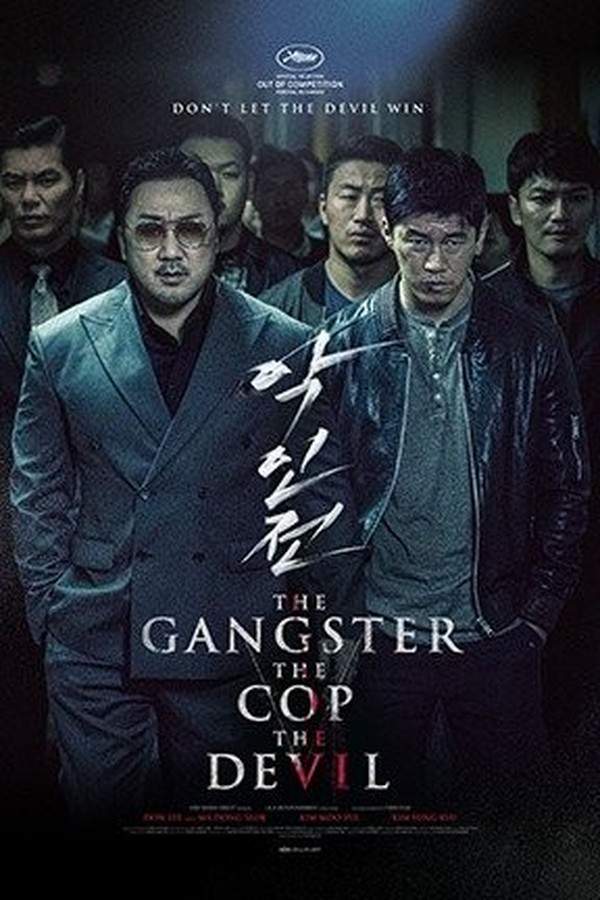
The Gangster, the Cop, the Devil (2019) movie poster

Timeline

The Gangster, the Cop, the Devil (2019) Timeline Explained – Every Event in Order

Release, runtime and language
2019 · 110 min · Korean
Echo score 75
Loading streaming availability…
Directed by
Won-Tae Lee
Starring
Dong-seok Ma, Sung-kyu Kim, Mu-Yeol Kim
Budget
$6.5M

A powerful crime boss, seeking vengeance after a brutal attack, finds himself reluctantly partnering with the very detective investigating him. As they navigate a dangerous underworld, their uneasy alliance becomes a fight for survival against a cunning serial killer and the pervasive corruption that surrounds them. The line between good and evil blurs in this intense, action-packed thriller.

On this page (6)
  1. 1 Where to watch
  2. 2 Events in order (15)
  3. 3 Timeline questions answered
  4. 4 Movie threads
  5. 5 Movies like The Gangster, the Cop, the Devil
  6. 6 Every angle
Loading streaming availability…

15 events in order · contains spoilers

The Gangster, the Cop, the Devil Timeline: Events in Chronological Order

Every key event of The Gangster, the Cop, the Devil (2019) in order, scene by scene, with when and where it takes place. Use it to untangle flashbacks, time jumps and parallel storylines, to refresh your memory before the sequel or to find the exact scene you are thinking of.

  1. The Tragic Incident

    A man suffers a tragic fate when his car is struck by an unknown assailant. As he steps out to assess the damage for insurance purposes, he is unexpectedly killed, setting off a chain of events that horrifies the community.

  2. Investigation Begins

    Police officer Jung Tae-Suk arrives at the scene of the incident to investigate the suspicious circumstances surrounding the man's death. Despite his concerns about a potential serial killer, his superior dismisses his instincts, leaving him frustrated but determined.

  3. Gangster's Conflict

    In a separate storyline, gangster Jang Dong-Soo returns home from a heated meeting with a rival gang leader. As he makes his way back, he encounters the same dangerous assailant, resulting in a violent altercation that leaves both men injured.

  4. Misunderstanding Among Henchmen

    While Dong-Soo recuperates in the hospital, his loyal henchmen misinterpret the situation and believe that the attack was a retaliation from a rival gang. They begin plotting their own revenge, unaware of the true nature of the threat.

    Where
    Hospital
  5. Dong-Soo's Realization

    During his recovery, Dong-Soo realizes that the assault is not a mere gang dispute but rather a sign of a more dangerous player at work. This insight compels him to seek the truth behind the violent events occurring in the city.

    Where
    Hospital
  6. A Meeting of Interests

    After grappling with the situation, Dong-Soo agrees to meet Tae-Suk to discuss their mutual interests in catching the unknown murderer. Motivated by his desire to protect his business and reputation, he recognizes that collaboration is essential.

  7. The Race for the Killer

    Dong-Soo asserts that he and Tae-Suk must race to capture the killer first, agreeing that the victor should have control over the killer's fate. This agreement sets off a frantic chase filled with tension and tactical maneuvers.

  8. An Unexpected Murder

    In a shocking turn, Dong-Soo orders his henchman, Kwon Oh-Sung, to eliminate a rival using the killer’s weapon, complicating the investigation further. This reckless move draws the attention of law enforcement and escalates the ongoing case.

    Where
    Gang Hideout
  9. Confrontation Between Allies

    Tae-Suk learns of Dong-Soo's actions and confronts him, leading to a heated argument about their priorities. This conflict emerges from their differing motivations—justice for Tae-Suk and vengeance for Dong-Soo.

    Where
    Police Station
  10. Tae-Suk's Investigation Deepens

    As Taek-Suk delves deeper into the case, he encounters yet another kidnapping linked to the murderer. His determination to rescue the hostage leads to tense moments where he must outsmart the kidnapper to save the victim.

  11. The Chase for Survival

    The investigation culminates in a thrilling chase as Tae-Suk and Dong-Soo, along with their respective groups, pursue the killer. The course of events brings both lawmen and criminals to a dangerous intersection filled with high-stakes confrontations.

  12. Capture of the Killer

    In a climactic moment, Tae-Suk and his team manage to capture Kang Kyung-Ho, the elusive murderer. Though Dong-Soo has his own agenda, Tae-Suk's pull for justice leads to the killer’s arrest and charges.

  13. Courtroom Drama Unfolds

    The courtroom becomes a battleground as the consequences of the events unfold. Dong-Soo's unexpected testimony links him to the killer, raising questions about his criminal past and complicating his fate amidst the legal proceedings.

    Where
    Courtroom
  14. Fates Aligned

    In a gripping conclusion, Kyung-Ho is sentenced to death for his heinous acts, while Dong-Soo faces arrest for his criminal activities. The intertwined fates of lawman and outlaw become starkly clear as they both grapple with the implications of their choices.

  15. Final Standoff

    In a final, tense moment, Dong-Soo finds himself incarcerated alongside Kyung-Ho. With vengeance on his mind, he approaches the killer, setting the stage for a dramatic confrontation filled with uncertainty about what lies ahead.

    Where
    Prison

Last updated: November 03, 2024 at 21:13

Was this helpful?

Timeline questions answered

The Gangster, the Cop, the Devil Timeline Explained: Your Questions Answered

When does it happen, and why in that order? The questions people ask about the chronology of The Gangster, the Cop, the Devil (2019): time jumps, flashbacks, cause and effect between scenes and the correct order of events, each answered with spoilers.

Q1

Why does Jang Dong-Soo agree to help Detective Jung Tae-Suk catch the killer?

Dong-Soo agrees to cooperate because the serial killer's random attacks threaten his criminal empire. He recognizes that the killer is a dangerous unknown variable who could disrupt his business operations and reputation. Additionally, he wants to catch the killer first so he can control the killer's fate rather than leaving it to the police.

Foreshadowing: Earlier, Dong-Soo dismisses his men's assumption that the attack was a rival gang move, showing he understands a more dangerous threat exists.

  • Jang Dong-Soo
  • Jung Tae-Suk
  • alliance
  • serial killer
  • cooperation
Q2

Why does Dong-Soo order his henchman to kill a rival using the serial killer's weapon?

Dong-Soo instructs Kwon Oh-Sung to eliminate a rival using the killer's weapon to simultaneously settle a personal score and frame the serial killer for another murder. This move backfires by drawing police attention and escalating the case to the Major Case Squad, complicating Tae-Suk's investigation.

Foreshadowing: The agreement that whoever captures the killer first gets to decide his fate establishes Dong-Soo's willingness to manipulate the situation for his own ends.

  • Kwon Oh-Sung
  • rival
  • murder weapon
  • framing
  • investigation
Q3

Why does Jang Dong-Soo testify against himself in court?

Dong-Soo provides unexpected testimony that reveals his extensive criminal history and connections to the killer. This seemingly self-destructive act may be calculated to ensure Kyung-Ho receives the death sentence, satisfying Dong-Soo's desire for personal vengeance while also ending a potential threat, the killer knows too much about Dong-Soo's operations.

Foreshadowing: Throughout the film, Dong-Soo's primary motivation is catching Kyung-Ho himself rather than letting the police handle it.

  • courtroom
  • testimony
  • Kang Kyung-Ho
  • death sentence
  • confession
Q4

What happens in the final scene between Dong-Soo and Kang Kyung-Ho in prison?

In the final moments, Dong-Soo is incarcerated alongside the convicted killer Kyung-Ho. With a sinister smile, Dong-Soo approaches Kyung-Ho, suggesting he plans to take personal vengeance rather than accept the legal system's outcome. The scene implies Dong-Soo will kill Kyung-Ho himself despite both being behind bars.

Foreshadowing: Dong-Soo's insistence throughout the film that he must be the one to catch the killer reveals his intent for personal revenge, not justice.

  • prison
  • final scene
  • Kang Kyung-Ho
  • vengeance
  • confrontation
Q5

Why does Tae-Suk's superior dismiss his concerns about a serial killer?

Tae-Suk's superior dismisses his serial killer theory because the first victim appears to have died in a simple accident, photographing car damage for an insurance claim. Without obvious signs of foul play, the superior sees no need to open a murder investigation, leaving Tae-Suk frustrated and determined to pursue the truth independently.

Foreshadowing: The opening incident involves a man stepping out to document damage for insurance, a detail that makes the murder appear accidental.

  • Jung Tae-Suk
  • police superior
  • serial killer
  • dismissed
  • investigation
Q6

Why do Dong-Soo's henchmen think a rival gang attacked him?

When Dong-Soo is attacked, his henchmen see the violent assault as a retaliation from a rival gang over territorial disputes they had just discussed in the meeting. They jump to this conclusion because the attack occurred right after a tense negotiation, making it seem like timing was not coincidental.

Foreshadowing: Timeline item 3 establishes Dong-Soo was returning from a heated meeting with a rival gang leader about territorial issues.

  • henchmen
  • rival gang
  • misunderstanding
  • territorial dispute
  • retaliation
Q7

Why does the opening victim step out to photograph car damage for insurance?

The victim was simply following standard procedure after his car was struck, he got out to document the damage for an insurance claim. This mundane, law-abiding action becomes the trap the killer exploits, demonstrating how the killer preys on ordinary situations. The insurance context also helps explain why police initially thought it was an accident.

Foreshadowing: The killer's pattern involves attacking people in vulnerable, everyday circumstances where violence seems unlikely.

  • insurance
  • car damage
  • opening murder
  • serial killer
  • trap
Q8

Why is Kang Kyung-Ho so difficult for police to catch?

Kang Kyung-Ho is elusive because he operates as a random, unpredictable serial killer rather than someone connected to the criminal underworld. He strikes without clear motive or pattern, making investigative profiling difficult. Additionally, he cleverly uses the chaos between gangs and police to blend into the confusion, attacking when least expected.

Foreshadowing: The initial police dismissal of Tae-Suk's concerns allows Kyung-Ho to continue operating without immediate intense scrutiny.

  • Kang Kyung-Ho
  • serial killer
  • elusive
  • investigation
  • capture
Q9

Why does the murder case get escalated to the Major Case Squad?

The case escalates to the Major Case Squad after Dong-Soo's reckless move, using the killer's weapon to murder a rival, creates multiple crime scenes linked to the same weapon. This draw police attention and force higher-level involvement, making it harder for both Tae-Suk and Dong-Soo to control the investigation's outcome.

Foreshadowing: Tae-Suk's confrontation with Dong-Soo about this very action highlights how it complicates the investigation.

  • Major Case Squad
  • escalation
  • investigation
  • weapon
  • crime scenes
Q10

Why does Dong-Soo insist on racing Tae-Suk to capture the killer first?

Dong-Soo demands they race to catch the killer because he wants vengeance, not justice. By capturing Kyung-Ho himself, Dong-Soo can ensure the killer suffers at his hands rather than facing a potentially lenient legal sentence. It also protects his criminal reputation, if a cop catches the killer first, Dong-Soo loses face in the underworld.

Foreshadowing: Dong-Soo states whoever captures the killer should have the right to decide his fate, revealing personal vengeance as his primary goal.

  • race
  • capture
  • vengeance
  • reputation
  • Kyung-Ho
Q11

What does it mean that the lines between law and criminality blur in this movie?

The film explores how both the cop and gangster use illegal methods to pursue the same killer. Tae-Suk works with a criminal and manipulates evidence, while Dong-Soo essentially becomes an unregulated enforcer. Neither operates purely within the law or crime, they converge in their methods, showing moral boundaries become flexible when confronting a greater evil.

Foreshadowing: The alliance between Tae-Suk and Dong-Soo itself represents this blurring, as they share information and resources despite being natural enemies.

  • moral ambiguity
  • corruption
  • alliance
  • justice
  • gangster
  • cop
Q12

Why does Tae-Suk have a mother deliver ransom money in the kidnapping case?

Tae-Suk uses a mother as bait to trace the killer during a kidnapping he believes is connected to the serial killer's pattern. By letting her deliver ransom, he can observe the exchange and track the abductor. This leads to the chase where they finally spot the killer, directly advancing the investigation toward capture.

Foreshadowing: Tae-Suk's investigation deepens as he connects seemingly unrelated crimes to the same killer.

  • kidnapping
  • ransom
  • mother
  • bait
  • chase
  • investigation

Movie threads

More Movies Like The Gangster, the Cop, the Devil, by Mood & Story

Curated lists built around what makes The Gangster, the Cop, the Devil tick: the same mood, the same kind of story or the same emotional payoff. Each list explains why these movies belong together.

Movies with criminal-cop alliances like The Gangster, the Cop, the Devil

When bitter enemies must join forces to survive a greater threat. If you liked the volatile partnership in The Gangster, the Cop, the Devil, explore these movies where detectives and criminals form reluctant teams. These films feature high-stakes action, moral ambiguity, and tense dynamics as sworn enemies navigate a shared goal, perfect for fans of gritty crime thrillers.

  • tense
  • calculating
  • gritty
  • vengeful
  • unsettling
  • strategic
  • Tone: dark, tense, morally ambiguous
  • Pacing: fast, driven by confrontation
Why these movies?

The story pattern: The narrative follows two opposing forces—often a meticulous detective and a powerful gangster—whose professional conflict is interrupted by a third, more dangerous party. Their alliance is fraught with suspicion and strategic maneuvering, as they must temporarily set aside their animosity to confront a mutual threat, leading to a complex dance of cooperation and betrayal.

Why they belong together: Movies are grouped here based on the core dynamic of an enforced alliance between archetypal enemies. They share a gritty tone, high intensity, and a focus on how professional boundaries collapse under extreme pressure, creating a uniquely tense and morally complex viewing experience.

Gritty urban manhunt movies like The Gangster, the Cop, the Devil

High-stakes chases through a corrupt underworld where no one is clean. Fans of The Gangster, the Cop, the Devil will enjoy these intense manhunt stories set in corrupt city environments. These movies feature fast-paced investigations, brutal violence, and a pervasive sense of moral decay, perfect for viewers seeking dark, action-packed thrillers about survival in a broken system.

  • brutal
  • oppressive
  • anxious
  • gritty
  • vengeful
  • corrupt
  • Tone: dark, oppressive, bleak
  • Pacing: fast, relentless
Why these movies?

The story pattern: The narrative is a relentless pursuit, often for a serial killer or elusive target, set against a backdrop of institutional corruption. The journey exposes the rotten foundations of the city's power structures, and the protagonists—whether cops, criminals, or both—must get their hands dirty, challenging their own morals in a world that offers no clear heroes.

Why they belong together: This thread connects movies through their shared atmosphere of a corrupt, gritty urban setting and the high-intensity experience of a desperate manhunt. The combination of fast pacing, dark tone, and heavy emotional weight creates a cohesive vibe of relentless pressure and ethical compromise.

If you liked this

Movies Like The Gangster, the Cop, the Devil

Similar movies to The Gangster, the Cop, the Devil: the same genre, themes or kind of story. Each one comes with its own plot summary, timeline and ending explained.

Browse all movie summaries

Every angle

The Gangster, the Cop, the Devil (2019) Explained: Plot, Timeline & Characters

Everything about The Gangster, the Cop, the Devil in one place: what happens in the plot summary, the timeline in chronological order, the characters and meaning and a spoiler-free summary. What's After the Movie adds the cast, box office and post-credit scenes.

Coming soon on iOS and Android

The Plot Explained Movie Summary App

Plot summaries, endings explained and timelines on your phone. Catch up on any movie in minutes, save your favorites and never miss a twist again.

Be the first to know when we launch. Your email stays private, always.

Learn more about the app