Plot Explained Spoilers guaranteed!
Plot Explained

Browse by genre

The First King (2019) movie poster

Plot Summary

The First King (2019) Plot Summary Explained

Release, runtime and language
2019 · 123 mins · Latin
Echo score 74
Loading streaming availability…
Directed by
Matteo Rovere
Starring
Fabrizio Rongione, Massimiliano Rossi, Max Malatesta, Alessandro Borghi, Vincenzo Pirrotta, Gabriel Montesi
Budget
$8M

The story follows Romulus and Remus, two brothers raised as shepherds, whose lives are drawn into a dramatic and fateful journey. Their experiences lead one of them to become the founder of a powerful and legendary nation. However, the path to greatness is paved with tragedy, culminating in a devastating act that involves the death of a brother. This timeless narrative explores themes of love, loyalty, and the cost of building an empire.

On this page (6)
  1. 1 Where to watch
  2. 2 What happens: full plot
  3. 3 Plot questions answered
  4. 4 Movie threads
  5. 5 Movies like The First King
  6. 6 Every angle
Loading streaming availability…

Full plot summary · contains spoilers

What Happens in The First King: Full Plot Summary

The whole story of The First King (2019) explained, from the opening scene to the final frame: every key event, every twist and what it all adds up to. Read it as a quick recap before the sequel, to check a scene you missed, or to finally understand what really happened.

In 753 BC, in the ancient region of Old Latium, a sudden flash flood results in the capture of two shepherd brothers, Romulus and Remus, who are taken as slaves in Alba Longa. In a bold bid for freedom, they lead a rebellion to liberate their fellow Latin and Sabine prisoners, taking the Vesta priestess Satnei hostage. During their escape, Romulus manages to steal the sacred fire but suffers a grave injury when stabbed by an Alban soldier. Confronted by the chaos surrounding his brother, Remus kills the Latin leader, thereby claiming the position of leadership within their tribe.

To avoid an encounter with the threatening Alban Army, the brothers' group retreats into a dense forest. There, they engage and subsequently defeat a warrior clan, leading Remus to declare himself King over the remaining population of their pagus, which comprises women, children, and the elderly. During a significant sacrificial event, Satnei delivers a prophecy revealing that one of the brothers is destined to become a great king who will create an empire of unimaginable size, but achieving this will necessitate the death of the other brother. Amidst the ambiguous interpretation, the tribe fears that Romulus will be the one sacrificed for Remus's ascent.

Unwilling to accept a mandate that demands fratricide, Remus extinguishes the sacred fire of Vesta, murders an aged priest, and abandons Satnei, leaving her vulnerable in the forest. When he returns to the pagus, Remus degrades his kin into servitude. Meanwhile, Romulus's health improves, prompting him to confront his brother about his tyrannical actions. Stricken with regret, Remus sets off to rescue Satnei. However, upon finding her near death from beast attacks, she warns him that his choice to spare Romulus will ultimately lead to his own demise at Romulus’s hands.

Regaining his strength, Romulus rekindles the sacred fire and reclaims leadership of their tribe, appointing a young woman to safeguard the fire, thereby establishing the first Vestal. Desperate to defy the prophecy, Remus makes a move toward the Tiber River with a group of men but soon encounters retaliation from Alban cavalry. Luckily, he is rescued by Romulus's tribe. However, in a twist of fate, Remus asserts control over the tribe and challenges Romulus, threatening to extinguish the sacred flame. This confrontation escalates into a fierce battle between the brothers, culminating in Romulus triumphantly mortally wounding Remus. On his deathbed, Remus reconciles with Romulus, acknowledges him as king, and urges him to establish a city on the opposite side of the river.

After crossing the Tiber, the tribe honors Remus by cremating his body on a pyre, and in his grief, Romulus vows to construct an immense and powerful city atop his brother's ashes, naming it Rome. As the film concludes, an animated depiction illustrates the dramatic expansion of Rome's territory, showcasing its zenith under Emperor Trajan in 117 AD.

Last updated: September 18, 2026 at 08:59

Was this helpful?

Plot questions answered

The First King Plot Explained: Your Questions Answered

The questions people ask most about The First King (2019): what happens in the confusing scenes, why the characters do what they do, the twists, hidden details and what the ending means. Each answer contains spoilers.

Q1

Why did Remus reject the prophecy and kill the priest?

Remus rejected Satnei's prophecy because he refused to accept a divine mandate requiring him to murder his own brother in order to become king. In a violent act of defiance, he extinguished the sacred fire of Vesta, killed the old priest who had witnessed the ritual, and abandoned Satnei in the forest to die. His rejection was not just a refusal of the prophecy's terms, but a complete break with the religious order that sustained the tribe.

Foreshadowing: Remus had already shown a willingness to seize power through violence by killing the Latin leader when Romulus was injured, hinting at his capacity for both self-determination and brutality.

  • remus prophecy
  • sacred fire vesta
  • satnei
  • fratricide
  • alban army
  • vestal priestess
Q2

Why did Remus become a tyrant after returning to the pagus?

After rejecting the prophecy, Remus returned to the pagus and forced the inhabitants, including his own people, into servitude. His tyranny stemmed from a combination of guilt over abandoning Satnei and a desperate attempt to assert absolute control over the tribe, since he could no longer rely on divine prophecy to justify his claim to kingship. Without the sacred fire, Remus ruled through fear rather than legitimacy.

Foreshadowing: Remus's reaction to the prophecy, extinguishing the sacred fire rather than accepting divine will, foreshadowed his rejection of any authority or moral code that constrained him.

  • remus tyranny
  • pagus
  • slavery
  • leadership
  • sacred fire
Q3

What was Satnei's dying warning to Remus?

When Remus found Satnei near death from beast attacks in the forest, she warned him that sparing Romulus would ultimately lead to Remus's own death at his brother's hands. Despite this warning, Remus chose not to kill Romulus, and her words proved accurate when Romulus mortally wounded him in their final confrontation. The warning made the prophecy's outcome clear, even as Remus refused to act on it.

Foreshadowing: Satnei's earlier prophecy during the sacrificial ritual had already established the deadly fate awaiting one brother, and her dying words clarified which one would fall.

  • satnei warning
  • remus
  • romulus
  • dying prophecy
  • beast attack
  • forest
Q4

Why did Romulus kill Remus at the end?

Romulus killed Remus because Remus had seized control of the tribe after being rescued and threatened to extinguish the sacred flame of Vesta a second time. With the tribe's survival and its divine covenant at stake, Romulus had no choice but to confront his brother, and the confrontation escalated into a fierce battle that ended with Romulus mortally wounding Remus. The killing was less about personal rivalry than about protecting the fire that legitimized the entire tribe.

Foreshadowing: The first time Remus extinguished the fire he abandoned Satnei and turned to tyranny, foreshadowing that his return to this act would again trigger devastating consequences.

  • romulus kills remus
  • sacred flame
  • brother battle
  • fratricide
  • final confrontation
Q5

How did Romulus reclaim leadership from Remus?

After recovering from his stab wound, Romulus confronted Remus about his tyrannical rule and rekindled the sacred fire of Vesta, restoring the tribe's divine connection. He then appointed a young woman to guard the flame permanently, establishing the first Vestal, which formalized his role as the tribe's rightful leader. By restoring the symbol Remus had destroyed, Romulus shifted the basis of power from brute force back to divine favor.

Foreshadowing: Romulus's earlier theft of the sacred fire during the escape from Alba Longa foreshadowed his role as the one destined to preserve and protect Vesta's flame.

  • romulus leadership
  • sacred fire
  • first vestal
  • pagus
  • tribe
  • vesta
Q6

Why did Remus die despite trying to escape to the Tiber?

Remus fled toward the Tiber River with a group of men in an attempt to escape the prophecy, but he was ambushed by Alban cavalry and only saved by Romulus's tribe. Upon being rescued, he immediately seized control of the tribe and challenged Romulus, recreating the very conflict he had tried to flee. The escape attempt failed because Remus could not abandon his hunger for power, and his confrontation with Romulus made the prophecy's fulfillment inevitable.

Foreshadowing: Satnei's dying warning had already told Remus that his choice to spare Romulus would seal his own fate, making his escape attempt doomed from the start.

  • remus escape
  • tiber river
  • alban cavalry
  • prophecy
  • romulus rescue
Q7

What does Satnei's prophecy about the brothers mean?

Satnei's prophecy stated that one brother would become a great king who builds an empire of unimaginable size, but only through the death of the other. The tribe initially interpreted this as Romulus being sacrificed for Remus's ascent, but the prophecy was ultimately fulfilled in reverse: Remus died so that Romulus could found Rome. The ambiguous wording is the central irony of the story, since the sacrificed brother turned out to be the one the tribe expected to triumph.

Foreshadowing: The ambiguity in the prophecy, which the tribe initially read one way, was a setup for the film's central twist that the sacrifice would not be who they expected.

  • prophecy brothers
  • satnei
  • romulus remus
  • founding rome
  • empire
  • destiny
Q8

Why was Rome founded on Remus's ashes?

After Romulus crossed the Tiber, the tribe cremated Remus's body on a pyre as an act of honor. Grief-stricken, Romulus vowed to build the greatest city on Earth on that very spot, naming it Rome. The ashes thus became both a burial site for his brother and the literal foundation of the empire, transforming personal tragedy into the seed of civilization.

Foreshadowing: Remus's deathbed request to build a city on the opposite side of the river directly set up this moment, turning his final words into the founding charter of Rome.

  • rome founding
  • remus ashes
  • tiber river
  • pyre
  • romulus vow
  • cremation
Q9

Why did Remus try to extinguish the sacred flame a second time?

When Remus returned after being rescued from the Alban cavalry, he reasserted control over the tribe by threatening to extinguish the sacred flame again. This was a deliberate power play to humiliate Romulus and re-establish dominance, mirroring his earlier rejection of the prophecy. It showed that Remus had not changed: he still believed he could rule through destruction of what others held sacred.

Foreshadowing: The first extinguishing of the fire led to tyranny and the abandonment of Satnei, foreshadowing that doing so again would trigger an even greater catastrophe.

  • remus sacred flame
  • vesta fire
  • power play
  • tribe control
  • brother conflict
Q10

Why did Remus kill the Latin leader during the escape from Alba Longa?

During the escape from Alba Longa, Romulus was gravely injured by an Alban soldier's stab wound after stealing the sacred fire. With his brother incapacitated and the group in chaos, Remus killed the Latin leader to seize control of the rebellion and prevent anyone else from filling the power vacuum. The killing was a calculated move that established Remus's pattern of taking power through violence whenever Romulus was weakened.

Foreshadowing: Remus's willingness to kill a leader to claim command foreshadowed his later pattern of seizing power through violence across the rest of the story.

  • remus kills latin leader
  • alba longa escape
  • romulus injury
  • rebellion
  • latin prisoners
Q11

What is the significance of the sacred fire of Vesta in the story?

The sacred fire of Vesta represents divine protection and the tribe's spiritual bond with the gods. Stealing the fire marked Romulus as someone chosen to carry Vesta's favor, and rekindling it after Remus extinguished it became the symbolic act that legitimized Romulus's kingship and the founding of Rome. Throughout the story, control of the flame is the true measure of who rules the tribe, more than bloodline or force.

Foreshadowing: Satnei's role as the Vesta priestess taken hostage foreshadowed that the sacred fire would become the central symbol of legitimacy throughout the entire story.

  • sacred fire vesta
  • divine protection
  • vesta priestess
  • romulus legitimacy
  • religious symbol
Q12

Why did Romulus appoint the first Vestal Virgin?

Romulus appointed a young woman to permanently safeguard the sacred fire of Vesta, establishing the first Vestal. This ensured that the flame, which had been stolen, extinguished, and rekindled, would never be lost again, and formalized the religious institution that would endure for centuries in Rome. By entrusting the fire to a permanent guardian, Romulus turned a single desperate act into a lasting foundation for the empire.

Foreshadowing: Romulus's personal connection to the sacred fire, beginning when he stole it during the escape from Alba Longa, foreshadowed that he would be the one to institutionalize its protection.

  • first vestal
  • romulus appointment
  • sacred fire
  • religious institution
  • vesta
  • roman tradition
Q13

Why did Romulus confront Remus about his rule?

As Romulus recovered from his stab wound, he could no longer tolerate Remus's tyranny over the tribe, which included enslaving their own people after he had abandoned Satnei. The confrontation forced Remus to acknowledge the consequences of his actions and set off his journey to find Satnei in the forest. This was the turning point that pulled Remus back toward the prophecy's fulfillment.

Foreshadowing: Romulus's earlier defiance in stealing the sacred fire foreshadowed that he would be the one willing to challenge Remus when their people suffered.

  • romulus confrontation
  • remus tyranny
  • tribe slavery
  • recovery
  • leadership challenge
Q14

Why did Remus reconcile with Romulus on his deathbed?

On his deathbed, mortally wounded by Romulus, Remus acknowledged that he had been wrong to fight his brother and recognized Romulus as the rightful king. He urged Romulus to build a city on the opposite side of the river, transforming his death from a defeat into a founding act. The reconciliation allowed Remus to give the prophecy a meaning he could accept, dying as the brother who enabled Rome rather than as the one who was destroyed by it.

Foreshadowing: Satnei's prophecy had always framed one brother's death as a sacrifice for the other, and Remus's deathbed blessing was the moment he consciously accepted that role.

  • remus deathbed
  • reconciliation
  • romulus king
  • city founding
  • tiber river
  • prophecy fulfilled

Movie threads

More Movies Like The First King, by Mood & Story

Curated lists built around what makes The First King tick: the same mood, the same kind of story or the same emotional payoff. Each list explains why these movies belong together.

Primal mythic historical epics like The First King

Raw, blood-soaked journeys through the brutal birth of ancient worlds. Movies like The First King that drop you into primitive, myth-soaked ancient worlds. If you liked the brutal, ritualistic tone of Rome's founding myth, you'll find similar visceral historical dramas here — gritty, blood-soaked, and drenched in fate. Expect high intensity, steady pacing, and heavy emotional weight across these primal epics.

  • primal
  • mythic
  • savage
  • blood-soaked
  • ancient
  • ritualistic
  • Tone: dark, brooding, primal
  • Pacing: steady, deliberate
Why these movies?

The story pattern: These stories follow warriors, outcasts, or chosen ones through a primitive landscape where survival is earned through violence and the favor of capricious gods. The narrative unfolds through distinct episodes of flight, combat, captivity, and ritual, building toward a climactic confrontation that determines the fate of a people or a nascent civilization. The arc is almost archetypal: humble or cursed origins, brutal trials, and the violent emergence of a new order, where every triumph is paid for in flesh.

Why they belong together: Grouped for their shared commitment to raw, archaeological realism and mythic weight. These films reject polished Hollywood antiquity in favor of mud, blood, religious sacrifice, and fatalistic storytelling. Tone, pacing, and intensity combine to create a specific feel: dark and brooding, steady and deliberate, with sustained physical danger and emotional weight that feels ancient rather than contemporary.
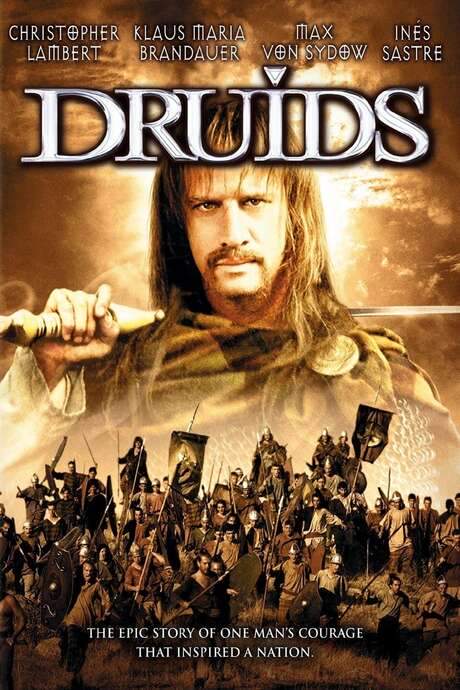

Brotherhood destroyed by destiny like The First King

Empires and legacies forged on the day a brother falls. Movies like The First King where brotherhood itself becomes the sacrifice. Similar films explore brothers torn apart by prophecy, destiny, or the price of building something greater. Expect bittersweet endings, heavy emotional weight, and dark tone where personal triumph and devastating loss collide. Historical and mythic dramas with doomed blood ties at their core.

  • brotherhood
  • fated
  • tragic
  • destiny
  • blood ties
  • bittersweet
  • Tone: dark, bittersweet, fatalistic
  • Pacing: steady, building toward reckoning
Why these movies?

The story pattern: Two brothers begin as inseparable companions, often raised together or bound by a shared ordeal. A prophecy, an inheritance, or a larger historical force then forces them onto opposing paths. The narrative tracks both through parallel struggles until they are brought into fatal confrontation. The climax is intimate as much as epic: a fraternal embrace, a refusal to strike, a deathbed blessing. The larger world changes forever, but the personal cost is permanent.

Why they belong together: These films share a specific emotional payload: greatness earned at the cost of brotherhood. They blend mythic or historical scope with intimate fraternal tragedy, and they almost always end bittersweet, with the protagonist achieving their monumental aim but carrying the dead weight of having killed or lost the one person who mattered most. Heavy emotional weight, dark tone, and a sense of fate closing in are consistent across the group.

If you liked this

Movies Like The First King

Similar movies to The First King: the same genre, themes or kind of story. Each one comes with its own plot summary, timeline and ending explained.

Browse all movie summaries

Every angle

The First King (2019) Explained: Plot, Timeline & Characters

Everything about The First King in one place: what happens in the plot summary, the timeline in chronological order, the characters and meaning and a spoiler-free summary. What's After the Movie adds the cast, box office and post-credit scenes.

Coming soon on iOS and Android

The Plot Explained Movie Summary App

Plot summaries, endings explained and timelines on your phone. Catch up on any movie in minutes, save your favorites and never miss a twist again.

Be the first to know when we launch. Your email stays private, always.

Learn more about the app