Plot Explained Spoilers guaranteed!
Plot Explained

Browse by genre

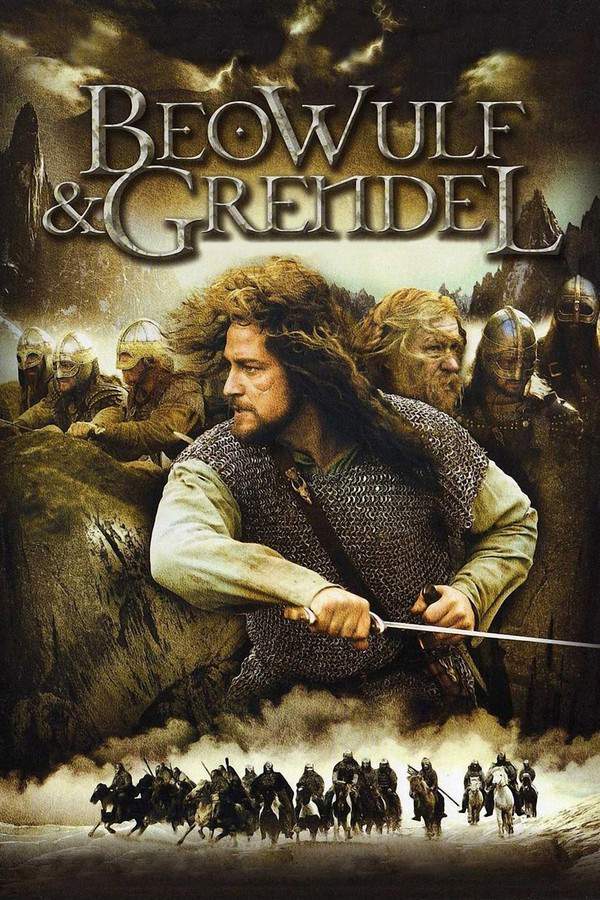
Beowulf & Grendel (2006) movie poster

Plot Summary

Beowulf & Grendel (2006) Plot Summary Explained

Release, runtime and language
2006 · 103 min · English
JustWatch #8,903 19
Directed by
Sturla Gunnarsson

In a medieval realm shrouded in darkness, a fierce Norse warrior named Beowulf confronts Grendel, a monstrous troll whose attacks plague the kingdom of Hrothgar. This thrilling tale brings the ancient poem's legend to life, depicting a bloody battle between good and evil. Beowulf must face not only Grendel but also the troll’s vengeful mother, as the kingdom struggles to overcome a terrifying threat and seek justice.

On this page (7)
  1. 1 Where to watch
  2. 2 What happens: full plot
  3. 3 Plot questions answered
  4. 4 The book behind the movie
  5. 5 Movie threads
  6. 6 Movies like Beowulf & Grendel
  7. 7 Every angle

Where to watch

Where to Watch Beowulf & Grendel (2006)

Where can you watch Beowulf & Grendel? Stream, rent or buy it in the US, including on Amazon Prime Video, Brew and Hoopla: current JustWatch availability with up-to-date prices.

Streaming availability powered by JustWatch

Full plot summary · contains spoilers

What Happens in Beowulf & Grendel: Full Plot Summary

The whole story of Beowulf & Grendel (2006) explained, from the opening scene to the final frame: every key event, every twist and what it all adds up to. Read it as a quick recap before the sequel, to check a scene you missed, or to finally understand what really happened.

As the sun sank beneath the horizon of 500 CE, Denmark's King Hrothgar bravely led his seasoned warriors in pursuit of a massive figure, believed to be a troll, along with his youthful companion, who was already sporting facial hair. In a moment of desperation, Hrothgar's companion advised his son Grendel to hide from the relentless attackers. In an unfortunate turn of events, arrows rained down, tragically claiming the father's life as his body tumbled onto the jagged rocks below. In a revealing twist of fate, Hrothgar, seeing young Grendel, resolved to spare him. The years rolled on, igniting a flame of vengeance within Grendel upon discovering the grisly mummified head of his father, now left as a grotesque centerpiece inside a crude memorial cave. The once-slim boy had morphed into a towering giant, consumed with an unquenchable desire for retribution.

The gloom settled over Hrothgar's grand hall as the Danes awakened to find twenty of their own mercilessly slaughtered. Overwhelmed by grief and despair, the beleaguered king felt the burdens of sorrow weighing heavily upon him. In this agonizing moment, Beowulf, with the blessing of Hygelac, set sail from Geatland, accompanied by thirteen valiant warriors, with the intent to eliminate Grendel and restore dignity to Hrothgar. The arrival of this noble band was met with heartfelt gratitude by the Danish monarch, who viewed them as a glimmer of hope in a dire situation. However, the specter of despair lingered, compounded by the rising presence of Christianity among the pagan villagers, incited by an Irish monk, as Grendel's night raids continued to plague Hrothgar's fortifications. Despite the presence of Beowulf's party, Grendel opted for retreat instead of making an appearance. This hesitation would later be unveiled by Selma the witch, who revealed to Beowulf that Grendel's reluctance was rooted in a profound aversion to harm an innocent.

As tragedy unfolded with the death of a baptized villager, the Geats, led by Beowulf, lacked the means to ascend the steep cliff near Grendel's lair. The silence that enveloped the hall was shattered with the grim discovery of the villager's corpse, driving Beowulf and his companions to return, armed with a makeshift rope to explore the ominous cave. Within this dark abyss, one of Beowulf’s men committed an act of desecration by mutilating the mummified head of Grendel's father. That very night, Grendel retaliated by attacking Hrothgar's hall, killing a Geat who had disrespected his father's remains. In a fierce struggle, Beowulf managed to ensnare the beast, but Grendel, refusing to be captured, tore his way free, collapsing onto the beach where an otherworldly hand dragged him into the depths. Hrothgar then revealed to Beowulf that he had previously executed Grendel's father for petty theft and spared Grendel out of compassion. Meanwhile, Selma shared the tragic story of how Grendel had once attacked her, which led her to shield him; touched by her tale, Beowulf became her lover. In their moments of glory, the Danes famously hung Grendel's severed arm from the rafters as a gruesome yet proud trophy.

As night enveloped the hall, a sudden onslaught occurred at the hands of the Sea Hag, Grendel's vengeful mother, who wreaked havoc and reclaimed her son's arm. Venturing back into Grendel's shadowy lair for a third exploration, Beowulf and his band of warriors uncovered an elusive underwater passage inside a pond deep within the cavern. Plunging into this eerie abyss filled him with trepidation, but there he was confronted by the lifeless form of Grendel. In a climactic encounter, Beowulf faced off against the Sea Hag, ultimately vanquishing her with a sword taken from her treasure hoard. As calm returned, Beowulf noticed Grendel's young child silently observing him with unblinking eyes. Later, as the child watched, Beowulf bestowed honors upon Grendel in a solemn burial ceremony. Shortly thereafter, he and his Geatish warriors prepared to return home, urging Selma to keep her child hidden to shield him from potential retribution by the Danes.
Last updated: November 22, 2024 at 18:29

Was this helpful?

Plot questions answered

Beowulf & Grendel Plot Explained: Your Questions Answered

The questions people ask most about Beowulf & Grendel (2006): what happens in the confusing scenes, why the characters do what they do, the twists, hidden details and what the ending means. Each answer contains spoilers.

Q1

Why does Grendel attack Hrothgar's hall?

Grendel attacks Hrothgar's hall after discovering his father's mummified head displayed in a memorial cave. Years earlier, Hrothgar had killed Grendel's father for petty theft and originally spared young Grendel out of compassion. When Grendel later finds his father's preserved head as a grotesque trophy, his grief transforms into an unquenchable desire for revenge against the Danes.
Foreshadowing: Earlier in the story, Hrothgar spares young Grendel, setting the foundation for this later conflict.

  • grendel attack
  • revenge
  • hrothgar
  • father death
  • mummified head
Q2

What is the connection between Hrothgar and Grendel?

Hrothgar is directly responsible for both killing Grendel's father and sparing Grendel's life as a child. During a hunt in 500 CE, Hrothgar's warriors killed what was believed to be a troll, but it was actually Grendel's father. Hrothgar then chose to spare the young Grendel, raising him in the kingdom. Years later, after discovering his father's death, Grendel returns as a monster seeking vengeance against the man who orphaned him.

Foreshadowing: The opening scene shows Hrothgar pursuing a figure with a young companion, establishing the tragic relationship.

  • hrothgar grendel connection
  • father killed
  • orphan
Q3

Why does Grendel initially retreat instead of attacking Beowulf's party?

Selma the witch reveals that Grendel hesitates to attack because he harbors a deep aversion to harming innocent people. This moral restraint causes him to withdraw when he encounters Beowulf and his warriors, whom he perceives as not being guilty of the wrongs committed against him. This hesitation is what allows Beowulf and his men to prepare for the confrontation.

Foreshadowing: Selma's revelation about Grendel's aversion to harming innocents comes after his initial retreat.

  • grendel retreat
  • innocent
  • selma witch
Q4

What triggers Grendel's major attack on the hall?

Grendel's violent attack on Hrothgar's hall is triggered when one of Beowulf's warriors desecrates the mummified head of Grendel's father inside the cave. This act of disrespect toward his father's remains incites Grendel's wrath, causing him to launch a savage attack that night, killing a Geat warrior who had committed this violation.

Foreshadowing: Earlier, Beowulf's men explore the cave where the mummified head is displayed, setting up the desecration.

  • desecration
  • father remains
  • cave attack
Q5

Who is the Sea Hag and why does she attack Hrothgar's hall?

The Sea Hag is Grendel's mother, a supernatural creature who seeks revenge after Grendel's defeat. When the Danes hang Grendel's severed arm as a trophy, the Sea Hag attacks the hall under cover of darkness to reclaim her son's arm. She later confronts Beowulf in Grendel's underwater lair, where he ultimately defeats her with a sword from her treasure hoard.

Foreshadowing: The Sea Hag's attack comes immediately after the Danes celebrate their victory by displaying Grendel's arm.

  • sea hag
  • grendel mother
  • underwater lair
  • revenge
Q6

Why does Beowulf bury Grendel and honor him?

After defeating the Sea Hag and finding Grendel's lifeless body, Beowulf chooses to give Grendel a respectful burial rather than leaving him to rot. This act signifies Beowulf's recognition that Grendel was not purely evil but was driven to violence by the trauma of losing his father and being wronged by Hrothgar's people. The burial represents Beowulf's understanding of Grendel's tragic nature and his attempt to bring closure to the conflict.

Foreshadowing: The battle reveals Grendel's human-like qualities and motivations, making the burial a logical conclusion.

  • burial
  • grendel honor
  • respect
  • closure
Q7

What is the significance of Grendel's child at the end?

In the final moments, Beowulf encounters Grendel's young child silently observing him in the underwater lair. This orphan represents the continuation of the cycle of violence, Beowulf has killed the father, and now the child could grow up seeking revenge. Beowulf warns Selma to keep the child hidden from the Danes, acknowledging that the conflict may not truly be over. The ending suggests the potential for history to repeat itself.

Foreshadowing: This mirrors the opening where young Grendel was spared, setting up the possibility of another generation of conflict.

  • grendel child
  • cycle of violence
  • orphan
  • selma child
Q8

Why does Beowulf become involved with Selma the witch?

Selma reveals to Beowulf that she had encountered Grendel before and had protected him from harm after he attacked her. This connection touches Beowulf, and he is drawn to her story and compassion despite her association with the monster. Their relationship develops as Beowulf seeks to understand Grendel better and find a resolution, eventually becoming lovers amidst the chaos of the conflict.

Foreshadowing: Selma is introduced earlier as the witch who explains Grendel's hesitation to attack.

  • selma
  • beowulf love
  • witch
  • grendel protection
Q9

What is the religious conflict in the movie?

The movie depicts the tension between Christianity and paganism as an Irish monk spreads Christian teachings among the pagan Danish villagers. This religious upheaval coincides with Grendel's attacks, creating internal turmoil among the Danes. The Christian influence represents the changing world order, while Grendel's attacks are portrayed as stemming from old wrongs, a conflict between the new moral order and the sins of the past.

Foreshadowing: The presence of Christianity is introduced alongside Grendel's escalating attacks.

  • christianity
  • paganism
  • irish monk
  • religious conflict
Q10

Why does Hrothgar spare Grendel as a child?

During the initial hunt in 500 CE, Hrothgar sees young Grendel after his father has been killed by arrows. Despite having just lost his own companion, Hrothgar chooses compassion over eliminating what appears to be a threat. He spares the boy's life, not knowing that this decision would later result in years of vengeance and bloodshed. Hrothgar later reveals this to Beowulf as a painful truth about his past.

Foreshadowing: The opening scene establishes Hrothgar's choice to spare the child, which drives the entire plot.

  • hrothgar spare grendel
  • compassion
  • youth
  • origin

Movie threads

More Movies Like Beowulf & Grendel, by Mood & Story

Curated lists built around what makes Beowulf & Grendel tick: the same mood, the same kind of story or the same emotional payoff. Each list explains why these movies belong together.

Grim Mythic Tragedies like Beowulf & Grendel

Ancient epics where heroes and monsters are bound by a tragic fate. If you enjoyed the tragic, mythic atmosphere of Beowulf & Grendel, explore these movies. This section features similar epic stories from myth and legend that are dark, character-driven, and delve into heavy themes of fate and revenge within a brutal historical or fantasy setting.

  • mythic
  • tragic
  • grim
  • somber
  • brutal
  • epic
  • Tone: dark, tragic, somber
  • Pacing: steady, deliberate
Why these movies?

The story pattern: Stories in this thread often follow a linear, quest-like structure centered around a monumental conflict. The narrative is driven by cycles of revenge and loss, where characters are forced to confront the moral cost of their actions, leading to a conclusion that is often more reflective than purely triumphant.

Why they belong together: These films are grouped together for their shared commitment to a dark, mythic atmosphere, their exploration of tragic character arcs, and their steady pacing that allows for reflection on weighty themes like grief, vengeance, and the burden of destiny.

Movies with Morally Ambiguous Monsters like Beowulf & Grendel

Tales where the monster has a story, challenging simple notions of good and evil. For viewers who appreciated the complex portrayal of Grendel in Beowulf & Grendel, this section highlights similar movies. Discover stories that humanize the monster, exploring their tragic backstory and motivations, leading to morally gray conflicts and a more nuanced view of good versus evil.

  • tragic
  • reflective
  • somber
  • brutal
  • psychologically complex
  • morally gray
  • Tone: dark, tragic, reflective
  • Pacing: steady, character-driven
Why these movies?

The story pattern: The narrative pattern involves revealing the antagonist's point of view, often through a traumatic past or a justified grievance. The central conflict becomes a cycle of violence fueled by misunderstanding or past sins, forcing the protagonist—and the audience—to grapple with ambiguity rather than clear-cut morality.

Why they belong together: These films are united by their thematic focus on perspective and moral ambiguity. They share a dark tone, a tendency towards heavy emotional weight due to themes of loss and trauma, and a narrative structure that deliberately complicates the hero/villain dynamic.

If you liked this

Movies Like Beowulf & Grendel

Similar movies to Beowulf & Grendel: the same genre, themes or kind of story. Each one comes with its own plot summary, timeline and ending explained.

Browse all movie summaries

Every angle

Beowulf & Grendel (2006) Explained: Plot, Timeline & Characters

Everything about Beowulf & Grendel in one place: what happens in the plot summary, the timeline in chronological order, the characters and meaning and a spoiler-free summary. What's After the Movie adds the cast, box office and post-credit scenes.

Coming soon on iOS and Android

The Plot Explained Movie Summary App

Plot summaries, endings explained and timelines on your phone. Catch up on any movie in minutes, save your favorites and never miss a twist again.

Be the first to know when we launch. Your email stays private, always.

Learn more about the app