Plot Explained Spoilers guaranteed!
Plot Explained

Browse by genre

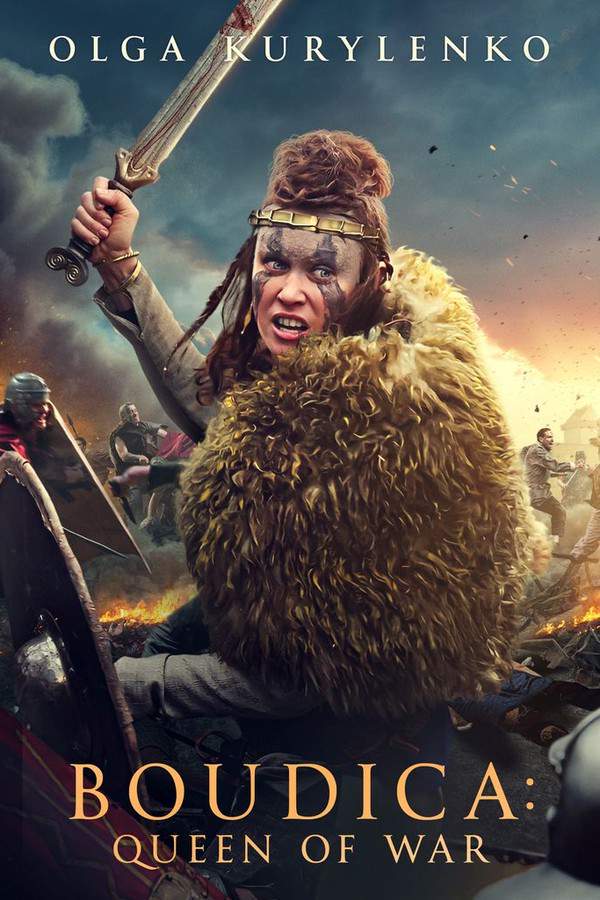
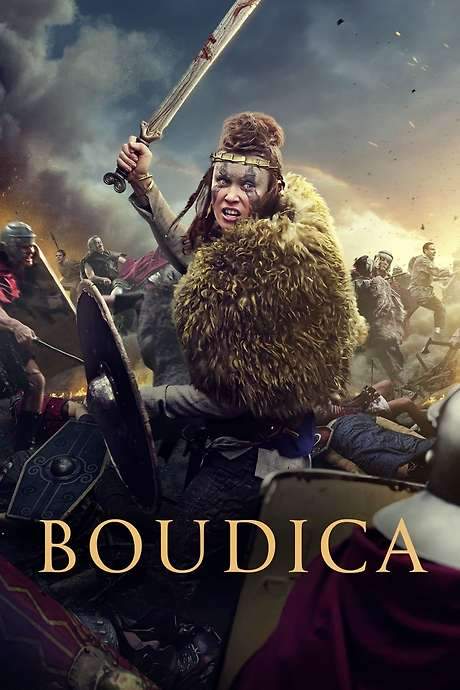
Boudica (2023) movie poster

Plot Summary

Boudica (2023) Plot Summary Explained

Release, runtime and language
2023 · 101 mins · English
Echo score 44
Loading streaming availability…
Directed by
Jesse V. Johnson
Starring
Olga Kurylenko, Rita Tushingham, James Faulkner, Peter Franzén, Clive Standen, Andy Beckwith

Inspired by events in A.D. 60, this film portrays Boudica, a Celtic warrior and queen of the Iceni people. Following the death of her husband, Prasutagus, at the hands of Roman soldiers, Boudica’s kingdom faces invasion and her land is seized. Driven by grief and a desire for vengeance, she unites the local tribes and leads a fierce war against the Roman Empire, challenging their dominance and fighting to reclaim her people’s freedom.

On this page (6)
  1. 1 Where to watch
  2. 2 What happens: full plot
  3. 3 Plot questions answered
  4. 4 Movie threads
  5. 5 Movies like Boudica
  6. 6 Every angle
Loading streaming availability…

Full plot summary · contains spoilers

What Happens in Boudica: Full Plot Summary

The whole story of Boudica (2023) explained, from the opening scene to the final frame: every key event, every twist and what it all adds up to. Read it as a quick recap before the sequel, to check a scene you missed, or to finally understand what really happened.

Set in the turbulent aftermath of the Roman conquest of Britain, the story follows Boudica, played by Olga Kurylenko, who is the wife of Clive Standen as Prasutagus, the king of the Iceni. While an ancient legend among the Trinovantes speaks of a woman warrior destined to lead her people to a grand victory, many of the locals have begun to embrace the encroaching Roman culture, even raising their own daughters to speak Latin. The tension between the native Britons and the occupiers is palpable; during a visit to the market, a servant of Boudica makes a disparaging remark regarding the Harry Kirton as Emperor Nero, which sparks a violent confrontation with a Roman merchant. Though Boudica is eventually rescued by a woman from the Trinovantes, it is Prasutagus who must step in to smooth over the situation and maintain a fragile peace with the Romans.

The political atmosphere darkens when the Roman procurator, Nick Moran as Catus Decianus, pays a visit to Prasutagus. Despite the king's genuine hospitality, Catus remains visibly displeased. In an effort to secure his people's safety and win over the procurator, Prasutagus intends to offer him a lavish gift, but his plans are cut short when he is brutally murdered by brigands. The devastating news is delivered to Boudica by her guardsman, Leo Gregory as Ciaran. Now thrust into the role of queen, Boudica attempts to negotiate by gifting half of her kingdom to the Romans. However, during her inauguration, Catus Decianus arrives to deliver a crushing blow, claiming that a woman cannot be queen under the laws of the Roman Empire. He dismisses her generous offer as a mere bribe, declares the entire kingdom confiscated, and orders that both Boudica and her daughters be flogged. In a final act of cruelty, Catus reveals that Ciaran had betrayed Prasutagus to the Roman soldiers before the procurator brands Boudica's face.

Boudica and her daughters are eventually rescued from their captivity by the Trinovantes, who see in her the fulfillment of the prophecy of the warrior queen. Her leadership is not immediately accepted by all; she is challenged by Peter Franzén as Wolfgar, a deserter from the Roman auxiliaries. However, she manages to win over Wolfgar and his men after she appears to perform a miracle using a bronze sword that was once given to her by Prasutagus. Despite Wolfgar's warnings that the Roman legions are far too powerful for a direct assault, Boudica plans a daring ambush in the Folbrook Forest. To maintain the morale of her warriors and sway their doubts, she once again utilizes a magic trick with her sword to prove her divine right to lead.

The ambush is a resounding success, resulting in the slaughter of the Roman forces and the deaths of both Catus Decianus and the traitor Ciaran. While the victory is sweet, Boudica is determined to continue the war until every Roman is driven from the land. To do this, she requires the blessing of the druidic council. With the help of Wolfgar, who persuades the druids to support her cause, she receives their blessing. During this time, Wolfgar attempts to proposition her, but she firmly rejects him. The council, including the Rita Tushingham as Green Druid and James Faulkner as Old Druid, reveal a haunting truth: her daughters are actually dead, and the girls accompanying her are their ghosts. Boudica continues to seek guidance from these spirits, and inspired by their presence, she leads her army to sack and burn the town of Camulos, ambush another Roman column near Cambridge, and eventually destroy the city of London.

Meanwhile, in Rome, the narrative shifts to Emperor Nero, who commits suicide in a state of despair following the Great Fire of Rome and the deteriorating situation in Britain. To quell the rebellion, Kris Johnson as Gaius Suetonius Paulinus is tasked with leading a relief army. Recognizing the danger, Wolfgar advises Boudica to retreat, noting that Paulinus leads a force of seasoned veterans and that the approaching winter would make fighting nearly impossible for the Britons. While the ghosts of her daughters suggest she should seduce Wolfgar to ensure his loyalty, Boudica chooses a different path and allows him to leave.

The conflict reaches its climax at the Battle of Watling Street. Paulinus proves to be a master tactician, leading Boudica's massive army directly into a lethal trap where they are massacred by Roman archers and heavy artillery. In her final moments of desperation, Boudica calls out to her daughters for help, but the spirits advise her that the time for earthly fighting has ended and it is time for her to join them in the afterlife. Even though Wolfgar arrives in a last-ditch effort to support her, Boudica's final charge is defeated, leading to the death of the queen and her remaining followers. The epic tale concludes with a poignant shot of the statue of Boudica standing on Westminster Bridge in modern-day London, serving as a permanent reminder of her defiance.
Last updated: October 19, 2026 at 19:50

Was this helpful?

Plot questions answered

Boudica Plot Explained: Your Questions Answered

The questions people ask most about Boudica (2023): what happens in the confusing scenes, why the characters do what they do, the twists, hidden details and what the ending means. Each answer contains spoilers.

Q1

Why was King Prasutagus really killed?

In the film Boudica, Prasutagus was not killed by random brigands as it first appears. His trusted guardsman Ciaran betrayed him to the procurator Catus Decianus, who wanted the Iceni kingdom for Rome. Catus had Prasutagus assassinated before the king could offer his planned gift and secure his family's independence.

Foreshadowing: When Ciaran brings the news of the attack to Boudica, his unusual composure hints that he is not simply a grieving messenger.

  • prasutagus death
  • ciaran betrayal
  • catus decianus
  • igeni king murder
Q2

Why did Boudica give half of her kingdom to the Romans?

After Prasutagus's death, Boudica gifted half the Iceni lands to Rome as a political appeasement, hoping a large tribute would convince the empire to leave her people in peace and confirm her rule as queen. The strategy backfires catastrophically when Catus Decianus rejects the gift as a bribe and confiscates the entire kingdom.

  • boudica gift
  • roman appeasement
  • igeni kingdom
  • tribute
Q3

Why did Catus claim a woman could not rule the Iceni?

Catus Decianus uses Roman law and custom to publicly deny Boudica's legitimacy as queen because accepting a female ruler would undermine Rome's excuse to seize Iceni lands. By declaring her rule invalid, he can confiscate the kingdom, punish her for the insult of the tribute, and justify the violence against her and her daughters.

  • catus decianus
  • boudica flogging
  • roman law
  • queen legitimacy
Q4

How is Boudica connected to the Trinovantes prophecy?

The Trinovantes carry an old legend about a woman warrior who will rise to lead them to freedom from Rome. After Boudica is rescued from captivity, the Trinovantes recognize her as the prophesied figure and rally around her. This supernatural framing turns her personal vengeance into a sacred tribal destiny.

Foreshadowing: The opening market scene, where Boudica is saved by a Trinovantes woman, foreshadows her eventual acceptance as their leader.

  • trinovantes prophecy
  • woman warrior legend
  • boudica chosen
  • tribal prophecy
Q5

How does Boudica's bronze sword miracle work?

Boudica performs what appears to be a supernatural feat with the bronze sword Prasutagus gave her, first to win over Wolfgar and later to convince warriors to attack Catus in Folbrook Forest. In practice, the film treats it as a clever magical illusion designed to awe onlookers, since the warriors never question what they actually witnessed and instead attribute it to divine power.

  • boudica sword
  • bronze sword miracle
  • wolfgar convincing
  • magic trick
Q6

Why are Boudica's daughters ghosts?

The druids reveal that Boudica's daughters actually died at some point after the flogging at her inauguration, and she has been accompanied ever since by their spirits rather than their living selves. She is unaware of their deaths and continues to take strategic and emotional counsel from them throughout the rebellion in Boudica.

Foreshadowing: When Boudica is rescued by the Trinovantes, the daughters move in an unusually quiet, detached way that hints they are not entirely present.

  • boudica daughters ghosts
  • dead daughters
  • druid revelation
  • supernatural
Q7

Why did Boudica reject Wolfgar's romantic proposal?

Boudica turns down Wolfgar because her loyalty belongs to the memory of Prasutagus and to the ghostly presence of her daughters, who represent the moral core of her campaign. Accepting a new relationship would also blur the political authority she needs to command the tribal alliance.

  • wolfgar proposition
  • boudica rejection
  • loyalty
  • prasutagus memory
Q8

Why did Boudica refuse to retreat before the Battle of Watling Street?

Despite Wolfgar's warning that Paulinus's veterans and the coming winter made a decisive battle suicidal, Boudica insists on fighting because she believes her warriors' honor and momentum demand a final reckoning with Rome. The ghosts of her daughters also push her toward confrontation rather than strategic withdrawal, sealing the fatal choice in Boudica.

  • watling street
  • boudica retreat
  • winter campaign
  • wolfgar warning
Q9

How did Suetonius Paulinus trap Boudica's army at Watling Street?

Paulinus, a veteran Roman general, uses superior terrain and discipline to funnel Boudica's much larger but less coordinated force into a narrow killing ground. He then deploys archers and Roman artillery to decimate the Britons before they can close into melee, turning what looked like a mismatch into a one-sided slaughter in Boudica.

Foreshadowing: Paulinus is introduced immediately after Boudica's string of Roman victories, signaling that a competent commander will reverse her momentum.

  • suetonius paulinus
  • watling street trap
  • roman tactics
  • artillery ambush
Q10

Why do the daughters' ghosts tell Boudica to stop fighting?

During the rout at Watling Street, the ghosts tell Boudica the time for battle is over and it is time for her to join them in death. The line reveals that the spirits have been guiding her not only toward vengeance but toward a final release from grief, framing her last charge as a willing passage rather than a defeat.

  • daughters ghosts
  • final battle
  • death invitation
  • supernatural guidance
Q11

Why does Wolfgar return to fight alongside Boudica at the end?

Although Boudica let Wolfgar leave, he comes back during the massacre at Watling Street because his loyalty to her cause, and his personal bond with her, outweigh his judgment that the battle is already lost. His sudden return allows Boudica one final warrior beside her as she makes her last charge in Boudica.

Foreshadowing: Wolfgar's earlier insistence on retreating while still standing beside Boudica hints that he would not truly abandon her.

  • wolfgar return
  • final charge
  • loyalty
  • watling street death
Q12

Why does Boudica's rebellion ultimately fail?

The revolt collapses because Boudica fights a string of lightly defended Roman targets before being forced into a set-piece battle against a veteran commander. Paulinus uses terrain, disciplined legionaries, and ranged firepower to neutralize her numerical advantage, and the coming winter means Boudica has no time to regroup or rebuild in Boudica.

  • rebellion failure
  • roman veterans
  • winter campaign
  • boudica defeat
Q13

What does the Westminster Bridge statue mean at the end of Boudica?

The closing shot of the Boudica statue on Westminster Bridge frames her defeat in Britain as the origin of an enduring national legend. Even though her army is slaughtered, the image insists that her defiance was preserved in London itself, turning a tragic ending into a statement about historical memory in the film Boudica.

  • westminster bridge statue
  • boudica legacy
  • ending meaning
  • historical memory

Movie threads

More Movies Like Boudica, by Mood & Story

Curated lists built around what makes Boudica tick: the same mood, the same kind of story or the same emotional payoff. Each list explains why these movies belong together.

Grief-fueled vengeance arcs like in Boudica

Stories where personal loss turns a broken soul into a relentless force of wrath. Movies like Boudica where grief becomes the spark for relentless revenge. Explore stories of warriors, queens, and outcasts who lose everything to a brutal force and rise up to wage a personal war against it. These are intense, emotionally heavy films driven by trauma, betrayal, and a burning need to strike back, often culminating in tragic endings.

  • vengeful
  • grieving
  • fierce
  • bleak
  • traumatized
  • defiant
  • Tone: bleak, vengeful, grief-stricken
  • Pacing: steady build toward a brutal crescendo
Why these movies?

The story pattern: A beloved figure dies at the hands of a dominant enemy. The protagonist is publicly shamed, tortured, or stripped of everything they held dear. From that shattered place, they slowly gather allies, accept the cost of violence, and march toward a confrontation they know may be fatal. Early victories feel intoxicating, but the arc usually bends toward loss, with the protagonist either dying in the final battle or paying a devastating personal price for their defiance.

Why they belong together: They share the same emotional spine: heaviness on the shoulders of one person who refuses to stay broken. The tone is bleak and fiery, the pacing steady as rage builds, and the intensity stays high because violence is never far from the frame. Characters fight not for glory but because surrender would mean erasing the people they loved.

Bleak historical rebellion epics like in Boudica

Ancient worlds where tribes rise against empires, knowing the cost may be extinction. If you liked Boudica and crave more movies like it, this thread gathers grim historical epics about tribes, queens, and rebels who rise against Roman, colonial, or imperial forces. Expect heavy warfare, tragic outcomes, druidic and spiritual undercurrents, and stories where defiance is glorious but defeat is near certain. Fans of somber ancient warfare and doomed uprisings will feel right at home.

  • epic
  • somber
  • grim
  • defiant
  • warring tribes
  • imperial cruelty
  • Tone: somber, fierce, melancholic
  • Pacing: steady march toward a final catastrophic battle
Why these movies?

The story pattern: A proud people are crushed by a technologically and politically superior invader. Survivors are scattered, humiliated, or enslaved. A leader emerges who is both grieving and untamed, and through rituals, alliances, and fiery speeches, unites fractured factions into a single fighting force. There are early victories, prophecies, betrayals from within, and a final apocalyptic clash that decides the fate of a culture. The story closes not in triumph but in ash, with survivors carrying memory forward when the leader cannot.

Why they belong together: They are all anchored in the same emotional gravity: the grandeur and futility of resistance against overwhelming empire. The tone is bleak, the pacing steady, the intensity unrelenting, and the world thick with history, ritual, and violence. What unites them is the willingness to let rebellion end in sorrow rather than offer easy comfort.

If you liked this

Movies Like Boudica

Similar movies to Boudica: the same genre, themes or kind of story. Each one comes with its own plot summary, timeline and ending explained.

Browse all movie summaries

Every angle

Boudica (2023) Explained: Plot, Timeline & Characters

Everything about Boudica in one place: what happens in the plot summary, the timeline in chronological order, the characters and meaning and a spoiler-free summary. What's After the Movie adds the cast, box office and post-credit scenes.

Coming soon on iOS and Android

The Plot Explained Movie Summary App

Plot summaries, endings explained and timelines on your phone. Catch up on any movie in minutes, save your favorites and never miss a twist again.

Be the first to know when we launch. Your email stays private, always.

Learn more about the app