Plot Explained Spoilers guaranteed!
Plot Explained

Browse by genre

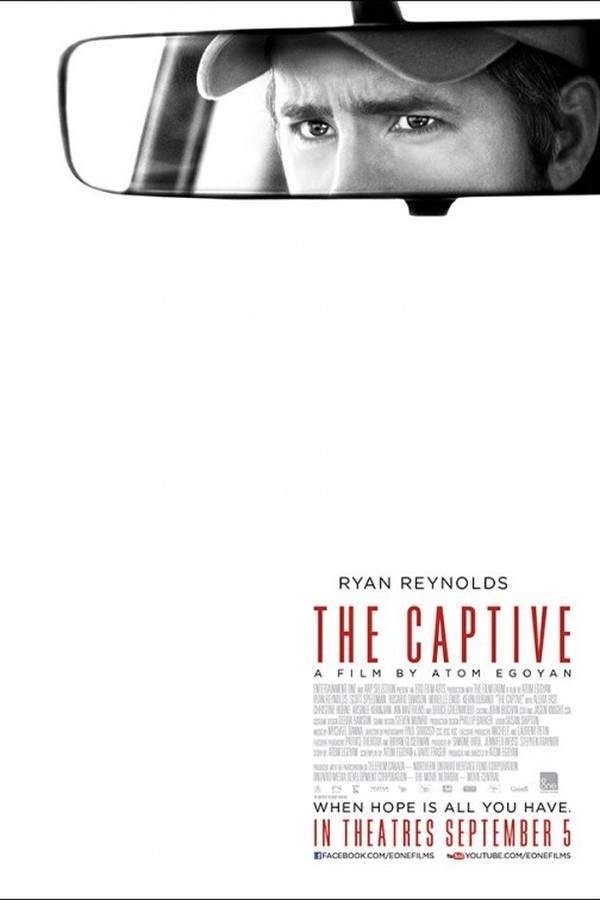
The Captive (2014) movie poster

Plot Summary

The Captive (2014) Plot Summary Explained

Release, runtime and language
2014 · 112 min · English
Directed by
Atom Egoyan
Starring
Ryan Reynolds, Rosario Dawson, Kevin Durand, Bruce Greenwood, Scott Speedman, Aaron Poole

After his young daughter mysteriously disappears, Ryan Reynolds’ character finds his world irrevocably changed. As years pass with no sign of her, he clings to hope and pursues emerging leads. The desperate search forces him to risk everything, not only to reunite with his daughter but also to clear his name from suspicion and repair his fractured marriage with his wife, Mireille Enos.

On this page (6)
  1. 1 Where to watch
  2. 2 What happens: full plot
  3. 3 Plot questions answered
  4. 4 Movie threads
  5. 5 Movies like The Captive
  6. 6 Every angle

Where to watch

Where to Watch The Captive (2014)

Where can you watch The Captive? Stream, rent or buy it in the US, including on Hoopla, Kanopy and Fandango at Home Free: current JustWatch availability with up-to-date prices.

Streaming availability powered by JustWatch

Full plot summary · contains spoilers

What Happens in The Captive: Full Plot Summary

The whole story of The Captive (2014) explained, from the opening scene to the final frame: every key event, every twist and what it all adds up to. Read it as a quick recap before the sequel, to check a scene you missed, or to finally understand what really happened.

The story unfolds through a series of non-linear flashbacks, weaving together the interconnected lives of several characters. We first encounter Mika (Kevin Durand), who resides in a luxurious, high-tech home surrounded by pristine snow. Inside, he watches Japanese Kabuki opera while keeping a close eye on security monitors. Mika reveals a hidden door which leads to a secret room where a teenage girl, Cassandra (Alexia Fast), plays the piano with a hint of apprehension. Mika briefly considers her request, saying, “Maybe; just this once.”

Meanwhile, Tina (Mireille Enos), feeling isolated in her own home, reflects on her past and the void left by her missing daughter, Cassandra. Her conversation with an unseen woman at a diner reveals her regret and longing, especially as the unseen woman probes about Cassandra’s 13th birthday, the last time she was seen.

As the narrative shifts, we meet Matthew (Ryan Reynolds), who encounters a young woman, Paige. Their connection raises suspicions about Matthew’s past and his relationship with Tina. In a poignant moment, he receives a call from Tina and battles through a furious snowstorm, highlighting the strains in their relationship.

While Mika works with a property developer, he keeps a sinister interest in the investigation surrounding the disappearance of Nicole Dunlop (Rosario Dawson), a police officer who had a crucial role in tackling child predators. As the investigation thickens, a series of flashbacks reveals that Cassandra has been in hiding for eight years, under Mika’s watchful gaze. She lives in constant fear, knowing that Mika has threatened her parents’ lives.

The story escalates as Matthew searches for his daughter, unraveling a complex web of crime and heartbreak. Dunlop and her partner Cornwall (Scott Speedman) delve deeper into the case, interviewing Matthew and revealing suspicions regarding his involvement in Cassandra's disappearance.

The tension builds as Tina, in her grief, discovers mementos from Cassandra’s childhood, unknowingly tying her deeper into Mika's manipulative games. As they scramble to piece together the clues, Dunlop’s investigation takes a dangerous turn, leading to her own capture by Mika’s accomplices.

In a heart-stopping climax, the police finally track down Mika's hideout, rescuing Cassandra just moments before tragedy strikes. The reunion between Cassandra and her parents is tear-filled, embodying years of loss and anguish. Though they face the aftermath of their ordeal, the film closes on a note of tentative hope, as Cassandra steps onto the ice, a symbol of her newfound freedom and resilience.

Throughout this gripping tale, themes of abduction, resilience, and the battle against darkness interlace as the characters confront their nightmares and strive for redemption.

Last updated: November 04, 2024 at 00:10

Was this helpful?

Plot questions answered

The Captive Plot Explained: Your Questions Answered

The questions people ask most about The Captive (2014): what happens in the confusing scenes, why the characters do what they do, the twists, hidden details and what the ending means. Each answer contains spoilers.

Q1

Why did Mika kidnap and keep Cassandra for eight years?

Mika kidnapped Cassandra as part of his predatory pattern of targeting young girls. The film reveals he kept her in a secret room within his high-tech home, allowing him to hold her captive for eight years while maintaining a facade of normalcy. He used threats against Cassandra's parents to keep her silent and compliant, ensuring she wouldn't attempt escape or reveal her location.
Foreshadowing: Mika's obsessive monitoring of security cameras and interest in child predator cases foreshadow his true nature as a dangerous abductor.

  • mika
  • cassandra
  • kidnapping
  • captivity
  • eight years
  • abduction
Q2

Why was Matthew suspected of involvement in Cassandra's disappearance?

Detective Dunlop and her partner Cornwall grew suspicious of Matthew because he was the father and had access to Cassandra. The police questioned why he wasn't able to locate his own daughter despite years of searching, and his background interviews raised red flags that made him a person of interest in the investigation.
Foreshadowing: Matthew's tense relationship with Tina and his secretive behavior during the search planted seeds of doubt about his involvement.

  • matthew
  • suspect
  • police investigation
  • cassandra disappearance
  • dunlop
Q3

Why was Cassandra's 13th birthday significant to the story?

Cassandra's 13th birthday was the last day she was seen before disappearing. This detail haunted her mother Tina, who regretted not being more protective on that fateful day. The 13th birthday serves as the timeline marker for when the abduction occurred, making it the emotional starting point of the family's eight-year nightmare.

Foreshadowing: Tina's conversation about the 13th birthday at the diner establishes the timeline that defines the entire search effort.

  • 13th birthday
  • cassandra
  • last seen
  • tina
  • disappearance timeline
Q4

What happened to Detective Dunlop when she was captured by Mika's accomplices?

Detective Dunlop's investigation led her directly into danger at Mika's hideout, where she was captured by his accomplices. This capture put her life in immediate jeopardy and intensified the stakes for the police force. Her capture demonstrated the real danger Mika posed and forced the police to escalate their rescue efforts.

Foreshadowing: Mika's sinister interest in Dunlop's investigation and his contacts in the criminal underworld anticipated her dangerous confrontation.

  • dunlop
  • captured
  • mika
  • hideout
  • police
  • investigation danger
Q5

How did the police finally track down Cassandra's location?

The police investigation intensified after uncovering Mika's connections to the child predator case involving Nicole Dunlop. Through persistent detective work and following the trail of evidence, they traced the clues to Mika's isolated, high-tech home. The climactic raid successfully located the secret room where Cassandra had been held for eight years, leading to her rescue just moments before tragedy could strike.

Foreshadowing: Mika's elaborate security system and secret room, initially shown as his method of control, became the evidence that exposed his crime.

  • police rescue
  • mika hideout
  • secret room
  • cassandra location
  • climax
Q6

What does Cassandra stepping onto the ice at the end represent?

Cassandra stepping onto the ice rink at the film's conclusion symbolizes her newfound freedom and resilience after years of captivity. The ice represents a stark contrast to the confined, dark secret room where she was held. By choosing to step onto the ice, she demonstrates her courage to reclaim her life and move forward, offering a hopeful conclusion to the traumatic journey.

Foreshadowing: The earlier scenes of Cassandra playing the piano in her hidden room, yearning for normalcy, foreshadow her eventual steps toward freedom.

  • ending
  • cassandra
  • ice
  • freedom
  • resilience
  • symbolism
  • hope
Q7

Why did Mika allow Cassandra to play the piano in her secret room?

Mika permitted Cassandra to play the piano as a twisted form of control and manipulation. By granting her small privileges like playing music, he created a false sense of dependency and gratitude while maintaining absolute power over her captivity. The piano scene shows Cassandra's brief moment of hope when Mika considers her request, revealing how he used conditional kindness as a psychological tool.

Foreshadowing: Mika's careful control over Cassandra's environment and his watching of the security monitors established his pattern of domination.

  • cassandra
  • piano
  • mika
  • secret room
  • control
  • manipulation
Q8

How did Mika threaten Cassandra's family to keep her silent?

Mika used the lives of Cassandra's parents as leverage to ensure her silence and compliance throughout the eight years of captivity. This threat kept Cassandra from attempting escape or seeking help, as she believed Mika would harm her parents if she disobeyed. The psychological manipulation added another layer of control beyond physical confinement.

Foreshadowing: The tension between Matthew and Tina, along with their desperate search, reflects the manipulative pressure Mika exerted on the entire family.

  • mika threat
  • cassandra parents
  • psychological control
  • silence
  • captivity
Q9

Why was Mika interested in the Nicole Dunlop investigation?

Mika's sinister interest in the Nicole Dunlop case, which involved child predators, revealed his deep involvement in the criminal underworld surrounding child exploitation. As a property developer working alongside criminal networks, Mika used his position to monitor investigations and stay ahead of law enforcement. His tracking of Dunlop's case demonstrated how he operated within the same criminal circles he pretended to oppose.

Foreshadowing: Mika's high-tech home and surveillance capabilities suggested a man who needed to stay informed about police activities targeting his world.

  • mika
  • dunlop
  • investigation
  • property developer
  • child predators
  • criminal network
Q10

Why does the film use non-linear flashbacks to tell the story?

The non-linear flashback structure serves to build suspense and reveal the full truth gradually, matching the investigative nature of the story. By alternating between the quiet dread of Cassandra's captivity and the frantic energy of the search, the structure creates psychological tension. This approach also mirrors how the characters themselves are piecing together clues to understand what truly happened during those eight years.

Foreshadowing: The opening scenes of Mika watching security footage and Cassandra in the secret room provide early visual hints that only gain full meaning through the flashback revelations.

  • flashbacks
  • non-linear structure
  • narrative
  • storytelling
  • psychological tension

Movie threads

More Movies Like The Captive, by Mood & Story

Curated lists built around what makes The Captive tick: the same mood, the same kind of story or the same emotional payoff. Each list explains why these movies belong together.

Thrillers about Grieving Families like The Captive

Stories about families navigating profound grief and suspicion after a devastating crime. A collection of movies like The Captive that center on the psychological fallout of a crime on a family. These films explore themes of grief, loss, and fractured relationships, often involving a desperate search for the truth. If you enjoyed the emotional weight and family drama in The Captive, these similar thrillers will resonate.

  • grief-stricken
  • desperate
  • heart-wrenching
  • unsettling
  • anxious
  • psychological trauma
  • Tone: dark, grief-stricken
  • Pacing: variable, character-driven
Why these movies?

The story pattern: These stories typically begin with a devastating inciting incident, such as a disappearance or murder, that shatters the family unit. The plot then follows a dual track: the external investigation and the internal collapse of family dynamics, often through a non-linear structure that reveals the depth of the trauma and the long road toward some form of resolution.

Why they belong together: Movies are grouped here for their shared focus on the domestic and emotional fallout of a crime. They share a heavy emotional weight, a dark or tense tone, and a common thematic core of exploring how families endure and are transformed by tragedy.

Claustrophobic Thrillers with a Tense Mood like The Captive

Thrillers that build an oppressive atmosphere of psychological dread and unease. Discover movies that share the tense, claustrophobic atmosphere of The Captive. These thrillers are defined by a feeling of unease, psychological manipulation, and an oppressive mood that keeps you on edge. If you liked the anxious, unsettling vibe of The Captive, you'll find more nerve-wracking stories here.

  • oppressive
  • claustrophobic
  • unsettling
  • anxious
  • tense
  • psychological dread
  • Tone: dark, tense, unsettling
  • Pacing: variable, suspenseful
Why these movies?

The story pattern: Narratives in this thread often involve characters who are psychologically or physically trapped, with the tension deriving from manipulation, hidden threats, or a fractured perception of reality. The pacing can be variable, alternating between slow-burn dread and frantic bursts of action, all serving to maintain a high level of suspense and emotional intensity.

Why they belong together: These films are connected by their masterful control of mood. They share a high-intensity, dark tone and utilize similar techniques to create feelings of claustrophobia and anxiety, making the viewing experience consistently tense and psychologically engaging.

If you liked this

Movies Like The Captive

Similar movies to The Captive: the same genre, themes or kind of story. Each one comes with its own plot summary, timeline and ending explained.

Browse all movie summaries

Every angle

The Captive (2014) Explained: Plot, Timeline & Characters

Everything about The Captive in one place: what happens in the plot summary, the timeline in chronological order, the characters and meaning and a spoiler-free summary. What's After the Movie adds the cast, box office and post-credit scenes.

Coming soon on iOS and Android

The Plot Explained Movie Summary App

Plot summaries, endings explained and timelines on your phone. Catch up on any movie in minutes, save your favorites and never miss a twist again.

Be the first to know when we launch. Your email stays private, always.

Learn more about the app