Plot Explained Spoilers guaranteed!
Plot Explained

Browse by genre

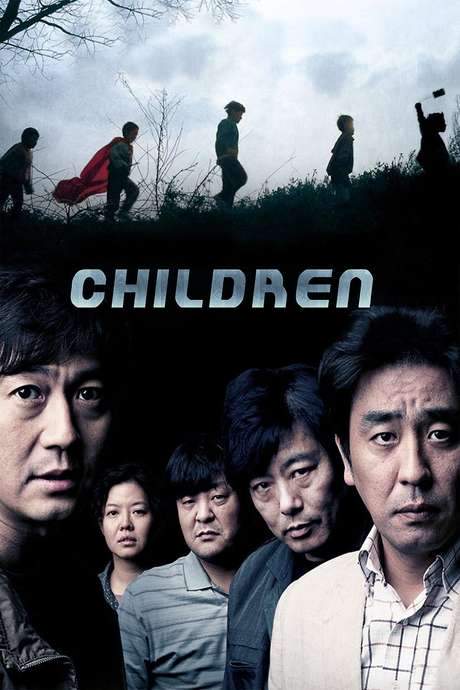
Children… (2011) movie poster

Plot Summary

Children… (2011) Plot Summary Explained

Release, runtime and language
2011 · 132 mins · Korean
Loading streaming availability…
Directed by
Lee Kyu-man
Starring
Kim Yeo-jin, Jeon Kuk-hwan, Park Byung-eun, Ryu Seung-ryong, Sung Dong-il, Park Seo-yeon

On March 26, 1991, five boys disappear while frog‑hunting on a mountain, sparking a lingering mystery. A documentary filmmaker, a police detective, and a university professor each pursue clues, but their investigation is clouded when one of the missing children's parents emerges as a key suspect.

On this page (5)
  1. 1 Where to watch
  2. 2 What happens: full plot
  3. 3 Plot questions answered
  4. 4 Movie threads
  5. 5 Every angle
Loading streaming availability…

Full plot summary · contains spoilers

What Happens in Children…: Full Plot Summary

The whole story of Children… (2011) explained, from the opening scene to the final frame: every key event, every twist and what it all adds up to. Read it as a quick recap before the sequel, to check a scene you missed, or to finally understand what really happened.

On March 26, 1991, during local elections, five boys vanish while exploring a nearby mountain on a day off from school. Their parents push for an immediate police investigation, but the authorities are distracted by safeguarding the polling stations. Days turn into weeks, and thousands of officers scour the mountain for clues, yet nothing materializes. The nation follows the parents’ desperate pleas as their story captures hearts and minds, sparking a wave of theories—from North Korean spies to alien abductions—about what might have happened to the children.

In 1996, Kang Ji-seung, a career-driven documentary maker Park Yong-woo who has just been reassigned to the small town after a high-profile setback, returns with a single aim: to resurrect his name by solving the case. He teams up with a determined professor Jeon Kuk-hwan who is eager to prove himself by cracking a crime that the police could not solve. The professor’s theory starts to gain momentum when he uncovers a telephone recording of someone claiming to be one of the missing boys calling his own home. The mother Kim Yeo-jin does not seem shocked to hear her son’s voice, which unsettles the investigator and pushes the professors’ line of inquiry toward questions about what the boy’s family might be concealing. As they press, the entire household—parents and even the grandmother—appears to behave with strange, unsettled reluctance. The professor convinces authorities to dig up the boy’s home, but finds nothing conclusive. The accusation shatters the family’s reputation, and the father Sung Ji-ru dies without ever clearing his name. Soon after, Kang Ji-seung is reassigned back to the city, and the professor loses his university position, both casualties of a case that refuses to be put to rest.

Then, in September 2002, the remains of the children are discovered in the woods on the same mountainside the youngsters had described visiting. Two skulls show large holes and one bears strange indentations from an unidentified instrument, while their clothes are knotted in sailor-like knots and the scene yields bullet casings. The discovery rattles the country anew, and Seoul is shaken by news of two more children missing in the capital. Kang Ji-seung reconnects with the police officer who investigated the original disappearance a decade earlier, who reveals a chilling detail: on the night after the boys vanished, he encountered a mysterious young man who is always seen fishing nearby. The officer kept this quiet because Korea’s statute of limitations would bar any prosecution, even if the killer were caught years later. He chose to wait and watch for another crime to trap the suspect, hoping to finally bring closure.

Using a traced license plate, Kang Ji-seung locates the man and breaks into his apartment when he’s away. A disturbing cache awaits—a box of items belonging to children and stacks of books tied into sailor’s knots. He waits outside the building, intending to confront the suspect when he returns home. The next morning, Kang Ji-seung’s own daughter vanishes, only to reappear moments later, claiming a man driving a passing truck helped her. He races the truck to a slaughterhouse, where he confronts the suspect. The man refuses to confess but hints that he might be the killer. With no rock-solid evidence to arrest him, Kang Ji-seung watches as the suspect saunters away, leaving the mystery unresolved and the danger lingering over the city.

> The case lingers in memory, a careful balance of pursued truth and the limits of justice, as the investigators chase a thread that refuses to untangle neatly.
Last updated: November 25, 2025 at 01:01

Was this helpful?

Plot questions answered

Children… Plot Explained: Your Questions Answered

The questions people ask most about Children… (2011): what happens in the confusing scenes, why the characters do what they do, the twists, hidden details and what the ending means. Each answer contains spoilers.

Q2

What did the telephone recording prove about the missing boys?

In 1996, professor Jeon Kuk-hwan discovered a recording of a boy claiming to be one of the missing children calling his own home. The call suggested the boy may have been alive after the disappearance, or that someone close to the family had knowledge of the case. The mother's lack of shock when hearing the recording raised suspicions about what the family might be hiding.

  • telephone recording
  • professor theory
  • mother reaction
  • missing boy call
Q3

Why did investigators suspect the missing boy's family?

The family's behavior became increasingly suspicious when authorities pressed for answers. The mother showed no surprise at hearing her son's voice on the recording, and the entire household, parents and grandmother, appeared reluctant and unsettled during questioning. Professor Jeon convinced authorities to dig up the family home in search of evidence, but found nothing conclusive.

  • family suspicion
  • mother reaction
  • house excavation
  • professor investigation
Q4

What happened to the professor and documentary maker after the case?

Both Kang Ji-seung and Professor Jeon Kuk-hwan had their careers destroyed by the investigation. The professor lost his university position after accusing the family and digging up their home without finding conclusive evidence. Kang Ji-seung was reassigned back to the city, and the father of the missing boy died without ever clearing his name. Both men became casualties of an unsolved case.

  • professor fired
  • careers ruined
  • father death
  • family reputation
Q5

How were the children's remains finally found?

In September 2002, the remains were discovered in the woods on the same mountainside the boys had described visiting. The discovery was made years after the initial disappearance, when the case had already faded from public attention. The remains showed signs of violence, two skulls had large holes and one bore indentations from an unidentified instrument, while their clothes were knotted in sailor-like patterns and bullet casings were found at the scene.

  • remains found
  • mountainside
  • skull injuries
  • bullet casings
  • sailor knots
Q6

What did the sailor knots on the children's clothing represent?

The children's clothes were found tied in sailor knots, a detail that would later appear again when Kang Ji-seung discovered the suspect's apartment filled with stacks of books also bound in sailor knots. This signature suggested the killer had a connection to maritime knowledge or deliberately used knots as a calling card, linking the crime scene evidence to the suspect's possessions.

Foreshadowing: The sailor knots first appeared on the children's remains in 2002, then again in the suspect's apartment.

  • sailor knots
  • evidence
  • suspect apartment
  • signature
Q7

Who was the mysterious man the police officer mentioned?

The original police investigator revealed that on the night after the boys vanished, he encountered a mysterious young man who was always seen fishing nearby. The officer kept this information secret because Korea's statute of limitations would have barred prosecution even if the killer was identified years later. He waited and watched for another crime to occur, hoping to catch the suspect in the act and finally bring closure.

  • fishing man
  • statute of limitations
  • police secret
  • suspect identity
Q8

What did Kang Ji-seung find inside the suspect's apartment?

Using a traced license plate, Kang Ji-seung located the suspect and broke into his apartment while he was away. Inside, he discovered a disturbing cache: items belonging to children and stacks of books all tied into sailor knots, the same knot style found on the children's clothing at the discovery site. This evidence strongly pointed to the suspect as the killer, though it was obtained illegally.

  • apartment search
  • children items
  • books
  • evidence
  • sailor knots
Q9

Why did Kang Ji-seung's daughter disappear and reappear?

The morning after Kang Ji-seung broke into the suspect's apartment and waited outside to confront him, his own daughter vanished. She reappeared moments later, claiming a man driving a passing truck had helped her. This incident appeared to be either a deliberate threat by the suspect or an attempt to lure Kang Ji-seung away from his position, showing the killer was aware of and responding to the investigation.

  • daughter kidnapped
  • truck
  • suspect threat
  • confrontation
Q10

What happened during the slaughterhouse confrontation?

Kang Ji-seung chased the truck to a slaughterhouse where he confronted the suspect directly. The man refused to confess but hinted that he might be the killer, saying something to suggest his guilt. However, with no solid evidence obtained through proper legal channels, Kang Ji-seung had no grounds for arrest. The suspect walked away freely, leaving the case unresolved and the danger still present in the city.

  • slaughterhouse
  • suspect confrontation
  • no confession
  • walked away
Q11

Why couldn't police arrest the suspect despite the evidence?

The evidence found in the apartment was obtained through illegal means, Kang Ji-seung broke in without a warrant. Additionally, the statute of limitations had expired, meaning even if the suspect confessed, prosecution would be barred. With no confession and tainted evidence, the legal system offered no path to conviction, allowing the suspect to walk free while the killer remained at large.

  • no arrest
  • statute of limitations
  • illegal evidence
  • prosecution blocked
Q12

What was the connection between the original case and the new disappearances in Seoul?

Shortly after the remains were discovered in September 2002, Seoul was shaken by news of two more children missing in the capital. This suggested the killer from the 1991 case might still be active and responsible for the new disappearances. The timing created urgent public fear that the decade-old mystery was not just unsolved but ongoing, with a dangerous individual still free to harm children.

  • Seoul disappearances
  • new victims
  • killer active
  • public fear

Movie threads

More Movies Like Children…, by Mood & Story

Curated lists built around what makes Children… tick: the same mood, the same kind of story or the same emotional payoff. Each list explains why these movies belong together.

Movies with obsessive investigators like in Children…

Stories about characters consumed by the desperate need to solve a haunting mystery. If you were captivated by the relentless pursuit of truth in Children…, these movies feature similar narratives. They focus on characters whose lives are overtaken by an unsolved mystery, often at great personal cost. This section includes other tense thrillers and crime dramas where the investigation becomes a dark, personal obsession.

  • obsessive
  • gripping
  • frustrating
  • haunting
  • suspenseful
  • anxious
  • Tone: dark, tense, melancholic
  • Pacing: steady, methodical
Why these movies?

The story pattern: These stories usually revolve around a central, often cold, case that refuses to be solved. The protagonist's initial professional interest gradually morphs into a personal fixation, driving them to ignore boundaries and sacrifice their well-being. The plot unfolds methodically, focusing on the pursuit's emotional and psychological decay rather than a swift resolution.

Why they belong together: Movies are grouped here because they share a core focus on the character arc of the investigator. The primary similarity is the theme of obsession, a dark tone, a steady pacing that builds tension, and an emotionally heavy journey that often ends without full closure, leaving a sense of haunting unease.

Movies about unsolved crimes and lasting grief like Children…

Narratives where a devastating crime's mystery endures, leaving a community in permanent sorrow. For viewers who appreciated the exploration of enduring grief in Children…, this collection features similar stories. These films delve into the emotional aftermath of an unsolved crime, capturing the frustration and sorrow of families and investigators left with unanswered questions. They are slow-burn, heavy dramas that prioritize emotional truth over neat resolutions.

  • melancholic
  • haunting
  • gripping
  • sad
  • frustrating
  • anxious
  • Tone: bleak, melancholic, haunting
  • Pacing: steady, reflective
Why these movies?

The story pattern: The narrative pattern often begins with a pivotal, unresolved tragedy. The story then unfolds across years or decades, examining how the absence of answers shapes the lives of those left behind. The plot is driven by emotional stakes rather than action, focusing on the weight of memory and the painful acceptance of ambiguity.

Why they belong together: These films are connected by their shared thematic focus on the consequences of an unsolved mystery. They feature a consistently dark and melancholic tone, a steady, reflective pace, and a heavy emotional weight centered on grief and frustration. The ending is typically bleak or ambiguous, reinforcing the theme of irresolvable loss.

Every angle

Children… (2011) Explained: Plot, Timeline & Characters

Everything about Children… in one place: what happens in the plot summary, the timeline in chronological order, the characters and meaning and a spoiler-free summary. What's After the Movie adds the cast, box office and post-credit scenes.

Coming soon on iOS and Android

The Plot Explained Movie Summary App

Plot summaries, endings explained and timelines on your phone. Catch up on any movie in minutes, save your favorites and never miss a twist again.

Be the first to know when we launch. Your email stays private, always.

Learn more about the app