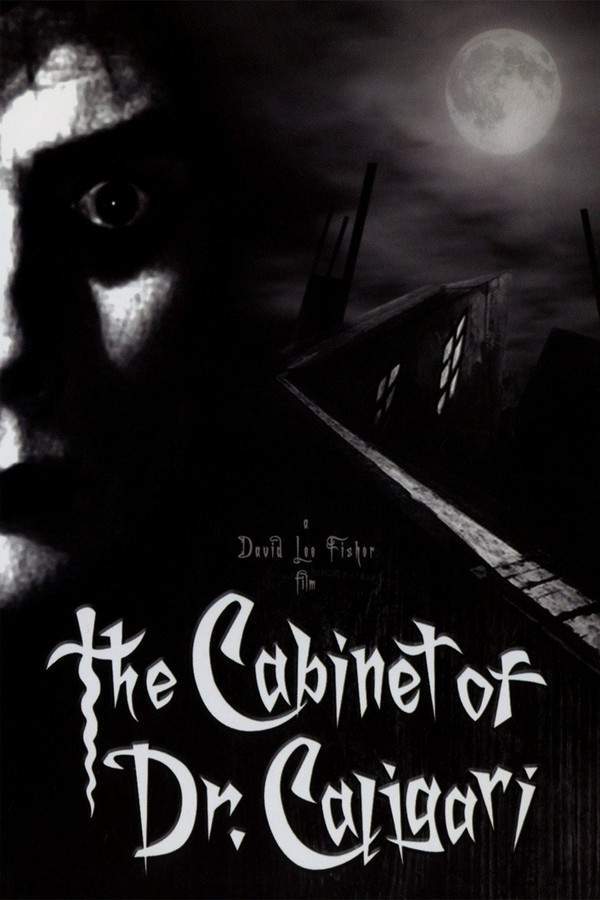
Year: 2006
Runtime: 76 min
Language: English
Director: David Lee Fisher
A charismatic showman arrives in a town, presenting a mysterious sleepwalker with extraordinary abilities. As audiences become enthralled by his captivating performances, a series of disturbing events unfold, suggesting a sinister plot and blurring the line between illusion and reality. The narrative explores themes of madness, manipulation, and the power of suggestion, questioning the perception of truth and sanity.
Warning: spoilers below!
Haven’t seen The Cabinet of Dr. Caligari yet? This summary contains major spoilers. Bookmark the page, watch the movie, and come back for the full breakdown. If you're ready, scroll on and relive the story!
Read the complete plot breakdown of The Cabinet of Dr. Caligari (2006), including all key story events, major twists, and the ending explained in detail. Discover what really happened, and what it all means.
The story unfolds as a rich tapestry of mystery and intrigue, drawing you into its depths. It kicks off with Francis, a captivating storyteller, as he entertains his friend Alan with an extraordinary narrative involving murder, chaos, and the enigmatic Dr. Caligari, a carnival barker with an unusual obsession for the sleeping and the dead. Through his storytelling, Francis takes a journey back to that fateful night when he and Alan encountered the eerie Cesare, a sleepwalking servant ensnared in Caligari's hypnotic grip.
In this enchanting world where the lines between reality and fantasy blur, Cesare emerges as an uncanny seer, predicting his own fate, proclaiming that dawn will signal his demise. As the plot thickens, Francis and his enchanting companion, Jane, find themselves ensnared in a treacherous web filled with deception and murder as they venture deeper into the perilous realm ruled by Caligari and Cesare. Tension mounts significantly when poor Jane becomes a target of Cesare's nocturnal escapades, propelling her father and brother into a frantic search through the shadowy streets of the German village of Holstenwall.
Amidst this frantic chase, Francis uncovers a shocking truth: Caligari's true nature is far more sinister than it appears. The very man who seems to exert control over Cesare is, in actuality, the mastermind behind the local insane asylum, fixated on the gruesome escapades of the medieval Dr. Caligari. As Francis grapples with the horrifying realities of his delusions, he must also confront the revelation that Cesare’s lifeless form was merely a diversion, designed to lead him astray from the genuine culprit – and to pull him closer to the edge of insanity.
The climax of the film unveils a staggering twist: Francis' intricate flashback is solely a figment of his fevered imagination. The elusive figure of "Caligari" he has been hunting down is, in fact, his own doctor within the asylum, who now suggests he possesses the ability to cure Francis of his delusions. As the revelations unfold, the very essence of reality begins to dissolve, leaving both Francis and the audience in a state of questioning what truly is real and what might just be a manifestation of our shared imaginings.
Last updated: November 19, 2024 at 17:01
Explore frequently asked questions about The Cabinet of Dr. Caligari (2006) with spoiler-rich answers covering the full plot summary, major story beats, character motivations, hidden details, and ending meaning. This movie summary FAQ helps explain confusing scenes, plot twists, and narrative decisions in clear, searchable detail.
Cesare predicts his own death as part of Dr. Caligari's hypnotic act, proclaiming that dawn will signal his demise. This prediction serves as both a compelling showmanship tactic and a foreshadowing of the tragic events to come. The prediction adds mystery to Cesare's character and creates tension, as the audience wonders if the sleepwalker's visions are genuine or part of Caligari's manipulation.
Cesare's prediction of his own death is introduced early in the carnival scene, establishing the film's theme of fate and foreshadowing his ultimate demise.
Cesare targets Jane as part of Dr. Caligari's sinister scheme, using his sleepwalking abilities to stalk and threaten her. This attack serves as a crucial plot device that propels the narrative forward, forcing Jane's father and brother to search through Holstenwall's streets and creating the tension that drives Francis to investigate Caligari further. Jane's targeting also demonstrates Caligari's willingness to use his control over Cesare for harmful purposes beyond mere entertainment.
The threat to Jane escalates from the earlier carnival demonstrations where Cesare's disturbing abilities were first showcased.
Francis discovers that Caligari is not merely a carnival showman but is actually the mastermind behind the local insane asylum. This revelation comes through Francis's investigation into the mysterious events surrounding Cesare, leading him to uncover the connection between the carnival figure and the asylum. The discovery deepens the mystery and suggests Caligari has been using his position to manipulate events from behind the scenes.
Caligari's obsession with the dead and the sleeping, established early in the carnival scenes, hints at his deeper involvement with the asylum.
The climactic twist reveals that the figure Francis has been chasing as "Dr. Caligari" is actually his own doctor within the asylum. This means Francis's entire narrative about hunting down a carnival barker was a delusion constructed within his fevered mind. The doctor suggests he can cure Francis of his delusions, but the film deliberately leaves ambiguous whether this "cure" represents reality or another layer of the protagonist's madness.
Francis's increasingly erratic behavior and the unstable, dreamlike quality of his account hint throughout that his perspective may not be trustworthy.
Cesare's lifeless body is found, leading Francis to believe he has solved the mystery and defeated Caligari's servant. However, this death is deliberately staged as a diversion to mislead Francis and draw him deeper into confusion. The fake death exploits Francis's assumption that the threat has passed, allowing the true manipulator to continue operating while Francis is distracted by what he believes is closure.
The film establishes early on that Caligari is a master of deception and theatrical performance, making the staged death plausible.
Francis is an unreliable narrator because the story he tells Alan is ultimately revealed to be a complete fabrication, a delusion constructed within his own mind while institutionalized in an asylum. Throughout his narrative, the boundaries between what actually happened and what Francis imagined become increasingly blurred. The film systematically plants clues that suggest his account may be distorted: the exaggerated theatricality of events, the convenient coincidences, and the increasingly paranoid logic of his deductions.
The opening frames showing Francis in an asylum setting, combined with the increasingly fantastical nature of his story, provide subtle hints that his perspective is compromised.
The asylum serves as the real-world setting that frames Francis's entire narrative as a delusion. While Francis tells his story as if he and his companions are free citizens investigating crimes in Holstenwall, the asylum is where he is actually confined. The asylum represents the space where his reality is constructed, and the revelation that Caligari is his doctor ties the fictional hunt back to this institutional setting. The asylum transforms the entire narrative from an external mystery into an internal psychological study.
The meta-framing of Francis as a storyteller whose dark tale unfolds against a backdrop of psychological instability hints at the asylum's importance from the beginning.
The film deliberately blurs reality and illusion to explore themes of madness, manipulation, and the reliability of perception. By presenting Francis's deluded narrative as if it were a real investigation, then revealing it as a construct of his institutionalized mind, the film questions whether we can ever trust our understanding of events. The ambiguous ending, where even the doctor's "cure" is questionable, leaves viewers in the same state of uncertainty as the protagonist, reinforcing the film's philosophical inquiry into the nature of truth and sanity.
The dreamlike visual style and the persistent theme of sleepwalkers, hypnosis, and suggestion prepare the audience for a narrative where nothing is certain.
Discover curated groups of movies connected by mood, themes, and story style. Browse collections built around emotion, atmosphere, and narrative focus to easily find films that match what you feel like watching right now.
Psychological tales where a protagonist's grip on reality is slowly called into question.If you enjoyed the reality-shattering twist in The Cabinet of Dr. Caligari, explore these movies where the protagonist's account of events is unreliable. These psychological thrillers and mysteries masterfully use narrative ambiguity to create suspense and leave you questioning the very nature of sanity.
Stories in this thread typically follow a protagonist who presents a seemingly straightforward account of events, only for cracks to appear in their narrative. The plot structure is often designed to mislead, building towards a climax that reveals the true nature of the protagonist's perception, whether due to mental illness, trauma, or manipulation, casting the entire story in a new, ambiguous light.
These films are grouped together by their central narrative device: the unreliable perspective. They share a common goal of disorienting the viewer and exploring themes of madness, memory, and the subjectivity of truth, creating a cohesive experience of psychological suspense.
Stories of sinister control set within oppressive, mentally suffocating environments.Fans of the manipulative dread in The Cabinet of Dr. Caligari will find similar chills in these claustrophobic thrillers. These movies explore themes of control, hypnosis, and psychological decay, often set in isolated or institutional settings that amplify the feeling of inescapable madness.
The narrative pattern involves a vulnerable character falling under the influence of a charismatic but sinister authority figure. The conflict is primarily psychological, as the protagonist's will and perception of reality are systematically dismantled. The setting itself often acts as a prison, intensifying the themes of entrapment and the struggle for mental freedom.
These movies are united by their oppressive atmosphere and core theme of psychological manipulation. They create a similar vibe through a steady pacing that builds unease, a dark tone, and a focus on the horrifying dynamics of control and submission within a confined world.
Don't stop at just watching - explore The Cabinet of Dr. Caligari in full detail. From the complete plot summary and scene-by-scene timeline to character breakdowns, thematic analysis, and a deep dive into the ending - every page helps you truly understand what The Cabinet of Dr. Caligari is all about. Plus, discover what's next after the movie.
Track the full timeline of The Cabinet of Dr. Caligari with every major event arranged chronologically. Perfect for decoding non-linear storytelling, flashbacks, or parallel narratives with a clear scene-by-scene breakdown.
Discover the characters, locations, and core themes that shape The Cabinet of Dr. Caligari. Get insights into symbolic elements, setting significance, and deeper narrative meaning - ideal for thematic analysis and movie breakdowns.
Discover movies like The Cabinet of Dr. Caligari that share similar genres, themes, and storytelling elements. Whether you’re drawn to the atmosphere, character arcs, or plot structure, these curated recommendations will help you explore more films you’ll love.
The Cabinet of Dr. Caligari (2006) Scene-by-Scene Movie Timeline
The Cabinet of Dr. Caligari (2006) Movie Characters, Themes & Settings
The Cabinet of Dr. Caligari (2006) Spoiler-Free Summary & Key Flow
Movies Like The Cabinet of Dr. Caligari – Similar Titles You’ll Enjoy
Nosferatu the Vampyre (1979) Story Summary & Characters
Kafka (1991) Complete Plot Breakdown
Nightmare Cinema (2019) Plot Summary & Ending Explained
The Hypnotist (2001) Film Overview & Timeline
The Masque of the Red Death (1989) Story Summary & Characters
The Cabinet of Dr. Ramirez (1991) Film Overview & Timeline
The Terror of Doctor Mabuse (1962) Complete Plot Breakdown
Dr. Jekyll and Mr. Hyde (1941) Movie Recap & Themes
Dr. Mabuse vs. Scotland Yard (1963) Ending Explained & Film Insights
Nightmare (1956) Plot Summary & Ending Explained
Phantom of the Rue Morgue (1954) Story Summary & Characters
The Testament of Dr. Mabuse (1933) Film Overview & Timeline
Dr. Jekyll and Mr. Hyde (1920) Spoiler-Packed Plot Recap
The Cabinet of Dr. Caligari (1920) Film Overview & Timeline
The Strange Case of Dr. Jekyll and Mr. Hyde (1968) Full Summary & Key Details