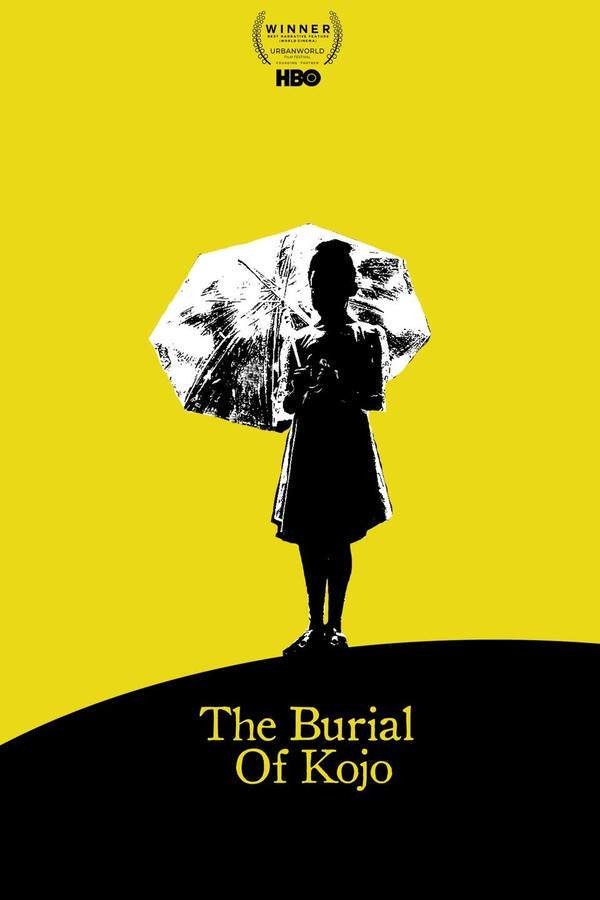
This mesmerizing drama-thriller explores the complex relationship between a father, Kojo, and his brother, Kwabena, as seen through the memories of his daughter, Esi. Set in the lush landscapes of Ghana, the film blends a turbulent family history with elements of magical realism. As Esi recounts her childhood, a mystical world unfolds, blurring the lines between life and death and revealing the secrets behind the two brothers' fates. The film offers a poignant look at family bonds and the power of memory.
Find where to stream, rent, or buy The Burial Of Kojo (2019) in the US with current JustWatch availability, up-to-date pricing, and platform listings for subscription, rental, and digital purchase options.
Warning: spoilers below!
Haven’t seen The Burial Of Kojo yet? This summary contains major spoilers. Bookmark the page, watch the movie, and come back for the full breakdown. If you're ready, scroll on and relive the story!
Read the complete plot breakdown of The Burial Of Kojo (2019), including all key story events, major twists, and the ending explained in detail. Discover what really happened, and what it all means.
Esi reflects on her formative years spent in a vibrant village in rural Ghana, where she resides in a stilted community reminiscent of the actual village, Nzulezo. Here, she lives with her father, Kojo, and her mother, Ama, who diligently supports their modest income through her sewing craft. Kojo, once a city dweller, escaped to the village due to a haunting tragedy, believing that “only water could cleanse the past.” His bond with Esi runs deep, often taking her on boat rides across the serene waters, sharing captivating stories that seem to hold deeper meanings understood only through their conclusions.
Their tranquil life takes an intriguing turn when an unexpected guest appears — an elderly blind man hailing from “the realm in-between,” a mysterious place described as where “everything is upside down.” He confides in Esi about a sacred white bird she must protect, which is being pursued by a sinister crow that presides over the land in-between.
Their lives shift yet again when Esi’s estranged uncle, Kwabena, arrives to reconnect with Kojo. The brothers had severed ties years ago, but Kwabena convinces Kojo to leave their village and relocate to the city, where they move in with Esi’s grandmother. There, Esi and her grandmother enjoy a Spanish-language Mexican telenovela that parallels their lives, featuring a rivalry between two brothers vying for the affection of the same woman. This tale strikes a chord, revealing that Kojo and Kwabena had similarly competed for love, with a tragic history revealing that the woman they loved died on her wedding day to Kwabena because of Kojo’s drinking and reckless driving.
Though initially hesitant, Kojo eventually agrees to join Kwabena in an illegal gold mining operation designed to restore their fortunes. However, betrayal lurks as Kwabena throws Kojo into an abandoned mineshaft and disappears. In a frantic search for her father, Esi and Ama turn to the police, leading to a desperate investigation into Kojo’s disappearance.
As Esi grapples with her father’s absence, she is haunted by visions of the crow ruling the enigmatic land in-between. It dawns on her that the crow symbolizes her uncle Kwabena, whose life ended in the same drunk driving incident that claimed the life of his beloved. The sacred white bird, she realizes, represents her father. With this newfound understanding, Esi recognizes that she alone has the strength to rescue him from the clutches of the past.
Last updated: November 16, 2024 at 11:38
Explore frequently asked questions about The Burial Of Kojo (2019) with spoiler-rich answers covering the full plot summary, major story beats, character motivations, hidden details, and ending meaning. This movie summary FAQ helps explain confusing scenes, plot twists, and narrative decisions in clear, searchable detail.
Kojo fled to the village to escape the guilt of a tragic accident. He believed that 'only water could cleanse the past,' symbolizing his attempt to wash away the memories and sorrow from his past life in the city. The tragedy involved a drunk driving incident that claimed the life of the woman both he and his brother Kwabena loved.
Earlier scenes show Kojo taking Esi on boat rides across water, reinforcing his belief in water's cleansing power.
The realm in-between is a mystical, liminal space described as where 'everything is upside down.' It exists between life and death, representing the film's magical realism layer. The blind man hails from this realm, and it becomes the symbolic landscape where Esi must confront the truth about her family's past.
The blind man's arrival introduces this mystical dimension early in the film, setting up the symbolic conflict between the white bird and crow.
Kojo and Kwabena became estranged after a tragic event involving a woman they both loved. On her wedding day to Kwabena, she died because of Kojo's drunk driving and reckless behavior. This devastating loss created a rift between the brothers, leading to years of separation until Kwabena returns to reconnect.
The telenovela they watch in the city mirrors this exact rivalry between two brothers competing for the same woman.
Kwabena betrayed Kojo by throwing him into an abandoned mineshaft during an illegal gold mining operation. This act represents Kwabena's lingering resentment over the past, specifically the accident that killed his bride and Kojo's role in it. Despite appearing to reconcile, Kwabena's anger never fully dissipated, leading him to eliminate his brother in a calculated manner.
The tension between the brothers is established early when Kwabena returns, and their shared history of rivalry foreshadows this violent betrayal.
The sacred white bird represents Kojo, Esi's father. The blind man told Esi she must protect this bird from a sinister crow. As Esi processes her father's disappearance and confronts her family's dark history, she realizes the white bird is her father, innocent and needing protection, while the crow (representing Kwabena) threatens him.
The blind man's warning about protecting the white bird from the crow appears early, before Esi understands its true meaning.
The crow symbolizes Kwabena, Esi's uncle, who rules over the land in-between. The sinister crow that pursues the white bird represents Kwabena's dark nature and his role in the family's tragedy. Both Kwabena and the crow met their end through drunk driving incidents, Kwabena died in the same accident that killed his bride, just as the crow is consumed by its own darkness.
Esi's visions of the crow haunting her intensify after her father's disappearance, connecting the symbol to her uncle.
The Spanish-language Mexican telenovela Esi and her grandmother watch in the city directly mirrors Kojo and Kwabena's own history. It features a rivalry between two brothers vying for the same woman's affection. This parallel narrative serves as a narrative device that helps Esi (and the audience) understand the true nature of the rivalry between her father and uncle, revealing that their tragic past mirrors the fictional drama exactly.
The telenovela subplot is introduced after they move to the city, setting up the revelation of the brothers' shared romantic history.
Esi believes she can rescue her father because she alone possesses the understanding of the symbolic world, the realm in-between, the white bird, and the crow. Having been chosen by the blind man to protect the white bird, and now understanding that the crow is Kwabena, Esi recognizes that only she can navigate this mystical space to bring her father back from the clutches of the past. Her connection to both the real and symbolic worlds gives her this unique ability.
The blind man's early instruction to protect the white bird, and Esi's recurring visions throughout the film, establish her special role.
On Kwabena's wedding day, the woman he was about to marry died because Kojo was drunk and driving recklessly. This tragic accident not only ended the woman's life but also destroyed the relationship between the brothers. Kojo's guilt over this event drove him to flee to the village, believing water could cleanse his past, a past that ultimately caught up with him through Kwabena's revenge.
The telenovela setup in the city directly parallels this exact event, hinting at the shared tragedy before it's fully revealed.
This phrase represents Kojo's belief that he could escape his guilt and the consequences of his actions by leaving his old life behind. Water symbolizes purification and a fresh start in many cultures, and Kojo chose to live near the water in the village, taking his daughter on boat rides across serene waters. However, the film suggests that some things cannot be washed away, Kwabena's revenge and the family's past ultimately caught up with him regardless of location.
Boat rides across water are a recurring motif throughout Esi's memories, reinforcing this theme of water as cleansing but also as a boundary between worlds.
Discover curated groups of movies connected by mood, themes, and story style. Browse collections built around emotion, atmosphere, and narrative focus to easily find films that match what you feel like watching right now.
Stories where past events are revisited through a mystical and reflective lens.If you liked the reflective, mystical mood of The Burial Of Kojo, discover other movies like it. These stories use magical realism and memory to explore family histories and emotional truths, offering a similar experience of dreamlike storytelling and melancholic beauty.
Stories in this thread often unfold through a character's recollection of the past, where the boundaries between reality and fantasy are intentionally blurred. The narrative journey is less about linear plot and more about emotional discovery, using magical or surreal elements to symbolize internal states and unresolved familial conflicts, frequently leading to a cathartic resolution.
These movies are grouped together because they share a unique blend of a reflective, melancholic tone with elements of magical realism. They prioritize atmosphere and emotional discovery over fast-paced action, creating a distinct viewing experience defined by poetic imagery and the power of memory.
Intense family dramas centered on the destructive bond between brothers.Explore more movies like The Burial Of Kojo that focus on the powerful and often painful dynamics of brotherhood. If you were captivated by the story of Kojo and Kwabena, you'll find similar dramatic tales of familial loyalty, betrayal, and the quest for redemption.
The narrative pattern typically involves a long-simmering conflict between siblings that comes to a head, driven by past grievances or competition. The plot explores the consequences of their actions on themselves and their wider family, often employing flashbacks to reveal the origin of the rift. The journey is emotionally charged, focusing on the moral complexities and the potential for forgiveness or tragic separation.
These films are united by their intense focus on the sibling relationship as the primary source of drama and tension. They share a medium to high emotional weight and often a melancholic or tense tone, exploring the profound impact of betrayal and the difficult path to mending—or accepting—broken bonds.
Don't stop at just watching - explore The Burial Of Kojo in full detail. From the complete plot summary and scene-by-scene timeline to character breakdowns, thematic analysis, and a deep dive into the ending - every page helps you truly understand what The Burial Of Kojo is all about. Plus, discover what's next after the movie.
Track the full timeline of The Burial Of Kojo with every major event arranged chronologically. Perfect for decoding non-linear storytelling, flashbacks, or parallel narratives with a clear scene-by-scene breakdown.
Discover the characters, locations, and core themes that shape The Burial Of Kojo. Get insights into symbolic elements, setting significance, and deeper narrative meaning - ideal for thematic analysis and movie breakdowns.
Discover movies like The Burial Of Kojo that share similar genres, themes, and storytelling elements. Whether you’re drawn to the atmosphere, character arcs, or plot structure, these curated recommendations will help you explore more films you’ll love.
The Burial Of Kojo (2019) Scene-by-Scene Movie Timeline
The Burial Of Kojo (2019) Movie Characters, Themes & Settings
The Burial Of Kojo (2019) Spoiler-Free Summary & Key Flow
Movies Like The Burial Of Kojo – Similar Titles You’ll Enjoy
The Forgiveness of Blood (2012) Full Summary & Key Details
This Is Not a Burial, It's a Resurrection (2021) Story Summary & Characters
The Killing of a Sacred Deer (2017) Movie Recap & Themes
How I Killed My Father (2002) Spoiler-Packed Plot Recap
Buried (2010) Spoiler-Packed Plot Recap
Just Buried (2008) Complete Plot Breakdown
Mami Wata (2023) Full Movie Breakdown
The Burial (2023) Film Overview & Timeline
This Is Not a Burial, It’s a Resurrection (2019) Story Summary & Characters
Dajo (2003) Complete Plot Breakdown
Yaaba (1989) Ending Explained & Film Insights
What Is Buried Must Remain (2022) Spoiler-Packed Plot Recap
Death Knot (2021) Movie Recap & Themes
Death on a Full Moon Day (1997) Ending Explained & Film Insights
Kokuho (2025) Story Summary & Characters