Year: 1985
Runtime: 94 mins
Language: English
Director: Gavin Millar
He loved the child we will never forget… Eighty‑year‑old Alice Hargreaves travels to Columbia University for a reception honoring Lewis Carroll. As a child she shared a close friendship with the writer, inspiring his most famous work. Now she reflects on that bond, recognizing its lingering, complex emotional impact.
Warning: spoilers below!
Haven’t seen Dreamchild yet? This summary contains major spoilers. Bookmark the page, watch the movie, and come back for the full breakdown. If you're ready, scroll on and relive the story!
Read the complete plot breakdown of Dreamchild (1985), including all key story events, major twists, and the ending explained in detail. Discover what really happened—and what it all means.
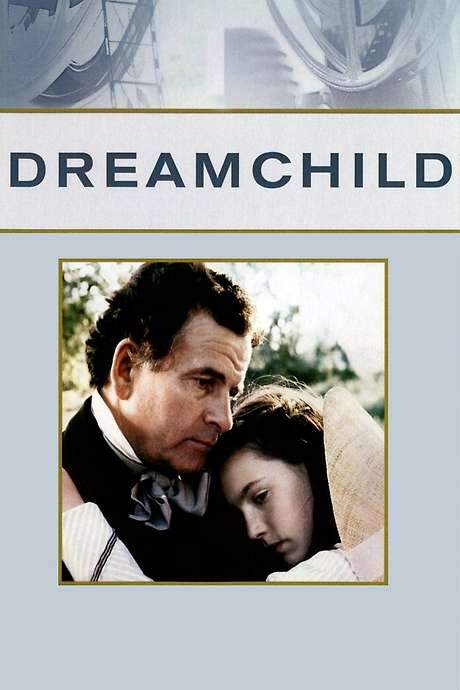
On a voyage home, an elderly widow named Alice Hargreaves becomes the anchor of a small, fragile world. Coral Browne portrays the woman who inspired Lewis Carroll’s famous tales, and she travels with her devoted carer, Lucy, toward a future she’s not sure she wants to face. As the pair disembark, they are flooded by a whirlwind of questions from a phalanx of reporters seeking the truth about her relationship with Carroll, whom Alice once knew as “Mr. Dodgson.” In the midst of the chaos, a seasoned ex-reporter named Jack Dolan becomes a guardian and guide for the pair, and his presence soon turns into a practical partnership. Peter Gallagher gives us Jack’s steady, persuasive charm as he helps them navigate fame, money, and opportunity. A quiet romance begins to bloom between Jack and Lucy, a connection that grows amid the press’s glare and the uncertain terrain of Alice’s memories.
When the hotel doors close behind them, the line between memory and dream blurs. Alice finds herself confronted by an extraordinary guest list in their rooms: Dodgson himself appears as a ghostly presence, and so too do the iconic figures from Carroll’s world—the Mad Hatter, the March Hare, the Caterpillar, the Dormouse, the Mock Turtle, and the Gryphon. In the vivid tea party that follows, these imagined visitors tease Alice for her age and her forgetfulness, while simultaneously drawing out the layers of her past with Carroll. Dodgson’s ghostly figure is portrayed by Ian Holm, and alongside him, the other figures spring to life through the voices of their performers: the Mad Hatter Tony Haygarth, the March Hare Ken Campbell, the Caterpillar Frank Middlemass, the Dormouse Julie Walters, the Mock Turtle Alan Bennett, and the Gryphon Fulton Mackay. These reappearances are not simply pantomime; they illuminate Alice’s inner world and illuminate the distance between the world she inhabited with Carroll and the world she inhabits as an aging woman.
The film then reveals a troubling undercurrent: through deft flashbacks, it suggests that Dodgson’s fascination with Alice may have stretched into troubling territory. As Alice revisits the boating party of July 4, 1862—a memory that Carroll told as a playful story to entertain her and her sisters—she begins to see the past through a different lens. She suspects Dodgson’s jealousy when she later meets the man who would become her husband, and she recognizes a pattern of playful provocations that might have unsettled him, even provoking his nervous stutter. The story unfolds as a careful, memory-soaked examination of power, consent, and the ways affection can become entangled with control and desire.
Throughout these revelations, Alice wrestles with what she owes the man who shaped her childhood and what she owes to the life she built afterward. The tension between memory and truth sits at the center of her journey, and she uses the present to interpret the past with honesty. Jack Dolan serves as a practical counterpoint to the dreams and accusations, translating emotion into opportunity and providing a lifeline of support for Alice and Lucy against the relentless press and the weight of history. The romance between Jack and Lucy deepens, offering a hopeful thread amid the introspective storm.
As the film moves toward its quiet, dignified close, Alice reaches a hard-won understanding of the way she and Dodgson treated each other. In a final, dreamlike sequence with the Mock Turtle and the Gryphon, forgiveness makes room for peace. The result is not a simple yes or no, but a nuanced reconciliation where memory, aging, invention, and love converge in a testament to the complexity of a life lived in the glow of a legendary imagination. The film leaves us with a portrait of a woman who has learned to tell her own story with clarity, courage, and a measured kindness toward the past.
Last Updated: October 14, 2025 at 04:07
Discover curated groups of movies connected by mood, themes, and story style. Browse collections built around emotion, atmosphere, and narrative focus to easily find films that match what you feel like watching right now.
Stories where elderly protagonists revisit the ghosts of their youth.If you liked the reflective journey in Dreamchild, explore more movies about elderly protagonists revisiting their past. These films share a melancholic, quiet tone and use memory to explore themes of aging, legacy, and reconciliation, offering similar contemplative experiences.
Narratives in this thread typically juxtapose a quiet present with a turbulent or significant past, often through flashbacks or surreal dream sequences. The central conflict is internal, as the protagonist grapples with long-buried emotions and re-evaluates pivotal relationships from their younger years, leading toward a nuanced understanding or bittersweet peace.
Movies are grouped here for their shared focus on an elderly protagonist's internal journey, their melancholic and reflective tone, and their use of memory as a narrative device to explore the weight of the past on the present.
Films where the line between memory, dream, and reality blurs.Find films with a dreamlike atmosphere like Dreamchild. These movies use surreal visuals and a non-linear structure to delve into memory and psychology, creating a similar haunting, introspective, and melancholic viewing experience for fans of quirky, surreal storytelling.
The narrative pattern involves a character, often in a state of reflection or crisis, whose perception of reality becomes fluid. Past events are revisited not as straightforward flashbacks but as symbolic, distorted dreamscapes. The plot is secondary to the emotional and thematic exploration of how we remember and are shaped by our history.
These films are connected by their dreamlike, surreal aesthetic, their focus on memory as a central theme, and their moderate narrative complexity that blends reality with fantasy to create a specific, introspective mood.
Don't stop at just watching — explore Dreamchild in full detail. From the complete plot summary and scene-by-scene timeline to character breakdowns, thematic analysis, and a deep dive into the ending — every page helps you truly understand what Dreamchild is all about. Plus, discover what's next after the movie.
Track the full timeline of Dreamchild with every major event arranged chronologically. Perfect for decoding non-linear storytelling, flashbacks, or parallel narratives with a clear scene-by-scene breakdown.
Discover the characters, locations, and core themes that shape Dreamchild. Get insights into symbolic elements, setting significance, and deeper narrative meaning — ideal for thematic analysis and movie breakdowns.
Get a quick, spoiler-free overview of Dreamchild that covers the main plot points and key details without revealing any major twists or spoilers. Perfect for those who want to know what to expect before diving in.
Visit What's After the Movie to explore more about Dreamchild: box office results, cast and crew info, production details, post-credit scenes, and external links — all in one place for movie fans and researchers.
Discover movies like Dreamchild that share similar genres, themes, and storytelling elements. Whether you’re drawn to the atmosphere, character arcs, or plot structure, these curated recommendations will help you explore more films you’ll love.
Dreamchild (1985) Scene-by-Scene Movie Timeline
Dreamchild (1985) Movie Characters, Themes & Settings
Dreamchild (1985) Spoiler-Free Summary & Key Flow
Movies Like Dreamchild – Similar Titles You’ll Enjoy
Alice in Wonderland (1951) Movie Recap & Themes
Alice Through the Looking Glass (2016) Complete Plot Breakdown
Alice in Wonderland (1933) Complete Plot Breakdown
Love Torn in a Dream (2000) Full Movie Breakdown
Alice (2005) Plot Summary & Ending Explained
Alice in Wonderland (1982) Film Overview & Timeline
Alice (1982) Full Summary & Key Details
Alice in Wonderland (1915) Film Overview & Timeline
Alice (1988) Spoiler-Packed Plot Recap
Qui donc a rêvé? (1965) Full Summary & Key Details
Alice Through the Looking Glass (1998) Spoiler-Packed Plot Recap
Wake Up and Dream (1946) Film Overview & Timeline
Alice in Wonderland (1999) Film Overview & Timeline
Alice in Wonderland (1966) Detailed Story Recap
Alice (1965) Ending Explained & Film Insights