Plot Explained Spoilers guaranteed!
Plot Explained

Browse by genre

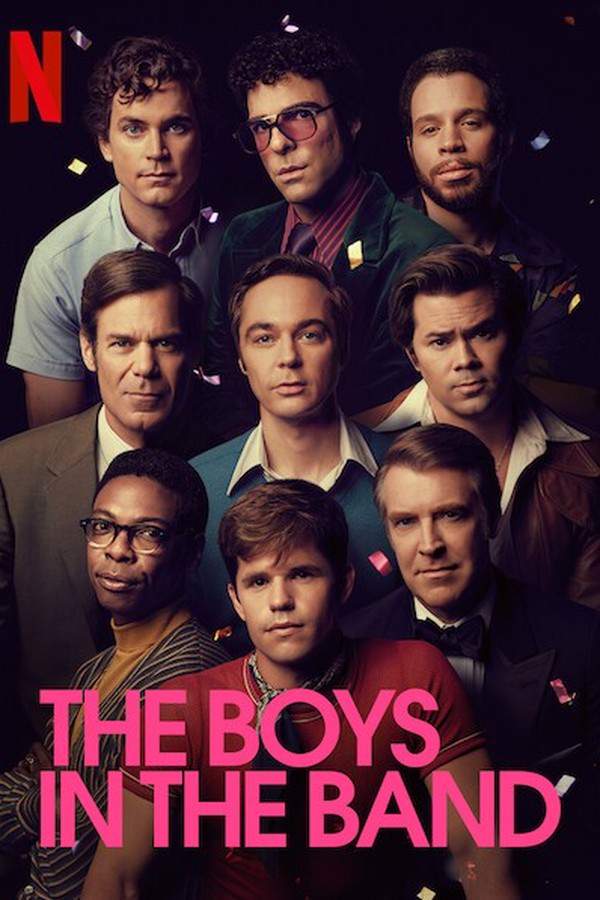
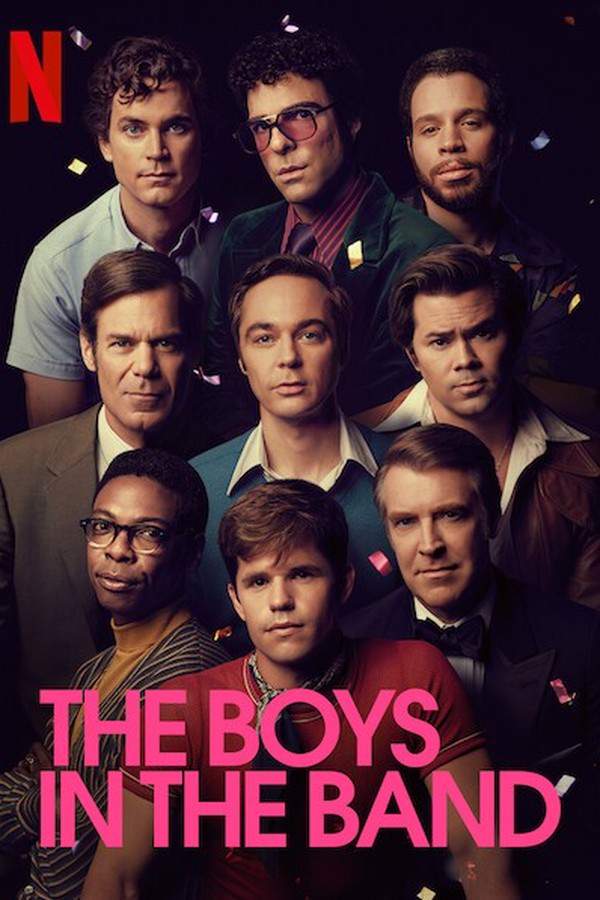
The Boys in the Band (2020) movie poster

Plot Summary

The Boys in the Band (2020) Plot Summary & Ending Explained

Release, runtime and language
2020 · 121 min · English
Echo score 79
Loading streaming availability…
Directed by
Joe Mantello
Starring
Charlie Carver, Matt Bomer, Zachary Quinto, Robin de Jesus, Andrew Rannells, Brian Hutchison

During the 1960s in New York City, a group of close friends, all gay men, plan an intimate gathering. However, the unexpected arrival of a guest disrupts the evening, forcing them to confront long-held secrets and unspoken tensions. As the night progresses, the carefully constructed facade of their camaraderie begins to crumble, revealing vulnerabilities and struggles related to identity and acceptance in a tumultuous era.

On this page (8)
  1. 1 Where to watch
  2. 2 What happens: full plot
  3. 3 Plot questions answered
  4. 4 How it ends
  5. 5 The book behind the movie
  6. 6 Movie threads
  7. 7 Movies like The Boys in the Band
  8. 8 Every angle
Loading streaming availability…

Full plot summary · contains spoilers

What Happens in The Boys in the Band: Full Plot Summary

The whole story of The Boys in the Band (2020) explained, from the opening scene to the final frame: every key event, every twist and what it all adds up to. Read it as a quick recap before the sequel, to check a scene you missed, or to finally understand what really happened.

In 1968, Michael gets ready for a birthday celebration for Harold at his Upper East Side apartment in Manhattan. Just as preparations are underway, he receives an unexpected call from his friend Donald, who arrives earlier than planned due to a canceled psychiatrist appointment. Once Donald is there, Michael reflects sadly on his aging and financially troubled situation. Then, Michael gets an emotional call from his former roommate from Georgetown, Alan, who seems distraught and expresses urgency to speak to Michael in person. Despite knowing Alan's heterosexuality, Michael invites him to join the party, cautioning his guests about Alan's unaware stance on Michael's homosexuality.

As the day transitions into night, Emory arrives accompanied by his partners Hank and Larry, who are having their own relationship troubles. Bernard brings a stack of books for Donald and settles into the evening's festivities. Just when it seems all is well, Alan calls from a payphone, announcing his decision to skip the party and meet Michael for lunch the next day. The mood shifts as Larry and Bernard start dancing to "Heat Wave," joined by Emory and Michael.

To everyone's surprise, Alan decides to show up at the party despite his earlier call. He witnesses Michael and his friends dancing, mistakenly identifying Hank as straight, while he grows uncomfortable with Emory’s overly expressive demeanor. When Michael attempts to take Alan aside for their urgent discussion, Alan skillfully avoids addressing the sensitive topics at hand.

The night also brings an unexpected twist when a hustler named Cowboy arrives sooner than intended, sparking a misunderstanding as he kisses Michael, thinking he is Harold. As the evening continues, Alan exits the upstairs bathroom and declares he is leaving, leading to friction with Emory, who criticizes him for being closeted. Their escalating argument results in Alan throwing a punch at Emory.

With a haze of marijuana, Harold finally arrives and receives Cowboy’s warm greeting. As Michael begins to indulge in drinking and smoking—despite having quit five weeks prior—tensions escalate between him and Harold, with harsh words exchanged. To lighten the mood, Emory brings out Harold's birthday cake and gifts. However, an incoming thunderstorm forces everyone indoors, shifting the atmosphere.

Determined to keep the evening lively, Michael announces a party game involving phone calls to the people they truly love. Participants earn points based on the depth of their conversations. Bernard attempts to reconnect with a teenage crush leading to a disappointing 2 points, while Emory recalls a dentist he once liked, finishing with 3 points. Meanwhile, Hank decides to leave a message for Larry at home and earns 7 points for his effort. Tensions rise with Michael revealing his suspicions about Donald and Larry's history. In an emotional exchange, Larry makes a heartfelt call to Hank, claiming his love and earning 10 points before the two head off upstairs.

Facing Alan again, Michael confronts him about their past, particularly a boy named Justin. Alan's subsequent phone call reveals his true allegiance to his wife, Fran, rather than the past he shared with Michael. As he scores 10 points with his call, he chooses to leave, which leaves Michael feeling defeated.

Before departing, Harold delivers a blunt truth to Michael, reminding him that no matter what, he will always be a homosexual, akin to everyone else at the party. With that, he takes Cowboy and his presents and exits. Emory accompanies a distressed Bernard as they promise to find a way home. Michael, filled with frustration over his friends' struggles with their identities, wishes aloud for a day when they could all stop internalizing their shame. He also confesses to Donald that he remains unaware of what Alan wished to reveal.

As midnight approaches, Michael finds solace in Mass at St. Malachy's. Meanwhile, Donald settles onto Michael's couch, engrossed in "The Golden Notebook." The night continues with Harold and Cowboy in a taxi heading home, Emory and Bernard enjoying late-night coffee, Hank and Larry having a passionate moment in the bedroom, and Alan drowning his sorrows alone at a bar. When Michael's Mass concludes, he steps outside, and in a sudden rush, breaks into a run down the street, embracing the night that lies ahead.
Last updated: November 16, 2024 at 15:20

Was this helpful?

Plot questions answered

The Boys in the Band Plot Explained: Your Questions Answered

The questions people ask most about The Boys in the Band (2020): what happens in the confusing scenes, why the characters do what they do, the twists, hidden details and what the ending means. Each answer contains spoilers.

Q1

Why does Alan show up at the party after calling to cancel?

Alan arrives despite his earlier call canceling because he was struggling with something urgent he needed to discuss with Michael. His decision to show up unannounced reflects his inner conflict, he couldn't wait until lunch the next day, suggesting whatever was troubling him required immediate attention.

Foreshadowing: Alan had earlier called from a payphone expressing urgency to speak with Michael in person.

  • alan
  • party
  • cancel
  • arrival
  • urgency
Q2

Why does Michael invite Alan to the party despite knowing he's straight?

Michael invites Alan because Alan expressed urgency and distress over the phone, claiming he needed to speak with Michael immediately. Despite knowing Alan's heterosexuality, Michael's concern for his former roommate overrides his caution, though he does warn his guests about Alan's unaware stance on their homosexuality.

  • michael
  • alan
  • invitation
  • straight
  • friend
Q3

What is the party game Michael initiates and what does it reveal?

Michael starts a game where guests must call someone they truly love and earn points based on the depth of their conversation. The game forces vulnerable confessions: Larry calls Hank declaring his love (10 points), Hank leaves a message for Larry (7 points), while Bernard's attempt to reach a teenage crush yields only 2 points, exposing their emotional struggles and unexpressed feelings.

Foreshadowing: The game was designed to keep the evening lively and distract from rising tensions.

  • party game
  • phone calls
  • love
  • larry
  • hank
  • confession
Q4

Why does Harold tell Michael he'll always be a homosexual no matter what?

Harold delivers this blunt truth to Michael as a form of tough love, confronting Michael's potential denial or shame about his identity. In the context of 1968, when homosexuality was still criminalized and highly stigmatized, Harold is reminding Michael that his identity is permanent and cannot be changed or escaped, regardless of whatever Alan had revealed or whatever crisis Michael was experiencing.

  • harold
  • michael
  • truth
  • identity
  • homosexual
Q5

Why does Michael start drinking and smoking again despite having quit five weeks prior?

Michael's decision to indulge in alcohol and marijuana stems from the escalating emotional chaos of the party, the confrontation with Alan, the revelations about his friends' relationships, and the overall tension surrounding identity and acceptance. The stress of the evening and his inability to process what's happening with Alan triggers his relapse as a coping mechanism.

Foreshadowing: Michael had been reflecting on his aging and financially troubled situation earlier in the evening, showing his fragile emotional state.

  • michael
  • drinking
  • smoking
  • relapse
  • stress
  • party
Q6

Why does Alan punch Emory during the argument?

Alan punches Emory after Emory criticizes him for being closeted and not accepting his own identity. The comment hits a nerve because Alan has been hiding his true self and struggling with his sexuality. Emory's direct confrontation about his closeted nature triggers Alan's violent reaction, revealing the deep frustration and self-loathing Alan carries.

Foreshadowing: Alan had been uncomfortable with Emory's flamboyant behavior throughout the party.

  • alan
  • emory
  • fight
  • punch
  • closeted
  • argument
Q7

What happens between Larry and Hank during the party?

Larry and Hank, who arrived having relationship troubles, reconcile during the party game. Larry makes a heartfelt phone call to Hank, genuinely declaring his love and earning 10 points. This emotional moment leads to the two heading upstairs together, marking a reconciliation in their relationship.

Foreshadowing: Emory arrived with Hank and Larry, who were already experiencing their own relationship issues.

  • larry
  • hank
  • reconciliation
  • love
  • phone call
  • relationship
Q8

Why does Michael go to Mass at the end of the night?

Michael attends midnight Mass at St. Malachy's seeking solace after the emotionally draining evening. The party has exposed his shame, his friends' struggles with their identities, and his unresolved issues with Alan. Mass represents his attempt to find comfort, answers, or perhaps escape from the overwhelming reality of his life and identity crisis.

  • michael
  • mass
  • church
  • midnight
  • solace
  • end
Q9

Why does Cowboy mistakenly kiss Michael thinking he's Harold?

Cowboy, a hustler hired by Harold for the evening, arrives earlier than expected and encounters Michael first. In the dimly lit apartment, Cowboy mistakes Michael for Harold and kisses him, thinking he's greeting his employer. This misunderstanding creates awkwardness and highlights the chaotic nature of the party.

  • cowboy
  • hustler
  • kiss
  • mistake
  • harold
Q10

Why does Alan choose to call his wife instead of discussing their past with Michael?

Alan calls his wife Fran rather than confronting his shared history with Michael because he has chosen to prioritize his marriage and straight life. During the pivotal phone call, Alan reveals his true allegiance lies with his wife, not with the past he shared with Michael or his former self. This decision to stay closeted and commit to his marriage leaves Michael feeling defeated.

Foreshadowing: Michael confronts Alan about their past and a boy named Justin, pushing Alan to make the phone call.

  • alan
  • wife
  • call
  • marriage
  • fran
  • closet
Q11

What did Alan want to tell Michael during the party?

While the specific revelation remains ambiguous, Alan came intending to confess something from their shared past, likely involving a boy named Justin that Michael mentions during their confrontation. However, Alan ultimately chooses not to disclose this secret, instead calling his wife and leaving. Michael admits at the end that he still doesn't know what Alan wished to reveal, leaving the mystery unresolved.

  • alan
  • secret
  • justin
  • confession
  • reveal

Ending explained

What Happens at the End of The Boys in the Band?

How The Boys in the Band (2020) ends, in short: the final scene, the last twist and what it means for the characters. The full ending explained, with every spoiler, lives on its own page.

Read the full ending explained

The ending of The Boys in the Band is intense and emotionally charged, revealing the deep wounds and complexities of the characters. After a night of heavy drinking, harsh words, and emotional explosions, the party begins to disintegrate. Alan, the only straight guest, tries to confound the group with a phone call, leading to a confrontation about sexuality and identity. Michael, overwhelmed by his own pain and self-hatred, becomes increasingly hostile and racist, revealing how his trauma manifests in cruelty towards those he cares about. The anger and frustration boil over, and Michael attempts to force Alan to confess his sexuality, which ends in Alan leaving abruptly, feeling misunderstood and vulnerable.

As everyone else departs one by one, the film closes with Michael alone, reflecting on the turmoil that just unfolded. He utters the haunting line that he still doesn’t understand anything, symbolizing the ongoing confusion and internal conflict that define him and the group. The ending emphasizes how their shared trauma—stemming from a society that rejects and marginalizes them—continues to weigh heavily on their hearts. Despite moments of closeness and affection, there is a persistent undercurrent of pain, shame, and the desire to be accepted for who they truly are. Ultimately, the film leaves viewers with a raw and honest look at a community grappling with identity, fear, and hope—reminding us of how far they’ve come, and how much further they still need to go. The characters’ struggles with appearances, perception, and self-acceptance echo beyond the party, resonating as a powerful commentary on the enduring challenges faced by many in the LGBTQ+ community.

The Boys in the Band ending explained in full

Movie threads

More Movies Like The Boys in the Band, by Mood & Story

Curated lists built around what makes The Boys in the Band tick: the same mood, the same kind of story or the same emotional payoff. Each list explains why these movies belong together.

Claustrophobic Social Dramas like The Boys in the Band

Intense gatherings where social facades crack under pressure in a single location. If you liked the intense, single-location tension of The Boys in the Band, explore more movies where a social gathering becomes a pressure cooker. These films use a confined setting to force confrontations and unravel secrets, creating a raw and often uncomfortable viewing experience focused on character dynamics.

  • claustrophobic
  • anxious
  • uncomfortable
  • confrontational
  • raw
  • tense
  • Tone: tense, confrontational, anxious
  • Pacing: steady, deliberate build
Why these movies?

The story pattern: Narratives in this thread typically unfold over a short period, often a single evening, within one primary location like an apartment or a dinner party. An inciting incident, such as an unexpected guest, disrupts the equilibrium, leading to a chain reaction of confrontations that expose the characters' vulnerabilities and the truth behind their relationships.

Why they belong together: These movies are grouped by their shared use of a confined setting to create high emotional intensity. They feature a steady, deliberate pacing that builds tension, a dominant tone of anxiety and confrontation, and a focus on the explosive dynamics that occur when people are trapped together with their secrets.

Movies with Bittersweet Revelations like The Boys in the Band

Emotional journeys where confronting painful secrets leads to a weary resolution. Fans of the heavy emotional weight and bittersweet ending of The Boys in the Band will appreciate these films. They explore characters grappling with painful self-discovery and truth, resulting in endings that feel realistically mixed—offering some closure but also acknowledging lasting scars.

  • melancholic
  • introspective
  • raw
  • uncomfortable
  • emotional
  • character study
  • Tone: tense, melancholic, introspective
  • Pacing: steady, character driven
Why these movies?

The story pattern: The narrative pattern involves a catalyst that forces characters to stop ignoring a central, painful truth. The ensuing emotional journey is heavy and introspective, as characters dismantle their own illusions. The climax is not about a simple victory but an acknowledgment of reality, leading to an ending that balances the pain of loss with the clarity of truth.

Why they belong together: This thread groups films that share a profound emotional weight stemming from themes of identity, secret-keeping, and self-loathing. They possess a steady, character-driven pace, a tense and melancholic tone, and critically, they conclude with a bittersweet feeling that reflects the complexity of human emotion and change.

If you liked this

Movies Like The Boys in the Band

Similar movies to The Boys in the Band: the same genre, themes or kind of story. Each one comes with its own plot summary, timeline and ending explained.

Browse all movie summaries

Every angle

The Boys in the Band (2020) Explained: Plot, Ending, Timeline & Characters

Everything about The Boys in the Band in one place: what happens in the plot summary, the timeline in chronological order, the characters and meaning, the ending explained and a spoiler-free summary. What's After the Movie adds the cast, box office and post-credit scenes.

Coming soon on iOS and Android

The Plot Explained Movie Summary App

Plot summaries, endings explained and timelines on your phone. Catch up on any movie in minutes, save your favorites and never miss a twist again.

Be the first to know when we launch. Your email stays private, always.

Learn more about the app