Plot Explained Spoilers guaranteed!
Plot Explained

Browse by genre

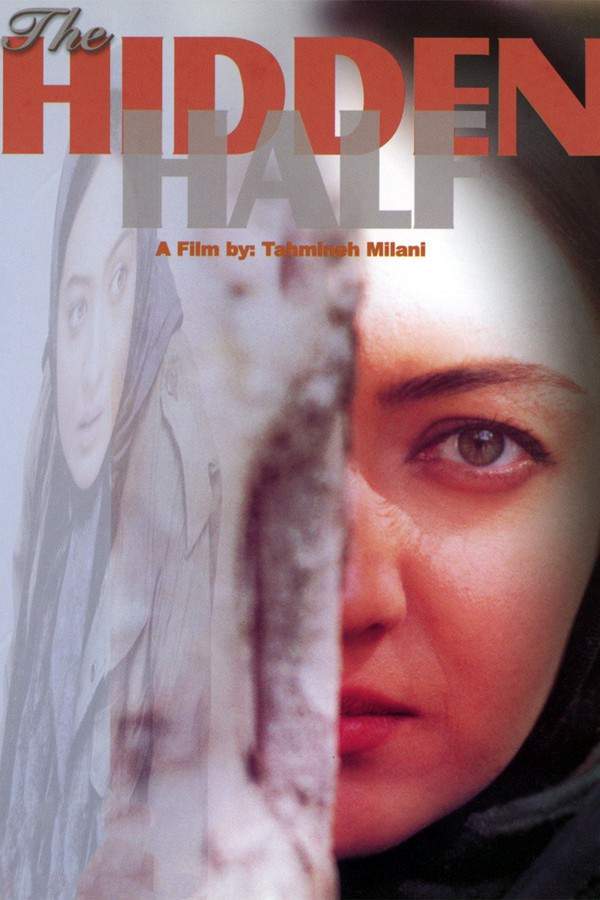
The Hidden Half (2001) movie poster

Plot Summary

The Hidden Half (2001) Plot Summary Explained

Release, runtime and language
2001 · 103 min · Persian
Directed by
Tahmineh Milani

A respected Iranian judge’s world is upended when his wife reveals a hidden past as a former militant. Through her intimate confession, he discovers a life he never knew, forcing him to grapple with the profound implications for his family and career. He must now reconcile his personal beliefs with his professional responsibilities, navigating a complex web of morality and loyalty.

On this page (5)
  1. 1 What happens: full plot
  2. 2 Plot questions answered
  3. 3 Movie threads
  4. 4 Movies like The Hidden Half
  5. 5 Every angle

Full plot summary · contains spoilers

What Happens in The Hidden Half: Full Plot Summary

The whole story of The Hidden Half (2001) explained, from the opening scene to the final frame: every key event, every twist and what it all adds up to. Read it as a quick recap before the sequel, to check a scene you missed, or to finally understand what really happened.

As Fereshteh, portrayed by Niki Karimi, pens her captivating life story in a heartfelt manuscript for her husband, Atila (played by Atila Pesyani), the narrative unfolds like a mesmerizing cinematic puzzle. This tale delves into her younger self at the University of Tehran, unraveling the complexities of her 18-year-old life amid the burgeoning Islamic Revolution of 1978. Her inquisitive nature draws her into the whirlwind of political upheaval spurred by the Shah's downfall, and she immerses herself in a communist group, distributing clandestine flyers, all while putting her safety on the line.

Amid this turbulent backdrop, Fereshteh encounters Roozebeh, an intellectual figure played by Mohammad Nikbin, who serves as a magazine editor and possesses a deep admiration for the ideals stemming from the Mossadeq era. He is equally captivated by Fereshteh's steadfast dedication to her cause. As the government tightens its grip by searching for activists throughout Tehran, Roozebeh offers Fereshteh an opportunity to flee abroad. Yet, torn by her commitment to her beliefs, she hesitates, uncertain if she is ready to abandon her passionate convictions.

In a twist of fate, Roozebeh's wife makes an entrance, unveiling the concealed dimensions of his existence and his familial obligations. This revelation triggers a transformative reaction within Fereshteh, prompting her to scrutinize her bond with the enigmatic Roozebeh. Ultimately, she decides to sever ties with him and embraces a new chapter by marrying her husband, all while choosing not to disclose her past.

However, the truth inevitably surfaces when her husband interviews a woman facing the death penalty in an appeal. In that critical moment, Fereshteh hopes to impart her story, yearning for her husband to hear her with compassion and an open heart. Through this act of sharing, she seeks to bridge the gap between her public persona and the hidden aspects of her identity that she has long kept in the shadows.

Last updated: November 21, 2024 at 10:03

Was this helpful?

Plot questions answered

The Hidden Half Plot Explained: Your Questions Answered

The questions people ask most about The Hidden Half (2001): what happens in the confusing scenes, why the characters do what they do, the twists, hidden details and what the ending means. Each answer contains spoilers.

Q1

Why did Fereshteh keep her past as an activist hidden from her husband?

Fereshteh chose to conceal her revolutionary past because she feared it would destroy her marriage and her husband's career. As a judge's wife living in a society where her past activities could be seen as shameful or dangerous, she believed her history as a communist activist during the Shah's downfall would irreparably damage the life she built. She wanted to protect Atila from the scandal and preserve the stability of their family.

  • fereshteh
  • atila
  • secret past
  • marriage
  • confession
Q2

Why did Fereshteh join a communist group during the Islamic Revolution?

At 18 years old during the 1978 Islamic Revolution, Fereshteh was drawn to the revolutionary fervor sweeping through Tehran. Her inquisitive nature led her to explore political alternatives, and she became committed to communist ideals believing they represented meaningful change. She distributed clandestine flyers despite knowing the activity carried a death penalty, driven by passionate belief in creating a better future.

  • fereshteh
  • communist group
  • revolution
  • activism
  • tehran
Q3

Why did Fereshteh decide to leave Roozebeh?

Fereshteh left Roozebeh when she discovered he was already married. The revelation about his familial obligations shocked her and forced her to reassess both her feelings for him and her own values. Rather than continue a relationship built on incomplete knowledge, she chose to cut ties entirely and pursue a different life path by marrying Atila.

  • fereshteh
  • roozebeh
  • marriage
  • betrayal
  • decision
Q4

Why did Fereshteh choose to reveal her past while her husband was interviewing a death row prisoner?

The moment was symbolically powerful for Fereshteh. When Atila interviewed a woman facing execution for her political activities, Fereshteh realized the irony of her husband judging someone for the very same activism she had participated in. This moment convinced her that if she didn't share her story now, she might never have another chance to be truly known by her husband.

  • death penalty
  • confession
  • interview
  • timing
  • irony
Q5

What happened to Roozebeh after Fereshteh cut ties with him?

The film does not explicitly detail Roozebeh's fate after Fereshteh left him. The focus remains on her decision to end the relationship and move on with her life. Roozebeh disappears from her narrative as she chooses stability with Atila over the uncertain future her revolutionary activities represented.

  • roozebeh
  • aftermath
  • fereshteh
  • ending
Q6

Why did Fereshteh refuse Roozebeh's offer to flee abroad?

Fereshteh was torn between her safety and her commitment to the revolutionary cause. Despite the escalating danger as the government intensified its search for activists in Tehran, she couldn't bring herself to abandon what she believed in. Her passion for the cause and her connection to the movement kept her in Iran, even as the risks grew deadly.

  • fleeing
  • revolution
  • danger
  • roozebeh
  • commitment
Q7

Why was Fereshteh willing to risk her life distributing flyers during the revolution?

Fereshteh's activism was driven by deep ideological conviction. At 18, she genuinely believed in the revolutionary cause and saw political engagement as her duty. The danger only strengthened her resolve, demonstrating how youthful idealism and personal conviction can override self-preservation during times of political upheaval.

  • activism
  • risk
  • revolution
  • ideology
  • flyers
Q8

What did Roozebeh represent to Fereshteh?

Roozebeh represented both intellectual admiration and a possible escape route from her dangerous situation. As a magazine editor with admiration for Mossadeq-era ideals, he was an embodiment of the revolutionary intellectual world sheaspired to be part of. He also offered her a physical escape from the mounting danger, making him a complex figure combining romantic possibility with practical salvation.

  • roozebeh
  • intellectual
  • admiration
  • escape
  • salvation
Q9

Why did Fereshteh write a manuscript about her past for her husband?

Writing the manuscript served as both a confession and a healing process for Fereshteh. It was her way of finally reconciling her public persona with her hidden identity. By putting her story down on paper, she could control how her husband learned the truth, and the act itself became therapeutic, a way to process her turbulent past.

  • manuscript
  • confession
  • healing
  • writing
  • truth
Q10

How did the political climate of 1978 Tehran affect Fereshteh's decisions?

The volatile revolutionary environment shaped every choice Fereshteh made. The Shah's downfall created both opportunity and deadly danger. The government's hunt for activists forced immediate decisions about survival. This high-stakes atmosphere pushed her toward Roozebeh, influenced her to stay or leave, and ultimately led her to seek stability through marriage and secrecy.

  • 1978
  • tehran
  • revolution
  • climate
  • decisions
Q11

What does Fereshteh hope to achieve by revealing her secret to Atila?

Fereshteh hopes for understanding and acceptance rather than judgment. She wants her husband to see her with compassion, recognizing that the woman he married and the activist she once was are both part of who she is. She seeks to bridge the gap between her public and private selves, yearning for authentic connection without the burden of secrets.

  • acceptance
  • understanding
  • compassion
  • marriage
  • truth
Q12

Why did Fereshteh choose to marry Atila instead of continuing her revolutionary life?

After cutting ties with Roozebeh and facing the reality of her dangerous situation, Fereshteh chose a path of safety and normalcy. Marrying Atila represented an escape from the constant threat of discovery and execution. It was a deliberate choice to prioritize personal survival and stability over ideological passion, though she carried the secret of her past into this new life.

  • marriage
  • atila
  • safety
  • stability
  • choice

Movie threads

More Movies Like The Hidden Half, by Mood & Story

Curated lists built around what makes The Hidden Half tick: the same mood, the same kind of story or the same emotional payoff. Each list explains why these movies belong together.

Movies with explosive secrets like The Hidden Half

A character's hidden history threatens to destroy their carefully built life. If you liked The Hidden Half, explore other movies where a character's hidden past dramatically upends their present life. These tense dramas often involve political secrets, hidden identities, or personal betrayals that create heavy moral dilemmas and dangerous consequences.

  • tense
  • unsettling
  • melancholic
  • clandestine
  • dangerous
  • introspective
  • Tone: tense, unsettling, melancholic
  • Pacing: variable, shifting between intimate confession and tense flashbacks
Why these movies?

The story pattern: The narrative centers on a pivotal confession or discovery that exposes a hidden past. This revelation often unfolds through flashbacks or intimate dialogues, creating a dual-timeline structure. The central conflict arises from the collision of this past truth with the protagonist's current identity, relationships, or societal position, forcing a painful reckoning.

Why they belong together: They are grouped by their core narrative engine: a dangerous secret from the past that destabilizes the present. The shared experience is one of suspenseful revelation, heavy emotional weight, and a tense exploration of identity, loyalty, and the consequences of buried truths.

Dramas about tense political marriages like The Hidden Half

Intimate relationships strained by opposing ideologies and state pressure. For viewers who enjoyed the marital tension in The Hidden Half, this list features movies where a couple's relationship is tested by political upheaval, secrets, or conflicting ideologies. These films blend heavy personal drama with broader social commentary, focusing on loyalty and survival.

  • tense
  • clandestine
  • anxious
  • reflective
  • ideological
  • dangerous
  • Tone: tense, reflective, dangerous
  • Pacing: steady, character-driven with moments of high tension
Why these movies?

The story pattern: The plot follows a couple whose relationship is tested not just by personal differences, but by their positions within a repressive political system or a divisive ideological struggle. The home becomes a microcosm of the outside conflict, with intimate conversations carrying the weight of life-and-death stakes. The journey is one of discovering the true beliefs of one's partner and navigating the immense risk this poses.

Why they belong together: These films are united by their central focus on a marriage under the extreme pressure of politics. They share a claustrophobic, reflective mood, a high-stakes tension derived from state surveillance or ideological danger, and a heavy emotional weight centered on betrayal and the cost of loyalty.

If you liked this

Movies Like The Hidden Half

Similar movies to The Hidden Half: the same genre, themes or kind of story. Each one comes with its own plot summary, timeline and ending explained.

Browse all movie summaries

Every angle

The Hidden Half (2001) Explained: Plot, Timeline & Characters

Everything about The Hidden Half in one place: what happens in the plot summary, the timeline in chronological order, the characters and meaning and a spoiler-free summary. What's After the Movie adds the cast, box office and post-credit scenes.

Coming soon on iOS and Android

The Plot Explained Movie Summary App

Plot summaries, endings explained and timelines on your phone. Catch up on any movie in minutes, save your favorites and never miss a twist again.

Be the first to know when we launch. Your email stays private, always.

Learn more about the app