Plot Explained Spoilers guaranteed!
Plot Explained

Browse by genre

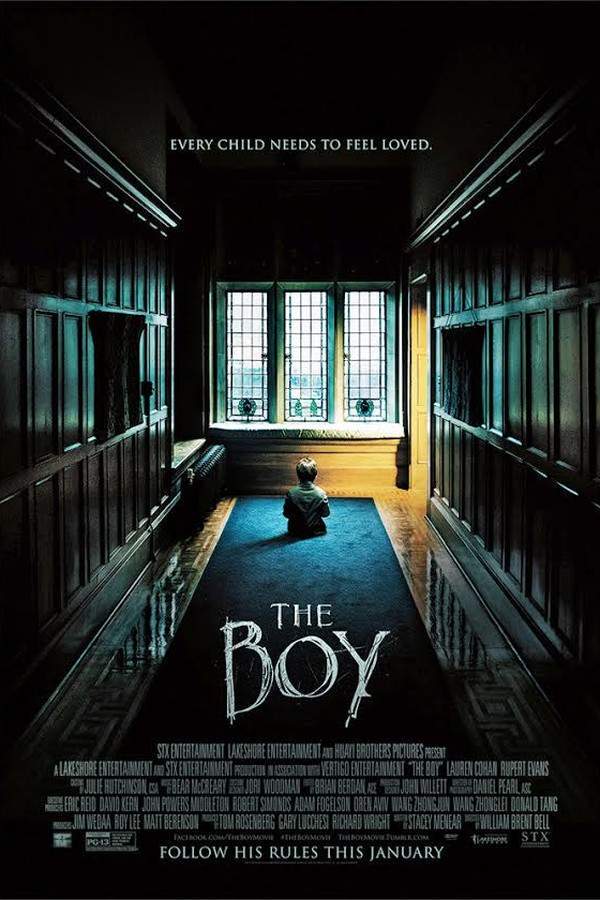
The Boy (2016) movie poster

Plot Summary

The Boy (2016) Plot Summary Explained

Release, runtime and language
2016 · 97 min · English
Directed by
William Brent Bell
Starring
Jim Norton, Rupert Evans, Lauren Cohan, Ben Robson, Diana Hardcastle, James Russell
Budget
$10M

A young American nanny, Greta, accepts a position caring for a young boy in a secluded English village. She soon discovers the family’s unsettling secret: they maintain the illusion that their deceased son still lives through a remarkably realistic doll. Disregarding the family's strict rules, Greta investigates further, inadvertently unleashing a disturbing and inexplicable force that threatens to unravel her sanity and expose a terrifying truth.

On this page (6)
  1. 1 Where to watch
  2. 2 What happens: full plot
  3. 3 Plot questions answered
  4. 4 Movie threads
  5. 5 Movies like The Boy
  6. 6 Every angle

Where to watch

Where to Watch The Boy (2016)

Where can you watch The Boy? Stream, rent or buy it in the US, including on Amazon Video, Apple TV Store and Fandango At Home: current JustWatch availability with up-to-date prices.

Streaming availability powered by JustWatch

Full plot summary · contains spoilers

What Happens in The Boy: Full Plot Summary

The whole story of The Boy (2016) explained, from the opening scene to the final frame: every key event, every twist and what it all adds up to. Read it as a quick recap before the sequel, to check a scene you missed, or to finally understand what really happened.

In the opening sequence, we meet Greta Evans, played by Lauren Cohan, as she travels in a classic British taxi. The path to her destination is secluded, enveloped by dense woods. Awakening from a brief slumber, she steps out of the vehicle, taking in the grandeur of a magnificent manor. The taxi driver informs her that he has already carried her belongings inside while she was dozing. He advises her to wait in the parlor before leaving in the taxi.

As Greta enters the house, she contemplates removing her shoes. After placing them by the entrance, she calls out but finds no one. Hearing a rustle from upstairs, she cautiously ascends the staircase, noting an enormous family portrait of the Heelshires that exudes an aristocratic aura. Calling out again in vain, she explores a room filled with vintage toys. She chuckles while inspecting them but is abruptly startled by a figure in the doorway—it's Malcolm, portrayed by Rupert Evans, the weekly grocery boy for the Heelshire family. As they engage in conversation, it's evident that he has taken an immediate liking to Greta, yet she remains courteous and distant. Malcolm informs her that she is the first American nanny they have hired, having recently moved to the UK.

The conversation turns whimsical as Malcolm shares that his grandmother reads tea leaves while his mother reads palms. When asked what he reads, he humorously responds, "with gum," prompting Greta to give him her chewed gum. His subsequent attempts at palm reading fall short, and he nervously hints at her past, leading to an abrupt change in Greta's demeanor. Curious about the Heelshire family, she inquires about them, especially since no one has welcomed her yet.

Malcolm describes the Heelshires as kind and generous but is cut off when Mrs. Heelshire, played by Diana Hardcastle, makes her entrance. She immediately disapproves of Greta, particularly her lack of shoes. Greta rushes to retrieve them, only to discover they are missing. Mrs. Heelshire dismisses it lightly, claiming, "Brahms likes to play." She insists Greta change into different shoes for their introduction to the family.

As they approach the parlor, the soft voice of Mr. Heelshire, played by James Russell, can be heard talking to Brahms. When he stands, Greta realizes that Brahms is merely a life-sized porcelain doll, which she initially finds amusing until she notices the seriousness etched on the Heelshires' faces. Malcolm tries to lighten the mood by greeting Brahms as if he were a human, which wins Mrs. Heelshire's approval.

During her introduction tour, Greta learns how crucial it is to treat Brahms with care. Mrs. Heelshire shows her the peculiarities of their household, including unique food storage practices and household traps for vermin. Mr. Heelshire shares that the attic is off-limits and emphasizes the importance of following specific daily routines for Brahms, expressing hopes that Greta will be more successful than previous nannies.

As she settles in, we're shown a glimpse of Greta's troubled past during a conversation with her friend, Sandy. We learn that Greta left a difficult relationship with someone named Cole, which adds layers to her character and personal stakes. Although uneasy about her strange new job, Greta is determined to make it work.

Following an unsettling night filled with mysterious occurrences, Greta's apprehensions grow when the doll exhibits signs of movement and agency. After some exploration with Malcolm, whom she grows closer to, she comes to terms with the notion that the doll might be more than a simple relic. Not only does Brahms appear to have an almost sentient quality, but there are also echoes of his tragic past involving a fire and a missing girl.

As the plot thickens, the dynamics shift. The Heelshires' absence allows for a chilling environment where all rules are tested. Following eerie incidents and moments of fleeting connection with Malcolm, Greta finds herself trapped in a cycle of care for the doll, now intertwined with her own survival against the haunting presence of Brahms.

With escalating tension, the film explores themes of love, loss, and the fine line between reality and the supernatural. The climactic encounters force Greta to confront both her past and her fight for freedom against the sinister legacy of the Heelshires and the doll. In a desperate bid to save both herself and Malcolm from the perils that lie within the walls of Heelshire Manor, Greta must gather not only her strength but also her wits to face the darkness that lingers in the shadows.

In the end, Greta's journey reveals that familial ties can be both nurturing and toxic, leading her to a gripping showdown that blurs the lines between protector and prisoner. As she finally escapes the clutches of Brahms, viewers are left wondering whether the ominous legacy truly ends or simply lies in wait for another unsuspecting soul.

Last updated: October 27, 2024 at 18:35

Was this helpful?

Plot questions answered

The Boy Plot Explained: Your Questions Answered

The questions people ask most about The Boy (2016): what happens in the confusing scenes, why the characters do what they do, the twists, hidden details and what the ending means. Each answer contains spoilers.

Q1

Why do the Heelshires treat the doll as their living son?

The Heelshires maintain the illusion that their deceased son Brahms is still alive through the life-sized porcelain doll because they are unable to cope with the trauma of losing their child. Mrs. Heelshire specifically enforces strict rules about treating Brahms as a real boy, insisting on proper introductions, appropriate footwear, and daily care routines. This behavior stems from unresolved grief that has manifested into a toxic, delusional attachment to the doll.

Foreshadowing: Earlier, Mrs. Heelshire immediately disapproves of Greta's bare feet, insisting she wear different shoes for her 'introduction' to Brahms.

  • Heelshires
  • grief
  • porcelain doll
  • parental loss
  • delusion
Q2

What happened to the real Brahms?

The real Brahms was the Heelshires' young son who died in a fire that destroyed the family's private wing of the manor years before the story takes place. The tragedy also involved a young girl who went missing during the same fire. The Heelshires never properly mourned this loss, instead creating the delusional world around the doll to replace their lost child.

Foreshadowing: Malcolm hints at Brahms' tragic past involving a fire and a missing girl after Greta discovers the doll exhibits strange behavior.

  • real Brahms
  • fire
  • missing girl
  • Heelshire family tragedy
Q3

Why is the attic forbidden in the house?

The attic is off-limits because it contains the burned remnants of the original Brahms' bedroom from the fire that killed him. Mr. Heelshire explicitly tells Greta that the attic is forbidden and must remain locked. This area serves as the physical reminder of the tragedy the Heelshires are desperately trying to forget, and keeping it sealed helps maintain their illusion that Brahms never died.

Foreshadowing: During the introduction tour, Mr. Heelshire emphasizes the attic is off-limits before Greta even finishes settling in.

  • attic
  • forbidden room
  • fire
  • locked door
  • Heelshire secret
Q4

What happened to the previous nannies at Heelshire Manor?

The previous nannies all failed to meet the Heelshires' expectations and left the position. Mrs. Heelshire expresses hope that Greta will be more successful than previous nannies, implying they either quit due to the bizarre demands or were dismissed for not properly caring for the doll. The supernatural events that Greta experiences suggest the previous nannies may have also encountered the doll's disturbing behavior, leading to their departure.

Foreshadowing: Mrs. Heelshire shows unusual interest in Greta's qualifications and expresses hope she will succeed where others failed.

  • previous nannies
  • failed caretakers
  • Heelshire household
  • job history
Q5

Is Brahms the doll actually alive?

The film leaves this ambiguous, but evidence suggests the doll moves through supernatural means rather than being mechanically operated. Brahms exhibits agency, moving on his own, appearing in different locations, and demonstrating knowledge he shouldn't have. Whether this is a ghost, a supernatural entity, or the family's collective delusion manifesting into something tangible remains deliberately unclear, adding to the horror.

Foreshadowing: After the first unsettling night, Greta discovers the doll has moved positions and shows signs of agency, despite being completely still when she fell asleep.

  • supernatural
  • haunted doll
  • living doll
  • paranormal activity
  • Brahms entity
Q6

What caused the fire at Heelshire Manor?

The fire that killed the real Brahms was an accident, though the exact cause is not detailed in the summary. It occurred in the private wing of the manor years before the story. The fire resulted in Brahms' death and the disappearance of a young girl who was present during the incident. This tragic event is the catalyst for the Heelshires' descent into delusion and their obsessive attachment to the porcelain doll.

Foreshadowing: Greta uncovers Brahms' history involving a fire while researching the doll's background and connecting with Malcolm.

  • fire
  • tragedy
  • Heelshire death
  • childhood death
  • manor fire
Q7

Who is the missing girl connected to Brahms?

The missing girl was a child who was present at Heelshire Manor during the fire that killed the real Brahms. She disappeared during the same incident that claimed Brahms' life. Her fate remains unknown, either she died in the fire or escaped and ran away. This tragedy is why the Heelshires have such a dark secret and why they maintain the doll illusion, as they may feel guilt over the girl's disappearance.

Foreshadowing: Malcolm mentions that Brahms' history involves both a fire and a missing girl, hinting at the dual tragedy that haunts the family.

  • missing girl
  • fire incident
  • Heelshire secret
  • tragedy
  • disappeared child
Q8

Why does Greta get trapped at the manor?

Greta becomes trapped at Heelshire Manor because the supernatural entity controlling the doll, the manifestation of Brahms, won't allow her to leave. After breaking the Heelshires' strict rules and discovering the truth about the doll, Greta is drawn deeper into the household's twisted reality. The Heelshires' departure leaves her alone with Brahms, and the doll's supernatural presence gradually isolates her, cutting off her escape routes and forcing her to care for him.

Foreshadowing: The Heelshires' absence creates the perfect conditions for Brahms to trap Greta, as the rules that kept previous nannies safe are no longer enforced.

  • trapped
  • escape
  • isolation
  • imprisonment
  • gaslighting
  • control
Q9

What is the ending of The Boy explained?

In the ending, Greta manages to escape from Heelshire Manor after a final confrontation with Brahms. However, the film deliberately leaves ambiguity about whether the threat is truly over. The final shots suggest that Brahms, or whatever supernatural force inhabits the doll, may still be present, waiting for another caretaker. Greta's escape represents her breaking free from the toxic familial bonds and gaslighting, but the lingering question is whether the malevolent legacy has truly ended or simply found a new victim.

Foreshadowing: The film's ambiguous ending reflects the unresolved nature of the Heelshires' grief and the supernatural entity that may persist beyond Greta's escape.

  • ending
  • finale
  • escape
  • resolution
  • ambiguous ending
  • sequel setup
Q10

Why does Mrs. Heelshire dislike Greta immediately?

Mrs. Heelshire disapproves of Greta from the moment they meet because Greta violates the household's strict protocols before even being properly introduced. Greta enters without shoes, which Mrs. Heelshire considers disrespectful to Brahms. Additionally, Greta is American and different from the previous British nannies, making her an outsider from the start. Mrs. Heelshire's coldness also stems from her possessive relationship with the doll, she views any new caretaker as a threat to her role as Brahms' primary guardian.

Foreshadowing: Mrs. Heelshire's first words to Greta are about her bare feet, establishing her strict adherence to rules and immediate judgment.

  • Mrs. Heelshire
  • conflict
  • disapproval
  • first meeting
  • household rules
Q11

What does Brahms want from Greta?

Brahms, as the supernatural entity, wants Greta to become his permanent caretaker, essentially replacing the mother figure he lost. The doll's behavior suggests a childlike need for attention, care, and obedience. When Greta breaks the rules or tries to leave, Brahms becomes aggressive and violent, demonstrating that he demands absolute compliance. His wants reflect the Heelshires' own twisted desire to maintain the illusion of having a living son.

Foreshadowing: Brahms' disturbing behavior escalates specifically when Greta attempts to assert independence or disregard his care routine.

  • Brahms' wants
  • caretaker
  • obedience
  • control
  • child entity
  • demands
Q12

Is the man in the basement the real Brahms?

Without specific details about a basement scene in the provided summary, this appears to be a reference to the twist in the sequel or expanded lore. Based on the pattern of the film, if a man in the basement is revealed, it would likely connect to the real Brahms, either suggesting he survived the fire as an adult or that someone has been hiding within the manor. The Heelshire family's secrets involve deception, so a hidden living person would fit their pattern of maintaining false realities.

Foreshadowing: The Heelshires keep many secrets, including the locked attic and the circumstances of Brahms' death, suggesting they are capable of hiding even more.

  • basement
  • hidden person
  • secret
  • reveal
  • twist
  • real Brahms

Movie threads

More Movies Like The Boy, by Mood & Story

Curated lists built around what makes The Boy tick: the same mood, the same kind of story or the same emotional payoff. Each list explains why these movies belong together.

Movies about psychological gaslighting like The Boy

A protagonist is trapped and isolated, their sanity questioned by a menacing environment. If you liked the unnerving psychological manipulation in The Boy, this thread features movies where characters are similarly trapped and gaslit, fighting to maintain their sanity against a sinister force. These stories focus on slow-building dread, domestic terror, and the horrifying question of whether the threat is real or imagined.

  • claustrophobic
  • paranoid
  • gaslighting
  • psychological
  • unsettling
  • tense
  • Tone: tense, paranoid, unsettling
  • Pacing: steady, slow burn
Why these movies?

The story pattern: The narrative follows a character, often an outsider, entering a confined and controlled environment. They encounter inexplicable events and are systematically disbelieved or manipulated by those around them. The story unfolds as an internal and external battle for survival, where distinguishing truth from deception becomes the central conflict.

Why they belong together: These movies are grouped by their shared foundation of psychological dread, built on isolation, gaslighting, and a claustrophobic setting. They prioritize a tense, uneasy mood over graphic violence, creating a deeply unsettling experience that lingers long after the film ends.

Movies about grief-haunted houses like The Boy

A family's unresolved trauma manifests as a supernatural presence within their home. For viewers who appreciated how The Boy used a supernatural premise to explore parental grief, this thread collects similar films where a family's tragedy literally haunts their home. These movies blend emotional depth with supernatural terror, often featuring ambiguous threats rooted in profound loss.

  • eerie
  • heavy
  • unsettling
  • grief
  • supernatural
  • domestic
  • Tone: heavy, eerie, tense
  • Pacing: steady, deliberate
Why these movies?

The story pattern: The plot revolves around a family attempting to cope with a devastating loss, often by creating a dangerous illusion or denying reality. An outsider enters this dysfunctional environment and uncovers the secret, inadvertently awakening the emotional and supernatural forces festering within the household. The conflict is as much about confronting painful truths as it is about surviving a ghost.

Why they belong together: These films are united by their central theme of grief as a catalyst for horror. They share a heavy emotional weight, a tense and eerie atmosphere, and a setting that acts as a prison for memories. The supernatural threat is intrinsically linked to the characters' psychological states.

If you liked this

Movies Like The Boy

Similar movies to The Boy: the same genre, themes or kind of story. Each one comes with its own plot summary, timeline and ending explained.

Browse all movie summaries

Every angle

The Boy (2016) Explained: Plot, Timeline & Characters

Everything about The Boy in one place: what happens in the plot summary, the timeline in chronological order, the characters and meaning and a spoiler-free summary. What's After the Movie adds the cast, box office and post-credit scenes.

Coming soon on iOS and Android

The Plot Explained Movie Summary App

Plot summaries, endings explained and timelines on your phone. Catch up on any movie in minutes, save your favorites and never miss a twist again.

Be the first to know when we launch. Your email stays private, always.

Learn more about the app