Plot Explained Spoilers guaranteed!
Plot Explained

Browse by genre

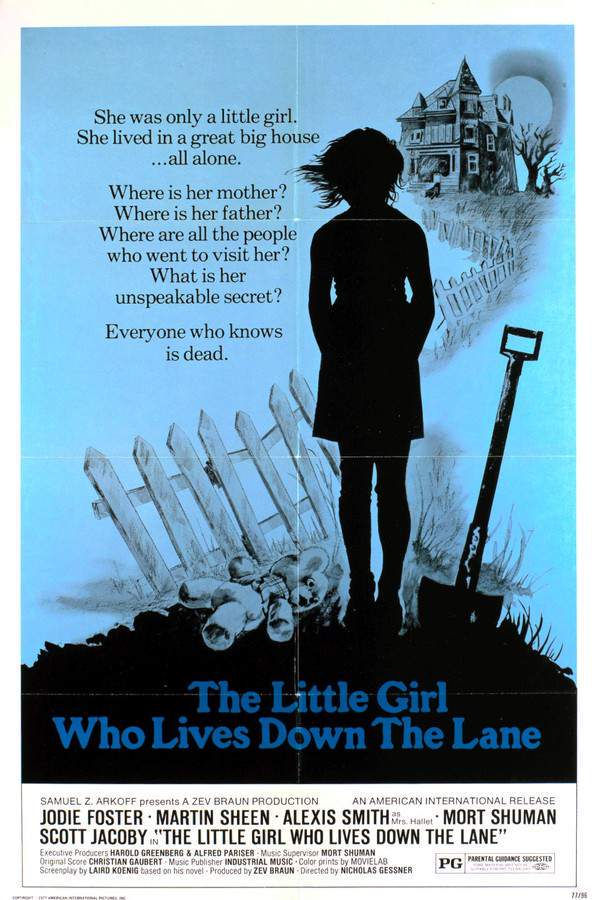
The Little Girl Who Lives Down the Lane (1977) movie poster

Plot Summary

The Little Girl Who Lives Down the Lane (1977) Plot Summary Explained

Release, runtime and language
1977 · 100 min · English
Loading streaming availability…
Directed by
Nicolas Gessner
Starring
Jodie Foster, Martin Sheen, Alexis Smith, Clesson Goodhue, Dorothy Davis, Hubert Noël

In a quiet New England town, thirteen-year-old Rynn Jacobs carefully guards her secrets, avoiding her landlady and the unsettling attention of Frank. With the support of a friendly neighbor named Mario, she must confront a web of deception and peril to safeguard a hidden truth about her family's past.

On this page (6)
  1. 1 Where to watch
  2. 2 What happens: full plot
  3. 3 Plot questions answered
  4. 4 Movie threads
  5. 5 Movies like The Little Girl Who Lives Down the Lane
  6. 6 Every angle
Loading streaming availability…

Full plot summary · contains spoilers

What Happens in The Little Girl Who Lives Down the Lane: Full Plot Summary

The whole story of The Little Girl Who Lives Down the Lane (1977) explained, from the opening scene to the final frame: every key event, every twist and what it all adds up to. Read it as a quick recap before the sequel, to check a scene you missed, or to finally understand what really happened.

As the witching hour of Halloween draws near, thirteen-year-old Rynn Jacobs finds herself isolated on her birthday, starkly contrasting the usual celebrations associated with this time of year. Having recently moved from England with her father, Lester Jacobs, a passionate poet, Rynn struggles to adapt to her new seaside community. Her solitude is disrupted by the unwelcome intrusion of Frank Hallet, the adult son of their landlady, Cora Hallet, who makes unwanted advances toward her.

The following day, Cora Hallet’s intrusive curiosity escalates as she inspects the garden before storming into the Jacobs' home, bombarding Rynn with invasive questions about herself and her father. Rynn tries to deflect Cora's inquiries, but Cora responds with hostility and condescension, relentlessly probing for secrets that are none of her business. The tension intensifies when Cora insists on retrieving jelly glasses left in the cellar, only to be met with Rynn's firm resistance.

As events unravel, it becomes clear that Cora is hell-bent on uncovering the hidden truths surrounding Rynn and her father—a pursuit that tragically leads to her own demise. In her reckless attempt to collect the forgotten glassware, Cora uncovers a concealed cellar, with catastrophic results. With Cora’s lifeless body sprawled at the bottom of the trapdoor, Rynn is thrust into a confrontation with the darker facets of human nature.

To cover her tracks, Rynn attempts to flee the ominous site in her car, but disaster strikes when the engine refuses to start. Just then, Mario, a teenager and nephew of Officer Miglioriti, unexpectedly appears, coming to her aid by driving the vehicle back into town. Rynn, grateful for his assistance, offers him a comforting meal.

That evening, the mood shifts as Officer Miglioriti arrives with unsettling news: Frank Hallet has reported his mother missing. The officer’s inquiries about Rynn's father are met with vague responses from Mario, who takes it upon himself to guard the Jacobs' family secrets. Later, Frank, enshrouded in suspicion and malice, shows up at their doorstep, heightening the tension further by committing a cruel act against Rynn's cherished pet hamster. Mario fiercely chases Frank away, determined to protect Rynn from the escalating threat.

Amidst the backdrop of uncertainty, Rynn slowly begins to let her guard down around Mario, her unexpected confidant. The weight of her troubled past unravels, revealing a tapestry woven with sorrow and desperation. Her father, motivated by love and sacrifice, had moved them to America in an effort to shield Rynn from her mother’s toxic influence. Tragically, he made the ultimate sacrifice, surrendering his life to the ocean's depths, leaving behind a cryptic legacy: a jar of potassium cyanide, disguised as a soothing remedy for the woman who would soon assume his role in their lives.

The bond Rynn has developed with Mario blossoms into a tender romance, nurtured by shared secrets and a solemn duty to bury her father's remains in their backyard. However, the cold grip of winter brings an unexpected curveball—Mario falls ill due to pneumonia, casting a shadow over their newfound love. While he recuperates in bed, Officer Miglioriti returns, suspicious about Rynn's obscured truth, setting off a series of events that tests their relationship.

Alone in the bleak corridors of a hospital, Rynn faces her solitude as she visits Mario, with each moment deepening her longing. Meanwhile, Frank reemerges like a ghost from Rynn's past, endangering the precarious balance she has managed to forge. With sinister threats and blackmail lurking in the shadows, Rynn finds herself in a cruel position—comply with Frank's demands or risk losing everything in her quest for silence.

In a calculated gamble, Rynn concedes to Frank's ultimatum, yet her own plan is already in motion. As they sit together, sipping tea and nibbling on almond cookies, the poison she had meticulously prepared takes effect, unfurling a dark tale of revenge that looms like a storm over their fateful encounter.
Last updated: November 17, 2024 at 20:18

Was this helpful?

Plot questions answered

The Little Girl Who Lives Down the Lane Plot Explained: Your Questions Answered

The questions people ask most about The Little Girl Who Lives Down the Lane (1977): what happens in the confusing scenes, why the characters do what they do, the twists, hidden details and what the ending means. Each answer contains spoilers.

Q1

Why does Rynn's father kill himself?

Rynn's father, Lester Jacobs, moved with his daughter from England to America to escape Rynn's toxic and abusive mother. He ultimately committed suicide by drowning in the ocean, leaving behind a cryptic jar of potassium cyanide disguised as a remedy, presumably for Rynn to use as protection in case her mother ever found them.

  • lester jacobs
  • father suicide
  • potassium cyanide
  • escaping mother
Q2

How does Cora Hallet die?

Cora dies after falling through a concealed trapdoor in the Jacobs' cellar. She had barged into the home demanding to retrieve jelly glasses she'd left there, ignoring Rynn's objections. While searching for the glasses, she discovered the hidden trapdoor and fell to her death at the bottom.

Foreshadowing: Earlier, Cora insists on retrieving the jelly glasses, which sets the tragic event in motion.

  • cora hallet
  • cellar death
  • trapdoor
  • fall
Q3

Why does Rynn poison Frank?

Rynn poisons Frank because he blackmails her, threatening to expose her father's death and her living alone if she doesn't comply with his demands. Faced with losing everything and being taken away, Rynn decides to eliminate the threat by serving him tea with the potassium cyanide her father left behind.

  • frank hallet
  • poisoning
  • blackmail
  • potassium cyanide
Q4

What is the jar of potassium cyanide for?

The jar of potassium cyanide was left by Rynn's father as a grim form of protection. He had disguised it as a soothing remedy, presumably intending for Rynn to use it against her mother if the toxic woman ever tracked them down. Rynn ultimately uses it to poison Frank when he threatens to expose her secrets.

Foreshadowing: Rynn reveals her father's dark legacy when explaining why they moved to America.

  • potassium cyanide
  • poison
  • father legacy
  • protection
Q5

Why is Rynn living alone without her father?

Rynn lives alone because her father committed suicide shortly after they moved to America. He drowned in the ocean, leaving her to fend for herself while keeping his death a secret. She maintains the deception that he is still alive to avoid being sent to an orphanage or back to her abusive mother.

  • rynn alone
  • father death
  • secret
  • living independently
Q6

How does Mario become Rynn's ally?

Mario first helps Rynn when her car won't start after she attempts to flee following Cora's death. He drives her back into town and later deflects Officer Miglioriti's questions about her father. Over time, Rynn trusts him with her secrets, and their bond evolves into a romance. He helps her bury her father's remains in the backyard.

  • mario
  • ally
  • romance
  • nephew of officer
Q7

What is Frank blackmailing Rynn about?

Frank blackmails Rynn by threatening to report her father missing and expose that she's living alone. He knows she has secrets to hide and uses this leverage to force her into compliance. His earlier unwanted advances and cruel act of killing her hamster demonstrate his predatory nature.

  • frank blackmail
  • threats
  • exposure
  • coercion
Q8

Why does Frank kill Rynn's hamster?

Frank kills Rynn's pet hamster as a cruel act of intimidation and malice. After his mother Cora goes missing and Frank reports her disappearance, he shows up at Rynn's doorstep and deliberately harms her cherished pet to unsettle and control her, demonstrating his predatory and vindictive personality.

  • frank
  • hamster cruelty
  • intimidation
  • pet killing
Q9

Why does Rynn refuse to let Cora get the jelly glasses?

Rynn desperately tries to prevent Cora from entering the cellar because she knows about the concealed trapdoor and fears Cora will discover it. If Cora found the trapdoor, she might uncover whatever secrets Rynn is hiding, eventually leading to the truth about Rynn's father.

  • cellar
  • trapdoor
  • resistance
  • secrets
Q10

Why does Mario get sick?

Mario contracts pneumonia during the cold winter months, forcing him to stay in the hospital. This illness creates a significant obstacle in his relationship with Rynn, leaving her isolated and vulnerable just as Frank's threats intensify.

  • mario illness
  • pneumonia
  • hospital
  • isolation

Movie threads

More Movies Like The Little Girl Who Lives Down the Lane, by Mood & Story

Curated lists built around what makes The Little Girl Who Lives Down the Lane tick: the same mood, the same kind of story or the same emotional payoff. Each list explains why these movies belong together.

Movies about isolated guardians of secrets like The Little Girl Who Lives Down the Lane

Isolated individuals must guard a dangerous truth from a hostile world. If you liked the tense secrecy and defensive isolation in 'The Little Girl Who Lives Down the Lane', explore these films. This thread gathers thrillers and dramas where solitary characters, often young or vulnerable, fiercely protect a hidden truth from predatory or suspicious forces, creating a mood of claustrophobic suspense.

  • lonely
  • tense
  • claustrophobic
  • paranoid
  • melancholic
  • slow burn
  • Tone: dark, tense
  • Pacing: steady
Why these movies?

The story pattern: The narrative revolves around a single, resourceful character managing a high-stakes secret, often related to a crime or traumatic past. The plot is driven by external threats who suspect the truth, leading to a psychological cat-and-mouse game where the protagonist's intelligence and resolve are constantly tested, culminating in a confrontation that secures their secret at a moral cost.

Why they belong together: They are grouped by their shared oppressive mood of solitude and constant threat, a slow-burn structure that builds dread around a central mystery, and protagonists whose defining trait is their fierce, almost feral, independence in the face of danger.

Atmospheric slow burn thrillers in isolated settings like The Little Girl Who Lives Down the Lane

Quiet, isolated settings where a sinister threat simmers beneath a placid surface. For viewers who appreciated the oppressive, small-town tension of 'The Little Girl Who Lives Down the Lane', this collection features similar movies. These films use a steady pace and a quiet, rural or suburban setting to build a palpable sense of dread, focusing on psychological unease and the threat posed by disturbing human behavior.

  • tense
  • oppressive
  • slow burn
  • claustrophobic
  • menacing
  • melancholic
  • Tone: dark, oppressive
  • Pacing: steady, methodical
Why these movies?

The story pattern: Stories unfold methodically within a confined, often picturesque locale that contrasts sharply with the unfolding horror. The narrative is driven by the intrusion of a sinister element—a predatory person or a buried secret—into a fragile ecosystem. The pacing is deliberate, focusing on atmosphere and building unease rather than action, leading to explosive, often violent, culminations.

Why they belong together: These films share a specific cinematic DNA: a STEADY pace that prioritizes atmosphere over plot speed, a DARK tone rooted in realistic human menace, and a HIGH intensity fueled by the claustrophobia of an isolated setting where escape is difficult and help is unavailable.

If you liked this

Movies Like The Little Girl Who Lives Down the Lane

Similar movies to The Little Girl Who Lives Down the Lane: the same genre, themes or kind of story. Each one comes with its own plot summary, timeline and ending explained.

Browse all movie summaries

Every angle

The Little Girl Who Lives Down the Lane (1977) Explained: Plot, Timeline & Characters

Everything about The Little Girl Who Lives Down the Lane in one place: what happens in the plot summary, the timeline in chronological order, the characters and meaning and a spoiler-free summary. What's After the Movie adds the cast, box office and post-credit scenes.

Coming soon on iOS and Android

The Plot Explained Movie Summary App

Plot summaries, endings explained and timelines on your phone. Catch up on any movie in minutes, save your favorites and never miss a twist again.

Be the first to know when we launch. Your email stays private, always.

Learn more about the app