

Plot Explained Spoilers guaranteed!
Plot Explained

Browse by genre

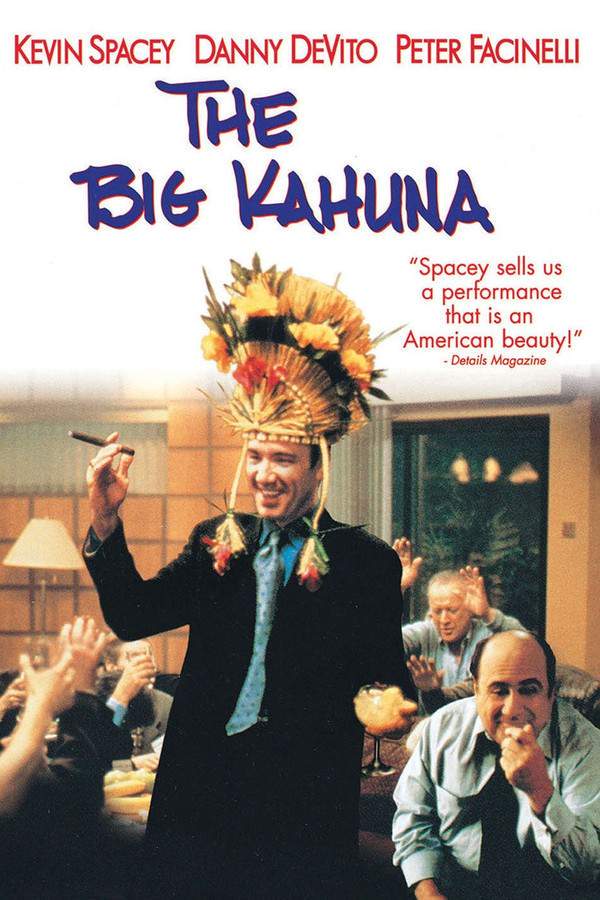
The Big Kahuna (1999) movie poster

Timeline

The Big Kahuna (1999) Timeline Explained – Every Event in Order

Release, runtime and language
1999 · 90 mins · English
JustWatch #28,897 3
Directed by
John Swanbeck
Starring
Kevin Spacey, Danny DeVito, Peter Facinelli, Paul Dawson, Frank L. Messina, Christopher Donahue
Budget
$7M

Three industrial‑lubricant salesmen sit in their company’s hospitality suite at a manufacturers’ convention, anxiously awaiting the arrival of the influential “big kahuna,” Dick Fuller. They hope to convince him to place a pivotal order that could rescue the firm’s faltering sales.

On this page (6)
  1. 1 Where to watch
  2. 2 Events in order (11)
  3. 3 Timeline questions answered
  4. 4 Movie threads
  5. 5 Movies like The Big Kahuna
  6. 6 Every angle

Where to watch

Where to Watch The Big Kahuna (1999)

Where can you watch The Big Kahuna? Stream, rent or buy it in the US, including on History Vault and Fandango At Home: current JustWatch availability with up-to-date prices.

Streaming availability powered by JustWatch

11 events in order · contains spoilers

The Big Kahuna Timeline: Events in Chronological Order

Every key event of The Big Kahuna (1999) in order, scene by scene, with when and where it takes place. Use it to untangle flashbacks, time jumps and parallel storylines, to refresh your memory before the sequel or to find the exact scene you are thinking of.

  1. Arrival at Wichita convention

    Larry Mann, Phil Cooper, and Bob Walker arrive at a trade convention in Wichita, Kansas. They settle in the hotel’s hospitality suite and outline their single goal: to secure a meeting with Dick Fuller, the Big Kahuna. The trio brings different personal histories that will influence how they navigate business and relationships.

    When
    Evening
    Where
    Wichita, Kansas (convention hotel suite)
  2. Clarifying goal and backstory

    Larry and Phil discuss character and their long friendship, revealing Larry’s financial pressures and Phil’s recovery from alcoholism. They emphasize that their main objective at the convention is to meet the Big Kahuna and pitch their lubricants. Bob listens, setting up his role as a bridge between them and potential clients.

    When
    Evening
    Where
    Hospitality suite, Wichita
  3. Bob becomes the social connector and bartender

    Bob takes on the role of bartender for the evening, chatting with attendees and trying to connect people with potential sales leads. He ambles through conversations, building rapport and collecting small bits of information. His easy manner positions him as the front line for future pitches.

    When
    Evening
    Where
    Hospitality suite, convention hotel
  4. Big Kahuna invites Bob to a private party

    The Big Kahuna approaches Bob and invites him to a private party at another hotel, signaling a chance to pitch away from the crowded convention floor. Larry and Phil watch and prepare Bob to present their industrial lubricants succinctly. The invitation heightens the pressure to deliver results.

    When
    Evening
    Where
    Private party at another hotel
  5. Bob is coached on the pitch

    Larry and Phil coach Bob through a refined pitch and hand him their business cards, coaching him on which information the Big Kahuna can actually absorb. They stress reading the room and tailoring the conversation to secure a future meeting. Bob heads out with a clear but narrow plan to convey value quickly.

    When
    Night
    Where
    Hospitality suite
  6. Bob reveals his approach to religion vs sales

    Bob returns from the private party and drops a bombshell: he spent the time discussing religion rather than pitching lubricants. Larry is stunned and devastated by this misalignment with the plan they laid out. Phil tries to contextualize Bob’s actions as part of personal growth and the risk of misreading a client’s needs.

    When
    Night
    Where
    Hospitality suite
  7. Phil reframes the moment

    Phil explains that proselytizing is just another form of a sales pitch, but true sales require honesty and genuine human contact. He argues that trust is the foundation of their friendship and that growth comes from recognizing what one should regret. The exchange reframes Bob’s actions as a learning moment rather than a total failure.

    When
    Night
    Where
    Hospitality suite
  8. Larry and Phil reflect on life and trust

    As Bob continues his religious approach, Larry and Phil pause to reflect on the nature of human life and the kind of people they want to be. Their conversation anchors the business relationship in deeper values beyond the deal. They consider how trust shapes future interactions with clients.

    When
    Night
    Where
    Hospitality suite
  9. Morning lobby encounter with the Big Kahuna

    The next morning, Bob is seen talking again to the Big Kahuna in the hotel lobby, signaling that he will press his agenda rather than pursue the lubricant pitch. Larry and Phil exchange a knowing smile, recognizing the ongoing tension between Bob’s approach and their sales strategy. The dynamic hints that a successful meeting remains uncertain.

    When
    Morning
    Where
    Hotel lobby, Wichita
  10. Checkout day and unresolved pursuit

    Phil begins packing his things and Larry checks out, with the trip ending without a secured deal. Bob’s ongoing religious pitch continues to color his interactions with the Big Kahuna, underscoring the group’s unresolved objective. The morning concludes with a sense that the Big Kahuna remains unconverted.

    When
    Morning
    Where
    Hotel lobby / checkout area
  11. Credits and closing soundtrack

    As the credits roll, the film features the song Everybody’s Free (to Wear Sunscreen), closing the story with a reflective tone on personal growth, honesty, and human connection. The track echoes the film’s themes of navigating sales, faith, and trust in professional life. It leaves the audience with a contemplative mood about how to approach others.

    When
    Credits

Last updated: October 07, 2025 at 09:59

Was this helpful?

Timeline questions answered

The Big Kahuna Timeline Explained: Your Questions Answered

When does it happen, and why in that order? The questions people ask about the chronology of The Big Kahuna (1999): time jumps, flashbacks, cause and effect between scenes and the correct order of events, each answered with spoilers.

Q1

Why did Bob talk about religion instead of pitching the lubricants?

Bob chose to discuss faith and meaning with the Big Kahuna because he believed genuine human connection was more valuable than a sales pitch. Rather than treating the conversation as a transactional opportunity, he saw it as a chance to share what mattered most to him personally. This approach surprised Larry and Phil, who had carefully prepared him with technical talking points.

Foreshadowing: Earlier in the suite, Bob's Baptist faith was established as a core part of his character, hinting at where his priorities truly lay.

  • bob walker
  • religion
  • faith
  • sales pitch
  • big kahuna
  • convention
Q2

What did Phil mean by proselytizing being another form of selling?

Phil explained that telling someone about your beliefs is fundamentally similar to making a sales pitch, both involve persuading someone to consider something you think they need. However, he stressed that true effectiveness in either pursuit comes from honest human connection, not manipulation. His insight reframed Bob's religious conversation as a bold, if unconventional, sales approach.

Foreshadowing: Phil's own recovery from alcoholism taught him about the power of honest self-reflection and shared vulnerability.

  • phil cooper
  • proselytizing
  • sales
  • trust
  • honesty
  • connection
Q3

Why was Larry so upset that Bob didn't pitch the lubricants?

Larry was devastated because he was facing significant financial pressure that he had kept hidden from his colleagues. Securing the Big Kahuna's business represented more than just a professional victory, it was potentially his last chance to stabilize his precarious financial situation. Bob's detour into religious discussion felt like a personal betrayal of their shared mission.

Foreshadowing: Larry's financial stress was introduced early when he and Phil discussed their personal situations in the suite.

  • larry mann
  • financial pressure
  • upset
  • sales failure
  • disappointment
Q4

What is the Big Kahuna and why is he so important to the salesmen?

The Big Kahuna is Dick Fuller, CEO of a major corporation, who represents the ultimate business prize for the three lubricant salesmen. Landing a meeting with him and securing his account could rescue their company's failing sales numbers. The term Big Kahuna itself symbolizes the pinnacle of business success in their industry.

Foreshadowing: From the moment they arrived in Wichita, the entire evening was structured around the single goal of reaching Fuller.

  • dick fuller
  • big kahuna
  • ceo
  • sales
  • convention
  • account
Q5

Did Bob actually get a meeting with Dick Fuller?

The movie leaves the outcome deliberately ambiguous. In the morning scene, Bob is shown still talking to the Big Kahuna in the lobby, suggesting he continued pursuing his religious approach. Larry and Phil exchange a knowing smile as they check out, but it's unclear whether Fuller was converted to their product, to Bob's faith, or to neither. The unresolved ending reflects the film's themes about the unpredictable nature of human connection.

Foreshadowing: The private party invitation earlier signaled that Fuller was at least open to engaging with Bob.

  • bob walker
  • dick fuller
  • meeting
  • outcome
  • ending
  • ambiguous
Q6

Why does Phil mention his recovery from alcoholism?

Phil reveals his recent recovery from alcoholism to illustrate his understanding of personal transformation and the importance of honest self-examination. His experience informs his philosophical outlook during the evening's conversations about trust, friendship, and growth. The detail humanizes Phil and shows how his past struggles give him depth when counseling Bob.

Foreshadowing: Phil's willingness to admit vulnerability early in the film sets up his role as the most emotionally honest of the three.

  • phil cooper
  • alcoholism
  • recovery
  • backstory
  • personal growth
Q7

Why does the movie end with the song 'Everybody's Free (to Wear Sunscreen)'?

The song plays over the closing credits and embodies the film's themes of life wisdom, personal choice, and honest self-reflection. The spoken-word essay, originally by Mary Schmich, offers advice about navigating relationships, taking risks, and living authentically, all ideas that resonate with what the characters experienced. The reflective tone underscores the film's bittersweet mood about growth without clear success.

Foreshadowing: The entire evening serves as a meditation on how people should approach each other and themselves.

  • everybody's free
  • wear sunscreen
  • closing credits
  • song
  • ending
  • themes
Q8

What does Phil mean when he says trust is the foundation of their friendship?

Phil tells Bob that the reason he and Larry have remained close for years is their mutual willingness to be vulnerable and honest with each other. This trust allows them to admit mistakes, share weaknesses, and grow together. He argues that genuine connection, whether in friendship or business, requires seeing the other person as a full human being rather than a means to an end.

Foreshadowing: The men's long history together was established in their easy, familiar banter from the start.

  • phil cooper
  • trust
  • friendship
  • relationship
  • honesty
  • connection
Q9

What is the difference between Bob's approach and traditional sales techniques?

Traditional sales, as practiced by Larry and Phil, focuses on product features, technical benefits, and building toward a transaction. Bob's approach instead prioritized authentic personal conversation and sharing his genuine beliefs about faith and meaning. While Larry and Phil saw this as a disastrous misread of the room, Phil ultimately suggested it represented a different kind of salesmanship, one based on truth rather than persuasion.

Foreshadowing: Bob's role as bartender was specifically designed to facilitate networking, but he reinterpreted it on his own terms.

  • bob walker
  • sales technique
  • approach
  • traditional
  • authenticity
  • persuasion
Q10

Does the film consider Bob's approach a success or a failure?

The film presents an ambiguous middle ground rather than a clear verdict. Larry clearly views the religious detour as a failure since they didn't secure the lubricant deal. However, Phil offers a more nuanced reading, suggesting that Bob's honest human engagement represents a different kind of success. The ending acknowledges personal growth without celebrating professional achievement, leaving viewers to decide which perspective they share.

Foreshadowing: Phil's earlier reflection that growth comes from recognizing what one should regret hints at the complexity of judging success.

  • success
  • failure
  • bob walker
  • outcome
  • growth
  • ambiguous ending

Movie threads

More Movies Like The Big Kahuna, by Mood & Story

Curated lists built around what makes The Big Kahuna tick: the same mood, the same kind of story or the same emotional payoff. Each list explains why these movies belong together.

Dialog-driven chamber pieces like The Big Kahuna

Movies where deep conflict unfolds almost entirely through dialogue in a confined space. If you liked the focused, talk-heavy tension of The Big Kahuna, explore more movies like it. This collection features stories where character development and conflict happen through extended conversations in a single, often confined setting, creating a powerful sense of intimacy and intellectual drama.

  • dialogue driven
  • claustrophobic
  • cerebral
  • tense
  • introspective
  • character study
  • Tone: tense, introspective, bittersweet
  • Pacing: slow, deliberate
Why these movies?

The story pattern: Stories in this thread typically confine a small group of characters to one primary location—a room, a car, a bunker—where a pressing situation forces them to converse. The plot advances through revelations and shifting power dynamics in dialogue, with external action often secondary to internal, philosophical clashes.

Why they belong together: These films are grouped by their shared reliance on dialogue as the main engine of plot and character development. They create a specific, intense mood through spatial limitations and verbal sparring, appealing to viewers who enjoy nuanced performances and thought-provoking scripts.

Stories about male midlife crisis like The Big Kahuna

Stories of aging men facing professional failure and questioning their life's purpose. Find movies similar to The Big Kahuna that explore the bittersweet reality of professional men grappling with failure, aging, and questions of personal authenticity. If you appreciated its honest look at male friendship and disillusionment, you'll find more poignant dramas here.

  • melancholic
  • reflective
  • midlife crisis
  • male friendship
  • professional failure
  • introspective
  • Tone: bittersweet, melancholic, reflective
  • Pacing: slow, character driven
Why these movies?

The story pattern: The narrative pattern follows a protagonist, or a small group, whose long-held professional identity is challenged by a failure or a younger rival. This triggers a period of intense self-reflection, leading to a conclusion that is rarely a clear victory but often a hard-won, ambiguous form of self-acceptance.

Why they belong together: They share a specific emotional core: a bittersweet, medium-intensity exploration of masculinity, failure, and the search for meaning beyond professional success. The pacing is typically slow and reflective, allowing for deep character study and a melancholic, sometimes cynical, mood.

If you liked this

Movies Like The Big Kahuna

Similar movies to The Big Kahuna: the same genre, themes or kind of story. Each one comes with its own plot summary, timeline and ending explained.

Browse all movie summaries

Every angle

The Big Kahuna (1999) Explained: Plot, Timeline & Characters

Everything about The Big Kahuna in one place: what happens in the plot summary, the timeline in chronological order, the characters and meaning and a spoiler-free summary. What's After the Movie adds the cast, box office and post-credit scenes.

Coming soon on iOS and Android

The Plot Explained Movie Summary App

Plot summaries, endings explained and timelines on your phone. Catch up on any movie in minutes, save your favorites and never miss a twist again.

Be the first to know when we launch. Your email stays private, always.

Learn more about the app