Plot Explained Spoilers guaranteed!
Plot Explained

Browse by genre

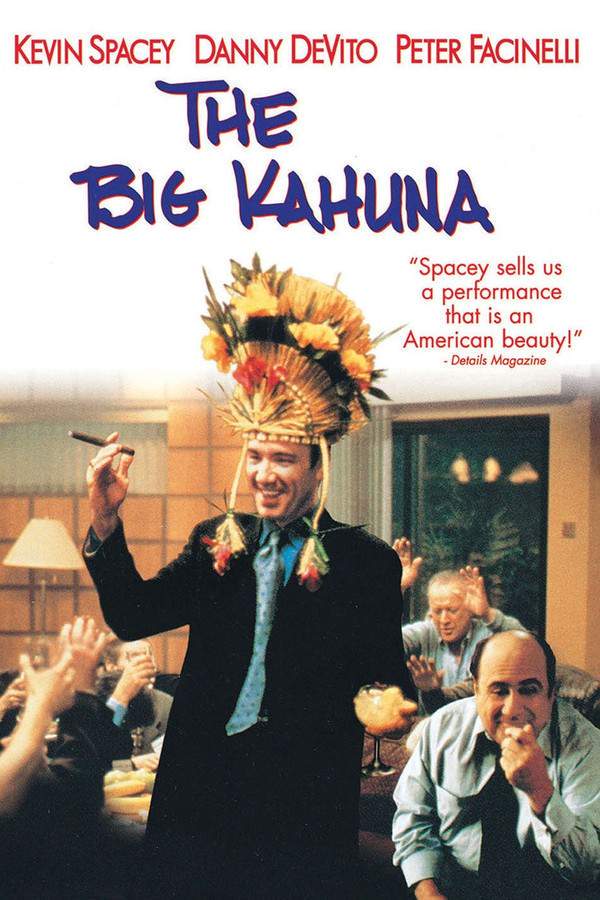
The Big Kahuna (2000) movie poster

Plot Summary

The Big Kahuna (2000) Plot Summary Explained

Release, runtime and language
2000 · 90 min · English
Loading streaming availability…
Directed by
John Swanbeck
Starring
Kevin Spacey, Danny DeVito, Peter Facinelli
Budget
$7M

Two veteran lubricant salesmen, Danny DeVito and Kevin Spacey, mentor a young colleague with tales of past triumphs while plotting to win over the highly sought-after “Big Kahuna,” Dick Fuler, at a Wichita convention. Their professional lives and the future of their company depend on securing a massive order that could turn their fortunes around. The competition is fierce, and the pressure is on as they navigate the complexities of the sales world.

On this page (6)
  1. 1 Where to watch
  2. 2 What happens: full plot
  3. 3 Plot questions answered
  4. 4 Movie threads
  5. 5 Movies like The Big Kahuna
  6. 6 Every angle
Loading streaming availability…

Full plot summary · contains spoilers

What Happens in The Big Kahuna: Full Plot Summary

The whole story of The Big Kahuna (2000) explained, from the opening scene to the final frame: every key event, every twist and what it all adds up to. Read it as a quick recap before the sequel, to check a scene you missed, or to finally understand what really happened.

Larry Mann (Kevin Spacey) and Phil Cooper (Danny DeVito), both seasoned marketing representatives from an industrial lubricants firm, find themselves attending a trade convention in Wichita, Kansas. They are soon joined by a young man from the research department, Bob Walker (Peter Facinelli). With a longstanding friendship, Larry and Phil share easy banter, but their lives are marked by challenges: Larry faces dire financial troubles, which he hints at, while Phil is newly sober after completing a recovery program for alcoholism. In contrast, Bob is an innocent young Baptist with no notable regrets, which adds a unique dynamic to their discussions.

Their main objective is to score a meeting with the elusive Dick Fuller, the CEO they refer to as "the Big Kahuna." As they wait in the comfort of their hospitality suite, the trio engages in deep conversations about character and personal development. They even appoint Bob as the bartender for the evening, despite his lack of experience with mixing drinks. Larry quips that their diverse paths—his smoking cessation, Phil's sobriety, and Bob's devout beliefs—have made them "practically Jesus."

As Bob tries his hand at bartending, he unexpectedly strikes up a conversation with the Big Kahuna and is invited to a private party at a nearby hotel. With excitement, Larry and Phil coach Bob on delivering their pitch about lubricants, providing him with essential talking points and their business cards. However, when Bob returns from his meeting, he reveals that instead of promoting their product, he discussed his religious views, leaving Larry in absolute shock and dismay.

In the wake of this exchange, Phil takes the time to clarify to Bob the essence of genuine human connection—he emphasizes that proselytizing can be likened to a sales pitch and explains that the foundation of Larry and Phil's friendship is built on trust and understanding. He advises that until Bob recognizes and embraces his own shortcomings and regrets, he will not progress in character or maturity.

The following morning, as Phil begins packing, Larry notices Bob chatting once more with the Big Kahuna in the lobby. They share a subtle, knowing smile, hinting that Bob's agenda remains focused on preaching instead of selling lubricants. The film's closing credits roll to the soothing tune of "Everybody's Free (to Wear Sunscreen)," an adaptation of Mary Schmich’s iconic essay, leaving viewers with thought-provoking themes about life, relationships, and personal growth.

Last updated: November 15, 2024 at 17:59

Was this helpful?

Plot questions answered

The Big Kahuna Plot Explained: Your Questions Answered

The questions people ask most about The Big Kahuna (2000): what happens in the confusing scenes, why the characters do what they do, the twists, hidden details and what the ending means. Each answer contains spoilers.

Q1

Why did Bob talk about religion instead of pitching lubricants to the Big Kahuna?

Bob is depicted as an innocent young Baptist with devout beliefs and no experience in salesmanship. When he unexpectedly met the Big Kahuna at the party, he default to what he knows best, his faith. His religious discussion came naturally because he's genuinely passionate about his beliefs, whereas selling industrial lubricants is completely outside his expertise and personality. This mismatch is exactly why assigning him the sales task was risky from the start.

Foreshadowing: Earlier, the trio jokes that their different paths, Larry's smoking cessation, Phil's sobriety, and Bob's devout beliefs, have made them 'practically Jesus,' hinting at Bob's tendency to bring up spiritual matters.

  • bob walker
  • big kahuna
  • religion
  • sales pitch
  • baptist
  • convention
Q2

Why did the Big Kahuna invite Bob to his private party?

Dick Fuller (the Big Kahuna) invited Bob because he approached him casually while Bob was bartending, not knowing Bob was part of the sales team. The conversation was casual and happened because Bob was serving drinks. There's no indication the Big Kahuna had any particular interest in their products, he simply struck up a conversation with the young bartender. The invitation was opportunistic rather than strategic, which is why it caught Larry and Phil off guard.

  • dick fuller
  • big kahuna
  • bob walker
  • invitation
  • party
Q3

Why is Phil's sobriety important to the story?

Phil's recent completion of a recovery program for alcoholism establishes his character arc and adds emotional weight to his advice to Bob. His sobriety represents a personal transformation and mirrors the film's themes of redemption and character growth. When Phil later explains to Bob that he needs to acknowledge his own shortcomings to mature, Phil is drawing from his own experience of confronting his alcoholism. His sobriety also contrasts with Larry's financial desperation, showing two different kinds of personal crisis.

  • phil cooper
  • sobriety
  • alcoholism
  • recovery
  • character growth
Q4

What did Phil mean when he said proselytizing is like a sales pitch?

Phil explained that both evangelizing and selling require building genuine human connections first. He told Bob that until he recognizes and embraces his own shortcomings and regrets, he will not progress in character or maturity. The comparison suggests that pushing beliefs on others, whether religious or commercial, without authenticity and self-awareness comes across as manipulative. Phil is essentially saying Bob's approach failed because it was self-righteous rather than empathetic.

  • phil cooper
  • proselytizing
  • sales pitch
  • human connection
  • character development
Q5

What are Larry's financial problems in the movie?

Larry is dealing with dire financial troubles that he hints at during the convention. While the exact details aren't specified, his financial desperation is what makes securing the Big Kahuna's business so critical. This pressure explains his shock and dismay when Bob fails to pitch the products. Larry's situation drives his intense focus on landing the deal, contrasting with Phil's personal sobriety journey and Bob's naïveté.

  • larry mann
  • financial problems
  • money
  • desperation
  • sales
Q6

Why did Larry and Phil coach Bob before his meeting with the Big Kahuna?

Larry and Phil saw Bob's unexpected meeting with the Big Kahuna as their best chance to secure a massive order. They coached him with talking points and business cards because they believed Bob could deliver their pitch if given the right guidance. Their strategy relied on Bob's access to the elusive CEO, but they underestimated Bob's inability to stay on message. This failure highlights the tension between experienced salesmanship and genuine human interaction.

  • larry mann
  • phil cooper
  • bob walker
  • coaching
  • pitch
  • strategy
Q7

Did Larry and Phil get the Big Kahuna's business?

No, Larry and Phil failed to secure any business from Dick Fuller. Bob's meeting resulted in religious discussion rather than a product pitch, meaning no order was placed. The film's ending shows Bob talking to the Big Kahuna again in the lobby, still focused on preaching rather than selling. Their primary objective at the convention was not achieved, leaving their professional futures uncertain.

  • dick fuller
  • big kahuna
  • business deal
  • lubricants
  • order
  • convention
Q8

What does the final scene with Bob and the Big Kahuna mean?

In the closing scene, Larry watches Bob engaged in another conversation with the Big Kahuna in the lobby. They share a subtle, knowing smile, suggesting Bob is still pursuing his own agenda, preaching his religious views, rather than closing a business deal. The ambiguous ending implies Bob's character hasn't changed and may continue focusing on his personal mission rather than professional sales, leaving Larry and Phil's goals unfulfilled.

  • ending
  • final scene
  • bob walker
  • dick fuller
  • smile
  • ambiguous
Q9

What does 'Big Kahuna' mean in the context of the movie?

In Hawaiian slang, 'kahuna' refers to an expert or important person, so 'Big Kahuna' is Larry and Phil's nickname for Dick Fuller, the CEO they desperately want to land as a client. They use the term with a mix of reverence and ambition, as securing a massive order from him could turn their professional fortunes around. The title reflects the central goal driving the entire convention trip.

  • big kahuna
  • title
  • dick fuller
  • ceo
  • meaning
  • slang
Q10

Why does the movie end with 'Everybody's Free (to Wear Sunscreen)'?

The film closes with the song 'Everybody's Free (to Wear Sunscreen)', an adaptation of Mary Schmich's iconic essay. The song delivers reflective, life-affirming advice about making choices, avoiding regrets, and living fully. This choice reinforces the movie's themes of personal growth, character development, and the wisdom gained through life experience, themes that Phil articulates in his conversation with Bob about genuine connection and self-awareness.

  • everybody free wear sunscreen
  • ending credits
  • theme
  • life advice
  • mary schmich
Q11

Why is Bob appointed as the bartender?

The trio appoints Bob as the bartender for the evening as a light-hearted decision, despite his lack of experience with mixing drinks. This role highlights the generational and experiential differences between the seasoned marketers and the young researcher. It also places Bob in a position where he naturally encounters the Big Kahuna, making his accidental meeting with the CEO possible. The bartender assignment is both comedic and plot-critical.

  • bob walker
  • bartender
  • meeting
  • chance
  • role

Movie threads

More Movies Like The Big Kahuna, by Mood & Story

Curated lists built around what makes The Big Kahuna tick: the same mood, the same kind of story or the same emotional payoff. Each list explains why these movies belong together.

Talky Character-Driven Dramas like The Big Kahuna

Movies where conversation reveals deep personal divides and life's regrets. If you enjoyed the sharp dialogue and introspective mood of The Big Kahuna, you'll find similar films here. This collection features movies like The Big Kahuna that are driven by conversation, exploring themes of regret, friendship, and generational clashes in a slow-paced, character-focused way.

  • dialogue-driven
  • claustrophobic
  • reflective
  • witty
  • philosophical
  • contemplative
  • Tone: bittersweet, reflective, philosophical
  • Pacing: slow, deliberate, conversation-focused
Why these movies?

The story pattern: Narratives in this thread unfold primarily through conversation, often in a single location. The plot is secondary to the emotional and philosophical conflicts between a small cast of characters. The journey is internal, focusing on the quiet realization of disappointment and the subtle shifts in relationships.

Why they belong together: Movies are grouped here for their shared focus on dialogue as the primary engine of the story, a bittersweet or melancholic tone, and a contemplative pace that allows for deep character exploration. They offer a thoughtful, often claustrophobic, experience centered on human connection and disillusionment.


Movies about Professional Pressure like The Big Kahuna

Stories where careers and identities are on the line in tense, confined settings. Find films that share the high-stakes sales environment and psychological tension of The Big Kahuna. These movies, similar to The Big Kahuna, explore the weight of professional failure and the complex dynamics between colleagues under extreme pressure.

  • tense
  • claustrophobic
  • career-focused
  • psychological
  • high-stakes
  • cynical
  • Tone: tense, bittersweet, cynical
  • Pacing: slow to steady, building tension
Why these movies?

The story pattern: The narrative follows characters whose professional lives hinge on a critical, time-sensitive goal. Conflict arises from internal doubts, ethical dilemmas, and competitive rivals. The story is a slow-building pressure cooker that tests the characters' values and resilience, often leading to an ambiguous or bittersweet resolution about the cost of success.

Why they belong together: This thread groups movies based on their shared theme of intense professional pressure, a medium-to-high sense of psychological stakes, and a focus on how ambition and business challenges reveal character. They deliver a specific kind of adult anxiety related to work, identity, and survival.

If you liked this

Movies Like The Big Kahuna

Similar movies to The Big Kahuna: the same genre, themes or kind of story. Each one comes with its own plot summary, timeline and ending explained.

Browse all movie summaries

Every angle

The Big Kahuna (2000) Explained: Plot, Timeline & Characters

Everything about The Big Kahuna in one place: what happens in the plot summary, the timeline in chronological order, the characters and meaning and a spoiler-free summary. What's After the Movie adds the cast, box office and post-credit scenes.

Coming soon on iOS and Android

The Plot Explained Movie Summary App

Plot summaries, endings explained and timelines on your phone. Catch up on any movie in minutes, save your favorites and never miss a twist again.

Be the first to know when we launch. Your email stays private, always.

Learn more about the app