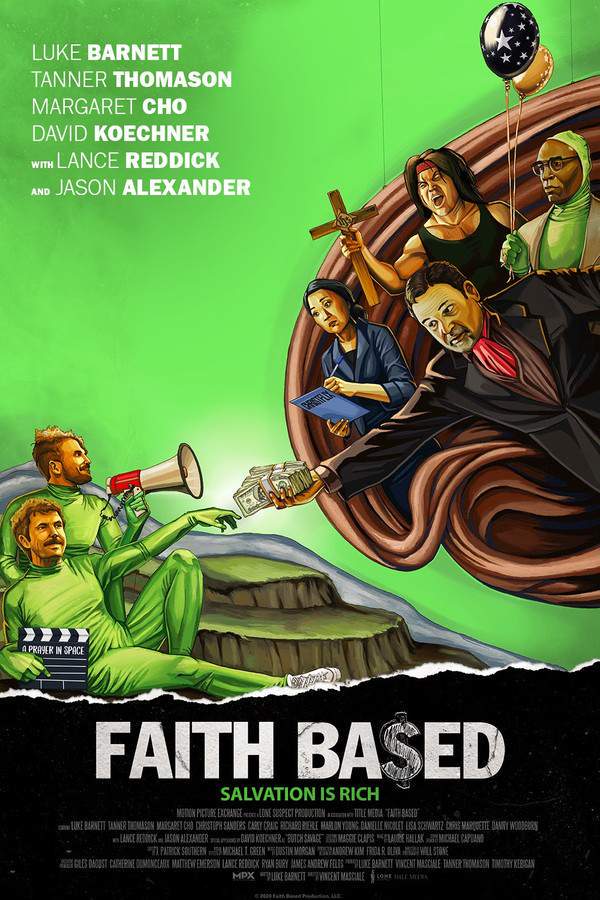
Luke and Tanner were childhood friends who, now in their 30s, share a rental home in Reseda where the days drift by with plenty of marijuana and a sense that something bigger could be possible. Luke’s adoptive father, a church pastor named Mike, often rails at his son for a perceived lack of motivation, even as the church itself teeters on the edge of financial trouble. Mike’s worries aren’t just about rent or bills; he’s seen churches gain money and attention by embracing a different kind of storytelling, including faith-inspired films. This observation plants a seed in Luke's mind: what if they could craft a Christian film that paid for the church’s needs and perhaps kept his father’s ministry afloat?
The two friends decide to explore the possibility and set up a meeting with Jane, the head of acquisitions at ChristFlix, a distributor known for faith-centered cinema. Jane lays out a clear, almost procedural blueprint for what she considers a successful Christian film. The formula is practical and specific: an openly Christian star, a title that includes unmistakable Christian terminology, a peril-driven plot that grips audiences, and, above all, a compelling, explicit treatment of Christian themes. Armed with this knowledge, Luke and Tanner begin to imagine a project that would tick every box while still telling a story with room for character, ambition, and faith.
With the plan taking shape, they settle on a working title—and a plot line—that would maximize those elements. They envision A Prayer in Space, a story about an astronaut stranded on Mars and praying for rescue, a premise designed to make him the first person to pray outside of Earth. The concept is bold, almost allegorical in its reach, and it’s crafted to resonate with a broad audience while remaining squarely within the formula Jane described. To bring the role of God to life, they recruit Butch Savage, a once-dynamo action star whose career has started to wane, believing his presence could lend the kind of gravitas and familiarity that the project’s target audience respects.
As the idea grows from a casual conversation into a concrete plan, Luke and Tanner see two intertwined goals: to create something commercially viable within the Christian film marketplace and to secure a financial lifeline for Mike’s church. The project represents a collision of art and practicality, faith and commerce, all filtered through the lens of friends trying to navigate a difficult moment in their lives. The result is a pitch that promises not only entertainment but also a potential rescue, a chance to turn personal history into a hopeful future.