Plot Explained Spoilers guaranteed!
Plot Explained

Browse by genre

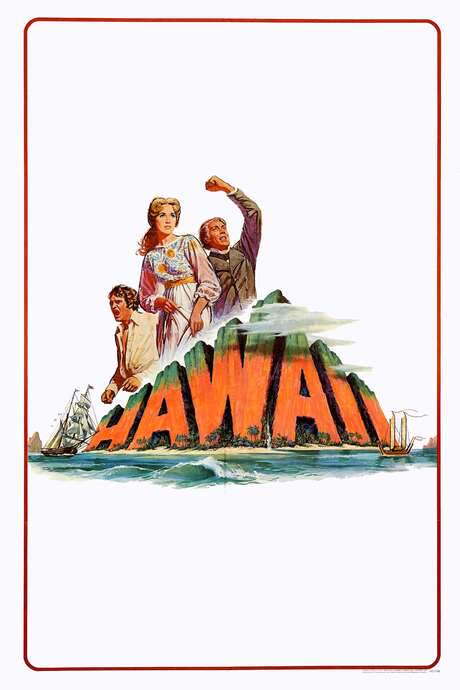
Hawaii (1966) movie poster

Plot Summary

Hawaii (1966) Plot Summary Explained

Release, runtime and language
1966 · 189 mins · English
JustWatch #10,670 6
Directed by
George Roy Hill
Starring
Julie Andrews, Bette Midler, Gene Hackman, Michael Constantine, Lou Antonio, Richard Harris

Adapted from James Michener’s novel, the film follows Abner Hale, a stern, humorless New England missionary, who marries the beautiful Jerusha Bromley and brings her to the exotic island kingdom of Hawaii to convert its native people. Their rigid worldview clashes with Hawaiian culture, preventing understanding and ending in tragedy.

On this page (7)
  1. 1 Where to watch
  2. 2 What happens: full plot
  3. 3 Plot questions answered
  4. 4 The book behind the movie
  5. 5 Movie threads
  6. 6 Movies like Hawaii
  7. 7 Every angle

Where to watch

Where to Watch Hawaii (1966)

Where can you watch Hawaii? Stream, rent or buy it in the US, including on ScreenPix Amazon Channel , Hoopla and Tubi TV: current JustWatch availability with up-to-date prices.

Streaming availability powered by JustWatch

Full plot summary · contains spoilers

What Happens in Hawaii: Full Plot Summary

The whole story of Hawaii (1966) explained, from the opening scene to the final frame: every key event, every twist and what it all adds up to. Read it as a quick recap before the sequel, to check a scene you missed, or to finally understand what really happened.

In 1819, Prince Keoki Kanakoa appeals to Yale Divinity School to bring Christianity to the Hawaiian Islands. Among the volunteers is Abner Hale, newly ordained, who must be married before embarking on the mission. Reverend Thorn introduces Abner to his young niece, Jerusha Bromley Hale, who is in love with Rafer Hoxworth, a whaler currently away at sea. Believing Hoxworth has forgotten her, Jerusha agrees to marry Abner after a brief courtship.

The couple, along with Mason and other missionaries, sails to Lahaina on the island of Maui. They are shocked by what they perceive as the islanders’ sins, including incest within the royal family. Kelolo is both husband and biological brother of Malama Kanakoa, the island’s ruler, a tradition meant to preserve the royal bloodline. Keoki, who longs to serve as a minister, faces pressure to marry his sister Noelani, who is next in line to rule, in order to secure dynastic continuity.

On Lahaina, Jerusha throws herself into parish life, volunteering to help the native people and to curb infanticide after rescuing a baby with a facial birthmark. She gives birth to a son, Micah, in the midst of hardship. During a stopover in one of his whaling voyages, Rafer Hoxworth returns, learns of Jerusha’s marriage to Abner, and is consumed by jealousy, even threatening Abner. Despite the tension, Abner baptizes Iliki, a young Hawaiian girl who had been given to the Hales as a servant, marking a small victory for conversion efforts.

Malama agrees to learn about Christianity but resists full conversion, knowing it would force her to send Kelolo away. At the Hales’ insistence, Malama imposes a curfew on sailors and forbids fraternizing with native women, sparking a riot among the sailors. Hoxworth presses Jerusha to leave with him, but she remains steadfast. When sailors retaliate by partially burning the church, the Hawaiians rally to defend the Hales, driving the sailors back to their ships. In a later act of vengeance, Hoxworth entices Iliki to leave the island with him, and Abner, trying to retrieve her, is cast overboard and attacked by a shark, leaving him permanently lame.

Years pass. Abner reveals to Keoki that he will likely never be ordained because he is not white, proposing that Keoki take a deacon’s role to oversee the natives’ activities. Keoki refuses, and his faith is strained as he renounces Christianity. On Malama’s deathbed, she agrees to be baptized, renouncing Kelolo as her husband. As the natives had foretold, a powerful gale strikes the town and destroys the church at Malama’s death.

Noelani becomes the Aliʻi Nui and marries Keoki. Abner disrupts the wedding, revealing that Malama’s baptism was a move for the people’s benefit. Kelolo departs for Bora Bora with Malama’s heart, and Abner prays for divine retribution to punish the islanders. When Noelani and Keoki’s child is born severely deformed, Abner argues against saving the infant, despite Jerusha’s pleas. Keoki drowns the child, and a measles outbreak soon devastates the native population, killing hundreds, including Keoki, who dies while denouncing God.

Jerusha’s years of toil and childbearing take a heavy toll on her health, and she dies prematurely. Devastated, Abner becomes more compassionate toward the Hawaiians, opposing settlers and plantation owners who seek more land. He is reassigned to Connecticut, though he stays in Hawaii and sends his children to New England. Returning to his hut, Abner is greeted by a young Hawaiian man who wishes to be his assistant. The man is the disfigured infant Jerusha had saved years before, and Abner’s happiness swells at the thought of a renewed partnership in the work he once believed was lost to him.
Last updated: October 05, 2025 at 12:22

Was this helpful?

Plot questions answered

Hawaii Plot Explained: Your Questions Answered

The questions people ask most about Hawaii (1966): what happens in the confusing scenes, why the characters do what they do, the twists, hidden details and what the ending means. Each answer contains spoilers.

Q1

Why did Jerusha agree to marry Abner instead of waiting for Rafer?

Jerusha agreed to marry Abner because she believed Rafer Hoxworth had forgotten her during his long whaling voyage. Reverend Thorn introduced her to the newly ordained Abner, who needed to be married before departing for the mission. After a brief courtship, Jerusha accepted his proposal, viewing it as an opportunity for a stable life despite her lingering feelings for Rafer.

Foreshadowing: The seeds of this love triangle are planted early when Rafer returns years later, filled with jealousy and threatening Abner.

  • jerusha bromley
  • abner hale
  • rafer hoxworth
  • marriage
  • missionary
Q2

What was the royal incest tradition in Hawaii?

The Hawaiian royal family practiced a tradition where the ruler married their own sibling to preserve royal bloodlines. Kelolo was both husband and biological brother of Malama Kanakoa, the island's ruler. This tradition shocked the New England missionaries, who viewed it as incest, though it was culturally significant in Hawaiian royalty for maintaining dynastic continuity.

Foreshadowing: This cultural clash sets up the central conflict between missionary values and Hawaiian traditions throughout the film.

  • kelolo
  • malama kanakoa
  • royal family
  • tradition
  • bloodline
Q3

Why did Malama refuse to fully convert to Christianity?

Malama resisted full conversion because doing so would force her to send Kelolo away, as Christian doctrine prohibited her incestuous marriage. She agreed to learn about Christianity but could not renounce her husband without losing herself. Only on her deathbed did she agree to be baptized and renounce Kelolo, doing so for the benefit of her people rather than personal belief.

Foreshadowing: Her deathbed decision triggers the destructive gale that destroys the church, fulfilling a local prophecy.

  • malama kanakoa
  • conversion
  • baptism
  • kelolo
  • christianity
Q4

What caused the gale that destroyed the church?

The gale that destroyed the church was interpreted by Hawaiians as a prophetic fulfillment. It struck immediately after Malama's death and baptism, leading locals to believe her conversion angered the gods. The timing, coming right after her deathbed baptism, made it appear as divine retribution for abandoning traditional beliefs.

Foreshadowing: The prophecy of the gale was foreshadowed earlier when Malama hesitated to convert, knowing it would bring disaster.

  • gale
  • church
  • destruction
  • prophecy
  • malama
Q5

Why was Abner denied ordination despite years of missionary work?

Abner was denied ordination because he was not white. Years after arriving in Hawaii, he revealed to Keoki that the church authorities would never ordain him due to his race. This hypocrisy deeply affected Abner and contributed to his eventual transformation in attitude toward the Hawaiians.

Foreshadowing: This denial foreshadows the eventual collapse of the missionary endeavor and Abner's change of heart.

  • abner hale
  • ordination
  • race
  • church
  • missionary
Q6

Why did Keoki drown his deformed newborn infant?

When Noelani and Keoki's child was born severely deformed, Abner argued against saving the infant, viewing it as divine punishment. Overcome with despair and believing Abner's interpretation, Keoki drowned the child. This act, combined with the subsequent measles outbreak, led Keoki to denounce God before dying.

Foreshadowing: This tragedy represents the climax of the film's exploration of religious imperialism and its destructive consequences.

  • keoki
  • noelani
  • infant
  • deformed
  • drowning
Q7

What caused the devastating measles outbreak in Hawaii?

The measles outbreak was a tragic consequence of Western contact. After Keoki drowned his deformed infant, a measles epidemic swept through the native Hawaiian population, killing hundreds, including Keoki himself. The disease was introduced by Westerners and devastated indigenous people who had no immunity.

Foreshadowing: This tragedy fulfills the film's theme of cultural destruction through colonial contact.

  • measles
  • outbreak
  • disease
  • hawaiians
  • death
Q8

Why did Abner become more compassionate toward Hawaiians after Jerusha's death?

After Jerusha died from years of hardship and childbearing, Abner underwent a profound transformation. Witnessing the death of his wife, the devastating measles epidemic, and the destruction of the mission caused him to reject the rigid missionary perspective. He began opposing settlers and plantation owners who sought to take Hawaiian land, finally understanding the damage his presence had caused.

Foreshadowing: This transformation sets up the bittersweet ending where Abner finds renewed purpose.

  • abner hale
  • hawaiians
  • compassion
  • transformation
  • settlers
Q9

Who was the disfigured man who became Abner's assistant at the end?

The young Hawaiian man who became Abner's assistant was the exact infant Jerusha had saved years earlier, the baby with a facial birthmark that the missionaries rescued from infanticide. The disfigurement from his birth condition had marked him, but he survived thanks to Jerusha's compassion. His return gave Abner a sense of renewed purpose in his work.

Foreshadowing: This fulfills the film's thematic circle of compassion and redemption through the survival of the child Jerusha saved.

  • infant
  • disfigured
  • birthmark
  • assistant
  • abner hale
Q10

Why did Kelolo take Malama's heart to Bora Bora?

After Malama's death, Kelolo removed her heart and departed for Bora Bora with it. This act was rooted in Hawaiian tradition, believing that the spirit requires the heart to journey to the afterlife. His departure symbolized the end of an era and the breaking of traditional bonds after Malama's baptism and death.

Foreshadowing: Kelolo's departure marks the collapse of the old Hawaiian order following Malama's conversion.

  • kelolo
  • malama
  • heart
  • bora bora
  • departure

Movie threads

More Movies Like Hawaii, by Mood & Story

Curated lists built around what makes Hawaii tick: the same mood, the same kind of story or the same emotional payoff. Each list explains why these movies belong together.

Historical Dramas of Cultural Clash and Tragedy like Hawaii

Epic stories where cultures collide, leading to profound tragedy and loss. Explore movies like Hawaii that portray the tragic collision of different worlds. These historical epics feature intense cultural conflicts, heavy emotional weight, and bittersweet or bleak endings, perfect for viewers interested in stories about the real-world costs of colonialism and faith-based missions.

  • tragic
  • solemn
  • devastating
  • epic
  • grieving
  • oppressive
  • Tone: melancholic, solemn, tragic
  • Pacing: steady, epic
Why these movies?

The story pattern: These stories chart the often-tragic encounters between distinct civilizations, typically from the perspective of an outsider, such as a missionary, colonist, or trader. The narrative structure is often epic and steady-paced, spanning years or decades to show the gradual or sudden devastation wrought by disease, conflict, and rigid belief systems, culminating in a somber reflection on loss.

Why they belong together: Movies are grouped here based on their shared focus on historical cultural collisions, their high emotional intensity, heavy thematic weight surrounding grief and loss, and a melancholic or bittersweet tone that lingers long after the credits roll.

Movies with Ill-Fated Romance and Bittersweet Endings like Hawaii

Romantic connections that are tested and ultimately broken by external, overwhelming forces. If you liked the tragic romance in Hawaii, these films feature love stories tested to their limits. These dramas focus on couples whose relationships are shattered by external tragedies, disease, or cultural divides, delivering a heavy, melancholic vibe similar to Jerusha and Abner's story.

  • tragic romance
  • bittersweet
  • devastating
  • grieving
  • solemn
  • heartbreaking
  • Tone: melancholic, bittersweet, tragic
  • Pacing: steady, character-driven
Why these movies?

The story pattern: The narrative follows a couple who form a deep bond, often against the odds. Their romance becomes a central pillar of the story, but it is persistently challenged by an unrelenting series of tragedies—war, disease, death, or irreconcilable differences. The pacing is steady, building emotional investment before a final, heartbreaking separation or loss that leaves a sense of quiet sorrow mixed with the memory of love.

Why they belong together: These films are united by a specific emotional mix: a significant romance score intertwined with an even higher sadness score. The viewing experience is defined by the tension between the beauty of the relationship and the inevitability of its destruction, leading to a heavy, bittersweet conclusion.

If you liked this

Movies Like Hawaii

Similar movies to Hawaii: the same genre, themes or kind of story. Each one comes with its own plot summary, timeline and ending explained.

Browse all movie summaries

Every angle

Hawaii (1966) Explained: Plot, Timeline & Characters

Everything about Hawaii in one place: what happens in the plot summary, the timeline in chronological order, the characters and meaning and a spoiler-free summary. What's After the Movie adds the cast, box office and post-credit scenes.

Coming soon on iOS and Android

The Plot Explained Movie Summary App

Plot summaries, endings explained and timelines on your phone. Catch up on any movie in minutes, save your favorites and never miss a twist again.

Be the first to know when we launch. Your email stays private, always.

Learn more about the app