Plot Explained Spoilers guaranteed!
Plot Explained

Browse by genre

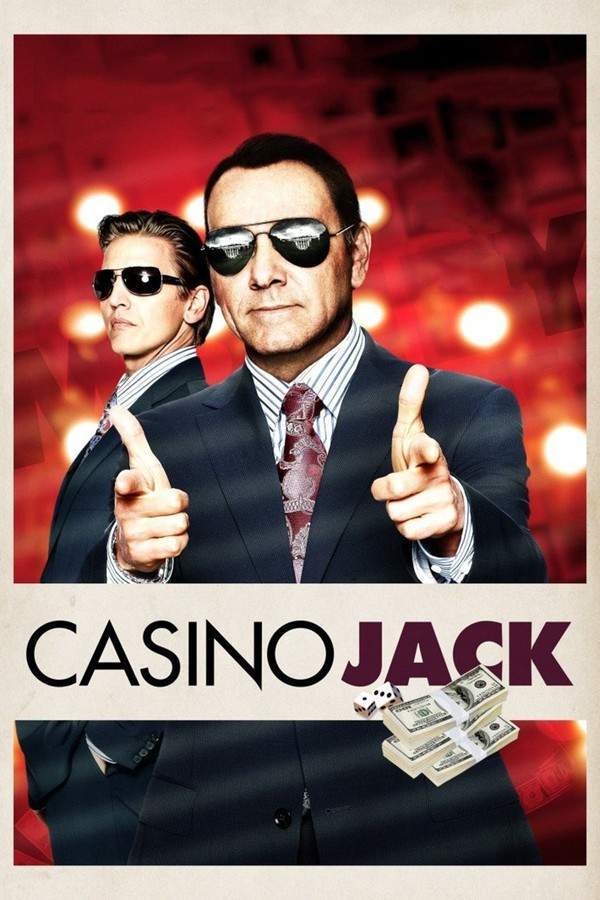
Casino Jack (2010) movie poster

Plot Summary

Casino Jack (2010) Plot Summary Explained

Release, runtime and language
2010 · English
JustWatch #27,862 7
Directed by
George Hickenlooper
Starring
Kevin Spacey, Barry Pepper, Jon Lovitz
Budget
$12.5M

This film recounts the shocking true story of lobbyist Jack Abramoff and his partner Michael Scanlon. Together, they exploit their connections to gain wealth and influence, trading political favors for personal profit. Their increasingly daring schemes attract unwanted attention, leading them into a dangerous world of murder, mafia connections, and widespread scandal that reverberates throughout Washington D.C. and beyond.

On this page (6)
  1. 1 Where to watch
  2. 2 What happens: full plot
  3. 3 Plot questions answered
  4. 4 Movie threads
  5. 5 Movies like Casino Jack
  6. 6 Every angle

Where to watch

Where to Watch Casino Jack (2010)

Where can you watch Casino Jack? Stream, rent or buy it in the US, including on Amazon Prime Video, Fawesome and YOW.tv: current JustWatch availability with up-to-date prices.

Streaming availability powered by JustWatch

Full plot summary · contains spoilers

What Happens in Casino Jack: Full Plot Summary

The whole story of Casino Jack (2010) explained, from the opening scene to the final frame: every key event, every twist and what it all adds up to. Read it as a quick recap before the sequel, to check a scene you missed, or to finally understand what really happened.

The film delves into the tumultuous life of Washington, D.C. lobbyist and businessman Jack Abramoff, portrayed by Kevin Spacey. He becomes entangled in a sprawling corruption scandal that ultimately results in his own conviction, alongside two White House officials, Representative Bob Ney, and nine additional lobbyists and congressional staffers.

Setting the stage two years prior to the indictment, we see Jack as a licensed lobbyist, adept at maneuvering through the complex web of political influence. His role allows him to legally accept funds from special interest groups to sway lawmakers in D.C. towards particular legislation. For instance, Jack secures funding from a garment manufacturer aiming to relax minimum wage standards in the U.S. governed Mariana Islands, thereby reducing production costs.

However, there are strict legal limitations on the amount a lobbyist can receive from a client. Undeterred, Jack approaches the chief of the Indian Chippawa tribe with an extravagant $30 million proposal aimed at thwarting a rival tribe's casino ambitions—an arrangement made clandestinely, unbeknownst to his firm. When the tribe's selection committee dismisses his proposal due to its exorbitant fees, Jack's ambitions seem thwarted.

In his quest for capital, Jack discovers an offshore gambling entity on the brink of Chapter 11 bankruptcy, whose owner, Gus, is desperate for a buyer due to his non-U.S. citizen status that jeopardizes his gambling license. Jack intends to use the Chippawa tribe's $30 million as a down payment for the failing SunSail Casino.

His partner, Michael Scanlon, travels to Florida with a lowball offer of 20 cents on the dollar to Gus, who is understandably insulted and refuses to engage. In a manipulative twist, Jack leverages his political connections, including Senate ally Robert Key, to introduce legislation that particularly impacts SunSail, hoping to gain the upper hand.

When Jack's boss uncovers his dubious intentions to personally acquire the casino, he is immediately terminated for breaching ethical policies. In a last-ditch effort to keep his plan under wraps, Jack collaborates with Adam— a disbarred businessman with a history of troubles— to hide the acquisition from his employers. Adam, however, makes it clear that Gus has his own agenda: selling the casino while maintaining control, a legal impossibility.

As Jack and Michael navigate their new firm, they resort to illicit payments to Gus, maneuvering through voting manipulations in the Chippawa tribe elections to secure their hefty fee. However, things unravel as Bernie—the former tribal chairman who opposed Jack—is made aware of Jack's misappropriation of funds, which he used to open a restaurant rather than fulfilling his promises to the tribe.

Personal lives intercede when Michael's infidelity is discovered by his wife, prompting her to blow the whistle to both the FBI and the Washington Post. The stakes escalate as Gus pressures Adam to secure jobs for his family members at SunSail and engages in intimidating behavior. The plot thickens with Adam leveraging his connections to eliminate Gus, raising suspicions about Jack’s involvement in Gus's demise.

As the explosive story unfolds, former political allies of Jack quickly distance themselves from him, leading to his dismissal from the firm. He faces a monumental lawsuit of $70 million from the Indian tribes for fraud. The Senate Indian Committee, chaired by John McCain—a man Jack had previously undermined in a presidential race—kicks off an inquiry into Jack's dealings.

In a twist of fate, Michael agrees to cooperate with the FBI, leaving Jack scrambling for a deal that comes too late. In 2006, Jack Abramoff faces convictions for fraud, conspiracy, and tax evasion, trading high-value gifts, extravagant meals, and sports trips for political favors. Ultimately, he spends three and a half years in federal prison, followed by a stint at a halfway house, before receiving his release on December 3, 2010.
Last updated: November 02, 2024 at 12:36

Was this helpful?

Plot questions answered

Casino Jack Plot Explained: Your Questions Answered

The questions people ask most about Casino Jack (2010): what happens in the confusing scenes, why the characters do what they do, the twists, hidden details and what the ending means. Each answer contains spoilers.

Q1

Why did Jack propose $30 million to the Chippawa tribe?

Jack proposed $30 million to the Chippawa tribe to fund a scheme against a rival tribe that wanted to open a casino. The proposal was actually a cover for Jack to divert funds toward acquiring the struggling SunSail Casino for himself. The tribe's selection committee rejected the proposal because the fees were excessively high, but Jack proceeded with his plan to use the tribe's money regardless.

  • jack abramoff
  • chippawa tribe
  • casino scheme
  • 30 million proposal
  • lobbying fraud
Q2

How did Jack plan to acquire the SunSail Casino?

Jack discovered the SunSail Casino was near bankruptcy and owned by Gus, who couldn't keep his gambling license due to non-U.S. citizen status. Jack planned to use the $30 million he hoped to secure from the Chippawa tribe as a down payment to purchase the casino. He sent Michael Scanlon to make a lowball offer to Gus, and when that failed, Jack manipulated legislation through his Senate connections to pressure Gus into selling.

  • sunsail casino
  • gus
  • jack abramoff
  • casino acquisition
  • offshore gambling
Q3

Why was Jack fired from his lobbying firm?

Jack was fired after his boss discovered his intention to personally acquire the SunSail Casino while using client funds as a down payment. This represented a severe conflict of interest and breach of ethical policies, as Jack was planning to profit from a deal that involved money from his lobbying clients. The firm terminated him immediately upon learning of his dubious intentions.

  • jack abramoff
  • fired
  • termination
  • lobbying firm
  • ethical breach
Q4

Who was Adam in Jack's scheme?

Adam was a disbarred businessman whom Jack recruited to help conceal his casino acquisition from his former employers. Adam had a troubled history and proved to have his own agenda, he was willing to help Jack but made clear that Gus (the casino owner) also had his own terms. Adam ultimately became involved in the violent climax when he leveraged connections to eliminate Gus, which raised suspicions about Jack's involvement.

  • adam
  • disbarred businessman
  • jack abramoff
  • sunsail casino
  • casino scheme
Q5

What happened to Gus, the casino owner?

Gus, the owner of the SunSail Casino, was pressure Jack and Adam to secure jobs for his family members at the casino. When his demands intensified, Adam used his connections to have Gus eliminated. This violent event created suspicion around Jack's involvement in Gus's demise and marked a dangerous escalation in the criminal aspects of Jack's schemes.

  • gus
  • sunsail casino owner
  • murder
  • eliminated
  • jack abramoff crimes
Q6

Why did Michael Scanlon's wife become a whistleblower?

Michael Scanlon's wife discovered his infidelity, which led her to retaliate by reporting his and Jack's illegal activities to both the FBI and the Washington Post. Her whistleblowing exposed the corruption and kicked off the investigations that eventually brought down Jack's operation.

  • michael scanlon
  • whistleblower
  • wife
  • infidelity
  • fbi investigation
Q7

Why did Michael Scanlon cooperate with the FBI?

As the investigation intensified and Jack's former political allies distanced themselves, Michael Scanlon decided to cooperate with the FBI in exchange for a more lenient sentence. This betrayal left Jack scrambling to cut his own deal, but it was too late. Michael's cooperation was the turning point that led to Jack's conviction.

  • michael scanlon
  • cooperate fbi
  • betrayal
  • plea deal
  • Jack abramoff conviction
Q8

What led to the Senate inquiry into Jack's dealings?

The Senate Indian Committee launched an inquiry after Jack faced a $70 million lawsuit from the Indian tribes for fraud. The committee was chaired by John McCain, who had a personal vendetta against Jack because Jack had previously undermined McCain's presidential campaign. The inquiry investigated Jack's lobbying activities and exposed the full extent of his fraudulent schemes.

  • senate inquiry
  • john mccain
  • indian committee
  • investigation
  • fraud
Q9

What was Jack Abramoff convicted of?

In 2006, Jack Abramoff was convicted of fraud, conspiracy, and tax evasion. His conviction stemmed from his practice of trading high-value gifts, extravagant meals, and sports trips for political favors. He served three and a half years in federal prison followed by time at a halfway house before being released on December 3, 2010.
  • jack abramoff
  • convicted
  • fraud
  • conspiracy
  • tax evasion
  • prison sentence
Q10

Why did Jack face a $70 million lawsuit from the tribes?

Jack faced a $70 million lawsuit from the Indian tribes, particularly the Chippawa tribe, for fraud. The tribe discovered that Jack had misappropriated funds they had provided him, money intended for lobbying and casino-related efforts that Jack diverted to open his own restaurant instead of fulfilling his promises to the tribe. This betrayal forms the basis of the civil suit.
  • 70 million lawsuit
  • fraud
  • chippewa tribe
  • misappropriated funds
  • civil suit
Q11

How did Jack manipulate legislation to pressure Gus?

When Gus refused Michael's insulting lowball offer, Jack used his political connections to have Senator Robert Key introduce legislation that would specifically impact SunSail Casino. This was an attempt to force Gus to sell by creating regulatory pressure on his business, demonstrating Jack's willingness to abuse his political influence for personal gain.

  • legislation
  • robert key
  • political manipulation
  • gus
  • sunsail casino pressure
Q12

What happened to the tribal funds Jack used?

Jack misappropriated funds provided by the Chippawa tribe for his lobbying and casino schemes. Instead of using the money as promised, Jack diverted it to open a restaurant for his own personal benefit. This financial betrayal was discovered by Bernie, the former tribal chairman who had opposed Jack's proposals, and became a key element in the tribe's lawsuit against him.

  • misappropriated funds
  • chippewa tribe
  • restaurant
  • bernie
  • tribal funds
Q13

Why did Jack's former political allies distance themselves from him?

Once the investigation began and the extent of Jack's illegal activities became public, his former political allies quickly distanced themselves to protect their own reputations. This abandonment left Jack isolated and without the political protection he had relied on to conduct his schemes, accelerating his downfall.

  • political allies
  • distanced
  • abandonment
  • scandal
  • reputation protection

Movie threads

More Movies Like Casino Jack, by Mood & Story

Curated lists built around what makes Casino Jack tick: the same mood, the same kind of story or the same emotional payoff. Each list explains why these movies belong together.

True Crime Downfall Stories like Casino Jack

True stories of arrogant figures undone by their own corrupt ambition. If you enjoyed the real-life unraveling of greed and power in Casino Jack, you'll find similar movies here. These films explore true stories of white-collar crime, political scandal, and the disastrous consequences of hubris, featuring tense narratives and heavy emotional weight.

  • greedy
  • paranoid
  • unraveling
  • tense
  • cynical
  • anxious
  • Tone: dark, cynical
  • Pacing: fast, relentless
Why these movies?

The story pattern: Stories in this thread typically follow a protagonist who achieves rapid success through illicit means, fueled by greed and a sense of invincibility. This rise is met with an equally rapid downfall, as their complex web of lies and deals begins to fray under the pressure of investigations, paranoia, and betrayal, leading to legal ruin and personal tragedy.

Why they belong together: These movies are grouped together because they share a dark, cynical tone and a fast-paced, high-intensity narrative structure centered on a true crime downfall. They evoke a similar mood of anxiety, greed, and paranoia, focusing on the moral decay that accompanies the pursuit of power.

Cynical Political Thrillers like Casino Jack

Tense exposés of systemic corruption where no one is innocent. Explore more movies like Casino Jack that critique political systems and expose corruption. These films share a fast pace, high tension, and a dark perspective on power, ideal for viewers who enjoy complex conspiracies and stories of greed in high places.

  • cynical
  • tense
  • conspiracy
  • greedy
  • paranoid
  • unraveling
  • Tone: dark, tense
  • Pacing: fast, intricate
Why these movies?

The story pattern: The narrative pattern involves a deep dive into a corrupt institution or network, often following a protagonist who is either a willing participant or becomes entangled. The story unravels a complex conspiracy through a series of escalating risks and betrayals, leading to a conclusion that highlights the pervasive nature of the corruption, even if individual players fall.

Why they belong together: Movies in this thread are united by their dark, tense tone and their thematic focus on political or corporate corruption. They share a fast pace, high intensity, and a mood that is fundamentally cynical and anxious, portraying a world where ethical lines are blurred and self-interest reigns.

If you liked this

Movies Like Casino Jack

Similar movies to Casino Jack: the same genre, themes or kind of story. Each one comes with its own plot summary, timeline and ending explained.

Browse all movie summaries

Every angle

Casino Jack (2010) Explained: Plot, Timeline & Characters

Everything about Casino Jack in one place: what happens in the plot summary, the timeline in chronological order, the characters and meaning and a spoiler-free summary. What's After the Movie adds the cast, box office and post-credit scenes.

Coming soon on iOS and Android

The Plot Explained Movie Summary App

Plot summaries, endings explained and timelines on your phone. Catch up on any movie in minutes, save your favorites and never miss a twist again.

Be the first to know when we launch. Your email stays private, always.

Learn more about the app