Plot Explained Spoilers guaranteed!
Plot Explained

Browse by genre

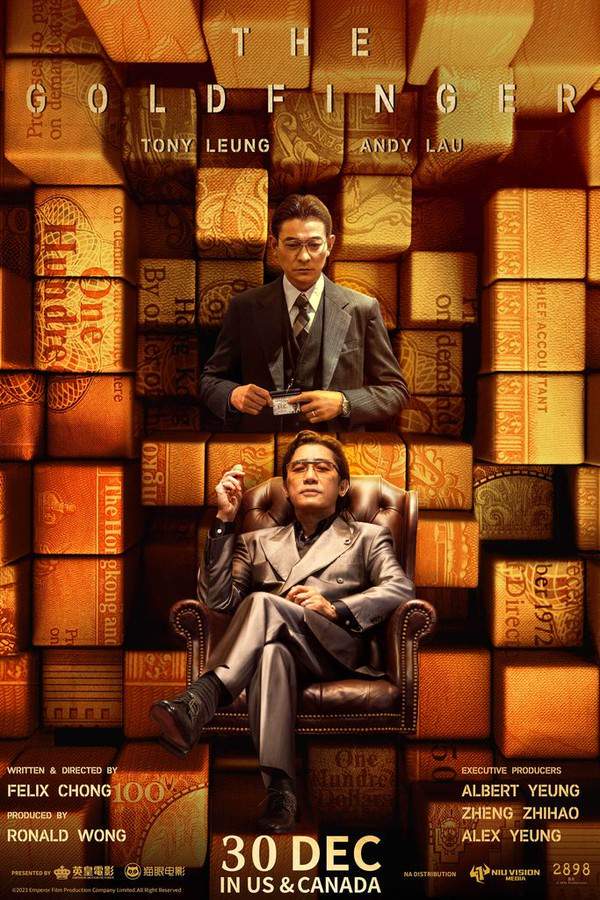
The Goldfinger (2023) movie poster

Plot Summary

The Goldfinger (2023) Plot Summary Explained

Release, runtime and language
2023 · 2 h 6 m · Chinese
Echo score 50
Loading streaming availability…
Directed by
Felix Chong
Starring
Andy Lau, Michael Ning, Tai-Bo, Philip Keung, Simon Yam, Carlos Chan
Budget
$45M

When the global economy faces potential collapse, a determined investigator uncovers a complex network of deception orchestrated by a formidable businessman. As his investigation threatens to reveal long-hidden corruption, the detective becomes embroiled in a dangerous game of cat and mouse with a brilliant and elusive adversary.

On this page (5)
  1. 1 Where to watch
  2. 2 What happens: full plot
  3. 3 Plot questions answered
  4. 4 Movie threads
  5. 5 Every angle
Loading streaming availability…

Full plot summary · contains spoilers

What Happens in The Goldfinger: Full Plot Summary

The whole story of The Goldfinger (2023) explained, from the opening scene to the final frame: every key event, every twist and what it all adds up to. Read it as a quick recap before the sequel, to check a scene you missed, or to finally understand what really happened.

When a sudden stock market crash leads to the collapse of a multi-billion-dollar enterprise, principal investigator Lau Kai-yuen from the ICAC finds himself deep in a complex web of crime surrounding the company's founder, Henry Ching. This investigation stretches on for years and reveals a myriad of corrupt dealings that challenge Lau's perseverance.

The story begins in 1974, when the ICAC was established to tackle rampant corruption, leading to many corrupt officers facing justice. In a moment of turmoil, these officers protest at the ICAC office, with the chaos instigated by Sarge. Lau steps in, persuading the agitated officers to disperse, and the government soon announces an amnesty for minor offenses, aiming to restore order by 1977.

Two years later, we meet Henry, who has fled Singapore after losing his job. Struggling to find new work in Hong Kong, he encounters K.K. Tsang, a man who mistakenly believes Henry's past success equals a prosperous future. They forge a lucrative partnership, leading to the creation of Carmen Century—a company named in honor of Henry's assistant, Carmen. As they cultivate their business, Henry manages to expand his reach through bribes and dubious dealings, navigating the world of real estate with the aid of wealth and manipulation.

Over an eleven-year span, Lau is relentless in his pursuit of justice against Henry, managing to secure an arrest warrant. However, luck seems to favor Henry, allowing him to evade consequences, as he and K.K. revel in their successes until the 1982-1983 downturn strikes. This economic collapse threatens to dismantle their empire and strains their friendship, as K.K.'s company struggles under police scrutiny. Tensions rise when K.K. threatens to expose Henry, leading to a desperate call for assistance from their backer, Musharra Hafa. But instead of the expected $20 million, they receive only $5 million, rendering their escape plan precarious.

As the situation unfolds, Henry’s lawyer Kelvin advises the team to maintain silence in the face of inquiry, complicating matters further when K.K. mysteriously disappears—leaving the reason for his absence uncertain. Henry, seeking to protect himself, agrees to cooperate with authorities under false assurances of safety, but betrayal looms as his subordinates are disposed of ruthlessly, exemplified by the tragic fate of Wan's model wife, who is murdered to ensure her husband testifies in Henry's favor. In a shocking twist, Kelvin is found dead with a note suggesting suicide, yet the circumstances surrounding his demise raise unsettling questions.

Fast forward a month, and Henry's trial begins, yet he emerges unscathed when K.K.'s son steps forward to accept the blame for fraud and bribery, receiving a lengthy 14-year sentence in lieu of Henry’s freedom. In an ongoing quest for justice, Lau travels to the U.K. in search of Hafa, hoping to persuade him to testify. In a twist of fate, Lau discovers Hafa was just another pawn in Henry's dangerous game, having been advised about undercover operatives meant to ensnare Henry.

Five years later, Henry is back in court, but again avoids serious repercussions when it’s revealed that the judge in his case has conflicts of interest, leading to a mistrial due to his prior investments in Carmen Century. The narrative continues forward to 1996, where Lau secures an extradition order for Hafa, setting the stage for a renewed trial. The film closes with Lau contemplating whether the extensive effort over the years was worth it, as Henry receives a minimal sentence of three years and Carmen Century's liquidation process leaves shareholders with nothing, highlighting the far-reaching repercussions of corruption.

Last updated: May 13, 2025 at 20:31

Was this helpful?

Plot questions answered

The Goldfinger Plot Explained: Your Questions Answered

The questions people ask most about The Goldfinger (2023): what happens in the confusing scenes, why the characters do what they do, the twists, hidden details and what the ending means. Each answer contains spoilers.

Q1

Why does Henry Ching keep escaping conviction throughout the movie?

Henry escapes conviction multiple times due to a combination of luck, strategic manipulation, and legal loopholes. Over the decades-long investigation, he evades charges through various means: when K.K.'s son voluntarily takes the blame and receives a 14-year sentence; when the second trial ends in mistrial because the judge has a conflict of interest due to prior investments in Carmen Century; and when his subordinates are murdered to prevent them from testifying against him. His wealth and connections consistently provide him with protection from serious consequences.

Foreshadowing: Earlier scenes show Henry's ability to manipulate situations, as seen when he convinces his partners to maintain silence through his lawyer Kelvin.

  • henry ching
  • conviction
  • trial
  • corruption
  • carmen century
Q2

Why does K.K. Tsang's son take the blame for Henry?

K.K. Tsang's son accepts the blame for fraud and bribery to protect Henry, resulting in a 14-year prison sentence while Henry walks free. This sacrifice is likely motivated by family loyalty or possibly coercion, though the exact reasoning is not fully explained in the film. The twist allows Henry to avoid conviction in his first trial despite the overwhelming evidence against him.

Foreshadowing: Earlier tension between K.K. and Henry, particularly when K.K. threatens to expose Henry during the financial crisis, hints at the complex dynamics within their partnership.

  • k.k. tsang
  • son
  • fraud
  • blame
  • trial
Q3

What happens to Kelvin and why is his death suspicious?

Kelvin, Henry's lawyer, is found dead with a note suggesting suicide. However, the circumstances surrounding his death are deeply suspicious given that he was advising the team to remain silent during the inquiry. His death appears to be orchestrated by Henry to eliminate potential witnesses, as Henry systematically removes anyone who could testify against him.

Foreshadowing: Henry's pattern of eliminating subordinates, including the murder of Wan's model wife, establishes his willingness to kill to protect himself.

  • kelvin
  • lawyer
  • death
  • murder
  • carmen century
Q4

Why does the second trial end in a mistrial?

Henry's second trial in 1988 ends in a mistrial due to a conflict of interest. The judge presiding over the case had previously invested in Carmen Century, creating a financial interest in the outcome. This conflict forces the trial to be declared invalid, allowing Henry to evade conviction once more despite new evidence of bribery from U.S. bankers.

Foreshadowing: The earlier discovery that judges can be influenced reflects the systemic corruption that permeates the judicial system in the film.

  • mistrial
  • judge
  • conflict of interest
  • second trial
  • carmen century
Q5

Why does Henry Ching leave Singapore for Hong Kong?

Henry leaves Singapore in 1979 after being laid off from his position in the construction industry. Unable to find new work as an engineer in Singapore, he travels to Hong Kong seeking opportunities, where he eventually partners with K.K. Tsang to found Carmen Century.

Foreshadowing: Henry's departure from Singapore coincides with the establishment of ICAC in 1974, suggesting his corruption was already underway before he left.

  • singapore
  • hong kong
  • henry
  • career
  • construction
Q6

How does the 1982-1983 stock market crash impact Henry's business?

The 1982-1983 stock market crash severely destabilizes Henry's business empire and strains his partnership with K.K. Tsang. The economic downturn threatens to dismantle their empire, causing K.K.'s company to struggle under police scrutiny. This financial pressure leads K.K. to threaten to expose Henry unless he secures funding from their backer Musharra Hafa.

Foreshadowing: The partnership between Henry and K.K. was built on deception about their successes, which becomes unsustainable during the economic collapse.

  • stock market crash
  • 1982
  • economic downturn
  • carmen century
  • business
Q7

Who is Musharra Hafa and what is his role?

Musharra Hafa is the financial backer who funds Henry and K.K.'s operations. When the 1982-1983 crisis hits, Henry contacts Hafa for $20 million to execute an escape plan, but Hafa sends only $5 million, making their escape precarious. Later, Lau travels to the U.K. to find Hafa and convince him to testify against Henry.

Foreshadowing: Hafa's initial failure to provide the full $20 million hints at his unreliability as an ally.

  • musharra hafa
  • backer
  • funding
  • financial
  • uk
Q8

Why is Wan's model wife murdered?

Wan's model wife is murdered by Henry's orders to ensure her husband testifies in Henry's favor. This brutal act exemplifies Henry's ruthlessness in eliminating anyone who could provide evidence against him, including his own subordinates.

Foreshadowing: The murder establishes Henry's pattern of silencing witnesses, which later extends to Kelvin and other potential informants.

  • wan
  • model wife
  • murder
  • witness
  • henry
Q9

Why does Henry Ching receive such a light sentence in the end?

Despite decades of investigation and overwhelming evidence of corruption, fraud, and multiple murders orchestrated by Henry, he ultimately receives only a three-year prison sentence. The light sentence reflects the film's dark commentary on systemic corruption and the failure of justice against powerful figures. Even when convicted, the punishment fails to match the scale of his crimes.

Foreshadowing: Throughout the film, Henry's ability to escape consequences through legal loopholes, witness elimination, and influence foreshadows his minimal punishment.

  • henry
  • sentence
  • three years
  • justice
  • corruption
Q10

Why does Henry decide to cooperate with authorities?

Henry agrees to cooperate with authorities after his lawyer Kelvin advises the team to maintain silence. However, this cooperation is revealed to be a betrayal, as Henry provides information to authorities while his subordinates are ruthlessly disposed of, including the murder of Wan's wife. The cooperation appears to be a calculated move to protect himself rather than genuine remorse.

Foreshadowing: Henry's pattern of self-preservation through any means necessary makes his 'cooperation' another strategic maneuver.

  • cooperate
  • authorities
  • betrayal
  • kelvin
  • henry
Q11

Does Lau Kai-yuen's decades-long pursuit of justice feel worth it?

The film leaves this question deliberately ambiguous. Lau spends over two decades pursuing Henry, eventually securing a conviction and three-year sentence, but the victory is pyrrhic. Henry's company liquidation leaves shareholders with nothing, systemic corruption remains largely unchecked, and Lau is left contemplating whether his obsession with the case sacrificed other aspects of his life for minimal results.

Foreshadowing: The opening sequence establishing ICAC's mission sets up the thematic tension between idealised justice and the reality of systemic corruption.

  • lau kai-yuen
  • obsession
  • justice
  • icac
  • worth

Movie threads

More Movies Like The Goldfinger, by Mood & Story

Curated lists built around what makes The Goldfinger tick: the same mood, the same kind of story or the same emotional payoff. Each list explains why these movies belong together.

Movies about financial crime investigations like The Goldfinger

Stories of investigators risking everything to expose powerful, untouchable corrupt elites. If you liked the procedural investigation into high-level corruption in The Goldfinger, you'll find similar stories here. This collection features movies about dogged detectives, journalists, and whistleblowers exposing complex white-collar crime and political graft, often with high personal stakes.

  • methodical
  • tense
  • persistent
  • corrosive
  • frustrating
  • cynical
  • Tone: dark, cynical, tense
  • Pacing: steady, methodical
Why these movies?

The story pattern: The narrative typically unfolds as a procedural investigation, often spanning years. A protagonist discovers a thread of corruption and meticulously follows it, facing threats, betrayals, and systemic obstacles. The conflict is less about physical action and more about intellectual pursuit, legal maneuvering, and enduring psychological pressure.

Why they belong together: Movies are grouped here because they share a focus on the arduous process of investigating white-collar crime. They have a methodical pace, a tone of persistent cynicism, and explore themes of power, justice, and the moral toll of a long, draining quest.

Movies with bittersweet and heavy endings like The Goldfinger

Journeys where the victory is partial and comes at a great personal or moral cost. Fans of The Goldfinger's emotionally heavy and bittersweet conclusion will appreciate these films. Explore stories where the protagonist's quest ends with a partial victory or a high personal cost, leaving a melancholic and thought-provoking feeling about justice and sacrifice.

  • bittersweet
  • melancholic
  • heavy
  • frustrating
  • thought-provoking
  • grim
  • Tone: bittersweet, melancholic, heavy
  • Pacing: steady, character-driven
Why these movies?

The story pattern: The narrative follows a character on a difficult, morally complex quest. They persevere through significant hardship and sacrifice, but the resolution is not a clean win. The ending often underscores that the victory was small, the cost was too high, or the larger injustice persists, creating a poignant and reflective conclusion.

Why they belong together: These films are grouped by their shared emotional trajectory and ending feel. They deliver a powerful, heavy experience that culminates in a bittersweet resolution, emphasizing themes of perseverance amidst futility and the ambiguous nature of justice.

Every angle

The Goldfinger (2023) Explained: Plot, Timeline & Characters

Everything about The Goldfinger in one place: what happens in the plot summary, the timeline in chronological order, the characters and meaning and a spoiler-free summary. What's After the Movie adds the cast, box office and post-credit scenes.

Coming soon on iOS and Android

The Plot Explained Movie Summary App

Plot summaries, endings explained and timelines on your phone. Catch up on any movie in minutes, save your favorites and never miss a twist again.

Be the first to know when we launch. Your email stays private, always.

Learn more about the app