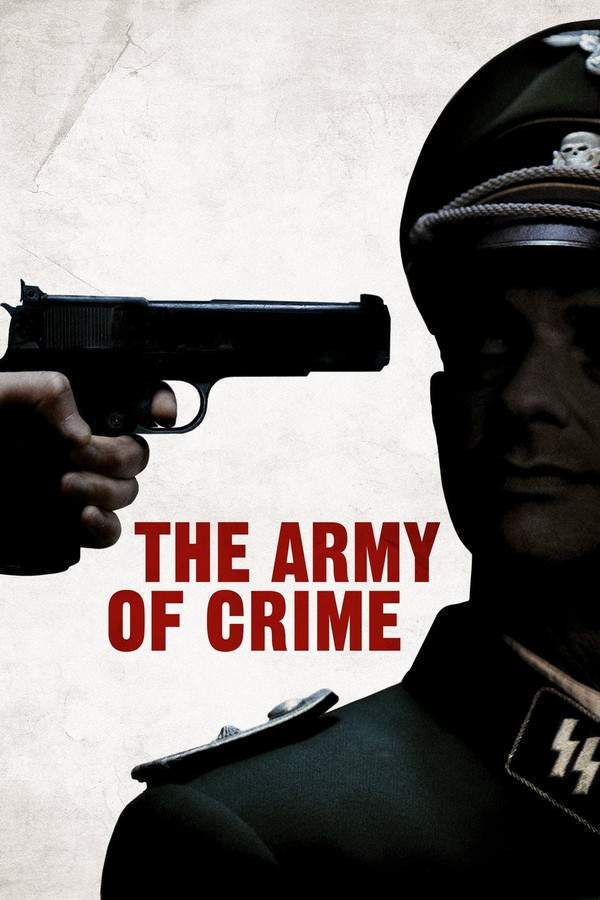
The Army of Crime

The Army of Crime

Year: 2010

Runtime: 139 min

Language: French

Director: Robert Guédiguian

DramaHistoryWar

During World War II, Armenian immigrant Missak Manouchian leads a diverse group of resistance fighters against the Nazi occupation of France. Alongside his wife, Mélinée, he organizes audacious operations targeting German officers, initiating a dangerous pursuit as the enemy attempts to uncover the group's identities. Their actions become a symbol of defiance and courage in the face of oppression, highlighting the bravery of those who fought for freedom.

Where to Watch The Army of Crime?

Find where to stream, rent, or buy The Army of Crime (2010) in the US with current JustWatch availability, up-to-date pricing, and platform listings for subscription, rental, and digital purchase options.

Warning: spoilers below!

Haven’t seen The Army of Crime yet? This summary contains major spoilers. Bookmark the page, watch the movie, and come back for the full breakdown. If you're ready, scroll on and relive the story!

The Army of Crime (2010) – Full Plot Summary & Ending Explained

Read the complete plot breakdown of The Army of Crime (2010), including all key story events, major twists, and the ending explained in detail. Discover what really happened, and what it all means.

In the heart of Paris during the harrowing time of the German occupation, various resistance movements began to take shape, including efforts made by migrants. A mismatched assembly of fighters emerged, engaging in poorly coordinated attacks against the occupying forces. Among them was Missak Manouchian, an Armenian exile whose principles initially held him back from taking a life, as he grappled with the ethical implications of such actions. Nonetheless, the grim realities of his situation compelled him to confront his reservations. Under his guidance, the group of 23 fighters became organized, evolving into what would famously be known as the Manouchian Group. This band was part of a broader network of around 100 resistance members who orchestrated a majority of the armed resistance actions within Paris throughout 1943.

The film vividly chronicles the journey of this resolute group, detailing their formation, the eventual arrests, and their grim trial by a German military court, which culminated in the execution of its members in 1944.

In a bid to diminish public sympathies towards these resistance fighters and to tarnish their image, the Vichy government resorted to distributing and displaying countless posters, nicknamed L’Affiche rouge for their striking red background. These posters featured the images of ten notable members of the group, alongside personal information intended to label the migrants as mere terrorists and criminals. However, the sentiment among the public was remarkably different; many responded by inscribing the phrase Morts pour La France (Died for France) across these posters, a phrase typically reserved to honor fallen soldiers. Individuals also left flowers as a poignant tribute, reflecting the deep respect and recognition for the sacrifices made by these brave fighters.

Last updated: November 16, 2024 at 14:49

Was this helpful?

The Army of Crime (2010) Plot Questions Answered – Summary FAQ

Explore frequently asked questions about The Army of Crime (2010) with spoiler-rich answers covering the full plot summary, major story beats, character motivations, hidden details, and ending meaning. This movie summary FAQ helps explain confusing scenes, plot twists, and narrative decisions in clear, searchable detail.

Q1

Why did Missak Manouchian initially hesitate to join the armed resistance?

A.

Missak Manouchian, an Armenian exile, was initially held back by his ethical principles about taking a life. As a survivor of the Armenian genocide, he carried deep moral convictions against killing. However, the grim realities of the German occupation and the brutal circumstances of the resistance struggle eventually compelled him to confront his reservations and take up arms.

Earlier scenes show Manouchian's Armenian background and the trauma he carries from past persecution.

missak manouchianarmenianethicsresistancemigration
Q2

What was L'Affiche rouge and why did the Vichy government create it?

A.

L'Affiche rouge was a propaganda poster with a striking red background created by the Vichy government in 1944. It featured the images and personal information of ten notable members of the Manouchian Group, aiming to label these migrant resistance fighters as terrorists and criminals. The government intended to diminish public sympathy for the resistance by making them appear as dangerous foreign elements.

The timeline shows the propaganda campaign launching shortly after the group's execution.

l affiche rougeposterpropagandavichymigrantsterrorism
Q3

Why did Parisians write "Mort pour La France" on the propaganda posters?

A.

Despite the Vichy government's intent to portray the resistance fighters as criminals, Parisians responded with deep admiration. Citizens wrote "Mort pour La France" (Died for France) across the posters - a phrase traditionally reserved for fallen soldiers. This was their way of honoring the fighters as true patriots and recognizing their sacrifice for the country, fundamentally undermining the government's propaganda effort.

The public response directly contradicted the Vichy regime's attempts to control narrative.

mort pour la franceparishonortributepublic response
Q4

How were the Manouchian Group members arrested?

A.

The German authorities began capturing members of the Manouchian Group one by one in late 1943, gathering intelligence on their operations through surveillance and infiltration. The fear of exposure loomed large over the fighters, though their resolve to continue fighting for freedom did not waver until the final arrests.

The group's successful attacks earlier in 1943 attracted significant German attention and retaliation.

arrestgerman authoritiescaptureparis1943
Q5

Why did the Vichy government specifically target migrants in their propaganda?

A.

The Vichy government emphasized the migrant backgrounds of the Manouchian Group fighters in their propaganda to paint them as foreign threats rather than legitimate resistance members. By highlighting that most fighters were immigrants - including Armenians, Spaniards, Italians, and Poles - they attempted to delegitimize the resistance in the eyes of French citizens and justify their crackdown as protecting France from foreign terrorists.

The group's composition as foreign-born resistance fighters was central to the propaganda strategy.

vichymigrantsimmigrantspropagandaforeignthreat
Q6

What happened at the German military trial of the Manouchian Group?

A.

In 1944, the remaining members of the Manouchian Group faced a grim trial by a German military court. The occupying forces sought to use the trial as a public example of the consequences of resistance. The court delivered a swift and brutal judgment, condemning the fighters to death as a means of intimidating other resistance members.

The trial represented the culmination of the German crackdown following the arrests.

trialgerman courtexecutiondeath sentencemilitary tribunal
Q7

How many resistance members were executed and when?

A.

In 1944, after their trial by the German military court, the members of the Manouchian Group were executed. The group originally consisted of 23 fighters, and all were ultimately put to death. Their sacrifice became a powerful symbol of defiance against Nazi tyranny.

The execution was the tragic endpoint foreshadowed by the arrests and trial.

executiondeathmanouchian group1944paris
Q8

What made the Manouchian Group different from other resistance groups?

A.

The Manouchian Group stood out for being primarily composed of migrants and immigrants, predominantly Armenians, Spaniards, Italians, and Poles. Under Manouchian's leadership, this diverse group of 23 fighters became the most active armed resistance unit within Paris in 1943, responsible for orchestrating the majority of armed resistance actions in the city as part of a broader network of around 100 resistance members.

The group's diverse immigrant composition was highlighted in the propaganda campaign.

manouchian groupdiversitymigrantsimmigrantsparis resistanceuniqueness
Q9

Why did Missak Manouchian become the leader of the resistance group?

A.

Missak Manouchian emerged as the leader of the group due to his organizational skills and his ability to unite fighters from diverse backgrounds. Despite his initial hesitation about armed resistance, his willingness to confront the ethical implications of the struggle and his commitment to the cause earned him the respect and trust of the other fighters, allowing him to coordinate their operations effectively.

His background as a genocide survivor gave him particular motivation to resist oppression.

missak manouchianleaderarmenianorganizationgroup
Q10

What was the significance of the Manouchian Group's attacks against German forces?

A.

Under Manouchian's leadership, the group launched audacious operations targeting German officers in Paris throughout early to mid-1943. These coordinated attacks ignited hope among Parisians and showcased the courage and determination of organized resistance. Their actions became a symbol of defiance and courage, demonstrating that resistance was possible even under heavy occupation.

The success of these attacks directly led to increased German retaliation and the group's eventual downfall.

attacksgerman officersparissignificancedefiancecourage
Q11

How did the execution of the Manouchian Group become a symbol of hope?

A.

Although the execution was unambiguously tragic, it transformed the fighters into revered symbols of resistance in France. Despite their deaths, their sacrifice inspired continued opposition against oppression. The public's response - writing "Mort pour La France" on posters and leaving flowers as tribute - cemented their legacy as heroes who died for freedom, creating a complex emotional legacy of tragedy and inspiration.

This transformation from martyrs to symbols was immediate, as evidenced by the public tributes.

legacysymbolhoperesistancesacrificeinspiration
Q12

Why did resistance movements begin forming in Paris during the occupation?

A.

As the German occupation tightened its grip on Paris starting in 1940, strict regulations and suppression fueled the desire for resistance among both local citizens and migrants. Various resistance movements began taking shape in 1941, composed of people united by a common goal of opposing the occupation and freeing their homeland, including the Manouchian Group which formed in 1942.

The timeline establishes the occupation as the catalyst for all subsequent resistance activity.

resistance movementoccupationparisgermanyorigin1940
Mobile App Preview

Coming soon on iOS and Android

The Plot Explained Mobile App

From blockbusters to hidden gems - dive into movie stories anytime, anywhere. Save your favorites, discover plots faster, and never miss a twist again.

Sign up to be the first to know when we launch. Your email stays private, always.

Explore Movie Threads

Discover curated groups of movies connected by mood, themes, and story style. Browse collections built around emotion, atmosphere, and narrative focus to easily find films that match what you feel like watching right now.

Tragic Historical Resistance movies like The Army of Crime

Stories of desperate defiance against oppression that end in tragic sacrifice.If you were moved by the courageous yet tragic story in The Army of Crime, explore more movies like it. This section features similar historical dramas about resistance movements, where characters fight for freedom against oppressive regimes, leading to somber and emotionally heavy conclusions that honor their sacrifice.

somberdefianttragicheroicgrippingoppressivehistorical

Narrative Summary

The narrative typically involves the formation of a resistance cell, their daring operations, the growing threat of capture, and an inevitable, tragic ending—often execution or death. The emotional arc moves from determination and defiance to grim acceptance of fate, culminating in a legacy that transcends their physical demise.

Why These Movies?

These films are grouped by their shared focus on historical resistance, a tense and somber tone, high-stakes narratives of life and death, and profoundly sad endings that are nonetheless infused with a sense of inspirational legacy. They deliver a heavy emotional weight centered on sacrifice.
Moral pressure cooker dramas with pacing like The Army of Crime

Character-driven dramas where ethical choices unfold under relentless, oppressive tension.For viewers who appreciated the steady, tense build-up of moral conflict in The Army of Crime, this section collects movies with a similar vibe. Discover other character-driven stories where individuals face heavy ethical dilemmas under extreme pressure, leading to gripping and somber narratives.

tensegrippingmoral conflictsomberpsychologicaloppressivecharacter-driven

Narrative Summary

Stories in this thread unfold with a steady, almost inevitable pace, focusing less on action and more on the psychological and ethical strain on the characters. The central conflict is internal and external, as protagonists grapple with the consequences of their actions while operating under constant threat, building towards a climax defined by sacrifice or profound choice.

Why These Movies?

These movies share a specific mix of a steady, methodical pacing and a consistently high-tone tension. They are united by their focus on moral conflict in life-or-death scenarios, resulting in a heavy emotional weight and a viewing experience that is gripping and somber rather than fast-paced or action-oriented.

Unlock the Full Story of The Army of Crime

Don't stop at just watching - explore The Army of Crime in full detail. From the complete plot summary and scene-by-scene timeline to character breakdowns, thematic analysis, and a deep dive into the ending - every page helps you truly understand what The Army of Crime is all about. Plus, discover what's next after the movie.

The Army of Crime Timeline

Track the full timeline of The Army of Crime with every major event arranged chronologically. Perfect for decoding non-linear storytelling, flashbacks, or parallel narratives with a clear scene-by-scene breakdown.

The Army of Crime Timeline

Characters, Settings & Themes in The Army of Crime

Discover the characters, locations, and core themes that shape The Army of Crime. Get insights into symbolic elements, setting significance, and deeper narrative meaning - ideal for thematic analysis and movie breakdowns.

Characters, Settings & Themes in The Army of Crime

The Army of Crime Spoiler-Free Summary

Get a quick, spoiler-free overview of The Army of Crime that covers the main plot points and key details without revealing any major twists or spoilers. Perfect for those who want to know what to expect before diving in.

The Army of Crime Spoiler-Free Summary

More About The Army of Crime

Visit What's After the Movie to explore more about The Army of Crime: box office results, cast and crew info, production details, post-credit scenes, and external links - all in one place for movie fans and researchers.

More About The Army of Crime