Plot Explained Spoilers guaranteed!
Plot Explained

Browse by genre

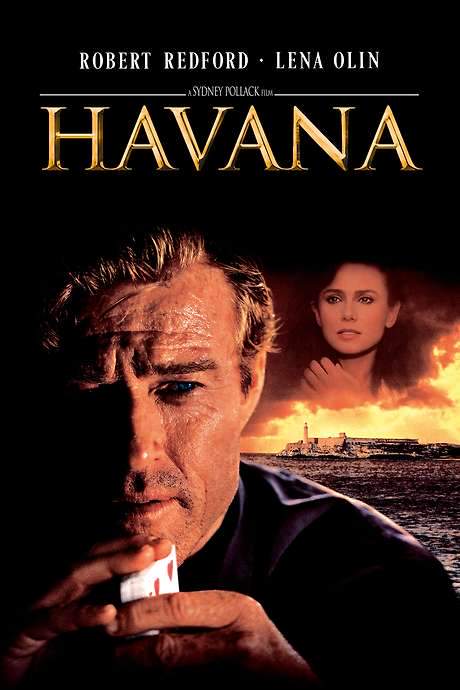
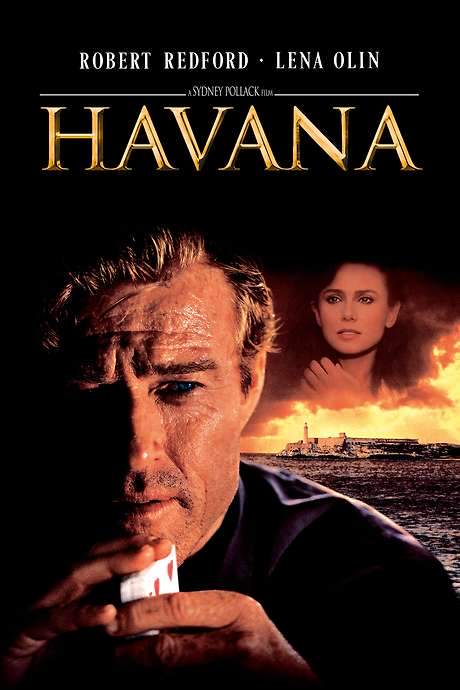
Havana (1990) movie poster

Plot Summary

Havana (1990) Plot Summary Explained

Release, runtime and language
1990 · 144 mins · English
Loading streaming availability…
Directed by
Sydney Pollack
Starring
Robert Redford, Richard Farnsworth, Alan Arkin, Mark Rydell, Richard Portnow, Tony Plana
Budget
$40M

A distrustful high‑stakes gambler lands in revolutionary Cuba, drawn to the perilous streets of the city where he hopes to win big at poker. There he encounters a daring woman who has risked everything, the wife of a Communist revolutionary, and a fierce passion ignites between them despite the danger surrounding their city.

On this page (6)
  1. 1 Where to watch
  2. 2 What happens: full plot
  3. 3 Plot questions answered
  4. 4 Movie threads
  5. 5 Movies like Havana
  6. 6 Every angle
Loading streaming availability…

Full plot summary · contains spoilers

What Happens in Havana: Full Plot Summary

The whole story of Havana (1990) explained, from the opening scene to the final frame: every key event, every twist and what it all adds up to. Read it as a quick recap before the sequel, to check a scene you missed, or to finally understand what really happened.

On Christmas Eve, 1958, aboard the boat from Miami to Havana, Roberta Duran [Lena Olin] enlists the aid of Jack Weil [Robert Redford] to smuggle radios for the revolutionaries in the hills. Weil agrees only because he is romantically drawn to her, and a fragile spark of feeling threads through their uneasy alliance. When they rendezvous for the payoff, Roberta reveals that she is married, cooling Weil’s hopes and adding a complication to their already perilous task.

In Havana, Weil encounters a Cuban journalist acquaintance, and during a night on the town they run into Roberta and her husband, Dr. Arturo Duran [Raúl Juliá], a revolutionary leader. Duran asks Weil for further aid for the cause, testing Weil’s loyalties and boundaries. Weil, feeling the weight of his conscience, turns him down and tries to walk away from the escalating danger, even as the revolution tightens its grip on the city and the couple’s fates become entwined with his own.

After a night of debauchery, Weil reads a newspaper account of Duran’s arrest and death. In shock, he continues with the planned poker game, coincidentally meeting the head of the secret police. He learns that Roberta was arrested and tortured in custody. He pressures another player in debt to him to obtain her release and, upon learning of the suffering she endured, he makes a personal vow to shelter her. Shaken by her husband’s fate and her jail ordeal, she lets him shelter her in his apartment, but she disappears that afternoon, leaving Weil to grapple with a growing sense of responsibility he cannot easily shake.

Realizing that he is in love with Roberta and encouraged by an old gambling friend, Weil drives into Cuba’s interior to find her at Duran’s old estate. He persuades her to return with him to Havana and to leave Cuba with him. When she asks, he explains that a lump on his arm contains a diamond he had planted there in his youth as insurance, a symbol of the risks he is willing to take for their future. He makes arrangements for her to leave Cuba via boat, but on his return to the apartment, he is assaulted by two Cubans, who inform him that Duran demands he get Roberta out of the country nonetheless.

Weil has a CIA acquaintance, Marion Chigwell [Daniel Davis], who confirms that Duran is still alive. He intimidates Chigwell into working with him to free Duran, a dangerous alliance built on deception and faith in a distant, changing future. Pretending to work for the CIA, Weil goes to see Duran, who is being held by the chief of the secret police. He tells the chief that Washington has plans for Duran and wants him released, with a payoff of $50,000. Weil goes to a doctor and then a jeweler to sell the diamond to raise the bribe for Duran’s release. He tells Roberta, who had decided to make a life with him, that her husband is alive. In shock, she leaves on her own to find her husband, while Weil’s own fortunes swing between risk and resolve.

Meanwhile, Weil blows the big game with high rollers, for whom he had been angling since he arrived in Havana. The casino’s manager, Joe Volpi, forgives him, understanding that Weil has chosen to prioritize Roberta’s safety and Duran’s fate over personal glory. On New Year’s Eve, 1959, the revolutionaries have won, and the city erupts in a wild, celebratory upheaval as the upper class and the secret police scramble to escape. The streets fill with revelers who trash the casinos and dance in the glow of a seismic political shift.

The next morning, Weil is in a restaurant preparing to depart. He sees Marion Chigwell, who informs him that he is working on a new book, The Cuisine of Indochina, and the encounter underscores the strange disjunction between his dangerous past and an uncertain future. Roberta shows up to bid him farewell. She sees the bandage on his arm and understands what it cost him to save her husband for her. She chooses to stay with the revolution, and Weil is left transformed by what he has learned and what he has lost.

Four years later, in 1963, Jack drives down to the Florida Keys and gazes across the sea toward Havana, hoping to see a boat bringing Roberta. He knows the ferry is no longer running, yet he keeps faith with the impossible dream, returning to the same vigil each year. He also realizes that the changes roiling Cuba are echoing across the United States, shaping not only a country’s fate but the inner life of a man who took extraordinary risks for love, loyalty, and a cause larger than himself.
Last updated: December 03, 2025 at 23:58

Was this helpful?

Plot questions answered

Havana Plot Explained: Your Questions Answered

The questions people ask most about Havana (1990): what happens in the confusing scenes, why the characters do what they do, the twists, hidden details and what the ending means. Each answer contains spoilers.

Q1

Why does Jack agree to smuggle radios for the Cuban revolutionaries?

Jack agrees to help smuggle the radios because he is immediately drawn to Roberta. His attraction to her is the primary motivation, though he also feels a tug of conscience toward the revolutionary cause. Without his personal feelings for Roberta, he would likely have refused the dangerous request.

Foreshadowing: Earlier on the boat, Jack's initial hesitation turns to agreement the moment Roberta appeals to him directly, showing his vulnerability to her charm.

  • jack weil
  • roberta
  • duran
  • smuggling
  • revolution
  • 1958
Q2

Why does Roberta disappear from Jack's apartment after he rescues her?

Roberta disappears because she is emotionally devastated by her husband's reported death and traumatized from being tortured in custody. She leaves to process her grief and decide her next move, not because she rejects Jack but because she is overwhelmed by the loss of her husband and her own suffering.

Foreshadowing: The text notes she lets him shelter her but disappears that afternoon, indicating she needed time alone to cope.

  • roberta
  • disappearance
  • weil apartment
  • torture
  • grief
Q3

How does Jack raise the $50,000 needed to bribe the secret police?

Jack sells a diamond that was planted under the skin of his arm when he was young as a form of insurance. He goes to a doctor to have it removed, then to a jeweler to sell it, using the proceeds to fund the bribe required to free Dr. Duran from the secret police chief.

Foreshadowing: Jack tells Roberta that the lump on his arm contains a diamond he had planted there in his youth as insurance for difficult times.

  • diamond
  • bribe
  • secret police
  • duran
  • 50
  • 000
  • cash
Q4

Why does Roberta choose to stay in Cuba instead of leaving with Jack?

Roberta chooses to stay with the revolution and her husband because her loyalty to the revolutionary cause and to Dr. Duran is stronger than her personal desire for safety with Jack. She understands the bandage on Jack's arm represents his sacrifice to save her husband, and she decides her place is with Duran and the new Cuba they fought for.

Foreshadowing: Jack's willingness to sell the diamond and risk everything to save Duran demonstrates the depth of his commitment, which ultimately allows Roberta to make her choice.

  • roberta
  • revolution
  • stay
  • duran
  • choice
  • 1959
Q5

Was Dr. Duran really dead or did he survive the secret police?

Duran was not dead. The newspaper reported his arrest and death, but in reality he was being held alive by the chief of the secret police. Jack learns the truth through his CIA acquaintance Marion Chigwell, which leads him to orchestrate the rescue mission using the bribery scheme.

Foreshadowing: Jack's decision to investigate further rather than accept the news at face value sets the rescue plan in motion.

  • duran
  • alive
  • secret police
  • arrest
  • chigwell
  • cia
Q6

Why does Jack lose the big casino game when he needs the money?

Jack intentionally loses the high-stakes casino game because his priorities have shifted. After learning of Roberta's torture and committing to freeing Duran, winning the game no longer matters to him. His focus is on rescuing Roberta's husband, not personal financial gain. Casino manager Joe Volpi recognizes this and forgives him.

Foreshadowing: The text states Jack blows the big game with high rollers, for whom he had been angling since arriving, but chooses Roberta's safety over personal glory.

  • jack
  • casino
  • game
  • lose
  • volpi
  • high rollers
Q7

Why does Jack keep returning to the Florida Keys in 1963 to watch for boats?

Jack maintains his annual vigil because he still holds hope that Roberta will one day come to him, even though he knows the ferry no longer runs. The ritual represents his enduring love for Roberta and his unwillingness to fully let go of the dream of being together. It also marks his personal transformation through the events in Cuba.

Foreshadowing: The final scene mirrors Jack's earlier journey to find Roberta at Duran's estate, showing his persistent hope against logic.

  • florida keys
  • vigil
  • 1963
  • hope
  • roberta
  • boat
  • annual
Q8

What does Marion Chigwell reveal about himself at the end of the movie?

At the end, Chigwell tells Jack he is working on a new book called The Cuisine of Indochina. This encounter highlights the strange contrast between Jack's dangerous involvement with the revolution and Chigwell's seemingly innocuous literary pursuits, underscoring how the characters have moved on from their Cuban entanglement into different futures.

Foreshadowing: Chigwell's earlier cooperation with Jack was based on intimidation and deception, making his cheerful talk of a new book feel oddly disconnected.

  • chigwell
  • cia
  • book
  • indochina
  • future
  • 1959
Q9

Why is Jack willing to risk his life and fortune for a married woman?

Jack falls genuinely in love with Roberta despite knowing she is married. His willingness to risk everything stems from the depth of his feelings combined with his growing moral conscience about the revolution. He also feels responsible after learning of her torture and her husband's fate. His romantic nature and sense of honor drive him to extreme sacrifice.

Foreshadowing: Jack's agreement to smuggle radios was initially motivated by attraction, which deepens into love as he witnesses her suffering and courage.

  • jack
  • roberta
  • love
  • sacrifice
  • married
  • risk
Q10

What happens in Havana on New Year's Eve 1959?

On New Year's Eve 1959, the Cuban revolution succeeds and the revolutionary forces take control of Havana. The streets erupt in wild celebration as the upper class and secret police scramble to flee. Revelers trash the casinos in an expression of the seismic political shift that has occurred.

Foreshadowing: The build-up throughout the film, from the smuggling operation to the arrests and violence, culminates in this moment of revolutionary victory.

  • new years eve
  • 1959
  • revolution
  • havana
  • celebration
  • casinos

Movie threads

More Movies Like Havana, by Mood & Story

Curated lists built around what makes Havana tick: the same mood, the same kind of story or the same emotional payoff. Each list explains why these movies belong together.

Revolutionary Romance Movies like Havana

Passionate affairs that burn brightly against the backdrop of political upheaval. If you were captivated by the ill-fated passion in Havana, explore more movies like it. This collection features intense romantic dramas set against political revolutions, where love and duty collide, leading to powerful stories of sacrifice and bittersweet endings.

  • romantic
  • tense
  • passionate
  • melancholic
  • urgent
  • atmospheric
  • Tone: melancholic, passionate, tense
  • Pacing: steady, urgent
Why these movies?

The story pattern: These narratives center on a love affair that becomes entangled with a larger political struggle. The protagonists, often from opposing sides or with conflicting commitments, find their relationship tested by danger, betrayal, and the overwhelming forces of history, typically concluding with a profound sense of loss.

Why they belong together: These films are grouped by their core premise of a high-stakes romance set within a volatile political landscape. They share a heavy emotional weight, a melancholic tone, and explore themes of sacrifice, moral ambiguity, and the high personal cost of idealism.

Movies about Cynical Outsiders like Havana

A disillusioned loner finds purpose through a dangerous connection in a troubled land. Fans of the gambler protagonist in Havana will enjoy similar films featuring cynical loners who find redemption. Discover movies like Havana where a self-serving character is transformed by love or sacrifice in a corrupt and dangerous environment, leading to a heavy emotional journey.

  • cynical
  • redemption
  • morally ambiguous
  • atmospheric
  • loner
  • sacrifice
  • Tone: melancholic, morally complex, atmospheric
  • Pacing: steady, character-driven
Why these movies?

The story pattern: The narrative follows a world-weary individual who operates by their own code, detached from the struggles around them. Their encounter with a cause or a person of fierce conviction forces them to confront their own emptiness. The arc is one of moral reawakening, often culminating in a significant sacrifice that redefines their life, even if it ends in loss.

Why they belong together: This thread connects films through a specific character archetype and their emotional journey. They share a steady, character-driven pace, a high-intensity atmosphere of risk, and a bittersweet conclusion where the protagonist is redeemed but pays a heavy personal price.

If you liked this

Movies Like Havana

Similar movies to Havana: the same genre, themes or kind of story. Each one comes with its own plot summary, timeline and ending explained.

Browse all movie summaries

Every angle

Havana (1990) Explained: Plot, Timeline & Characters

Everything about Havana in one place: what happens in the plot summary, the timeline in chronological order, the characters and meaning and a spoiler-free summary. What's After the Movie adds the cast, box office and post-credit scenes.

Coming soon on iOS and Android

The Plot Explained Movie Summary App

Plot summaries, endings explained and timelines on your phone. Catch up on any movie in minutes, save your favorites and never miss a twist again.

Be the first to know when we launch. Your email stays private, always.

Learn more about the app