Year: 1959
Runtime: 97 mins
Language: German
Director: Frank Wisbar
Set amid the brutal winter battles of 1943, the film follows a young German lieutenant whose growing distrust of the inhuman Nazi doctrine forces him to wrestle with the very meaning of war. As relentless combat rages around him, he confronts a painful clash between duty, conscience and the stark reality of suffering, questioning both his role and the ideology that drives the conflict.
Warning: spoilers below!
Haven’t seen Stalingrad: Dogs, Do You Want to Live Forever? yet? This summary contains major spoilers. Bookmark the page, watch the movie, and come back for the full breakdown. If you're ready, scroll on and relive the story!
Trace every key event in Stalingrad: Dogs, Do You Want to Live Forever? (1959) with our detailed, chronological timeline. Perfect for unpacking nonlinear stories, spotting hidden connections, and understanding how each scene builds toward the film’s climax. Whether you're revisiting or decoding for the first time, this timeline gives you the full picture.
Last updated: October 09, 2025 at 11:06
Find frequently asked questions about the Stalingrad: Dogs, Do You Want to Live Forever? (1959) timeline, including chronological order, nonlinear jumps, cause-and-effect links, and scene sequence clarifications. This timeline FAQ helps explain when key events happen, how moments connect, and why the story unfolds in that specific order.
Wisse helps Katja secure a job because he recognizes she would be deported to Germany as a forced laborer if she remained unemployed. Despite being a German officer in enemy territory, he uses his personal connections to arrange employment for her, showing an early moral conflict between his military duty and basic human compassion. This act establishes his growing distrust of Nazi ideology and sets up his later questioning of the war's purpose.
This early display of compassion foreshadows Wisse's eventual rejection of Nazi doctrine and his ability to form connections with Russian civilians later in the film.
Hitler issues a stand-fast order, refusing to permit a breakout because he believes holding Stalingrad is strategically essential for maintaining the German position in the east. His refusal to authorize a retreat reflects the Nazi regime's ideological insistence on absolute obedience and the belief that the city must be held at any cost. This order dooms hundreds of thousands of troops to death or capture.
Paulus follows Hitler's stand-fast order despite the hopeless situation because he believes in military obedience and fears the consequences of disobeying direct orders from the Führer. Even as the situation becomes untenable and relief attempts fail, Paulus remains loyal to the command structure. His refusal to break out dooms the Sixth Army and leads to the catastrophic surrender in February 1943.
The tension between obedience and survival runs throughout the film, culminating in the ultimate failure of blind loyalty.
The Luftwaffe initially manages to deliver only about 20% of the supplies the trapped troops need, and this quickly drops to nothing as Soviet forces capture the airfields needed for resupply. Without adequate food, ammunition, and medical supplies, the German forces in the pocket face starvation and growing casualties. The failure of air relief seals the fate of the encircled army.
Linkmann attempts to flee the encirclement because he recognizes the situation is hopeless and wants to save himself rather than die with the trapped army. As conditions deteriorate and starvation sets in, his will to fight collapses. He makes a first attempt during the retreat, which Wisse stops, and later makes a final attempt that ends with Wisse shooting him.
Linkmann's desertion attempts reveal the crumbling morale among officers, contrasting with those who choose to stay.
Wisse shoots Linkmann because Linkmann's second attempt to desert threatens the already fragile German defense. With morale collapsing and the situation desperate, Wisse cannot allow a senior officer to abandon his men, which would further demoralize the troops. The act also represents Wisse's own transformation, he enforces discipline even as he questions the broader war effort.
The Romanian front was dangerously overextended, spanning 19 kilometers instead of the standard 5-6 kilometers, and was poorly equipped with insufficient reserves after months of fighting. Additionally, the Romanian forces lacked adequate anti-tank weapons to defend against Soviet armored divisions. When the Red Army launched its offensive, the thin Romanian lines broke quickly, allowing the Soviets to encircle the German Sixth Army.
Wisse disguises himself as a Russian soldier while pursued by Soviet forces and stumbles into a group of Russians being fed. Among them is Katja, the Russian woman he had helped earlier. Despite the danger, she does not betray him and instead guides him back toward German lines. This act of mercy from someone he helped saves his life.
The kindness Wisse showed Katja earlier is repaid, demonstrating how small acts of humanity can have consequences.
Wisse coerces a sergeant to ignore orders to burn the supply depot, instead allowing German soldiers to carry off food and supplies freely. He only sets fire to the depot after the soldiers have taken what they need, denying the supplies to the approaching Soviets while ensuring his own men are fed. This act shows Wisse prioritizing his soldiers' survival over strict adherence to orders.
Field Marshal Hoth attempts to break through to the trapped Sixth Army with his panzer group, but his flanks become exposed when the Soviets breach the Italian 8th Army's positions. Forced to withdraw to avoid being encircled himself, Hoth's failure dooms Paulus's forces. The collapse of the Italian front removes any chance of rescue.
During the initial retreat into the Stalingrad pocket, Wisse confronts and prevents Linkmann from deserting. At this point, Wisse still maintains some commitment to military discipline and the chain of command, even as the situation deteriorates. This first confrontation establishes the tension between the two officers that culminates in Linkmann's death.
Paulus initially orders his men to fight to the last man, following Hitler's directive to hold position. However, as the situation becomes utterly hopeless, with no supplies, no relief coming, and catastrophic casualties, the reality of total defeat becomes unavoidable. Eventually, Paulus orders the surrender, allowing approximately 90,000 survivors to march into Soviet captivity.
Discover curated groups of movies connected by mood, themes, and story style. Browse collections built around emotion, atmosphere, and narrative focus to easily find films that match what you feel like watching right now.
Stories of being trapped, surrounded, and facing inevitable defeat.If the oppressive atmosphere of a military encirclement in Stalingrad gripped you, explore more movies like it. These films focus on the psychological and physical toll of being trapped, depicting the grim reality of survival against overwhelming odds in a confined, hopeless space.
Narratives in this thread typically follow a linear descent into disaster, charting the stages of a siege from initial hope to ultimate futility. The focus is on the collective experience of a trapped group, highlighting the breakdown of order, the struggle for survival, and the erosion of humanity under extreme pressure.
These films are grouped by their shared, oppressive setting and the intense psychological strain it creates. They deliver a consistent mood of desperation and inevitability, using a confined space as a crucible for character and a powerful metaphor for hopeless conflict.

Character studies of soldiers confronting the inhumanity of the cause they serve.If you were captivated by the protagonist's ideological struggle in Stalingrad, discover similar films about soldiers grappling with their conscience. These stories explore the heavy themes of duty versus morality, depicting a personal collapse within the larger machinery of war.
The narrative arc follows a soldier's gradual disillusionment, moving from belief or compliance to deep skepticism and moral crisis. The external chaos of war mirrors the internal psychological breakdown, leading to a pivotal moment of choice or a resigned acceptance of a tragic fate.
These films are united by their profound focus on a soldier's psychological and ethical journey. They share a heavy emotional weight, a bleak tone, and a central theme of individual conscience being crushed by the impersonal brutality of ideological warfare.
Don't stop at just watching - explore Stalingrad: Dogs, Do You Want to Live Forever? in full detail. From the complete plot summary and scene-by-scene timeline to character breakdowns, thematic analysis, and a deep dive into the ending - every page helps you truly understand what Stalingrad: Dogs, Do You Want to Live Forever? is all about. Plus, discover what's next after the movie.
Read a complete plot summary of Stalingrad: Dogs, Do You Want to Live Forever?, including all key story points, character arcs, and turning points. This in-depth recap is ideal for understanding the narrative structure or reviewing what happened in the movie.
Discover the characters, locations, and core themes that shape Stalingrad: Dogs, Do You Want to Live Forever?. Get insights into symbolic elements, setting significance, and deeper narrative meaning - ideal for thematic analysis and movie breakdowns.
Get a quick, spoiler-free overview of Stalingrad: Dogs, Do You Want to Live Forever? that covers the main plot points and key details without revealing any major twists or spoilers. Perfect for those who want to know what to expect before diving in.
Visit What's After the Movie to explore more about Stalingrad: Dogs, Do You Want to Live Forever?: box office results, cast and crew info, production details, post-credit scenes, and external links - all in one place for movie fans and researchers.
Discover movies like Stalingrad: Dogs, Do You Want to Live Forever? that share similar genres, themes, and storytelling elements. Whether you’re drawn to the atmosphere, character arcs, or plot structure, these curated recommendations will help you explore more films you’ll love.
Stalingrad: Dogs, Do You Want to Live Forever? (1959) Plot Summary & Movie Recap
Stalingrad: Dogs, Do You Want to Live Forever? (1959) Scene-by-Scene Movie Timeline
Stalingrad: Dogs, Do You Want to Live Forever? (1959) Spoiler-Free Summary & Key Flow
Movies Like Stalingrad: Dogs, Do You Want to Live Forever? – Similar Titles You’ll Enjoy
Cross of Iron (1977) Spoiler-Packed Plot Recap
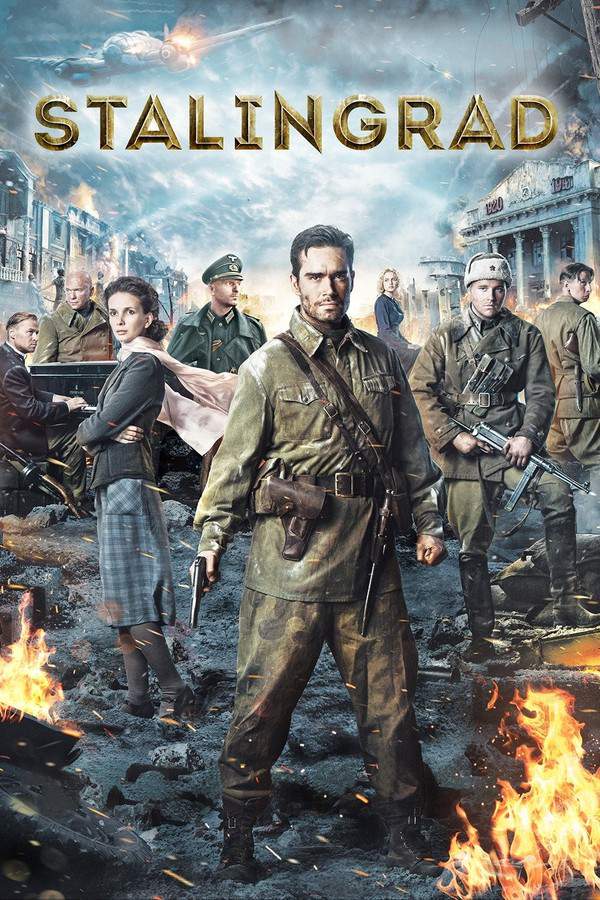
Stalingrad (2014) Plot Summary & Ending Explained
Enemy at the Gates (2001) Story Summary & Characters
Winter War (2017) Full Summary & Key Details
Leningrad (2007) Full Summary & Key Details
Stalingrad (1990) Spoiler-Packed Plot Recap
Battle for Moscow (1000) Film Overview & Timeline
A Siege Diary (2020) Ending Explained & Film Insights
The Battle of Stalingrad (1949) Spoiler-Packed Plot Recap
The Turning Point (1945) Spoiler-Packed Plot Recap
The Alive and the Dead (1963) Full Summary & Key Details
The Doctor of Stalingrad (1958) Film Overview & Timeline
Stalingrad (1943) Full Movie Breakdown
The Hot Snow (1972) Film Overview & Timeline
Soldiers (1956) Plot Summary & Ending Explained