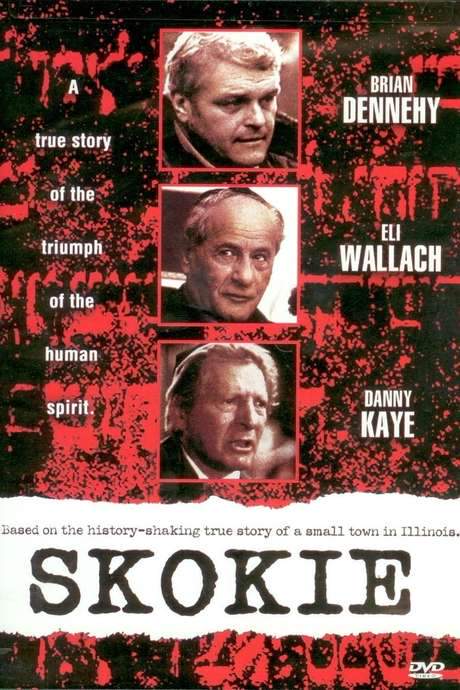
Skokie

Skokie

Year: 1981

Runtime: 125 mins

Language: English

Director: Herbert Wise

HistoryDrama

A dramatization of the controversial trial concerning the right for Neo-Nazis to march in the predominantly Jewish community of Skokie, Illinois.

Warning: spoilers below!

Haven’t seen Skokie yet? This summary contains major spoilers. Bookmark the page, watch the movie, and come back for the full breakdown. If you're ready, scroll on and relive the story!

Timeline – Skokie (1981)

Trace every key event in Skokie (1981) with our detailed, chronological timeline. Perfect for unpacking nonlinear stories, spotting hidden connections, and understanding how each scene builds toward the film’s climax. Whether you're revisiting or decoding for the first time, this timeline gives you the full picture.

1

Neo-Nazi plans rally in Skokie

Frank Collin selects Skokie, a suburb just north of Chicago, as the site for his next rally, signaling a provocative challenge to the community. The move puts a confrontation with a large Jewish population at the center of the village's future.

Skokie, Illinois
2

Jewish community faces the threat

Skokie's Jewish community, including Holocaust survivors, realizes the march would be a painful reminder of their past. They see the rally as a warning and vow to respond to prevent history from repeating itself.

Skokie, Illinois
3

Community decides to oppose the rally

The community resolves to stand against the rally at all costs. Their goal is to ensure that the Holocaust will not be forgotten or allowed to happen again.

Skokie, Illinois
4

Moderates propose a quarantine strategy

Leaders Bert Silverman and Abbot Rosen propose ignoring the neo-Nazis and refusing to feed the media publicity. They argue that non-engagement will render the rally futile.

Skokie, Illinois
5

Quarantine plan faces resistance

Not everyone agrees with the quarantine approach; some fear it would cede moral ground and let intimidation go unchecked.

Skokie, Illinois
6

Max Feldman challenges the plan with memory of oppression

Holocaust survivor Max Feldman argues that ignoring the Nazis is a trap he learned about in Germany. He recalls nearly being led to a concentration camp and vows to take action, even if it means shedding blood.

Skokie, Illinois
7

Feldman becomes de facto spokesman

Led by Feldman as de facto spokesman, the majority of the community aligns with protesting the rally. His experience and voice become the driving force behind the shift.

Skokie, Illinois
8

Protest plan moves forward

With Feldman's leadership, the community agrees to protest the rally. Organizing efforts begin to marshal attendees and spread their message.

Skokie, Illinois
9

Protest framed as memory of the Holocaust

The protest is framed as a defense of Holocaust memory and the insistence that such hatred not be allowed to resurface. The message centers on remembering the past to prevent its repetition.

Skokie, Illinois
10

Media and public debate intensify

Media attention increases as the community's stance against the rally becomes a public issue. Debates surface about the best way to respond and be heard.

Skokie, Illinois
11

Internal tensions surface

The clash over strategy reveals tensions between different leaders and approaches within the community. The disagreement tests unity and resolve.

Skokie, Illinois
12

Plan to oppose the rally solidifies

A concrete plan to protest is formalized, replacing earlier arguments with a unified course of action. Preparations accelerate as the moment to act approaches.

Skokie, Illinois

Last updated: February 18, 2026 at 23:45

Was this helpful?

Skokie (1981) Timeline Questions Answered – Chronology FAQ

Find frequently asked questions about the Skokie (1981) timeline, including chronological order, nonlinear jumps, cause-and-effect links, and scene sequence clarifications. This timeline FAQ helps explain when key events happen, how moments connect, and why the story unfolds in that specific order.

Q1

Why did Bert Silverman and Abbot Rosen propose ignoring the Neo-Nazi rally?

A.

Silverman and Rosen believed that the best response to the neo-Nazi march was to deny it attention and media publicity. They argued that if the Jewish community refused to acknowledge the rally, it would not gain traction in the public eye and the threat would fade away without provoking a larger confrontation. Their strategy was based on the principle that engaging with the Nazis would only give them the exposure they sought.

quarantine strategybert silvermanabbot rosenignore Nazisnon-engagement
Q2

Why did Max Feldman oppose the quarantine strategy?

A.

Max Feldman, a Holocaust survivor, opposed the quarantine approach because he had lived through the consequences of ignoring rising Nazi aggression in Germany. He recalled being told to ignore the Nazis before they came for him, and nearly paying with his life when he was almost led to a concentration camp. Feldman believed that silence in the face of hatred is lethal and that ignoring the neo-Nazis would be a dangerous mistake.

max feldmanholocaust survivorquarantineignore Nazismemories of oppression
Q3

Why did Frank Collin choose Skokie for the Neo-Nazi rally?

A.

Frank Collin selected Skokie because it had a substantial Jewish population, including many Holocaust survivors. The town was strategically chosen as a provocative challenge to a community that would find a Nazi march particularly painful and threatening, making it an ideal location for maximum impact and attention.

frank collinneo-nazi rallyskokie locationprovocationholocaust survivors
Q4

How did Max Feldman become the community's leader?

A.

Max Feldman became the de facto spokesman after his powerful speech against the quarantine approach convinced the majority of the community to adopt a protest strategy. His firsthand experience as a Holocaust survivor gave his arguments moral authority and emotional weight that the moderates could not match. His conviction that silence would be dangerous electrified the discussion and shifted public opinion toward active opposition.

max feldmancommunity leaderholocaust survivorprotest strategyvoice of experience
Q6

Why was the Jewish community divided over how to respond?

A.

The community divided between those who believed ignoring the neo-Nazis was the wisest tactical choice to deny them publicity, and those who felt that silence would betray the memory of Holocaust victims and embolden future hatred. The split represented a fundamental tension between pragmatic caution and moral obligation, with survivors like Max Feldman bringing personal trauma to argue that passivity enabled atrocity.

community divisionprotest vs ignorestrategy debatejewish community split
Q7

How did the community's response to the rally change over time?

A.

The community's response evolved from initial shock and division to a unified protest approach. Initially, the moderate quarantine plan dominated discussion, but after Max Feldman's passionate advocacy, the majority shifted toward organizing a counter-protest framed as a defense of Holocaust memory. The protest aimed to ensure the hatred would not be allowed to resurface while honoring those who suffered.

community responseprotest evolutionstrategy shiftmax feldman influence
Q8

What role did the mayor and police chief play in the conflict?

A.

Police Chief Arthur Buchanan and Mayor Albert J. Smith were tasked with managing the delicate balance between protecting First Amendment rights and ensuring public safety. They had to navigate the community's fear and trauma while maintaining law and order. Their leadership faced the challenge of managing a highly volatile situation with intense emotional stakes on all sides.

mayor albert smithpolice chief arthur buchananleadershippublic safetylaw enforcement
Mobile App Preview

Coming soon on iOS and Android

The Plot Explained Mobile App

From blockbusters to hidden gems - dive into movie stories anytime, anywhere. Save your favorites, discover plots faster, and never miss a twist again.

Sign up to be the first to know when we launch. Your email stays private, always.

Explore Movie Threads

Discover curated groups of movies connected by mood, themes, and story style. Browse collections built around emotion, atmosphere, and narrative focus to easily find films that match what you feel like watching right now.

Legal Battles with Moral Dilemmas like Skokie

High-stakes courtroom dramas where the law clashes with deep-seated morals.Discover movies like Skokie that explore intense legal dramas centered on profound moral dilemmas. These films feature courtroom conflicts, debates on ethics and civil rights, and emotionally heavy narratives focused on justice.

tenseseriousthought-provokingconfrontationallegal dramamoral conflictanxiousuncomfortable

Narrative Summary

The narrative typically revolves around a controversial case that forces characters and the audience to grapple with complex questions. The story builds methodically through legal arguments and personal conflict, leading to a resolution that often leaves a lasting emotional and intellectual impact.

Why These Movies?

These movies are grouped together because they share a focus on the courtroom as a crucible for moral and philosophical debate. They feature high emotional weight, steady pacing, and a tense tone, creating a gripping and thought-provoking viewing experience centered on justice.

Movies about Protest and Community Conflict like Skokie

Stories where community trauma clashes with the exercise of controversial rights.If you liked Skokie, explore movies about political protest, community conflict, and civil rights debates. These tense dramas often involve controversial marches, historical trauma, and moral questions about free speech.

tensecontroversialdefiantcommunity conflictpolitical dramatraumaanxiousserious

Narrative Summary

These narratives follow a community under threat from a protest or political action that triggers past trauma. The plot explores the internal divisions, legal challenges, and personal reckonings that arise, building a steady tension towards a climactic confrontation or resolution.

Why These Movies?

This thread unites films with a shared focus on the explosive conflict between constitutional rights and communal suffering. They are characterized by a tense, anxious mood, heavy emotional weight, and a serious examination of societal values and historical wounds.

Unlock the Full Story of Skokie

Don't stop at just watching - explore Skokie in full detail. From the complete plot summary and scene-by-scene timeline to character breakdowns, thematic analysis, and a deep dive into the ending - every page helps you truly understand what Skokie is all about. Plus, discover what's next after the movie.

Skokie Summary

Read a complete plot summary of Skokie, including all key story points, character arcs, and turning points. This in-depth recap is ideal for understanding the narrative structure or reviewing what happened in the movie.

Skokie Summary

Characters, Settings & Themes in Skokie

Discover the characters, locations, and core themes that shape Skokie. Get insights into symbolic elements, setting significance, and deeper narrative meaning - ideal for thematic analysis and movie breakdowns.

Characters, Settings & Themes in Skokie

Skokie Spoiler-Free Summary

Get a quick, spoiler-free overview of Skokie that covers the main plot points and key details without revealing any major twists or spoilers. Perfect for those who want to know what to expect before diving in.

Skokie Spoiler-Free Summary

More About Skokie

Visit What's After the Movie to explore more about Skokie: box office results, cast and crew info, production details, post-credit scenes, and external links - all in one place for movie fans and researchers.

More About Skokie